跳至正文
公共卫生 · 治理 · 管理 · 法律 · 社会干预与跨部门协作

eric.bernier.1@umontreal.ca(263) 384-3050预约会面

我的论文 简历 海报
Éric Bernier 的肖像

Éric Bernier

公共卫生博士研究生(二年级) · 法律专业人士 · 创业者 · 特殊教育工作者

从个人到政策:以整合视角理解卫生系统

从陪伴个人到公共卫生研究,我的经历引领我探索卫生系统的不同层面:从个体的现实到组织,直至公共政策与治理。

这些处于实践、管理、法律与研究交汇处的经历,孕育了一个信念:改变卫生系统,需要让人的经验、科学知识、集体动态与政治选择彼此对话。

我的志向是在这些彼此相邻却未必相互理解的领域之间打开大门,打破视角之间的壁垒,拉近研究与行动的距离,以促进自主决定、为集体决策提供依据,并为建设一个更公正、更健康的社会贡献力量。

正在构思阶段的公共卫生博士研究,由 Nadia Sourial 博士(Ph.D.)与 Géraldine Layani 博士(M.D.)联合指导 Chaire de recherche GSK en gestion optimale des maladies chroniques(GSK 慢性病优化管理研究讲席) CRCHUM FRQ 奖学金获得者(B2)

自由浏览

探索我的世界

拖动即可探索点击一扇门进入滑动浏览各扇门轻触即可进入

6 扇门

左右拖动以浏览大厅,也可将鼠标移至边缘。点击门或栏目进入。

点击一扇门即可进入

经历一览

  1. 2025 年起加拿大蒙特利尔大学公共卫生学院(ESPUM)及蒙特利尔大学医院研究中心(CRCHUM):公共卫生博士
  2. 2025法国巴黎-先贤祠-阿萨斯大学:卫生法与社会法方向公法硕士
  3. 2024–2025法国国家绩效支持署(ANAP):医疗社会服务项目专员
  4. 2024法国西布列塔尼大学(UBO):医疗社会服务机构管理硕士级文凭法国布雷斯特 IAE:创业与管理大学文凭法国朗代诺 Fondation Ildys:EHPAD(失能老人居住照护机构,类似魁北克 CHSLD)管理实习
  5. 2020–2023法国:特殊教育工作者,Adapei 35
  6. 2016–2024法国:适应性度假及喘息服务项目负责人

经历数据概览

残障支持与喘息服务

年支持残障人士的经历
10
次负责管理的适应性度假活动
100+
名机构外度假活动受益者
≈1 000
与喘息支持相关的家庭及专业人员对受支持者身边支持群体的估算
≈1 000

教育与教学

项大学第二周期文凭
4
项助教工作蒙特利尔大学
4
次评审团特别嘉许
3
项最佳海报奖GFSP 2026 · 博士组
1

网络与参与

名获代表的学生
3 000
位医疗社会服务网络专家参与网络的组织与交流工作
30
网络研讨会和实践共同体活动累计参与人次管理人员与卫生专业人员
2 000+
名区域心理健康调查参与学生设计并主持该调查
1 000
指标说明
  • 残障支持与喘息服务:数字为整个职业历程的估算量级。喘息支持涉及家庭及陪护专业人员。两项估算描述相互关联的群体,不应相加,也不是经核实的个人统计。
  • 教学:蒙特利尔大学。
  • 最佳海报:GFSP,2026 年,博士及博士后组。
  • 医疗社会服务网络:参与专家网络的组织与交流工作。
  • 网络研讨会与实践共同体:组织交流并主持讨论;管理者与卫生专业人员的累计参与人次。
  • 心理健康:设计并主持一项面向学生的区域性调查。

论文进行中 · 主题仍在构建,可能大幅调整

暂定题目

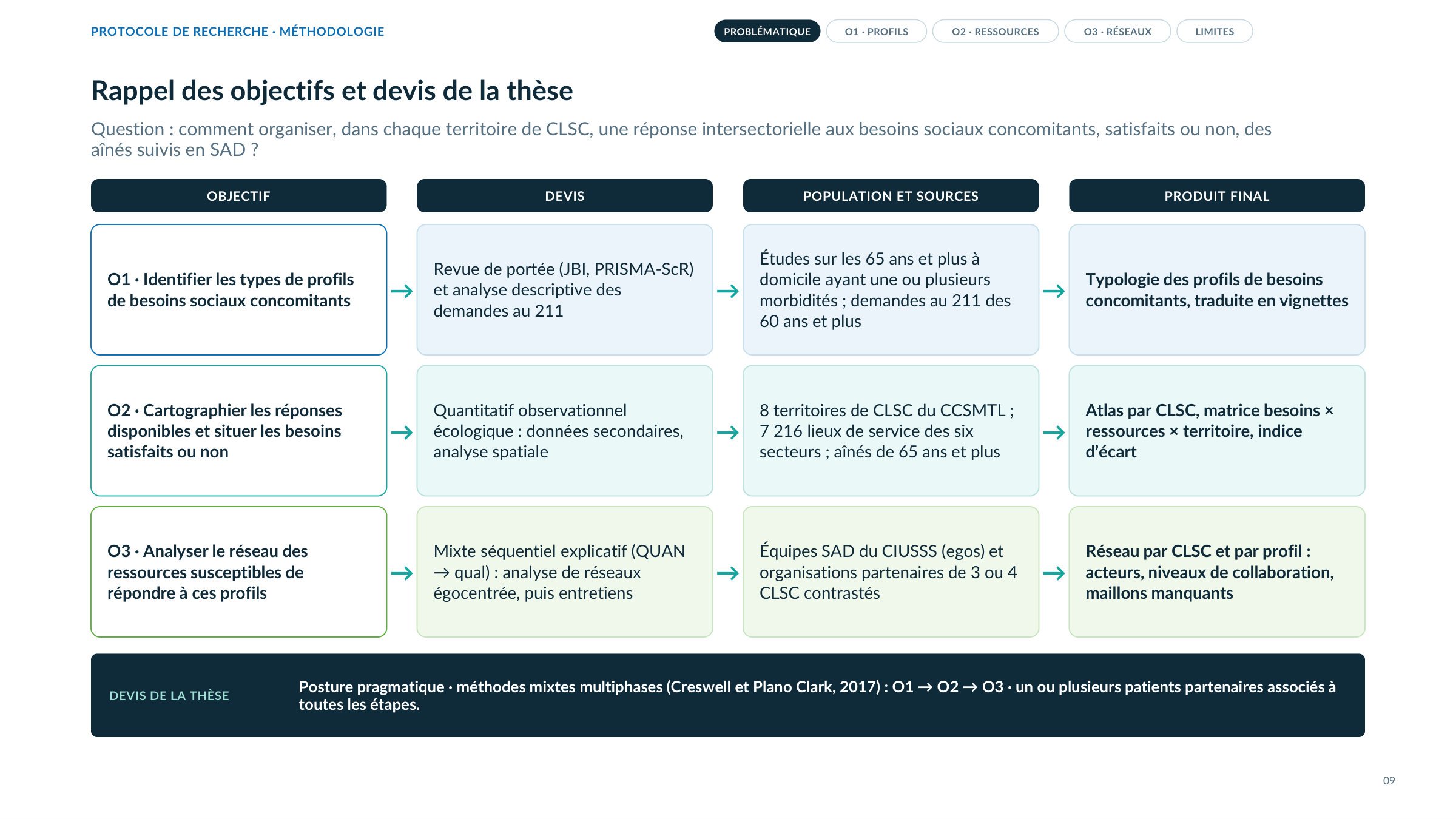
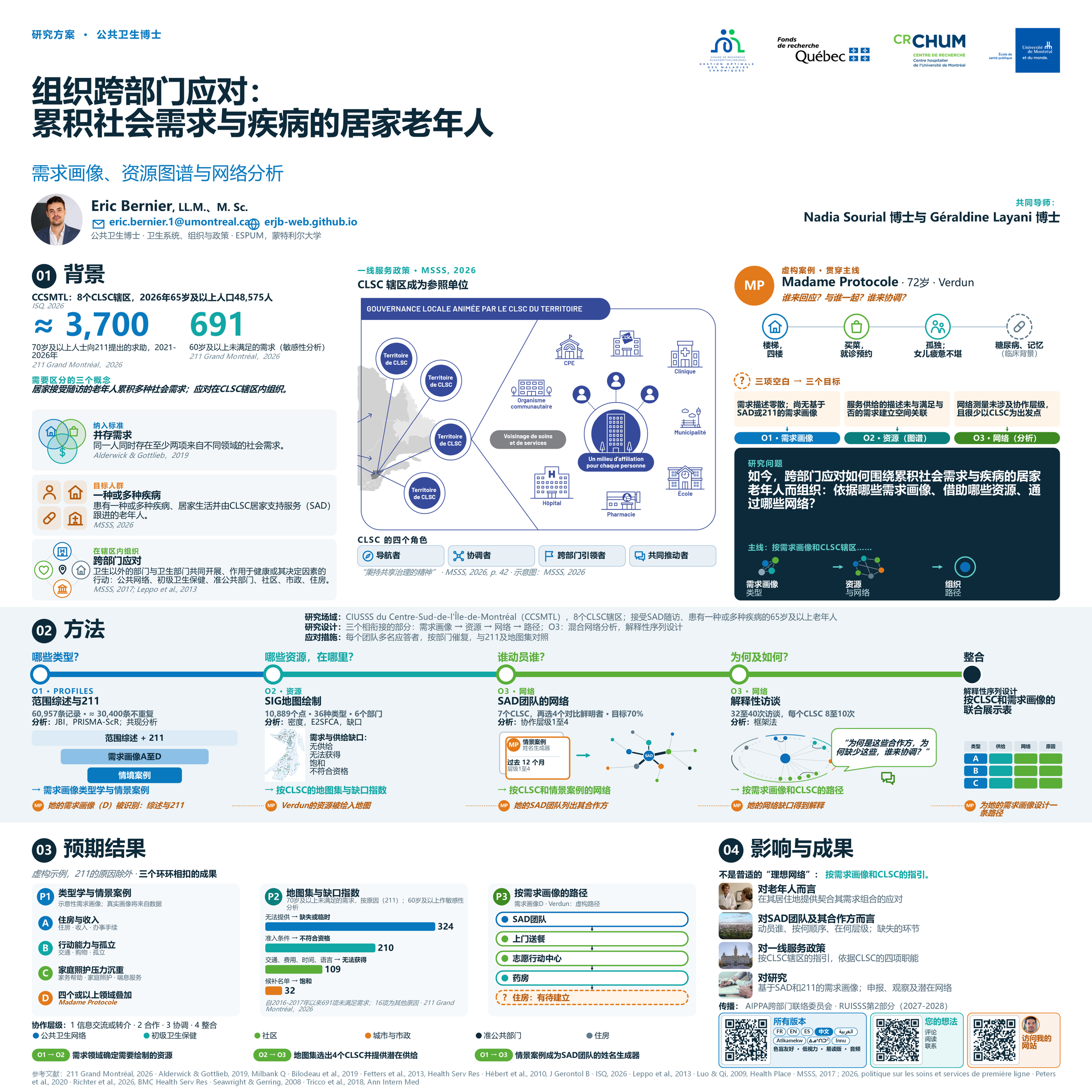
为同时存在社会需求与疾病的居家老年人组织跨部门应对:类型、资源地图与网络分析

联合指导 : Nadia Sourial 博士 (Ph.D.(博士)) · Géraldine Layani 博士 (M.D.(医学博士),M.Sc.(理学硕士))École de santé publique de l’Université de Montréal(ESPUM,蒙特利尔大学公共卫生学院)公共卫生博士,卫生系统、组织与政策方向(SOPS)· 二年级Chaire de recherche GSK en gestion optimale des maladies chroniques(GSK 慢性病优化管理研究讲席)Fonds de recherche du Québec(FRQ,魁北克研究基金会)博士奖学金(B2)Chaire de recherche GSK en gestion optimale des maladies chroniques · Fonds de recherche du Québec · CRCHUM · ESPUM · Université de Montréal
研究问题

今天,围绕同时存在社会需求与疾病的居家老年人,跨部门应对是如何组织的:依据哪些类型、借助哪些资源、通过哪些网络?

设计:多阶段混合方法(Creswell & Plano Clark, 2017),实用主义立场——O1 范围综述(JBI, PRISMA-ScR)及 211 描述性分析;O2 定量观察性生态学研究;O3 解释性序列混合设计(QUAN → qual),自我中心网络分析。

01研究背景

研究问题

今天,围绕同时存在社会需求与疾病的居家老年人,跨部门应对是如何组织的:依据哪些类型、借助哪些资源、通过哪些网络?

1. 问题:需求超出供给

在魁北克,居家支持(SAD)指公共网络在个人家中提供的照护与服务,主要由 CLSC(地方社区服务中心)团队提供。2024-2025 年,它服务了 395,783 人,共 3,720 万小时;另有 17,883 人在等待首次服务。65 岁及以上人群中,80% 至少患有一种慢性病,一半患有多种(多病共存)(MSSS,《Mieux chez soi》,2026,第 4、6 页)。

2023 年公共网络满足的需求比例

居家支持10.7%
RI-RTF68.8%
CHSLD98.9%

居家支持:所需 2.347 亿小时中仅提供 2,540 万小时(CSBE, 2024, p. 11)。

等待首次居家支持服务的人数

2019 年 3 月 31 日13,250
2022 年 3 月 31 日17,226

三年增长约 30%(CSBE, 2024, pp. 2, 96)。

长期照护的使用者与资源

在家接受服务的使用者84%
居家支持所获资源38%

机构住宿以 62% 的经费服务 16% 的使用者(CSBE, 2024, p. 7)。

魁北克 65 岁及以上人群的健康

至少一种慢性病80%
多病共存一半

另有 91% 的 55 岁以上者认同“终身住在自己家”(CSBE, 2024, p. 7;MSSS, 2026a, p. 4)。

健康与福祉专员(CSBE)在《Bien vieillir chez soi》四卷报告(2023-2024)后得出结论:居家支持体系复杂、整合不足、绩效不佳。2023年,公共网络只提供了居家所需2.347亿小时中的2,540万小时:回应率为10.7%,而在长期护理中心(CHSLD)为98.9%。居家支持获得长期照护资源的38%,却服务84%的使用者;等待首次服务的人数从13,250人(2019年)增至17,226人(2022年)。其余部分依赖照护者、社区组织和私营部门,即公共网络之外的部门。

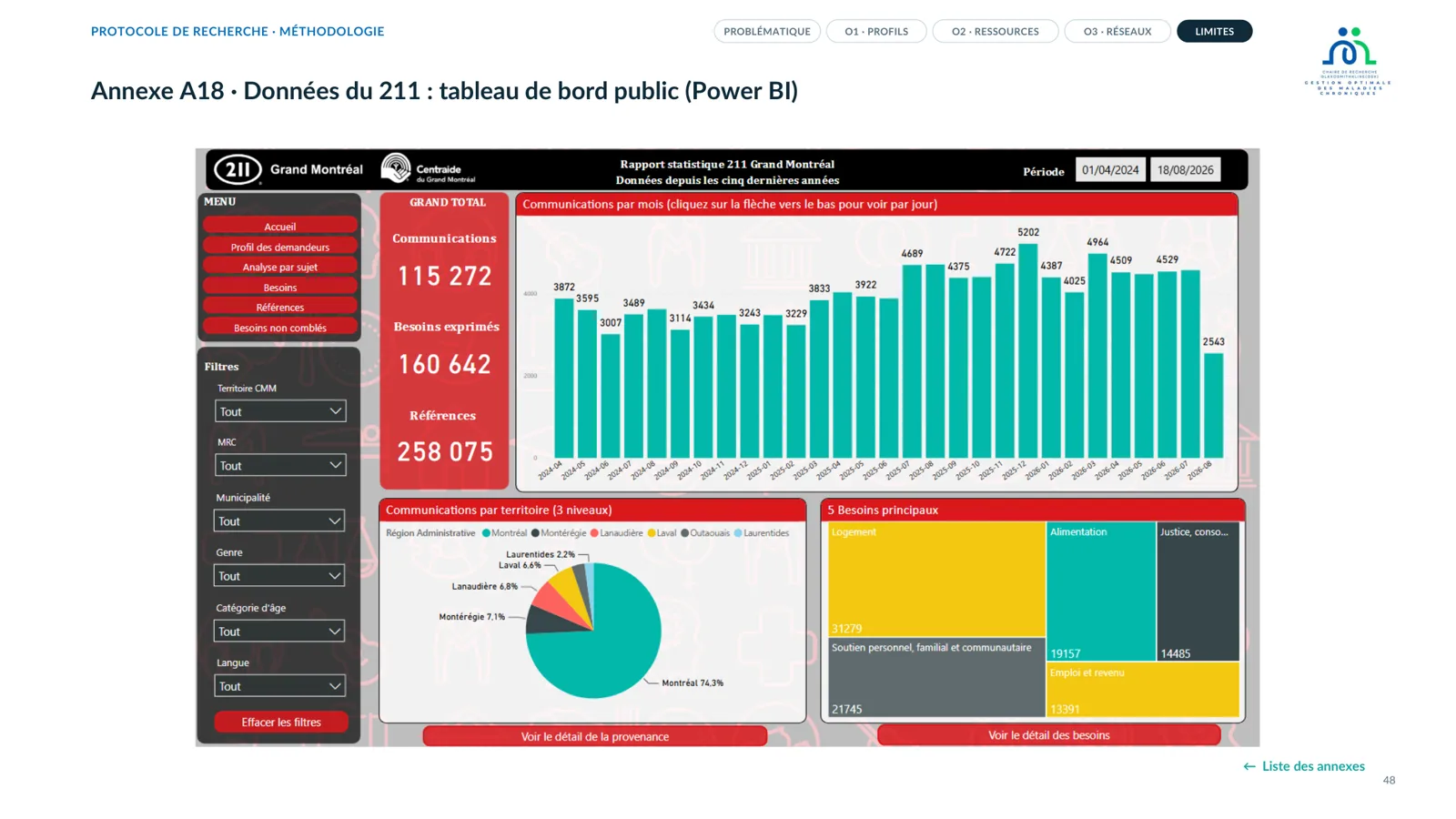
在研究区域(CCSMTL,8个CLSC辖区),2026年有48,575名65岁及以上居民(ISQ)。2021年,其中28.6%生活在低收入线以下,Pointe-Saint-Charles高达41.8%,Centre-Sud为38.7%;66.9%的家庭为租户(加拿大统计局)。在211求助热线中,70岁及以上人群的需求首先涉及个人与社区支持(21.9%)和住房(13.4%),这两个领域中他们需求未获满足的比例是全年龄段的两倍。60岁及以上人群中最常见的原因是“服务不可用”(324项需求),其次是准入条件(210)和缺乏交通(66)。60岁及以上人群的求助中只有44项来自CLSC。

CSBE表格:2023年所需小时、提供小时与回应率,其中居家为10.7%
魁北克2023年长期照护的所需小时、提供小时与回应率:公共网络仅回应居家需求的10.7%。 截图:Commissaire à la santé et au bien-être(2024),《Bien vieillir chez soi》第4卷执行摘要,第11页(Clavet等的预测,HEC Montréal,2023)。
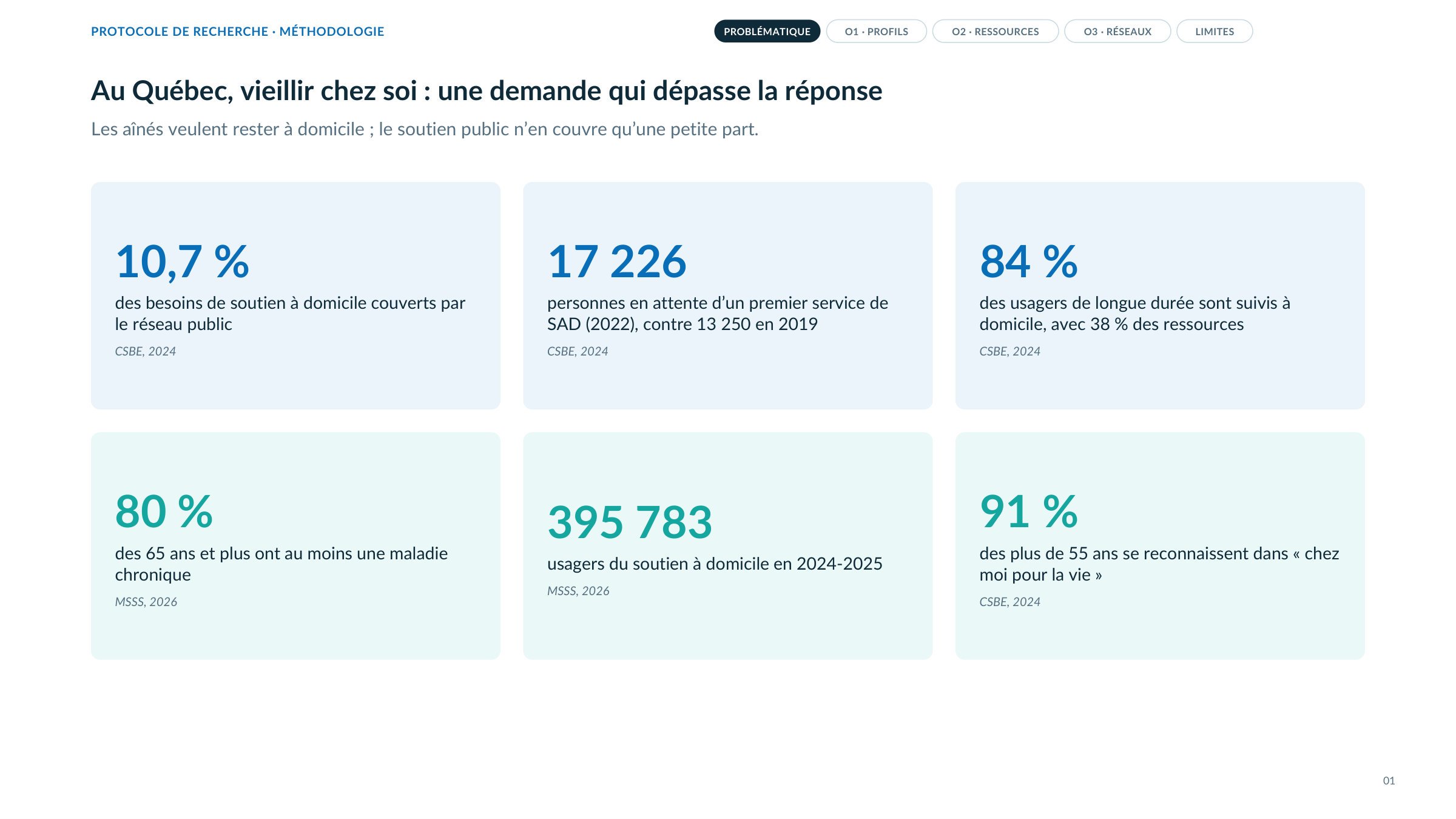
魁北克问题的六个关键数字。
魁北克问题的六个关键数字。 来源:Bernier, E. (2026). 论文方法 O1-O3[演示文稿,法文],第 2 张幻灯片。

2. 需求叠加时,应对变得更难

一位老年人可能同时患有一种或多种疾病(急性或慢性健康问题),并有多项社会需求:住房不合适、收入过低、孤立、缺少交通、照护者精疲力竭。这被称为并存的社会需求。它们共同构成复杂性因素:每一项都让其他问题更难解决,个人的照护路径也变得不顺畅(Safford et al., 2007; Grembowski et al., 2014; Schaink et al., 2012; Johnson & Bacsu, 2018)。《Mieux chez soi》政策承认:当需求涉及生活的多个方面时,多名从业者必须协同工作,而慢性病会使居家需求更复杂、更密集(MSSS,2026a,第 4 页)。

这些情况难以发现,因为没有任何单一服务能看到一个人的全部需求。它们也难以协调:卫生与福利专员(CSBE)认为居家支持体系复杂、整合不足、绩效不佳。人们并不总能组织起共同、适切而协调的应对。可以推测,在同一地区,各机构可能互不相识或并不合作;某项资源缺失时,人们并不知道另一部门的资源可以替代。没有研究直接证明这一点:这是一种推论,来自关于服务网络、社区组织承接能力以及寻找可用帮助之难的研究(Lemieux-Charles et al., 2005; Varda et al., 2020; Hogg-Graham et al., 2021; Macleod et al., 2017)。在 211,60 岁及以上人群需求未获满足的最常见原因是“服务不可用”。

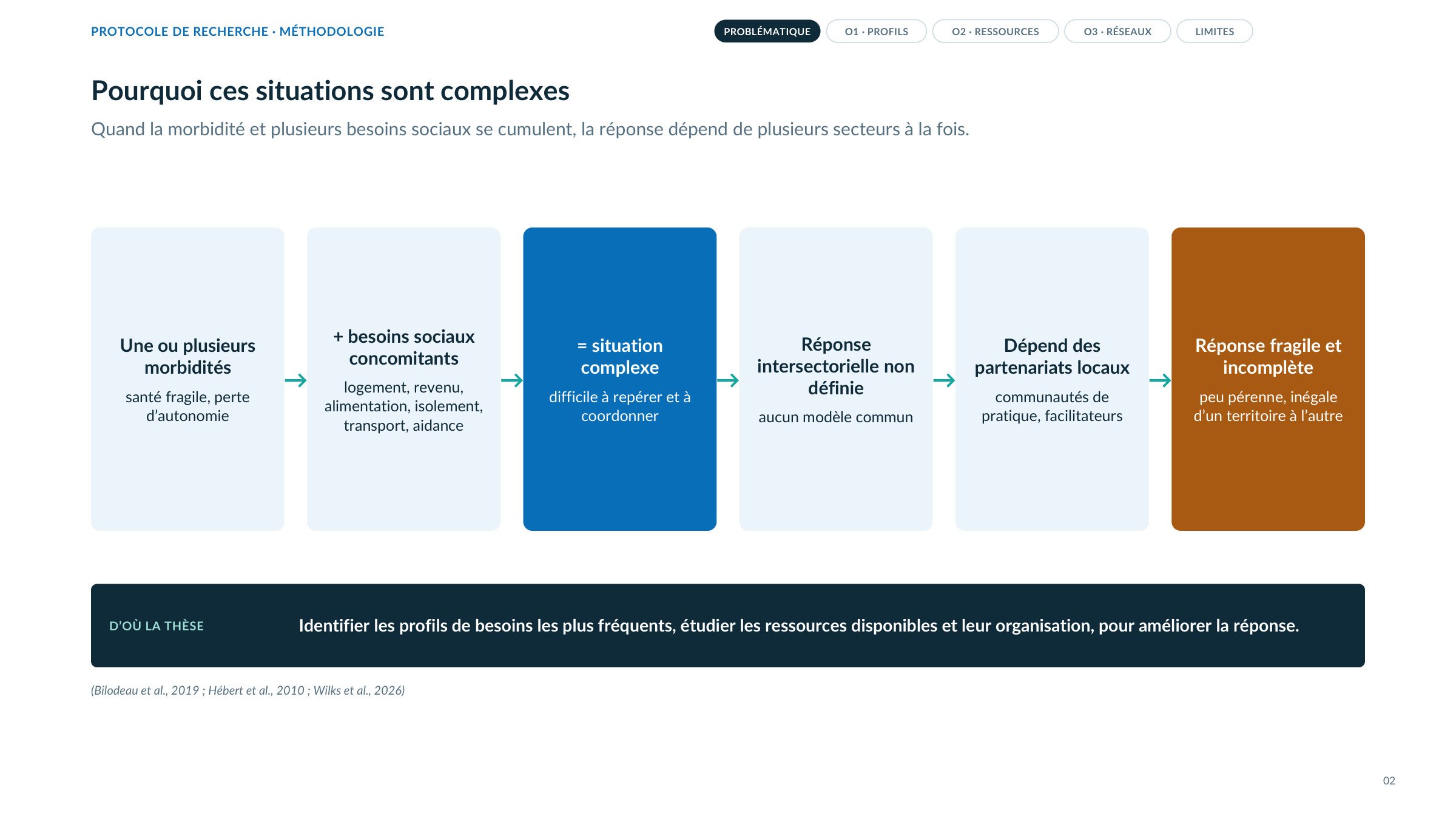
复杂性的链条:一种或多种疾病加上并存的社会需求,使情况难以发现和协调。
复杂性的链条:一种或多种疾病加上并存的社会需求,使情况难以发现和协调。 来源:Bernier, E. (2026). 论文方法 O1-O3[演示文稿,法文],第 3 张幻灯片。

3. 多个入口,而非一个

《Mieux chez soi》政策希望 CLSC 成为主要入口(MSSS,2026a,第 XII 页)。实际上,老年人通过许多入口进入网络:CLSC 居家支持团队;日间医院;住院;跌倒后的急诊;CISSS 或 CIUSSS(地区卫生与社会服务机构)的居家照护;家庭医学组(GMF);药房;市政;社会住房;无障碍交通;社区组织;家庭照护者;211 信息与转介服务。每个入口只看到情况的一部分,没有一个能保证全部需求得到考虑。

老年人CLSC 与居家支持日间医院住院跌倒后急诊GMF药房社区组织家庭照护者211市政社会住房无障碍交通
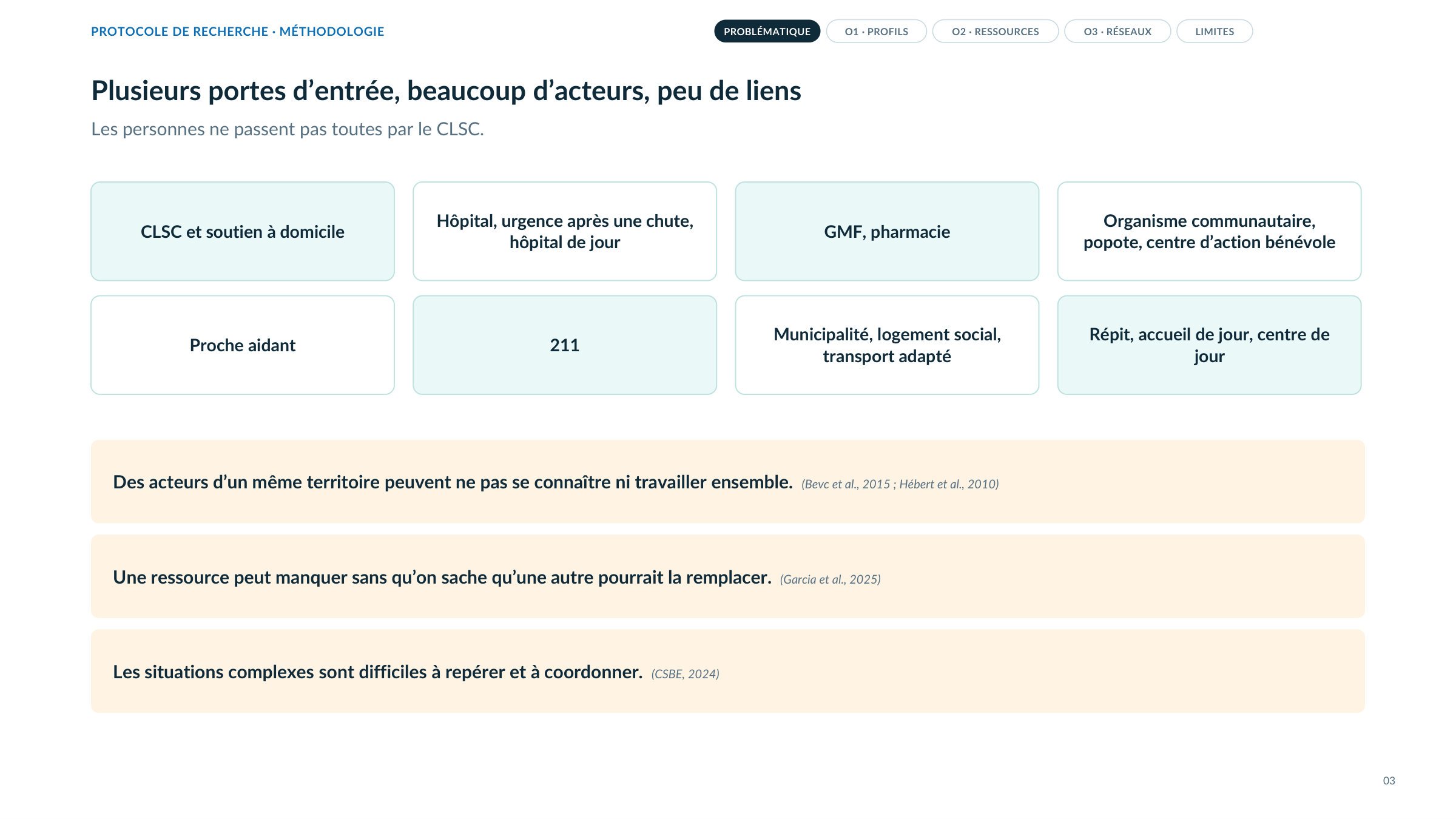
十二个可能的入口;CLSC 被设计为主要入口(MSSS, 2026a, p. XII),但只是其中之一。没有一个入口能单独看到全部需求。
各个入口,以及它们之间薄弱的联系。
各个入口,以及它们之间薄弱的联系。 来源:Bernier, E. (2026). 论文方法 O1-O3[演示文稿,法文],第 4 张幻灯片。

4. 魁北克已有的服务整合机制

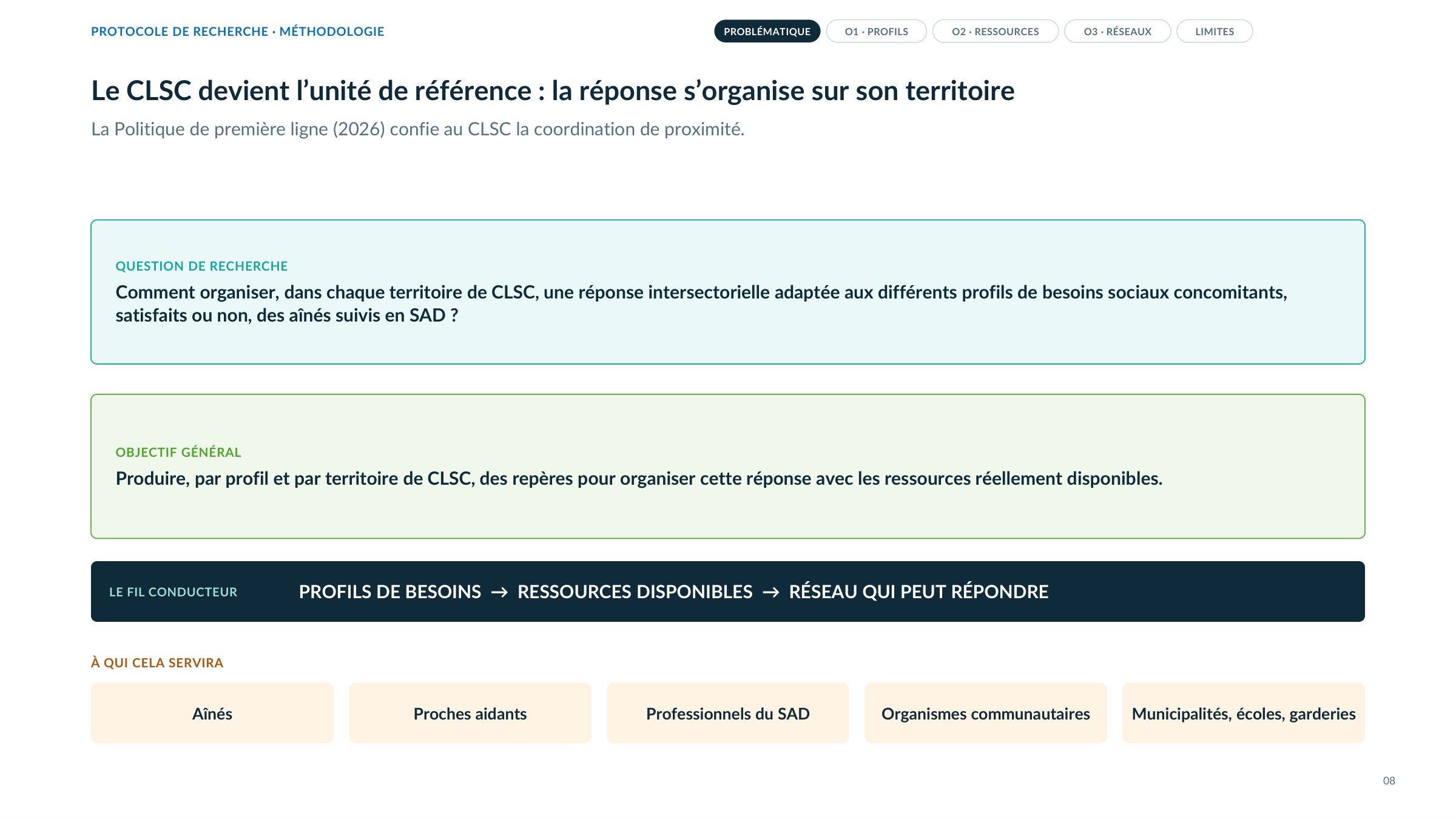
《第一线医疗与社会服务政府政策》(MSSS,2026年3月)将每个人归属于一个CLSC辖区,该辖区成为协调第一线服务的参照单位(第15页)。政策赋予CLSC四种角色:导航者、协调者、跨部门领导者和共同推动者(第42页)。随附的部长指引指出,原本作为地方枢纽的CLSC已失去活力、脱离其最初使命(第1页):目标是恢复这一角色。

已有多种机制在拉近各方。PRISMA 是魁北克针对失能老人的服务整合模式,结合了单一入口、个案管理、共同评估工具和伙伴协商;其评估显示功能衰退减少、未满足需求减少(Hébert et al., 2003, 2010; Couturier et al., 2021)。MSSS 的老年人整合式近邻服务方针(AIPPA,2024)依靠协作实践和对有需求者的识别(第 8 页),依靠 ITMAV 项目的街区工作者和机构的社区组织者(第 28 页),以及实践社群(第 59 页;Ranmuthugala et al., 2011)。社区组织者隶属于 CISSS 或 CIUSSS 的社区组织服务,是机构与当地组织之间的纽带(Bourque & Lachapelle, 2010)。

跨部门合作在魁北克并不新鲜:2003年的《Chez soi : le premier choix》政策已提出这一方向;蒙特利尔大学RUISSS(2022)提出了六个部门的框架(公共网络、第一线、准公共、社区、市政、住房)和四个协作层级(信息交换、合作、协调、整合;参照Bilodeau、Parent和Potvin,2019)。MSSS的AIPPA方针及其在CCSMTL的跨部门联络委员会延续了这一工作。所缺少的是逐个辖区判断:针对哪些需求组合,应动员哪些部门。

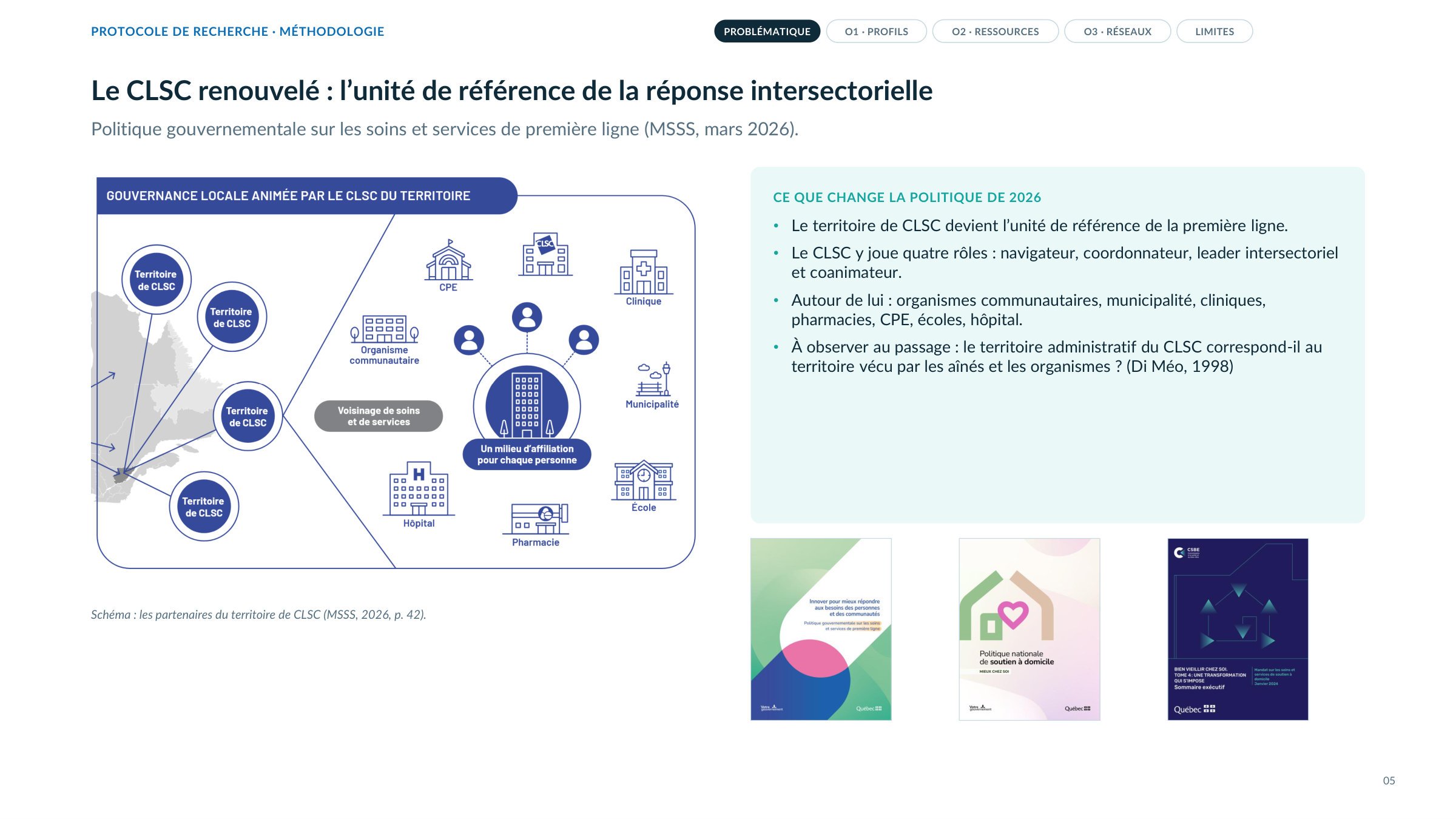
第一线政策中的框文:CLSC辖区与CLSC的四种角色
CLSC作为就近治理单位及其四种角色:导航者、协调者、跨部门领导者和共同推动者。 截图:MSSS(2026),《Politique gouvernementale sur les soins et services de première ligne》,第42页。

本图与文献一起,用于界定论文所研究的部门(MSSS, 2026b, p. 42;Bilodeau et al., 2019)。

这些机制很宝贵,但跨部门应对仍不够清晰可见。它常常依赖地方伙伴关系:一个实践社群、一个协商平台、一位担任促进者的人。若此人离开或资金中断,应对便会减弱:它难以持久,也常常不完整。更重要的是,这些机制都没有说明哪些需求组合最常见、每种组合在一个地区有哪些资源,以及网络今天如何组织应对。这正是本论文的目标。

2026 年政策带来的改变(MSSS, 2026b, pp. 15, 42)。
2026 年政策带来的改变(MSSS, 2026b, pp. 15, 42)。 来源:Bernier, E. (2026). 论文方法 O1-O3[演示文稿,法文],第 6 张幻灯片。

5. 文献已经做过的尝试

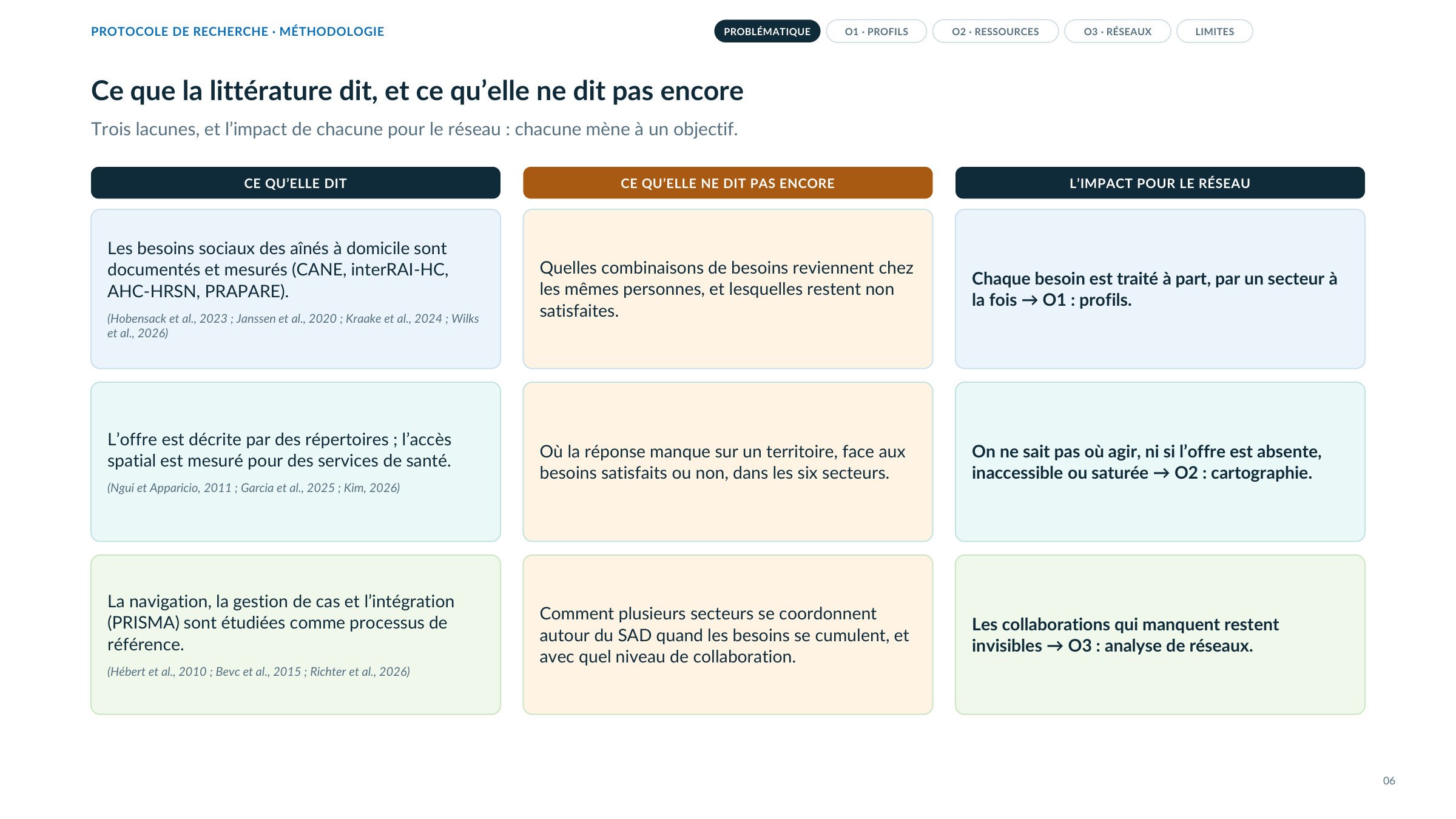
文献表明,居家老年人的社会需求常见且相互叠加(McManus等,2025;Tingvold等,2026),会形成聚类(Kreuter等,2021),也存在已满足或未满足需求的画像,但多基于CANE工具和照护者视角(Janssen等,2020;Kraake等,2024)。文献记录了转介、导航和社会处方(Hébert等,2010;Percival等,2022),以及服务供给的地图分析(Kim,2026;Álvarez-Pérez等,2025)。

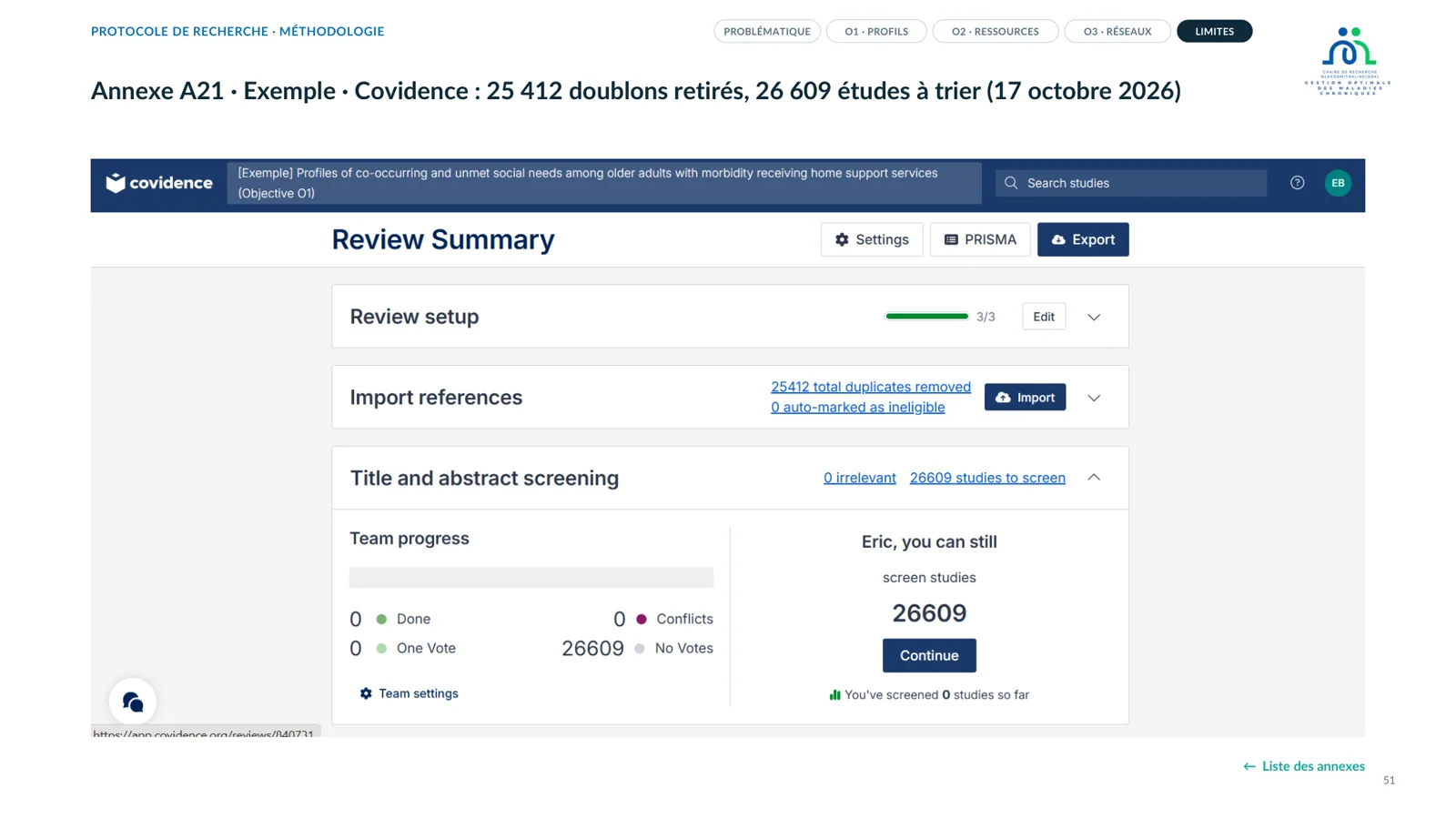
文献尚未说明:在接受居家支持的人群中,哪些需求组合反复出现、哪些仍未满足;它很少在一个辖区内把这些组合与可及资源联系起来;其网络分析通常只记录是否存在联系,很少记录协作层级,几乎从不以多个CLSC的居家支持团队为起点。O1范围综述从四个数据库(MEDLINE、Embase、APA PsycInfo、PubMed)的60,957条记录出发:剔除2006年以前的8,938条,52,021条导入Covidence,删除25,412条重复,由两名评审员筛选26,609项研究。

已有研究绘制了老年人需求与资源的地图:在魁北克,Anne-Marie Séguin(INRS)为魁北克住房公司(SHQ,2018)主持的研究,按地区类型描述了 75 岁及以上人群已满足或未满足的需求,以及地方资源和个人策略。Juliette Duc 及其同事用 QGIS 和 R 绘制了全魁北克 65 岁及以上人群的服务供给与需求地图:农村地区人均服务较少,地方差异很大(Duc et al., 2026)。另有研究描述了居家失智症患者的需求类型(Janssen 等,2020),或用社会网络分析(SNA)分析服务网络(Urbanoski 等,2018)。目前尚未发现有研究在 CLSC 地区层面,把并存的社会需求与一种或多种疾病作为复杂性因素联系起来。

主要研究空白

就研究问题的各个组成部分而言,文献并非空白:多重社会需求的测量、需求的并存、患者的求助意愿以及各类应对机制均已有研究。然而,所识别的综述中,没有一项针对初级卫生保健中的成年人,同时涵盖需求的未满足性质、并存性、患者的优先排序、需求间的相互关系、应对网络以及直至解决的轨迹。因此,研究空白在于需求配置与跨部门应对配置之间的衔接,以及解释某些需求为何在被识别后仍然持续存在的机制。

出于方法学上的严谨,本研究采用的表述是“在已开展的 PubMed 和 Cairn 检索中未识别到综述”,而非“不存在任何综述”。

三个空白,各自通向一个目标。
三个空白,各自通向一个目标。 来源:Bernier, E. (2026). 论文方法 O1-O3[演示文稿,法文],第 7 张幻灯片。

6. 跨部门应对,而不只是个体干预

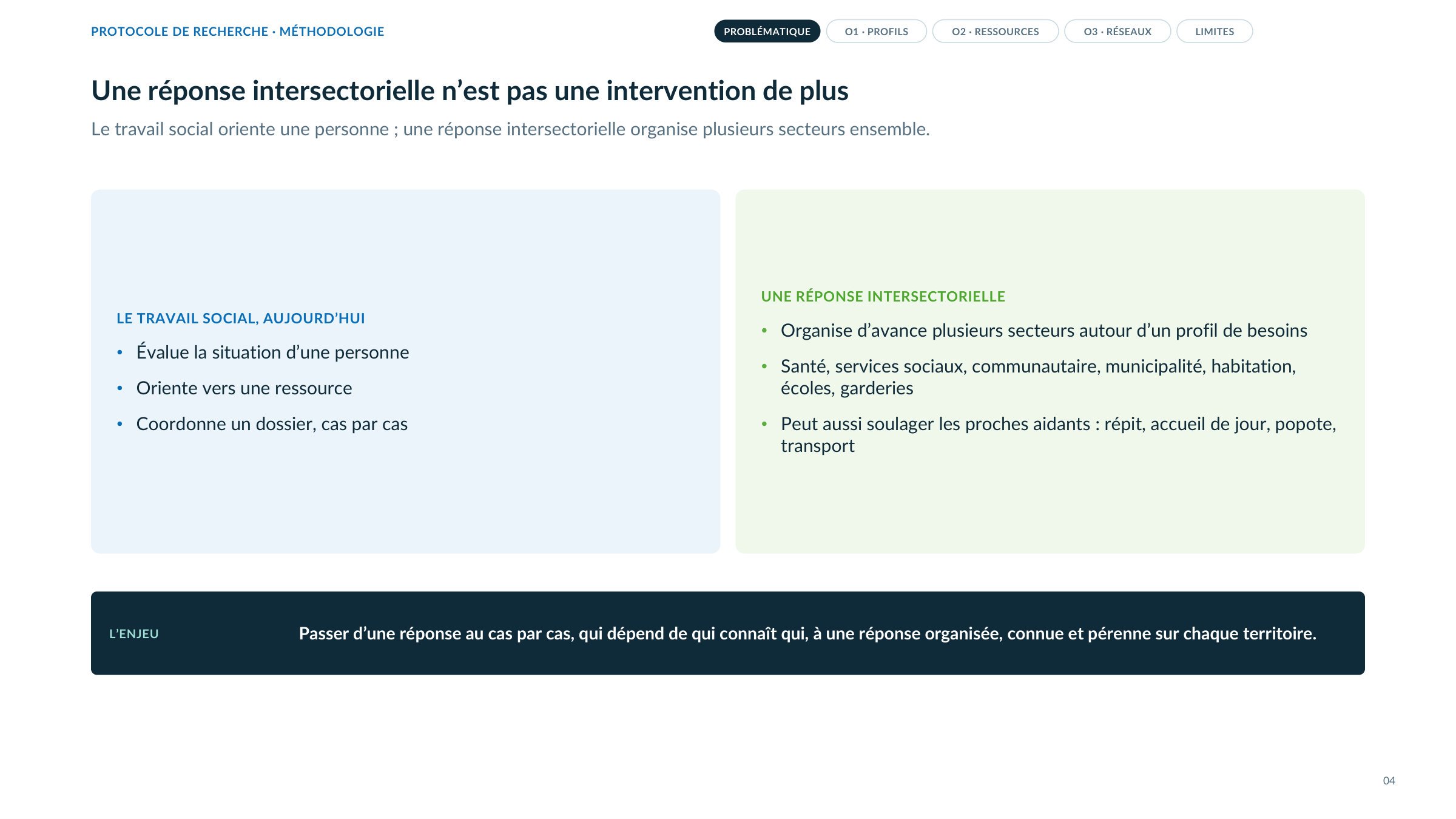
居家支持的社工评估个人状况、进行转介并陪伴:这是个体干预,必不可少。而针对一种或多种疾病患者并存社会需求的跨部门应对是另一回事:它是在一个地区内,组织多个部门(卫生、社会服务、社区、市政、住房、交通)针对同一需求组合持久地共同行动。今天的关键不在于从业者的能力,而在于缺少共同的组织:每位从业者都在逐案重建一个本可以事先知道的网络。社会工作逐案评估、转介和协调;跨部门应对则围绕某一类型事先组织多个部门(Couturier et al., 2022; Bilodeau et al., 2019)。关键在于:从“谁认识谁”走向有组织、可持续的应对。

今天的社会工作目标中的跨部门应对
评估一个人的状况围绕某一需求类型事先组织多个部门
转介到某项资源卫生、社会服务、社区、市政、住房、学校、托儿所
逐案协调个案也减轻照护者负担:喘息、日间照护、送餐、交通
取决于“谁认识谁”在每个地区有组织、可知且持久

依据 Couturier 等(2022)与 Bilodeau 等(2019)。

社会工作与跨部门应对。
社会工作与跨部门应对。 来源:Bernier, E. (2026). 论文方法 O1-O3[演示文稿,法文],第 5 张幻灯片。

7. 次要部分:生活地域与行政地域

2026 年政策把 CLSC 地区作为参照单位。配套的《方针》指出,该地区不再只是行政划分,而是一个“有生命的空间”,现有 166 个地区本身并非目的(MSSS,2026,摘要及第 4 页)。然而,CLSC 地区最初是为了给每个机构分配服务人口而划定的(MSSS,地域数据管理建议);在蒙特利尔,公共卫生部门还把全岛划分为 101 个更贴近社区的街区,而行政单位并不总是与生活环境相符(Di Méo, 1998; Riva et al., 2008; Macé, 2010; Breton et al., 2009)。作为次要问题,本论文将检验人们实际使用的资源是否遵循 CLSC 边界,还是越出边界。

8. 论文的构想

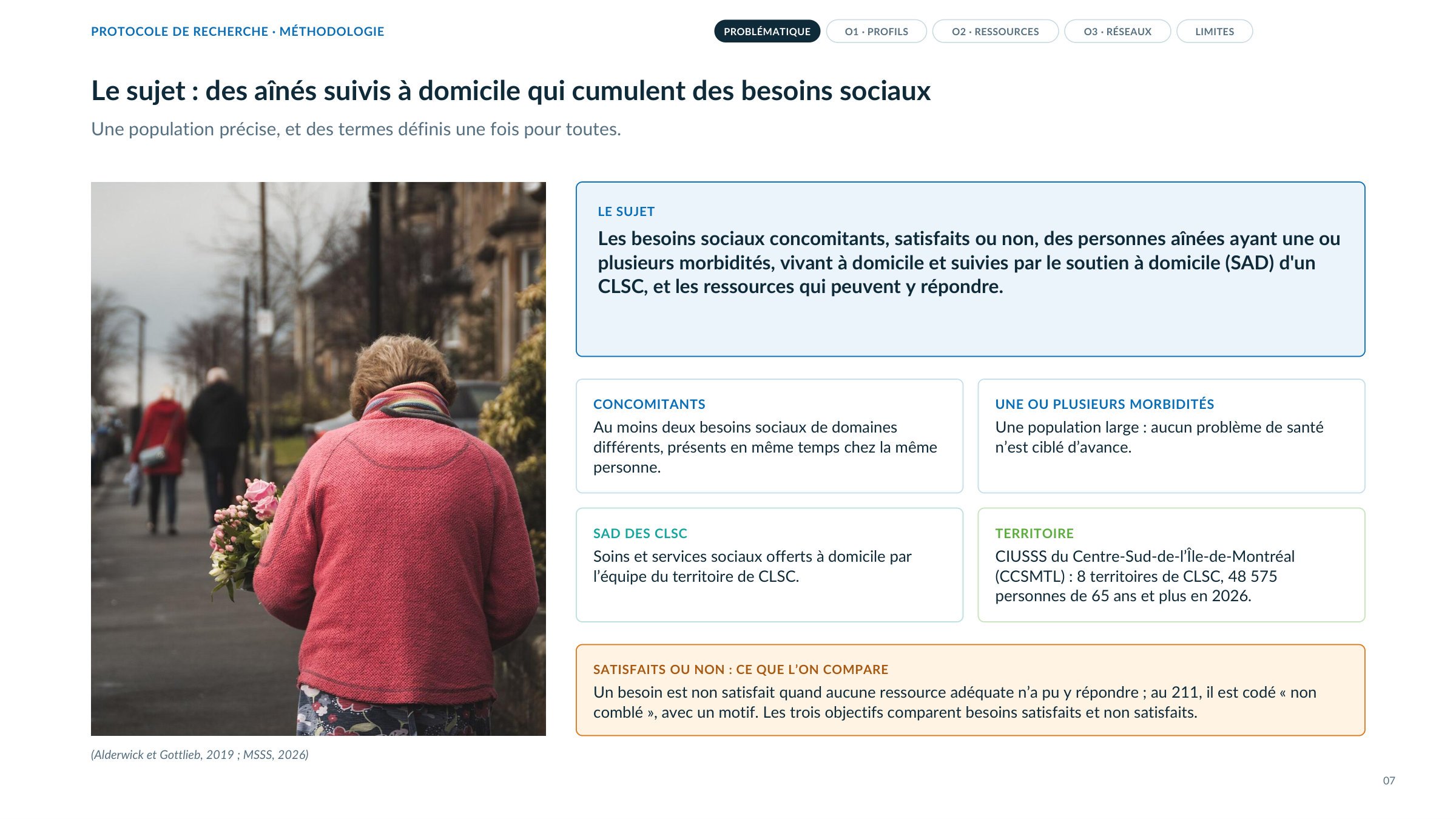
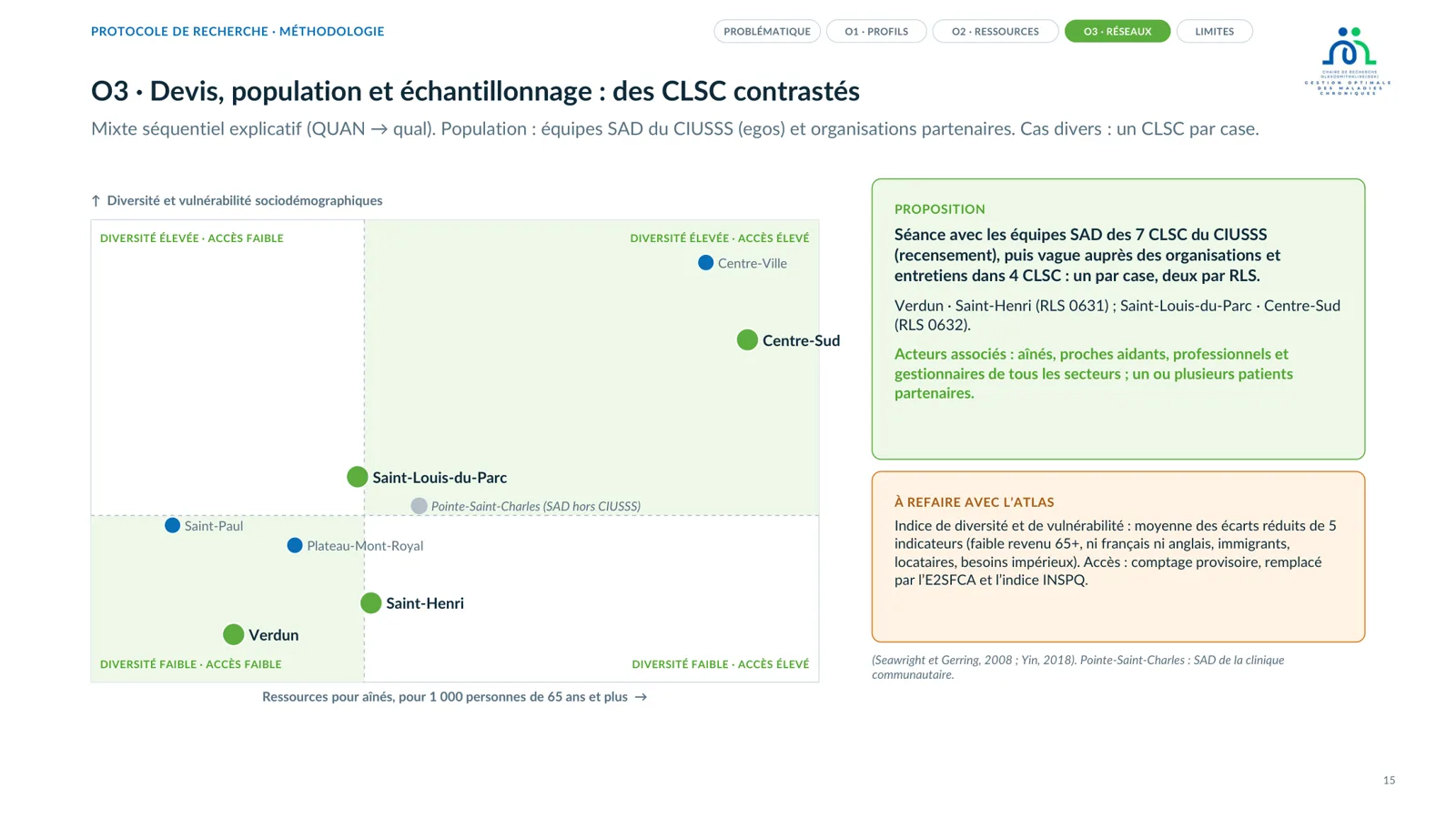
由此产生出发点:识别居家支持老年人中最常见的并存社会需求类型;针对每种类型,找出各 CLSC 地区可用的资源;再理解今天的应对如何组织,以便加以改进。论文对象是患有一种或多种疾病、居家生活、接受蒙特利尔岛中南部 CIUSSS 八个 CLSC 地区居家支持服务的老年人(2026 年 65 岁及以上共 48,575 人)。

主线可用三个词概括:类型 → 资源 → 网络。O1 说明哪些需求组合反复出现;O2 逐个地区说明有哪些资源、缺什么;O3 说明谁已在合作、缺少哪些联系。每一步都为下一步提供所需。

9. 我的立场

我的思考源于我在多个部门之间的经历,以及我对居家养老政策的观察——我曾在 ANAP 从事这方面的工作。作为特殊教育工作者,我亲眼看到,当多项服务各自介入而缺乏协调时,为最复杂的情况组织共同应对有多难。本论文希望让今天主要依靠各方善意的事情变得可见,从而可以组织。

文献基础

下列资源为概念构建提供支持。各专门栏目中的题目、研究问题、核心论点与研究目标构成当前的项目框架。

构思研究项目

我目前处于构思阶段:一个按优先级整理的文献库、它所揭示的研究空白,以及支撑它的课程阅读。

222篇纳入文献
39篇优先阅读文献
83篇重要阅读文献
9个考察的空白维度

按优先级分布

优先级 539
优先级 483
优先级 346
优先级 224
优先级 130

文献来源

  • PubMed112
  • Embase 与 MEDLINE(Ovid)95
  • Cairn15

本文献库基于 Ovid(Embase、MEDLINE)、PubMed 和 Cairn 构建,并根据每篇文献与论文研究问题的相关性赋予优先级。

文献尚未解决的问题

下表针对所考察的九个维度,逐一列出文献现状、研究空白的重要程度以及若干参考文献。

概念界定

重要

已有探讨但尚未稳定

PubMed 收录的研究日益区分社会风险、社会需求与求助意愿。Cairn 中的法语文献补充了关于不稳定处境与社会脆弱性的术语,这些概念往往是多维度的,但在概念上比未满足的需求更为宽泛。

Gruß 2021; Tucher 2026; Tudrej 2019; Karran 2023

测量

重要

丰富但异质

各类工具在涵盖领域、判定阈值和施测方式上差异很大。Cairn 中出现的多维不稳定处境评分(如 EPICES 和 PRECAR)并不等同于未满足社会需求问卷。

Zein 2026; Karran 2023; Tudrej 2019; Rogers 2025

特征描述与患病率

中等

至少一项需求已有充分记录

大量研究描述了各领域需求的患病率及累积负担,但当需求定义和测量工具不同时,估计值难以相互比较。

Jih 2023; Bleacher 2020; Fiori 2021

多重性与并存

重要

新兴但现已得到证实

多项社会需求或风险同时存在的情况很常见,已有研究提出了聚类、类别和累积负担测量。一项近期研究还表明,风险的多重性会显著提高希望获得帮助的可能性。

Vest 2025; Kreuter 2021; Zeng 2024; Tucher 2026

患者的优先排序

重大

已有少量直接研究,但该领域仍欠发展

文献主要测量求助意愿、协商目标、可接受性或相对优先级,近期研究进一步强化了“检出的风险”与“希望获得的帮助”之间的区分。e-CARE 相关研究展示了根据患者节奏和优先事项调整的陪伴支持,但并未形成标准化的需求排序。

O’Loughlin 2022; Gruß 2021; Tucher 2026; Vasan 2026; Ouanhnon 2022

需求之间的相互关系

重大

主要被描述为并存或整体复杂性

定量分析主要记录需求的并存情况与特征分型。Cairn 中的法语定性研究描述了社会、行政、经济和健康困难的相互交织,但很少涉及其方向、先后顺序或因果机制。

Vest 2025; Kreuter 2021; Marron-Delabre 2015; Ouanhnon 2022

解决与轨迹

重大

日益增多,但以中间指标为主

该领域逐步区分筛查、转介、对接、获得资源和需求解决。法语 e-CARE 研究还追踪了具体结果,如权益开通、获得家庭医生、住房以及就医路径中的自主性,但缺乏针对每项需求是否解决的标准化测量。

Steeves-Reece 2022; Hausmann 2024; Ouanhnon 2022; Agarwal 2025

网络与跨部门应对

对整合而言重大

文献丰富,但常与患者数据脱节

PubMed 收录的研究记录了患者导航、社区卫生工作者、医疗与法律合作以及闭环转介;Cairn 则记录了全科医疗中的社会服务单元以及法国的初级保健与地区协调机构(MSP、CPTS、DAC)。然而,网络配置很少与需求特征及其解决情况相联系。

Hogg-Graham 2021; Tevaearai 2022; Yatim & Sebai 2021; Lessi 2023; Ouanhnon 2022

整合性综述

主要空白

在 PubMed 和 Cairn 审查中未发现

检索到的综述中,没有一项针对初级卫生保健就诊的成年人,同时涵盖需求的未满足性质、多领域测量、并存模式、患者赋予的优先级、需求间的相互关系、可调动网络的配置以及直至解决的轨迹。

Karran 2023; Vest 2025; Chang 2026; Tudrej 2019; Ouanhnon 2022

39 篇优先阅读文献
  1. Dahrouge et al. (2026) A Randomized Controlled Trial of Social Prescribing: Comparing a Comprehensive Navigation Model With Signposting 随机试验
  2. Dina Zein; Kriti Gogia; Jenifer Clapp; Alessandra Calvo-Friedman; Nichola J Davis; Ji E Chang (2026) Convergence and differences across social needs identified through structured screeners and clinical assessments 文章
  3. Mayo Clinic team (2026) Coordinating Multisector Efforts to Address Social Needs in a Rural Midwestern Primary Care Setting 比较性队列研究
  4. Russell et al. (2026) Racial, Ethnic, and Sex Differences in Social Risks and Social Needs Concordance Among Veterans 加权横断面调查
  5. Stephanie S Loo et al. (2026) Experiences of Social Risk Screening in the Safety-Net Among Patients with Mental Health Needs 定性研究文章
  6. Bolen et al. (2025) The Impact of a Bidirectional Clinic to Community Social Care Referral Program 项目研究
  7. Coletti D.J.; Andrews A.; Rooney E.; Chen A.; Alvarenga J.; Verbsky J. (2025) YEAR TWO, WE FOLLOW THROUGH: LONGITUDINAL SOCIAL DETERMINANTS OF HEALTH SCREENING IN A LARGE ACADEMIC RESIDENT PRACTICE. 会议摘要
  8. Fennelly et al. (2025) Comparison of the Performance of Three Health Related Social Needs Screening Tools 比较研究
  9. Hatef et al. (2025) An Electronic Health Record-Based Platform for Social Needs Assessment and Navigation Services: Preliminary Results of an RCT 随机试验
  10. Lewis et al. (2025) Optimizing the community resource specialist to address social needs in primary care: results from a pragmatic quality improvement evaluation 务实性质量改进评估
  11. Saluja K; Mahbub A; Gauthier AP; Lemonde M; Timony P; Durand F; Dahrouge S (2025) Understanding patient barriers and enablers to accessing community resources: a qualitative study to inform navigation service delivery. 临床试验;期刊论文
  12. Vest J.R.; Wu W.; Conner K. (2025) Clusters of Health-Related Social Needs Among Adult Primary Care Patients. 文章
  13. Vest et al. (2025) Performance of 4 Methods to Assess Health-Related Social Needs 方法比较研究
  14. Clapp et al. (2024) Implementing and monitoring high-quality community health worker care in adult primary care at New York City Health + Hospitals 实施与随访研究
  15. Drake et al. (2024) Association of Patient-Reported Social Needs with Emergency Department Visits and Hospitalizations Among Federally Qualified Health Center Patients 回顾性队列研究
  16. Gilbert et al. (2024) Patient Preferences for Addressing Unhealthy Behaviors, Mental Health Challenges, and Social Needs in Primary Care 随机试验内分析
  17. Jane Jih; Antony Nguyen; Irena Cenzer; Jennifer Morrish (2023) Burden of unmet health-related social needs in an academic adult primary care practice in San Francisco California 文章
  18. Renaud et al. (2023) Addressing Health-Related Social Needs Via Community Resources: Lessons From Accountable Health Communities 采用随机比较的项目评估
  19. Shi et al. (2023) Social Needs Assessment and Linkage to Community Health Workers in a Large Urban Hospital System 观察性队列研究
  20. Teggart et al. (2023) Effectiveness of system navigation programs linking primary care with community-based health and social services: a systematic review 系统综述
  21. Zhang WJ; Fornili K (2023) Screening for Social Determinants of Health Among Medicare Beneficiaries in Primary Care During the Covid-19 Pandemic in Prince George's County, Maryland. 期刊论文
  22. Cene CW; Buys E; Clark JW; Foley K; True V; Kiger J; Salter AS (2022) Better Together: A Descriptive Analysis of a Medical-Legal Partnership in Western North Carolina. 期刊论文
  23. Jones K.G.; Roth S.E.; Vartanian K.B. (2022) Health and Health Care Use Strongly Associated with Cumulative Burden of Social Determinants of Health. 文章
  24. Kristen O'Loughlin et al. (2022) Patient Preferences for Discussing and Acting on Health-Related Needs in Primary Care 定性研究文章
  25. Ouanhnon L; Esquerre B; Champrobert K; Buerba A; Pariente K (2022) Projet e-CARE : un dispositif expérimental d’aide au parcours de soin pour les patients en situation de précarité. Bilan après deux ans 服务项目描述性评估
  26. Sandhu et al. (2022) Patient Barriers to Accessing Referred Resources for Unmet Social Needs 随访中嵌入的定向定性研究
  27. Heller CG; Rehm CD; Parsons AH; Chambers EC; Hollingsworth NH; Fiori KP (2021) The association between social needs and chronic conditions in a large, urban primary care population. 期刊论文;美国国立卫生研究院院外研究资助;非美国政府研究资助;美国公共卫生署研究资助
  28. Hogg-Graham et al. (2021) Exploring the capacity of community-based organisations to absorb health system patient referrals for unmet social needs 混合方法与社会网络分析
  29. Lian et al. (2021) Factors Associated with Patients' Connection to Referred Social Needs Resources at a Federally Qualified Health Center 回顾性队列研究
  30. Palakshappa D.; Benefield A.J.; Furgurson K.F.; Harley M.G.; Bundy R.; Moses A.; Taxter A.J.; Bensinger A.S.; Cao X.; Denizard-Thompson N.; Rosenthal G.E.; Miller D.P. (2021) Feasibility of Mobile Technology to Identify and Address Patients' Unmet Social Needs in a Primary Care Clinic. 文章
  31. Bleacher et al. (2020) Associations Between Patients' Unmet Social Needs and Self-Reported Health Confidence at One Primary Care Clinic 横断面研究/质量改进
  32. Rogers et al. (2020) Patients' Attitudes and Perceptions Regarding Social Needs Screening and Navigation: Multi-site Survey in a Large Integrated Health System 多地点调查
  33. Buitron de la Vega et al. (2019) Implementing an EHR-based screening and referral system to address social determinants of health in primary care 实施研究
  34. Sarah R Reves; Jonathan P O'Neal; Martha M Gonzalez; Chantal McHenry; Molly Favour; Rebecca S Etz (2019) A 60-Second Survey to Identify Patients' Unmet Social Needs 文章
  35. Hsu et al. (2018) Evaluation of the Learning to Integrate Neighborhoods and Clinical Care Project: Findings from Implementing a New Lay Role into Primary Care Teams to Address Social Determinants of Health 混合方法项目评估
  36. Rodriguez J.; Nafisi A.; Rob-Inson C.; Arteaga E.; Pierce L.D.; Sunn L.; Kim K.J. (2018) Social determinants of health screening and com-munity resource referral in a safety-net resident primary care clinic. 会议摘要
  37. Sundar et al. (2018) Universal Screening for Social Needs in a Primary Care Clinic: A Quality Improvement Approach 质量改进
  38. Page-Reeves et al. (2016) Addressing Social Determinants of Health in a Clinic Setting: The WellRx Pilot in Albuquerque, New Mexico 试点研究
  39. Popay J.; Kowarzik U.; Mallinson S.; Mackian S.; Barker J. (2007) Social problems, primary care and pathways to help and support: Addressing health inequalities at the individual level. Part I: The GP perspective. 文章
83 篇重要阅读文献
  1. Cook N; Pisciotta M; Larson Z; Fein HL; Donovan J; McGrath BM; Gunn R; Owens-Jasey C; Templeton A; Volk-Britton M; Nishiike Y; Stowe S; Gold R (2026) Using a Modified Delphi Process to Develop an Intervention to Support Care Coordination of Patient Social Needs in Primary Care 改良德尔菲法/干预开发
  2. Eva Chang; Iridian Guzman; Nicole Glowacki; Rasha Khatib (2026) Implementation of Social Needs Screening and Intervention in Primary Care: A Systematic Review of Program-Level Determinants 系统综述
  3. Graham et al. (2026) Merging Law and Medicine: Patient Attitudes About and Experiences with Social Needs Screening and Medical-Legal Partnerships in Primary Care 全国调查
  4. Gruber E; Grisham R; Arem H; Starling CM; Smith M; Dortch F; Perman C (2026) Experiences of Maryland Primary Care Practices in Addressing Social Needs Through a Novel Value-Based Payment 混合方法
  5. Isabelle Weld-Blundell et al. (2026) Social Needs Screening Tools for Clinical Populations in Australia and New Zealand: A Scoping Review and Critical Analysis 范围综述
  6. Kosowan et al. (2026) Implementing the screening for poverty and related social determinants and intervening to improve knowledge of and links to resources (SPARK) in primary care clinics across Canada 实施队列研究
  7. Multistakeholder study team (2026) Defining the Social Needs Service Cascade: Evidence From A Multistakeholder Qualitative Study 多方利益相关者定性研究
  8. Park JK; Beck AF; Warren K; Sage WM (2026) Medical-Legal Partnership as Value-Based Primary Care: Interprofessional Teamwork for Health-Related Social Needs. [Review] 期刊论文;综述
  9. Ralston et al. (2026) Outreach Assessment for Social Health Needs in Patients with Multiple Chronic Conditions: Qualitative Study of Patient Experience 多中心定性研究
  10. Tucher EL; Knox MJ; Grant RW; Brown MC (2026) Factors Associated With Patients Wanting Assistance With Their Social Risks 加权横断面研究
  11. Vasan A; Knowles M; Flerchinger S; Tandy TK; Mosen D; Soltesz J; Paradis O; Friedman N; Long JA; Ertz-Berger BL; Kangovi S (2026) Effects of a Standardized Community Health Worker Intervention on Health Care Utilization Within an Integrated Delivery System 随机试验/前瞻性分析
  12. Wright T; Jenkinson DJ; Yu D; Tierney S; Ford J; Tatton S; Yameen F; Jinks C; Parry E (2026) Screening for social determinants of health in primary care: protocol for a feasibility study. 期刊论文
  13. Agarwal G; Ziesmann A; Paramalingam A; Nair K; Delleman B; Edwards D; Crowe S; Tye H (2025) Perceptions of primary care patients attending a legal health clinic: a qualitative descriptive study 描述性定性研究
  14. Anonymous (2025) Community Health Workers Systematically Assessing and Addressing Social Determinants of Health to Improve Outcomes in Community Health Centers (CHW-SYSTIM). 临床试验
  15. Anonymous (2025) Measuring Patient Reported Needs in Outpatient Liver Disease Management. 临床试验
  16. Elaine De Leon; Sneha Panganamamula; Antoinette Schoenthaler (2025) Health-Related Social Needs Discussions in Primary Care Encounters in Safety-Net Clinics: A Qualitative Analysis 定性研究文章
  17. Hudon et al. (2025) Planning the scale-up of integrated care for adults with complex health and social needs in Quebec 实施/规划研究
  18. Kelsea LeBeau; Erin M Bergner; Joyce W Harris; Laurie L Novak; Isaac Schlotterbeck; Sunil Kripalani; Lyndsay A Nelson (2025) Optimizing the Collection, Integration, and Use of Health-Related Social Needs Data in the Primary Care Setting: Recommendations Derived From Key Interest-Holders 定性研究文章
  19. Kosowan et al. (2025) Validation of a standardised approach to collect sociodemographic and social needs data in Canadian primary care: cross-sectional study of the SPARK tool 验证研究
  20. Llamocca EN; Bossick AS; White Perkins D; Ahmedani BK; Behrendt R; Bloemen A; Murphy A; Kulkarni A; Lockhart E (2025) Health-related social needs screening, reporting, and assistance in a large health system 病历横断面研究
  21. Napierala H; Jeske N; Roll S; Köberlein-Neu J; Herrmann WJ (2025) Social prescribing to improve health and well-being of patients presenting with non-medical health related social needs in primary care: Study protocol of a multi-center randomized controlled pragmatic feasibility trial 务实性随机试验方案
  22. Olson et al. (2025) Getting Inside Closed-Loop Referrals: Exploring the Patient Experience of Finding and Connecting to Social Care With a Community Resource Referral System Using a Community-Based Participatory Approach 参与式混合方法
  23. Pola-Garcia M.; Enriquez Martin N.; Turon Lanuza A.; Mendez-Lopez F.; Gasch-Gallen A.; Lou Alcaine M.L.; Benede Azagra C.B. (2025) Assessing the implementation and impact of a social prescribing protocol in primary care. 文章
  24. Rao M.; Maciejewski M.; Greene A.L.; Smith V.A.; Slightam C.; Cohen A.; Jacobs J.; Blalock D.V.; Kimerling R.; Zulman D.M. (2025) PREVALENCE OF 18 SOCIAL RISKS IN A NATIONAL SURVEY OF VETERANS HEALTH ADMINISTRATION PATIENTS. 会议摘要
  25. Sidebottom et al. (2025) Health-Related Social Needs and Health Care Utilization in the Accountable Health Communities Model AHC 队列/评估
  26. Vest et al. (2025) Health-related social needs, methods, and concerns for a polysocial risk score: an expert panel 德尔菲法/专家小组
  27. Agarwal et al. (2024) Integrating a Legal Clinic Program Within Urban Primary Healthcare 项目研究
  28. Carroll J.K.; Fernald D.H.; Hall T.L.; Groves H.M.; Grant G.; Sherrill A.; Crispe K.; Brown A.; Lampe S.; Perry Dickinson W. (2024) A Unique Model and Workforce to Address Health-Related Social Needs and Health Equity: Regional Health Connectors in Colorado. 文章
  29. Drake et al. (2024) Implementation of NCCARE360, a Digital Statewide Closed-Loop Referral Platform to Improve Health and Social Care Coordination: Evidence from the North Carolina COVID-19 Support Services Program 实施案例研究
  30. Gore R; Engelberg RS; Johnson D; Jebb O; Schwartz MD; Islam N (2024) Integrating Community Health Workers' Dual Clinic-Community Role in Safety-Net Primary Care: Implementation Lessons from a Pragmatic Diabetes-Prevention Trial 定性实施研究
  31. Hatef E; Richards T; Topel K; Hail S; Kitchen C; Shaw K; Zhang T; Lasser EC; Weiner JP (2024) Piloting a Clinical Decision Support Tool to Identify Patients With Social Needs and Provide Navigation Services and Referral to Community-Based Organizations: Protocol for a Randomized Controlled Trial 随机试验方案
  32. Hausmann et al. (2024) Participation of Veterans Affairs Medical Centers in veteran-centric community-based service navigation networks: A mixed methods study 跨组织混合方法
  33. Hudon et al. (2024) Opportunities of integrated care to improve equity for adults with complex health and social needs: a qualitative study 定性研究
  34. Leung C.W.; Patel M.R.; Miller M.; Spring E.; Wang Z.; Wolfson J.A.; Cohen A.J.; Heisler M.; Hao W. (2024) Food Insecurity at a Large Academic Medical Center: Understanding the Five-Year Prevalence, Trends, Associated Health-Related Social Risks, and Requests for Assistance. 会议摘要
  35. Leung C.W.; Patel M.R.; Miller M.; Spring E.; Wang Z.; Wolfson J.A.; Cohen A.J.; Heisler M.; Hao W. (2024) Food Insecurity Prevalence and Risk Factors at a Large Academic Medical Center in Michigan. 文章
  36. Moon et al. (2024) Automated Identification of Patients' Unmet Social Needs in Clinical Text Using Natural Language Processing 算法开发与验证研究
  37. Parchman ML; Stefanik-Guizlo K; Penfold RB; Holden E; Shah AC (2024) Improving Diabetes Control in a Medicaid Managed Care Population With Complex Needs 项目评估
  38. Sabatino et al. (2024) Identifying and addressing health-related social needs: a Medicaid member perspective 定性研究
  39. Sosso J.L.; Fischer K.M.; Lampman M.A.; Garrison G.M.; Stacey S.K.; Bernard M.E.; Foss R.M.; Jegen D.A.; Allen S.V.; Thacher T.D. (2024) Relationship Between Social Risks and Diabetes Metrics in a US Health System. 文章
  40. Walker R.J.; Williams J.S.; Linde S.; Egede L.E. (2024) Social Risk and Clinical Outcomes Among Adults With Type 2 Diabetes. 文章
  41. Zeng et al. (2024) Patterns of Social Needs Among Patients in a Large Health System 潜在类别分析
  42. Anonymous (2023) The Hotspotters Project. Pursuing the Triple Aim in Hotspotters: Identification and Integrated Care. 临床试验
  43. Egede L.E.; Walker R.J.; Linde S.; Williams J.S. (2023) IDENTIFYING INDIVIDUALS WITH HIGHEST SOCIAL RISK IN ADULTS WITH TYPE 2 DIABETES: TWO PARAMETER ITEM RESPONSE THEORY METHODOLOGY. 会议摘要
  44. Emma L Karran et al. (2023) The 'what' and 'how' of screening for social needs in healthcare settings: a scoping review 范围综述
  45. Kerry K Meltzer; Corinne M Rhodes; Anna U Morgan; Gillian L Lautenbach; Judy A Shea; Marguerite A Balasta (2023) Insights Into Patients' Perceptions of Health-Related Social Needs and the Role of the Adult Primary Care Clinic 定性研究文章
  46. Rao M.; Maciejewski M.; Nelson K.; Marcotte L.M.; Zulman D. (2023) BEYOND SCREENING AND REFERRAL: A PRAGMATIC FRAMEWORK FOR HEALTH CARE SYSTEMS TO DETERMINE THE ACTIONABILITY OF SOCIAL RISKS. 会议摘要
  47. Williams J.S.; Linde S.; Walker R.J.; Egede L.E. (2023) RELATIONSHIP BETWEEN SOCIAL RISK INDICATORS AND CLINICAL OUTCOMES FOR ADULTS WITH TYPE 2 DIABETES: A LATENT CLASS ANALYSIS. 会议摘要
  48. Albert et al. (2022) Do patients want clinicians to ask about social needs and include this information in their medical record? 横断面调查
  49. Alice F Yan et al. (2022) Effectiveness of Social Needs Screening and Interventions in Clinical Settings on Utilization, Cost, and Clinical Outcomes: A Systematic Review 系统综述
  50. Anna Louise Steeves-Reece et al. (2022) Social Needs Resource Connections: A Systematic Review of Barriers, Facilitators, and Evaluation 混合方法系统综述
  51. Beidler et al. (2022) "More than just giving them a piece of paper": Interviews with Primary Care on Social Needs Referrals to Community-Based Organizations 全国性定性研究
  52. Broaddus-Shea et al. (2022) Health-related social needs screening communication in primary care: patient and staff perspectives 定性研究
  53. Jopling et al. (2022) TeamCare: an interprofessional primary care intervention for patients with complex health and social needs 干预方案/研究
  54. Khan et al. (2022) Exploring Intra and Interorganizational Integration Efforts Involving the Primary Care Sector - A Case Study from Ontario 案例研究与社会网络方法
  55. Mathieu Bujold; Pierre Pluye; France Légaré; Participatory Review Team (2022) Decision-making and related outcomes of patients with complex care needs in primary care settings: a systematic literature review with a case-based qualitative synthesis 混合方法系统综述
  56. McQueen et al. (2022) Associations among social needs, health and healthcare utilization, and desire for navigation services among US Medicaid beneficiaries with type 2 diabetes 横断面调查
  57. Simpson et al. (2022) Understanding social care need through primary care big data: a scoping review 范围综述
  58. Tevaearai M; Hangartner E; Dory É; Abelairas H; Marion-Veyron R; Pahud Vermeulen B; Bodenmann P (2022) Chapitre 3.17. Une unité sociale installée au cœur des consultations de médecine générale 书籍章节/实践经验报告
  59. Chagin et al. (2021) A Framework for Evaluating Social Determinants of Health Screening and Referrals for Assistance 框架开发与应用
  60. Drake et al. (2021) Implementation of social needs screening in primary care: a qualitative study using the health equity implementation framework 定性实施研究
  61. Emily Ruiz Escobar; Shweta Pathak; Carrie M Blanchard (2021) Screening and Referral Care Delivery Services and Unmet Health-Related Social Needs: A Systematic Review 系统综述
  62. Fiori et al. (2021) Scaling-up social needs screening in practice: a retrospective, cross-sectional analysis of data from electronic health records from Bronx county, New York, USA 回顾性实施分析
  63. Fraze et al. (2021) Resource Brokering: Efforts to Assist Patients With Housing, Transportation, and Economic Needs in Primary Care 组织定性研究
  64. Gruß I; Varga A; Brooks N; Gold R; Banegas MP (2021) Patient Interest in Receiving Assistance with Self-Reported Social Risks 横断面研究
  65. Matthew W Kreuter; Rachel Garg; Linda Li; Laura McNulty; Tess Thompson; Amy McQueen; Alina A Luke (2021) How Do Social Needs Cluster Among Low-Income Individuals? 文章
  66. Nguyen et al. (2021) Receipt of Social Needs Assistance and Health Center Patient Experience of Care 全国调查分析
  67. Piemeu et al. (2021) Expectations and needs of socially vulnerable patients for navigational support of primary health care services 定性研究
  68. Sahil Sandhu; Jacqueline Xu; Howard Eisenson; Janet Prvu Bettger (2021) Workforce Models to Screen for and Address Patients' Unmet Social Needs in the Clinic Setting: A Scoping Review 范围综述
  69. Boch et al. (2020) Integrative Review of Social Determinants of Health Screening Tools Used in Primary Care 整合性综述
  70. Iott et al. (2020) More than a Database: Understanding Community Resource Referrals within a Socio-Technical Systems Framework 社会技术定性研究
  71. Johnston KJ; Mittler J; Hockenberry JM (2020) Patient social risk factors and continuity of care for Medicare beneficiaries. 期刊论文;观察性研究;非美国政府资助
  72. Krist et al. (2020) Enhanced care planning and clinical-community linkages versus usual care to address basic needs of patients with multiple chronic conditions: a clinician-level randomized controlled trial 随机试验方案
  73. Manian et al. (2020) Social needs intervention dosage and successful resource connections 观察性项目研究
  74. Samuels-Kalow et al. (2020) The terminology of social emergency medicine: Measuring social determinants of health, social risk, and social need 概念性文章
  75. Berkowitz et al. (2019) Impact of Social Needs Navigation on Utilization Among High Utilizers in a Large Integrated Health System: a Quasi-experimental Study 准实验研究
  76. Santo et al. (2019) Patient-Defined Visit Priorities in Primary Care: Psychosocial Versus Medically Focused Concerns 观察性研究
  77. Tudrej BV; Martinière A; Etonno R; Reif C; Emery S; Hervé C; Birault F (2019) Scores de précarité en pratique clinique 工具综述/综合性文章
  78. Jules McGregor; Stewart W Mercer; Fiona M Harris (2018) Health benefits of primary care social work for adults with complex health and social needs: a systematic review 系统综述
  79. Leppin et al. (2018) Applying Social Network Analysis to Evaluate Implementation of a Multisector Population Health Collaborative That Uses a Bridging Hub Organization 实施过程社会网络分析
  80. Valaitis et al. (2018) Navigation delivery models and roles of navigators in primary care: a scoping literature review 范围综述
  81. Flye Sainte Marie C; Querrioux I; Baumann C; Di Patrizio P (2015) Difficultés des médecins généralistes dans la prise en charge de leurs patients précaires 混合方法研究
  82. Marron-Delabre A; Rivollier E; Bois C (2015) Relation médecin-patient en situation de précarité économique : point de vue des patients 定性研究
  83. Whitford D.L.; Chan W.-S. (2007) A randomised controlled trial of a lengthened and multi-disciplinary consultation model in a socially deprived community: A study protocol. 文章

01.2 · 研究方向

研究方向

六个研究方向,将研究问题与相关工作和经历连接。每张卡片均链接至网站中的具体内容。

主要研究方向

次要方向

01.3 · 成果

成果与在研工作

这里汇集学术交流、已答辩论文和在研手稿,并保留原始标题、作者及各自状态。

研究成果资料库

按成果类型浏览

研究手稿、会议海报、口头报告与学位论文,四类作品清晰呈现。

  1. 01研究
  2. 02写作
  3. 03展示
  4. 04传播
当前分类 :研究文章

已提交与准备中的学术论文

已提交的文章及正在撰写的手稿,与博士研究同步推进。

卫生系统与初级保健

已提交至 BJGP Open

Patient experience and potentially avoidable hospitalisations across OECD countries: exploratory ecological study

Éric Bernier (LL.M, PhD student), Nadia Sourial (PhD), Isabelle Vedel (PhD), Géraldine Layani (MD, M.Sc), Aurélien Algoet (MD), Matthieu Calafiore (MD, PhD)

可避免住院患者体验初级卫生保健

认识论与知识转化

稿件已完成初稿 · 工作暂停

Epistemic return in public health governance: The road back from health to science

Bernier, É.

研究影响通常被设想为单向的:从知识流向政策与实践。本文提出将公共卫生构想为一门关于治理的反思性科学:它阐明在何种条件下,实地观察到的后果以及相关人群的知识可以要求重新审视上游的类别、指标与规则。这一概念被转化为一套文献审核方法,并在四条制度链上进行了试用。

认识论回归反思性治理研究影响

治理与公共空间

手稿准备中

Prise de parole des médecins dans l’espace public québécois lors des débats entourant le projet de loi n° 2 : une analyse qualitative du discours critique

Bernier, É., Aïssi, F., Diene Faye, C., Boukari Abdo, S.

医生公共发声公共辩论卫生政策

卫生法

手稿准备中

Vieillir chez soi à l’épreuve du droit : l’effectivité du choix du lieu de vie en droit français et en droit québécois

Bernier, É. · 法学学理文章

卫生法居家养老居住地选择

01.4 · 研究立场

研究立场

立足情境、保持批判与反思的研究

我的研究立场关注如何提出问题、构建分析范畴,以及形成可供讨论和修正的知识。它结合对健康处境的关系性理解、对制度的考察与研究者的反思。

01研究者的定位

交代观察立场,明确研究选择

我将人理解为独特的存在,同时置身于关系、历史,以及其所依赖的社会、物质和生命环境之中。每个人可以拥有自己的愿望;实现这些愿望的可能性,也由生活条件、可用资源及与他人的关系共同形成。独特性与相互依赖之间的张力贯穿我对健康的理解。

作为研究者,我也身处同一个世界。陪伴残障人士,以及法律、管理和公共卫生方面的经历,影响我关注哪些问题。我将这种位置作为需要审视的起点:公开自己的选择、接纳异议,并允许研究改变我的分类方式。

反思意味着考察研究问题、所选范畴、纳入的行动者以及调查条件如何影响所产生的知识。我明确说明这些选择、其他可能的解释及结论的局限,使推理过程能够接受讨论。

01.5 · 研究方法

实际运用的研究方法

从问题到观察:每个问题都需要相应的数据、分析方法与诠释。我依据需要阐明的内容选择方法,并在不同学科之间交叉融合。

研究设计、数据收集与分析策略的选择,都与研究问题相联系。以下方法说明各自的用途、实施要求和局限。

混合方法

整合定量与定性分析:网络分析、回归、主题分析、文献分析与地图绘制,并汇集于整合表之中。

工具箱

数据分析

Positron (R)PythonNVivoQGISExcel

协作与引导

MiroKlaxoonCanva

办公软件

Office 365

自我中心与社会中心社会网络分析

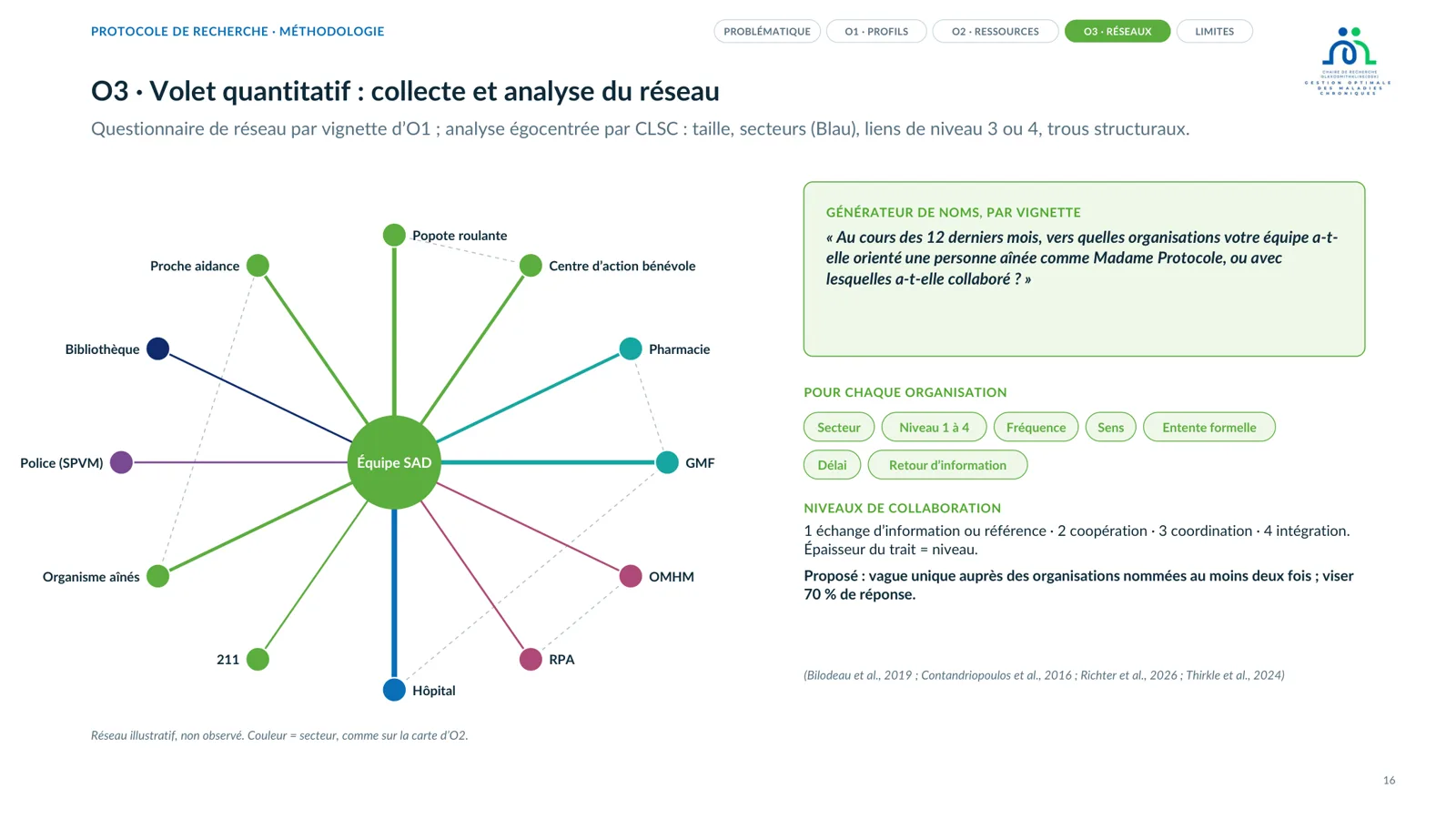
社会网络分析关注行动者之间的关系,而不仅是其个体属性。社会中心取向考察一个有边界群体内的全部联系;自我中心取向则从一名受访者(ego)及其提名的互动对象(alters)出发。在我的博士论文中,网络以每个 CLSC(地方社区服务中心)的居家支持服务(SAD)团队为中心。对每个情景案例,团队列出过去12个月内曾把老年人转介到的、或与之合作过的组织,并标明合作程度,从1(信息交流或转介)到4(整合)。这一申报的网络与211的转介和资源图集相比较,再通过访谈加以解释。

市级健康促进协调的自我中心网络:焦点行动者(ego)位于中心,与其互动对象(alters)相连。
市级健康促进协调的自我中心网络:焦点行动者(ego)位于中心,与其互动对象(alters)相连。 图1,引自 Richter、Mamontova 和 Kühne(2026),BMC Health Services Research,CC BY 4.0
东帝汶27个精神卫生与社会服务机构的社会中心网络,依据一年内的联系频率绘制。
东帝汶27个精神卫生与社会服务机构的社会中心网络,依据一年内的联系频率绘制。 图2,引自 Hall 等(2019),International Journal of Mental Health Systems,CC BY 4.0

制图与地理信息系统

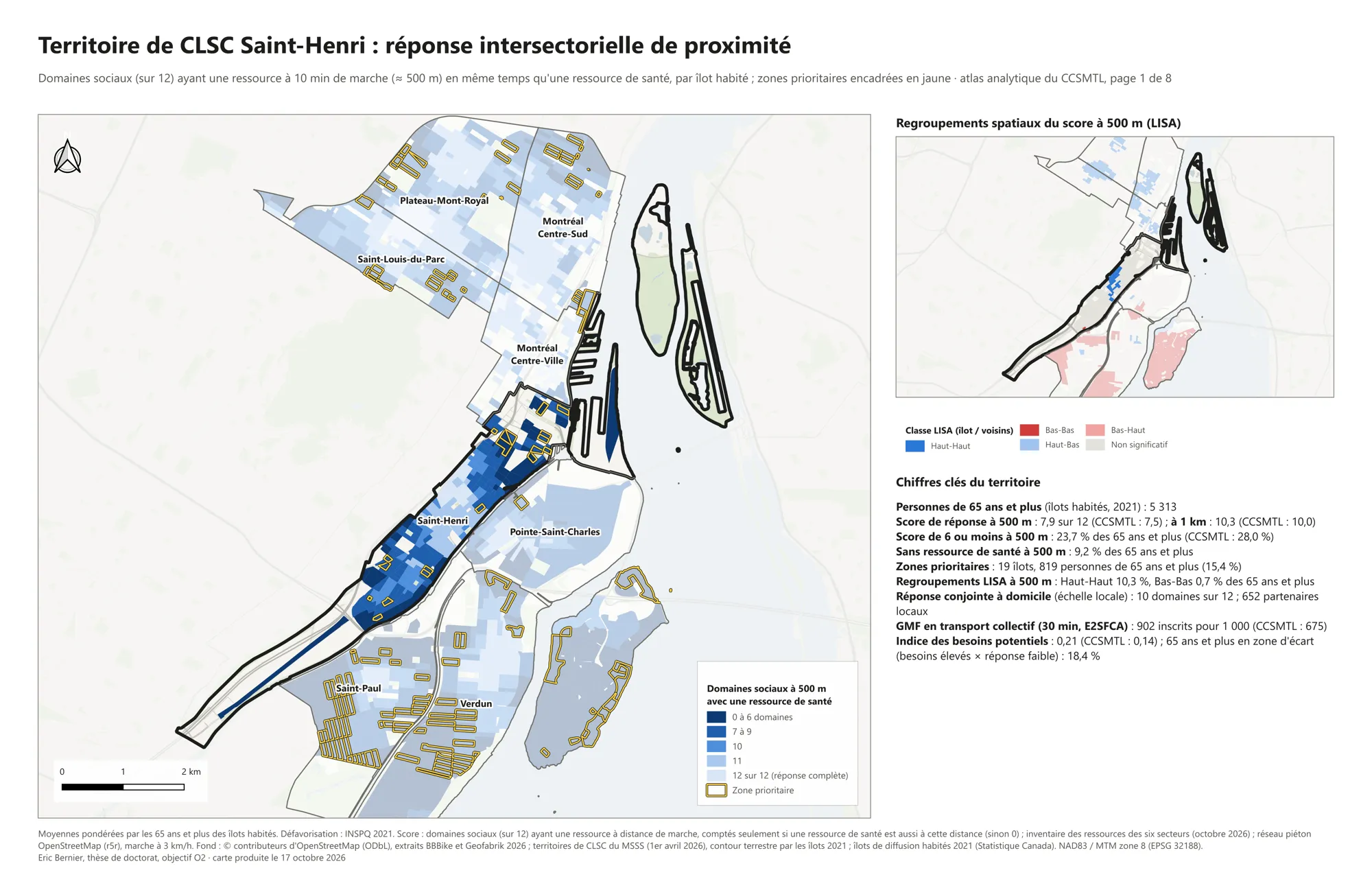
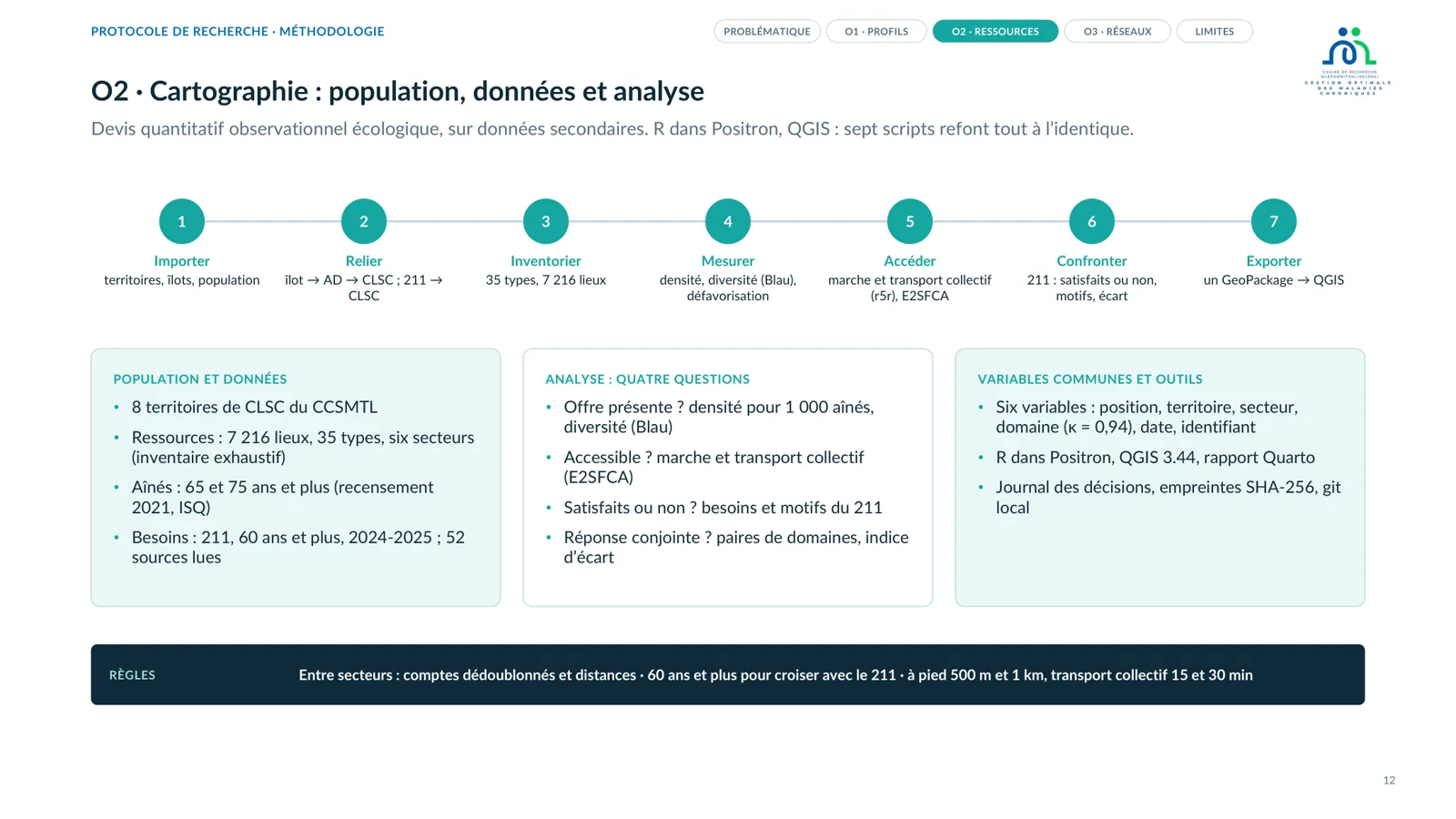
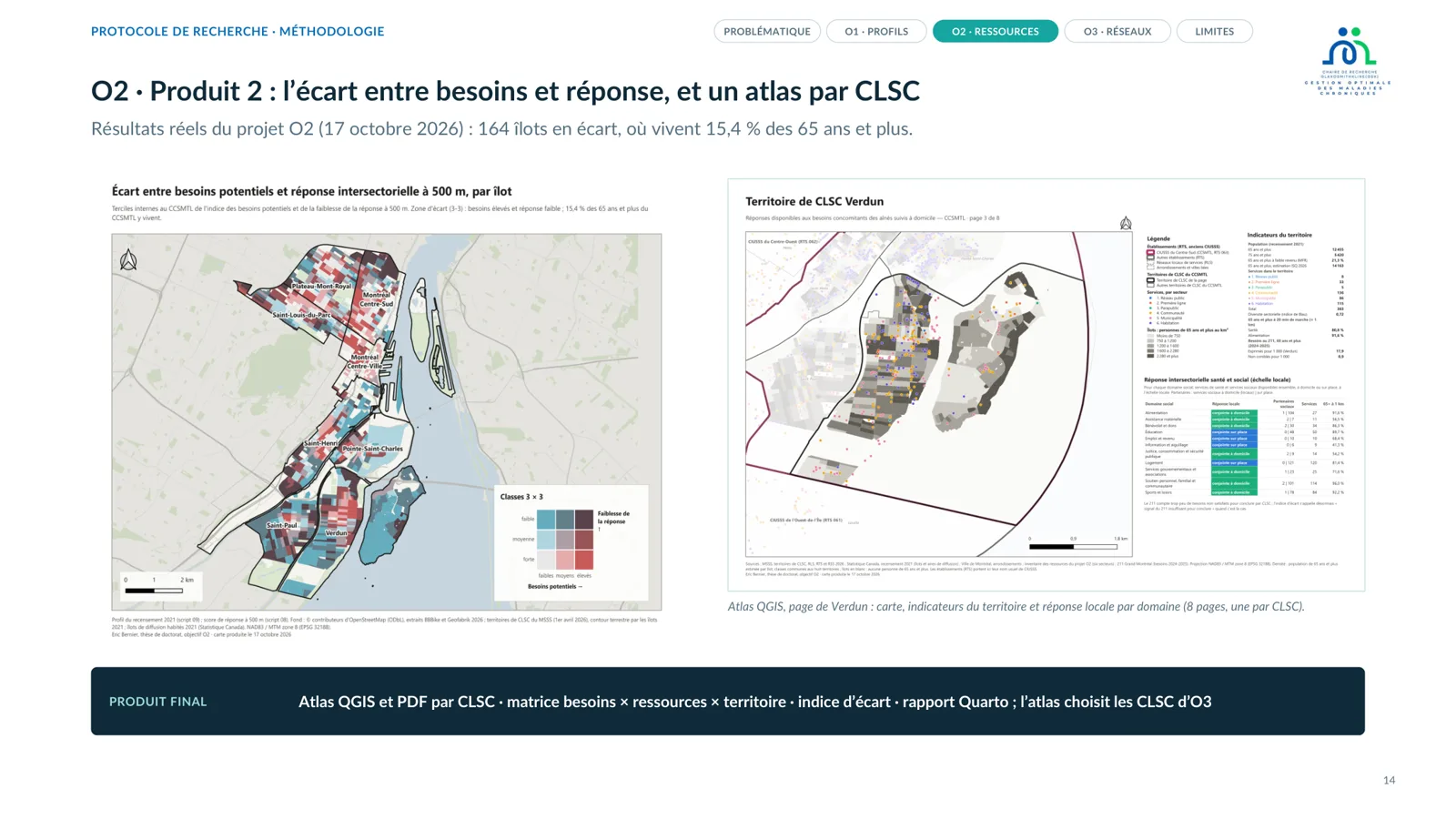
制图与地理信息系统(GIS)将数据与其空间位置相关联,用以描述服务、需求和人口在一定地域内的分布。潜在可及性测度,例如两步移动搜寻法(2SFCA),把服务供给、需求以及二者之间的距离联系起来。我通过日内瓦大学的一门慕课(MOOC)掌握了这一方法的基础。在我的博士论文中,制图即目标 O2:为每个 CLSC 辖区制作资源图集,测量步行和公共交通的 E2SFCA 可及性,并计算需求与供给之间的差距指数。

  • Guagliardo, M. F. (2004). Spatial accessibility of primary care: Concepts, methods and challenges. International Journal of Health Geographics, 3, Article 3. https://doi.org/10.1186/1476-072X-3-3
  • Luo, W., & Wang, F. (2003). Measures of spatial accessibility to health care in a GIS environment: Synthesis and a case study in the Chicago region. Environment and Planning B: Planning and Design, 30(6), 865–884. https://doi.org/10.1068/b29120
  • Ngui, A. N., & Apparicio, P. (2011). Optimizing the two-step floating catchment area method for measuring spatial accessibility to medical clinics in Montreal. BMC Health Services Research, 11, Article 166. https://doi.org/10.1186/1472-6963-11-166
采用2SFCA方法(常规版与优化版)测得的蒙特利尔医疗诊所空间可及性。
采用2SFCA方法(常规版与优化版)测得的蒙特利尔医疗诊所空间可及性。 图3,引自 Ngui 和 Apparicio(2011),BMC Health Services Research,CC BY 2.0
2015年蒙特利尔都会区卫生与社会服务机构的分布,包括 CLSC(图d)。
2015年蒙特利尔都会区卫生与社会服务机构的分布,包括 CLSC(图d)。 图4,引自 Apparicio 等(2017),International Journal of Health Geographics,CC BY 4.0

可重复编程:在 Positron 中使用 R 与 Python,以及命令行(shell)

可重复编程是指在可重新运行、可核查的脚本中完成分析的每一步,从导入数据到生成图表。我在 Posit 的开发环境 Positron 中使用 R 与 Python 编程,并在命令行(shell)中串联各项处理步骤。在 R 中,tidyverse 用于组织数据准备;igraph 与 statnet 用于构建网络并计算中心性、密度与凝聚性;sf 用于处理空间数据。Python 则在数据准备与自动化方面补充这一流程。整个流程在同一个有文档记录的项目中连接网络数据、地域数据与图表。

  • Handcock, M. S., Hunter, D. R., Butts, C. T., Goodreau, S. M., & Morris, M. (2008). statnet: Software tools for the representation, visualization, analysis and simulation of network data. Journal of Statistical Software, 24(1), 1–11. https://doi.org/10.18637/jss.v024.i01
  • Pebesma, E. (2018). Simple features for R: Standardized support for spatial vector data. The R Journal, 10(1), 439–446. https://doi.org/10.32614/RJ-2018-009
  • Wickham, H., Averick, M., Bryan, J., Chang, W., McGowan, L. D., François, R., Grolemund, G., Hayes, A., Henry, L., Hester, J., Kuhn, M., Pedersen, T. L., Miller, E., Bache, S. M., Müller, K., Ooms, J., Robinson, D., Seidel, D. P., Spinu, V., . . . Yutani, H. (2019). Welcome to the tidyverse. Journal of Open Source Software, 4(43), Article 1686. https://doi.org/10.21105/joss.01686
参与预防新发人畜共患病的机构网络,按部门着色;以 igraph 和 statnet 分析,并在 R 中用 ggraph 绘制。
参与预防新发人畜共患病的机构网络,按部门着色;以 igraph 和 statnet 分析,并在 R 中用 ggraph 绘制。 图2,引自 Clifford Astbury 等(2024),Globalization and Health,CC BY 4.0
几内亚和塞拉利昂机构间互动的社会关系图(疟疾与COVID-19),在 R 中用 tidyverse、tidygraph 和 ggraph 绘制。
几内亚和塞拉利昂机构间互动的社会关系图(疟疾与COVID-19),在 R 中用 tidyverse、tidygraph 和 ggraph 绘制。 图1,引自 Feddern 等(2025),PLOS ONE,CC BY 4.0

定性主题分析与定性网络分析

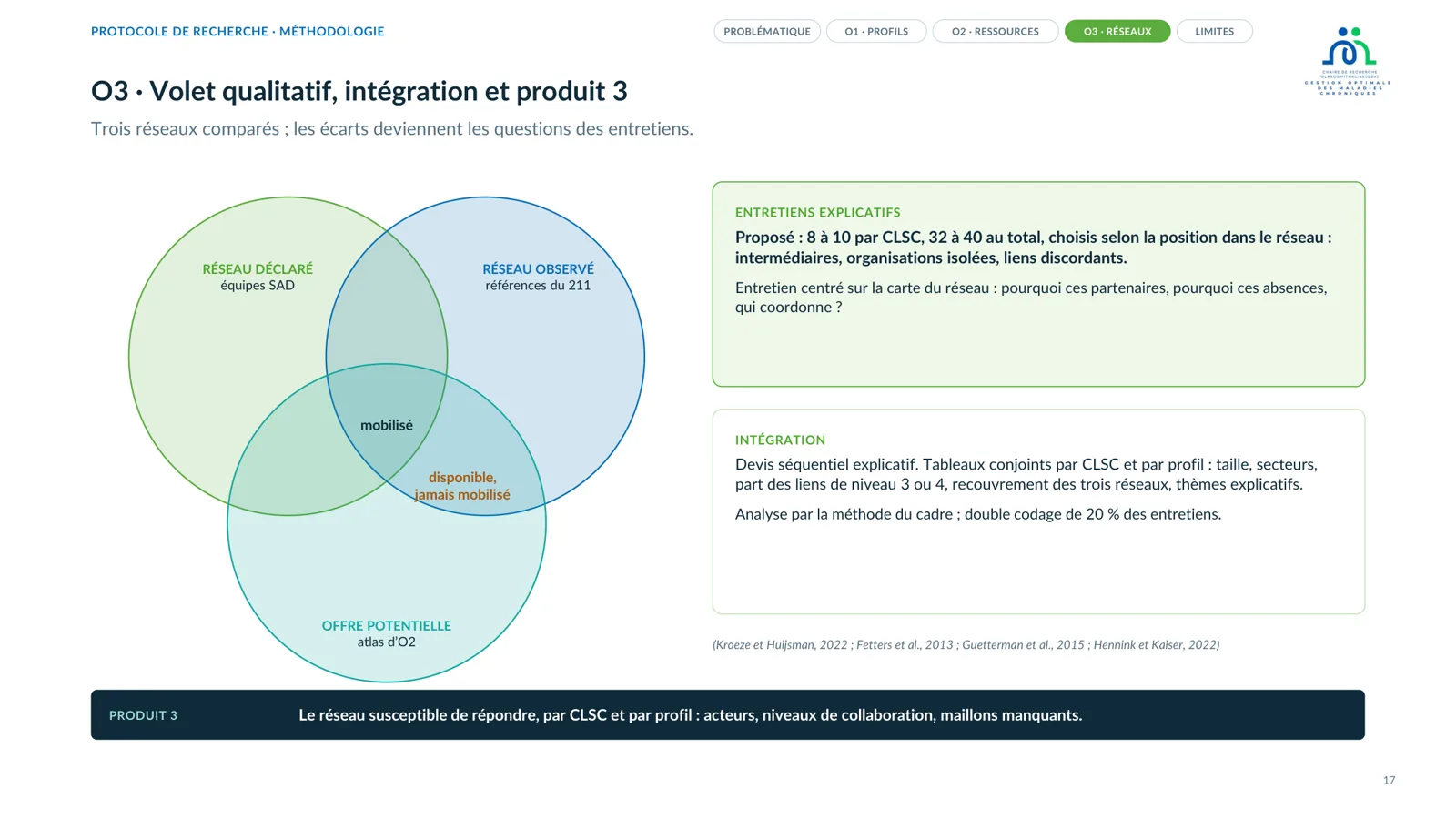
主题分析通过从初始编码到主题界定的迭代过程,在访谈或文献语料中识别、组织并解释意义模式。我使用 NVivo 进行编码,记录编码树、备忘录以及逐步形成的归类。在我的博士论文中,解释性访谈围绕每个 SAD 团队的网络图展开。Framework Method在参与者×主题矩阵中结合演绎与归纳编码,比较部门、网络位置及需求类型。计划在整合定量与定性部分之前,对20%的资料进行双重编码、保留反思日志并向参与者反馈。
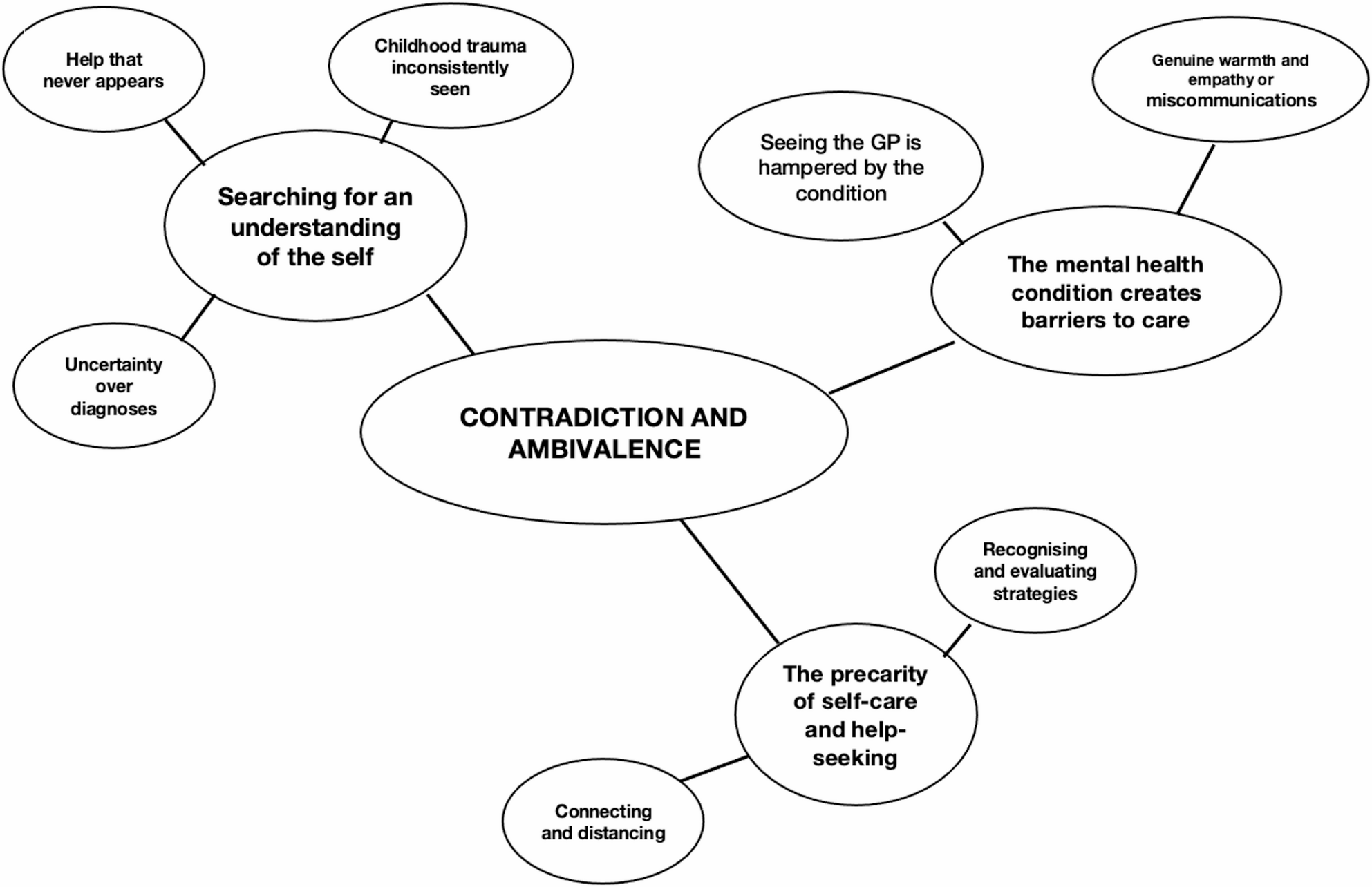
基于 NVivo 编码访谈的反思性主题分析所得主题图,主题为初级卫生保健的可及性。
基于 NVivo 编码访谈的反思性主题分析所得主题图,主题为初级卫生保健的可及性。 图1,引自 Instone 等(2026),BMC Primary Care,CC BY 4.0
访谈中手绘后数字化的网络图,出自对一个跨部门健康促进网络的定性分析。
访谈中手绘后数字化的网络图,出自对一个跨部门健康促进网络的定性分析。 图1,引自 Fleuren、Thiel 和 Frahsa(2021),International Journal of Environmental Research and Public Health,CC BY 4.0

批判性话语分析

我对魁北克医生在第2号法案辩论期间的批判性话语进行了定性分析。目的性语料库包括42份新闻报道与新闻稿(Eureka 数据库,2025年5月至12月),按时间顺序编码,直至编码结构趋于稳定。分析结合了 Fairclough 的三维模型(文本、生产与传播实践、社会政治语境)、框架理论以及叙事角色的分配:受害者、责任者与保护者。每一条引文都可追溯至其来源,分析区分了文本本身所说的内容与其社会学解读。

  • Entman, R. M. (1993). Framing: Toward clarification of a fractured paradigm. Journal of Communication, 43(4), 51–58. https://doi.org/10.1111/j.1460-2466.1993.tb01304.x
  • Fairclough, N. (1995). Critical discourse analysis: The critical study of language. Longman.
  • Hennink, M. M., Kaiser, B. N., & Marconi, V. C. (2017). Code saturation versus meaning saturation: How many interviews are enough? Qualitative Health Research, 27(4), 591–608. https://doi.org/10.1177/1049732316665344
  • Shanahan, E. A., Jones, M. D., & McBeth, M. K. (2018). How to conduct a Narrative Policy Framework study. The Social Science Journal, 55(3), 332–345. https://doi.org/10.1016/j.soscij.2017.12.002
社会实践:社会政治语境话语实践:生产与传播文本
批判性话语分析的三维模型 示意图,依据 Fairclough(1995)

案例研究:在具体背景中理解组织

案例研究深入考察具体情境中的现象,如组织、地区、政策或项目。研究可涉及单案例、多案例或嵌入式分析单元;其优势在于联系现象与背景。

界定与选择
明确分析单位、时间和组织边界,并说明为何选择典型、对照性或尤其具有信息价值的案例。
整合材料
结合访谈、文件、观察和量化数据。先分析各案例;多案例设计再进行跨案例比较。
结论范围
保留证据链、考察竞争性解释并描述背景。可迁移性依赖分析推理,不预设统计代表性。
  1. 界定案例
  2. 整合来源
  3. 分析机制
  4. 讨论可迁移性
在情境中开展调查,明确分析单位与比较逻辑。

定性访谈:经验、实践与行动逻辑

访谈,尤其是半结构式访谈,探索经验、决策和实践的意义。开放式提纲组织主题,同时为追问、意外发现与矛盾保留空间。

目的性抽样
寻找相关且具有差异的观点。依据资料的信息丰富程度、样本特征与对话质量调整招募,而非套用统一样本量。
收集与分析
预试提纲、取得同意,记录访谈条件并安排转录与假名化。将编码与原始片段相联系,例如使用 Framework Method 的矩阵。
反思性与透明度
说明研究者立场、调查关系和解释选择。COREQ 支持透明报告;访谈不能用于估计患病或现象的流行率。
  • Malterud, K., Siersma, V. D., & Guassora, A. D. (2016). Sample size in qualitative interview studies: Guided by information power. Qualitative Health Research, 26(13), 1753–1760. https://doi.org/10.1177/1049732315617444
  • Gale, N. K., Heath, G., Cameron, E., Rashid, S., & Redwood, S. (2013). Using the framework method for the analysis of qualitative data in multi-disciplinary health research. BMC Medical Research Methodology, 13, Article 117. https://doi.org/10.1186/1471-2288-13-117
  • Tong, A., Sainsbury, P., & Craig, J. (2007). Consolidated criteria for reporting qualitative research (COREQ): A 32-item checklist for interviews and focus groups. International Journal for Quality in Health Care, 19(6), 349–357. https://doi.org/10.1093/intqhc/mzm042
  1. 选择观点
  2. 访谈并记录
  3. 编码与解释
  4. 讨论反例
材料在互动中形成;情境与反思性属于分析的一部分。

问卷设计与实施

问卷调查将研究问题转化为可比较的测量,联系目标人群、抽样策略、题目选择及在线、电话或面对面的实施方式。

构建测量
界定概念、选择适当题目并明确参照时期。新量表须考察内容效度、结构与信度;问卷不自动等同于心理测量量表。
预试与实施
使用认知访谈了解题目理解过程,再开展试点。安排无障碍、语言、时长、知情同意、保密及适当提醒。
评估估计质量
记录覆盖、参与、无应答与缺失数据。按设计要求应用权重;大样本本身不能纠正选择偏倚。
  1. 界定与抽样
  2. 构建与预试
  3. 实施与跟踪
  4. 分析质量
质量建设贯穿问卷实施之前、期间和之后。

二次数据分析

二次分析重新利用已有调查、队列、行政或机构数据,回答明确的问题。必须理解这些数据为何、针对谁以及如何产生。

数据适用性
考察覆盖人群、观察单位、时间、变量字典与可比性。区分行政指标与对需求或经验的直接测量。
可复现的准备
记录获准访问、清理、重编码、链接和排除。考虑调查设计与定义变化,并以脚本追踪转换。
偏倚与透明度
考察测量误差、缺失、选择和混杂。RECORD 明确常规健康数据研究的报告要求;数据可用不保证代表性或因果识别。
  • Cheng, H. G., & Phillips, M. R. (2014). Secondary analysis of existing data: Opportunities and implementation. Shanghai Archives of Psychiatry, 26(6), 371–375. https://pmc.ncbi.nlm.nih.gov/articles/PMC4311114/
  • Benchimol, E. I., Smeeth, L., Guttmann, A., Harron, K., Moher, D., Petersen, I., Sørensen, H. T., von Elm, E., Langan, S. M., & RECORD Working Committee. (2015). The REporting of studies Conducted using Observational Routinely-collected health Data (RECORD) Statement. PLOS Medicine, 12(10), Article e1001885. https://doi.org/10.1371/journal.pmed.1001885
  1. 评价适用性
  2. 记录来源
  3. 协调与分析
  4. 检验稳健性
从问题及数据生成条件出发,明确呈现后续转换。

因果推断与准实验评价

因果推断关注干预或暴露相对于明确替代方案的效应。它区分因果问题与观察到的关联,并联系人群、干预、比较、时间与结局。

界定目标效应
明确目标估计量和时间零点,以因果图(DAG)说明假设关系。视问题需要,定义数据能够模拟的目标试验。
选择识别策略
讨论可交换性、正值性与一致性。标准化、加权和其他调整依赖数据;双重差分尤其要求平行趋势假设可信。
考察其他解释
中断时间序列须考虑趋势、季节性、自相关及同期事件。解释应结合敏感性分析与残余混杂的局限。
  • Hernán, M. A., & Robins, J. M. (2020). Causal inference: What if. Chapman & Hall/CRC. https://miguelhernan.org/whatifbook
  • Lopez Bernal, J., Cummins, S., & Gasparrini, A. (2017). Interrupted time series regression for the evaluation of public health interventions: A tutorial. International Journal of Epidemiology, 46(1), 348–355. https://doi.org/10.1093/ije/dyw098
  1. 提出因果效应
  2. 明确假设
  3. 识别与估计
  4. 分析敏感性
因果估计依赖可辩护的设计与假设;统计模型在这一框架内发挥作用。

卫生系统比较分析:MSSD 与 MDSD

比较分析联系治理、融资、资源、服务组织与结果。Carsten Anckar 的研究阐明两种案例选择逻辑:最相似系统设计(MSSD)与最不同系统设计(MDSD)。

MSSD · 最相似系统
比较背景维度相近、研究结局不同的系统,以考察可能解释结果差异的组织或政策因素。
MDSD · 最不同系统
比较背景差异明显、但结局相同的系统,以探索可能促成该结局的共同因素。这些逻辑指导案例选择,并不构成随机化。
保证比较有意义
说明国家或地区选择,协调概念、时期与指标,再分析机制与轨迹。考虑内部差异、改革历史及少量系统推断的局限。
  • Anckar, C. (2008). On the applicability of the most similar systems design and the most different systems design in comparative research. International Journal of Social Research Methodology, 11(5), 389–401. https://doi.org/10.1080/13645570701401552
  • World Health Organization & European Observatory on Health Systems and Policies. (2022). Health system performance assessment: A framework for policy analysis. World Health Organization. https://www.who.int/publications/i/item/9789240042476/
  1. 明确结局
  2. 论证 MSSD 或 MDSD
  3. 协调指标
  4. 比较机制
有目的地选择系统服务于解释性问题,而非仅进行绩效排名。

01.6 · 文献综述 · 2026年10月14日

人工智能:编程、知识生产及其社会影响

本专题结合辅助编程、工具开发,以及对研究、学习和公共卫生的思考,并以有关技术效益、局限及社会变革的科学研究为依据。

01编程与智能体

引导人工智能辅助开发

对话助手提出回答;智能体则可以连续读取文件、修改内容和执行工具。这改变了工作组织方式:需要界定允许的操作、保存记录,并评价最终方案。

从需求到规格说明

明确用户、必要数据、预期功能和无障碍约束。将修改拆分为可理解的单元,有助于讨论方案,并在恢复工作时保持逻辑连续。

项目背景与架构

工具的一致性取决于文件、依赖项、数据结构和已有决策。局部看似合理的代码可能不适合整个项目;助手需要掌握这些背景。

调试、修改与维护

理解错误、复现问题、说明原因并修正相关部分。可维护性与即时运行同样重要:清晰命名、文档、版本记录和撤回修改的能力。

控制智能体的自主性

根据任务的重要性配置访问权限、行动范围和决策节点。直接操作文件、数据或服务的智能体,需要比文字建议更多的监督。

Bengio et al. (2026)

科研代码的可靠性

审视单位、缺失值、数据转换与假设。已知示例、针对性检查和可复现性,可用于评价程序行为及其输出的科学含义。

衡量实际价值

生产率取决于任务、经验和工具。METR 的2025年研究及2026年方法更新提示,应区分主观速度感、质量和实测收益。

Becker et al. (2025) · METR (2026)

生成的代码行数不是良好指标。我关注的是工具是否实用、可理解、易于获取,并能够持续完善。
02.1 · 实施

知识转化与实施

促进知识在个人、实践场域与研究之间流动,进而审视它们实际能够带来哪些改变。

02知识转化与实施

03 · 实施

知识转化与实施

促进知识在个人、实践场域与研究之间流动,进而审视它们实际能够带来哪些改变。

在我的博士论文中,知识动员伴随研究进行:它既不是实施研究,也不是政策评估。

资源

已完成培训MobilizeU,知识动员 · Research Impact Canada 与 York University(约克大学),2026 · 了解更多

五个阶段

知识转化与实施五个阶段

与实践场域共同构建问题

一切始于倾听:识别与相关群体共同探讨其需求和需要指导的决策,然后明确谁参与、何时参与以及其影响力。知识转移计划常常忽视对公众的深入了解(Tchameni Ngamo 等,2016);而知识的综合应用则在问题提出阶段就邀请结果的使用者参与(Jull 等,2017)。尊重、相关性、互惠性和责任感引导着这一初次接触(Kirkness & Barnhardt,1991)。

需求参与

这五个阶段借鉴了“知识到行动”模型(Graham et al., 2006)与 Ward 框架(2017)。

每个领域都将科学文献与我的实践联系起来。

知识动员的八个工作领域科学文献

让知识双向流动

动员,是指将研究中的知识传递到实际环境中,同时也将实际环境和人们的需求传递到研究中。知识向行动的模型区分了知识的产生和其应用的循环:识别问题、将知识适应于具体情境、识别障碍、支持并跟踪其应用(Graham et al., 2006)。五个问题组织了这一过程:转移什么、转移给谁、由谁转移、如何转移以及产生什么效果,而且首先应动员一组证据,而不是单独的研究(Grimshaw et al., 2012)。知识中介为这种联结工作赋予了具体形象(Munerol et al., 2013)。

Graham et al. (2006)Grimshaw et al. (2012)Ward et al. (2012)Munerol et al. (2013)

在我的博士论文中:一项知识动员计划

为何、何事、面向谁、如何

Ward 框架以四个问题构建该计划:在选择“如何”、形式与渠道之前,先明确“何事”“为何”与“面向谁”。

(Ward, 2017)

从知识到行动

“知识到行动”模型为知识的生产、调适、传播与追踪提供框架,但并不声称能确保其被持续采纳。

(Graham et al., 2006)

基于 4R 原则的伙伴关系

尊重、相关性、互惠与责任指导着与患者及实践场域之间的伙伴关系,并以 IRSC(加拿大卫生研究院)的患者参与框架为依据。

(Kirkness & Barnhardt, 1991;IRSC, 2014;Bowen & Graham, 2013)

审议式对话

与 SAD 团队及其合作伙伴开展对话,将轨迹模型和地图转化为契合情境的参考依据,并向参与者反馈。参与情况依据 GRIPP2 进行报告。

(Boyko et al., 2012;Lavis et al., 2009;Staniszewska et al., 2017)

追踪贡献,而非归因

借助四项指标(产出、覆盖范围、吸纳、有据可查的使用)和一份登记册,评估研究的合理贡献,而不将后续变化归因于研究本身。

(Morton, 2015)

实施科学参考框架

CFIR 2.0

审视促进或阻碍实施的情境与决定因素。

(Damschroder et al., 2022)

实施结果

区分可接受性、采纳、适切性、可行性、忠实度、成本、渗透度与可持续性。

(Proctor et al., 2011)

研究影响

影响框架主要描绘的是“去程”,即从研究走向实践;我的工作同样追问“回程”。

(Greenhalgh et al., 2016;Brownson et al., 2026)

贡献分析方法

将产出与使用相联系,再与有据可查的变化相联系,同时审视其他可能的影响因素。

(Morton, 2015;Bayley & Phipps, 2019)

共同生产与整合式知识转化

共同生产的机制取决于基础设施、角色的清晰度与权力的共享;其成本同样不容忽视。

(Graham et al., 2019;Kothari et al., 2025;Oliver et al., 2019)

批判性实施科学

对框架进行理论化,而不是把它们当作核查清单来套用。

(Kislov et al., 2019)

参与与审议

设计并评估能够留下其影响痕迹的公众参与过程。

(Abelson et al., 2003;OCDE, 2022)

为何需要实施

证明一项创新有效,并不足以保证它会被采纳。

(Bauer & Kirchner, 2020)

实施策略

ERIC 汇编提供了一套涵盖 73 项策略的共同词汇,用于描述、选择和报告所采用的策略。

(Powell et al., 2015)

复杂干预

实施成为一个独立的阶段,以情境、项目理论与利益相关方为核心。

(Skivington et al., 2021)

面向老年人的实施

在魁北克,一项促进老年人社会参与的公民陪伴项目的实施,揭示了哪些条件至关重要。

(Gobeil et al., 2023)

参考文献(APA)
  1. Abelson, J., Forest, P.-G., Eyles, J., Smith, P., Martin, E., & Gauvin, F.-P. (2003). Deliberations about deliberative methods: Issues in the design and evaluation of public participation processes. Social Science & Medicine, 57(2), 239–251. https://doi.org/10.1016/S0277-9536(02)00343-X
  2. Barwick, M., Phipps, D., Myers, G., Johnny, M., & Coriandoli, R. (2014). Knowledge translation and strategic communications: Unpacking differences and similarities for scholarly and research communications. Scholarly and Research Communication, 5(3). https://doi.org/10.22230/src.2014v5n3a175
  3. Bauer, M. S., & Kirchner, J. (2020). Implementation science: What is it and why should I care? Psychiatry Research, 283, Article 112376. https://doi.org/10.1016/j.psychres.2019.04.025
  4. Bayley, J. E., & Phipps, D. (2019). Building the concept of research impact literacy. Evidence & Policy, 15(4), 597–606. https://doi.org/10.1332/174426417X15034894876108
  5. Beaulieu, M.-D. (2016). Construction et hiérarchisation des données probantes en santé : savoirs scientifiques, expérientiels et contextuels. Revue du CREMIS, 9(2), 9-15. https://cremis.ca/publications/articles-et-medias/construction-et-hierarchisation-des-donnees-probantes-en-sante-savoirs-scientifiques-experientiels-et-contextuels/
  6. Berrada, M. (2026, 2 juin). Recherche et politiques publiques : comment mieux faire circuler les savoirs ? Affaires universitaires. https://www.affairesuniversitaires.ca/actualites/recherche-et-politiques-publiques-comment-mieux-faire-circuler-les-savoirs/
  7. Boaz, A., Hanney, S., Borst, R., O’Shea, A., & Kok, M. (2018). How to engage stakeholders in research: Design principles to support improvement. Health Research Policy and Systems, 16, Article 60. https://doi.org/10.1186/s12961-018-0337-6
  8. Bowen, S. J., & Graham, I. D. (2013). From knowledge translation to engaged scholarship: Promoting research relevance and utilization. Archives of Physical Medicine and Rehabilitation, 94(1 Suppl.), S3–S8. https://doi.org/10.1016/j.apmr.2012.04.037
  9. Boyko, J. A., Lavis, J. N., Abelson, J., Dobbins, M., & Carter, N. (2012). Deliberative dialogues as a mechanism for knowledge translation and exchange in health systems decision-making. Social Science & Medicine, 75(11), 1938–1945. https://doi.org/10.1016/j.socscimed.2012.06.016
  10. Breton, H. (2025). Savoirs expérientiels en santé : revue systématique de littérature. Santé Publique, 37(3), 241-251. https://doi.org/10.3917/spub.255.0241
  11. Brownson, R. C., Iwelunmor, J., Odeny, T. A., Proctor, E. K., & Geng, E. H. (2026). So what? Elevating the impact of implementation science. Implementation Science Communications, 7, 2. https://doi.org/10.1186/s43058-025-00831-9
  12. Bulloch, M. N. (Animatrice). (2024, 17 juillet). SCCM Pod-520: Implementation science: From evidence to practice [Balado]. Dans SCCM Podcast. Society of Critical Care Medicine. https://www.sccm.org/communications/sccm-podcast/sccm-podcast-all-episodes/sccm-pod-520-implementation-science-from-evidence-to-practice
  13. Centre de collaboration nationale des méthodes et outils. (2016, 4 juillet). CCNMO - Prise de décisions fondée sur des données probantes [Vidéo]. YouTube. https://www.youtube.com/watch?v=XrZjc3Flrz8
  14. Courcy, I., Bureau, A., & Grenier, G. (2022). L’art visuel comme outil de pratique en mobilisation et transfert de connaissances : retour sur un projet de cocréation d’une murale alliant la recherche, l’art et des savoirs expérientiels. Revue francophone de recherche sur le transfert et l’utilisation des connaissances, 6(3). https://doi.org/10.18166/tuc.2022.6.3.25
  15. Crowley, D. M., & Scott, J. T. (2023). To support evidence-based policymaking, bring researchers and policymakers together. Issues in Science and Technology, 39(2), 31-35. https://issues.org/evidence-based-policymaking-researchers-policymakers-collaborate-crowley-scott/
  16. Dagenais, C., Hot, A., & Ridde, V. (2023, 21 février). Communiquer efficacement les connaissances scientifiques permet de sauver des vies. The Conversation. https://theconversation.com/communiquer-efficacement-les-connaissances-scientifiques-permet-de-sauver-des-vies-197191
  17. Damschroder, L. J., Reardon, C. M., Widerquist, M. A. O., & Lowery, J. (2022). The updated Consolidated Framework for Implementation Research based on user feedback. Implementation Science, 17, 75. https://doi.org/10.1186/s13012-022-01245-0
  18. Dancause, L. (2023). Guide pédagogique sur la mobilisation des connaissances (L. Cardinal & J. Luckerhoff, dir.). Laboratoire interdisciplinaire de recherche sur l’enseignement supérieur. https://www.erudit.org/fr/livres/hors-collection/guide-pedagogique-sur-la-mobilisation-des-connaissances/
  19. David, G., & Grégoire, A. (2018). Guide pratique – Stratégie de partenariat avec les patients et le public en recherche. Unité de soutien SRAP du Québec. https://ceppp.ca/wp-content/uploads/2021/01/USSQ_Guide-pratique-SPPP-en-recherche_V1.pdf
  20. Diany, R., Fitzgibbon-Collins, L. K., & Gagliano Taliun, S. A. (2025). Ten simple rules for getting started with knowledge mobilization. PLOS Computational Biology, 21(4), e1012888. https://doi.org/10.1371/journal.pcbi.1012888
  21. Équipe RENARD. (2023, 26 mai). Ancrage historique et évolution du courtage de connaissances [Vidéo]. YouTube. https://www.youtube.com/watch?v=3uucW5ZOp-g
  22. Équipe RENARD. (2023, 29 mai). Les compétences clés pour agir en courtage de connaissances [Vidéo]. YouTube. https://www.youtube.com/watch?v=RGVmhf9Wyzo
  23. Esmail, R., Hanson, H. M., Holroyd-Leduc, J., Brown, S., Strifler, L., Straus, S. E., Niven, D. J., & Clement, F. M. (2020). A scoping review of full-spectrum knowledge translation theories, models, and frameworks. Implementation Science, 15, Article 11. https://doi.org/10.1186/s13012-020-0964-5
  24. Fillol, A., Traverson, L., Zitti, T., Bars, G., Minssieux, N., Hot, A., Dagenais, C., & Ridde, V. (2026). Évaluation d’une intervention de courtage de connaissances à l’Agence régionale de santé Île-de-France. Santé Publique, 38(1), 15-34. https://doi.org/10.3917/spub.261.0015
  25. Gainforth, H. L., Hoekstra, F., McKay, R., McBride, C. B., Sweet, S. N., Martin Ginis, K. A., Anderson, K., Chernesky, J., Clarke, T., Forwell, S., Maffin, J., McPhail, L. T., Mortenson, W. B., Scarrow, G., Schaefer, L., Sibley, K. M., Athanasopoulos, P., & Willms, R. (2021). Integrated knowledge translation guiding principles for conducting and disseminating spinal cord injury research in partnership. Archives of Physical Medicine and Rehabilitation, 102(4), 656-663. https://doi.org/10.1016/j.apmr.2020.09.393
  26. Georgalakis, J. (2023, 16 janvier). We need to talk about equity in knowledge mobilisation. Transforming Evidence. https://transforming-evidence.org/blog/we-need-to-talk-about-equity-in-knowledge-mobilisation
  27. Gervais, M.-J., Souffez, K., & Ziam, S. (2016). Quel impact avons-nous ? Vers l’élaboration d’un cadre pour rendre visibles les retombées du transfert des connaissances. Revue francophone de recherche sur le transfert et l’utilisation des connaissances, 1(1). https://doi.org/10.18166/tuc.2016.1.1.5
  28. Gobeil, J., Gaumond, V., Germain, S., Vézina, A., Duguay, A.-M., & Levasseur, M. (2023). Implantation de l’Accompagnement-citoyen personnalisé d’intégration communautaire (APIC) : vers l’optimisation de la mise en œuvre de cette approche novatrice visant la participation sociale des aînés. Canadian Journal on Aging / La Revue canadienne du vieillissement, 42(4), 551-564. https://doi.org/10.1017/S0714980823000132
  29. Gobel, U. (2021, 8 février). Knowledge mobilization will help Canada face the next major challenge. Policy Options. https://policyoptions.irpp.org/magazines/february-2021/knowledge-mobilization-will-help-canada-face-the-next-major-challenge/
  30. Graham, I. D., Logan, J., Harrison, M. B., Straus, S. E., Tetroe, J., Caswell, W., & Robinson, N. (2006). Lost in knowledge translation: Time for a map? Journal of Continuing Education in the Health Professions, 26(1), 13–24. https://doi.org/10.1002/chp.47
  31. Graham, I. D., McCutcheon, C., & Kothari, A. (2019). Exploring the frontiers of research co-production: The Integrated Knowledge Translation Research Network concept papers. Health Research Policy and Systems, 17, 88. https://doi.org/10.1186/s12961-019-0501-7
  32. Greenhalgh, T., Hinton, L., Finlay, T., Macfarlane, A., Fahy, N., Clyde, B., & Chant, A. (2019). Frameworks for supporting patient and public involvement in research: Systematic review and co-design pilot. Health Expectations, 22(4), 785-801. https://doi.org/10.1111/hex.12888
  33. Greenhalgh, T., Raftery, J., Hanney, S., & Glover, M. (2016). Research impact: A narrative review. BMC Medicine, 14, 78. https://doi.org/10.1186/s12916-016-0620-8
  34. Grimshaw, J. M., Eccles, M. P., Lavis, J. N., Hill, S. J., & Squires, J. E. (2012). Knowledge translation of research findings. Implementation Science, 7, Article 50. https://doi.org/10.1186/1748-5908-7-50
  35. Harvey, G., & Kitson, A. (2016). PARIHS revisited: From heuristic to integrated framework for the successful implementation of knowledge into practice. Implementation Science, 11, Article 33. https://doi.org/10.1186/s13012-016-0398-2
  36. Hoekstra, F., Mrklas, K. J., Khan, M., McKay, R. C., Vis-Dunbar, M., Sibley, K. M., Nguyen, T., Graham, I. D., SCI Guiding Principles Consensus Panel, & Gainforth, H. L. (2020). A review of reviews on principles, strategies, outcomes and impacts of research partnerships approaches: A first step in synthesising the research partnership literature. Health Research Policy and Systems, 18, Article 51. https://doi.org/10.1186/s12961-020-0544-9
  37. Institut du Nouveau Monde. (2026, 31 mars). Quand l’expertise académique rencontre le vécu du terrain (Épisode 2) [Balado]. Dans Le Réverbère : mini-série sur la science citoyenne. YouTube. https://www.youtube.com/watch?v=J6gVGWA_yhc
  38. Instituts de recherche en santé du Canada. (2012). Guide de planification de l’application des connaissances aux IRSC : approches intégrées et de fin de subvention. https://irsc-cihr.gc.ca/f/documents/kt_lm_ktplan-fr.pdf
  39. Instituts de recherche en santé du Canada. (2014). Cadre d’engagement des patients de la Stratégie de recherche axée sur le patient. https://cihr-irsc.gc.ca/f/48413.html
  40. Jabet, C., & Petitgand, C. (2022, 21 juillet). Au-delà de l’acceptabilité sociale, ouvrir le dialogue pour favoriser la participation citoyenne au débat sur l’utilisation des données de santé. Fonds de recherche du Québec. https://frq.gouv.qc.ca/ouvrir-le-dialogue-pour-favoriser-la-participation-citoyenne/
  41. Jull, J., Giles, A., & Graham, I. D. (2017). Community-based participatory research and integrated knowledge translation: Advancing the co-creation of knowledge. Implementation Science, 12, Article 150. https://doi.org/10.1186/s13012-017-0696-3
  42. Kirkness, V. J., & Barnhardt, R. (1991). First Nations and higher education: The four R’s—Respect, relevance, reciprocity, responsibility. Journal of American Indian Education, 30(3), 1–15.
  43. Kislov, R., Pope, C., Martin, G. P., & Wilson, P. M. (2019). Harnessing the power of theorising in implementation science. Implementation Science, 14, 103. https://doi.org/10.1186/s13012-019-0957-4
  44. Kothari, A., Sibbald, S. L., McCutcheon, C., Berta, W., Urquhart, R., Horsley, T., Comer, L., & Graham, I. D. (2025). How does integrated knowledge translation work? A realist review. Health Research Policy and Systems, 23, 102. https://doi.org/10.1186/s12961-025-01374-0
  45. Kwan, B. M., Brownson, R. C., Glasgow, R. E., Morrato, E. H., & Luke, D. A. (2022). Designing for dissemination and sustainability to promote equitable impacts on health. Annual Review of Public Health, 43, 331-353. https://doi.org/10.1146/annurev-publhealth-052220-112457
  46. Lavis, J. N., Boyko, J. A., Oxman, A. D., Lewin, S., & Fretheim, A. (2009). SUPPORT Tools for evidence-informed health Policymaking (STP) 14: Organising and using policy dialogues to support evidence-informed policymaking. Health Research Policy and Systems, 7(Suppl. 1), S14. https://doi.org/10.1186/1478-4505-7-S1-S14
  47. Lemire, N., Souffez, K., & Laurendeau, M.-C. (2009). Animer un processus de transfert des connaissances : bilan des connaissances et outil d’animation. Institut national de santé publique du Québec. https://www.inspq.qc.ca/publications/1012
  48. Les humains derrière la recherche en soins palliatifs. (2025, 13 novembre). Le pont entre la recherche et le terrain [Balado]. Apple Podcasts. https://podcasts.apple.com/ca/podcast/le-pont-entre-la-recherche-et-le-terrain/id1608211841?i=1000736634362
  49. Lomas, J. (2007). The in-between world of knowledge brokering. BMJ, 334(7585), 129-132. https://doi.org/10.1136/bmj.39038.593380.AE
  50. Massuard, M. (2023). Guide pour accompagner l’implantation de pratiques prometteuses dans un établissement : soutien à l’implantation de pratiques prometteuses et au transfert de connaissances dans le réseau de la santé et des services sociaux (J. Lane, dir.). Ministère de la Santé et des Services sociaux. https://publications.msss.gouv.qc.ca/msss/fichiers/2023/23-516-04W.pdf
  51. Mayne, J. (2012). Contribution analysis: Coming of age? Evaluation, 18(3), 270-280. https://doi.org/10.1177/1356389012451663
  52. Morton Ninomiya, M. E., Maddox, R., Brascoupé, S., Robinson, N., Atkinson, D., Firestone, M., Ziegler, C., & Smylie, J. (2022). Knowledge translation approaches and practices in Indigenous health research: A systematic review. Social Science & Medicine, 301, Article 114898. https://doi.org/10.1016/j.socscimed.2022.114898
  53. Morton, S. (2015). Progressing research impact assessment: A “contributions” approach. Research Evaluation, 24(4), 405–419. https://doi.org/10.1093/reseval/rvv016
  54. Munerol, L., Cambon, L., & Alla, F. (2013). Le courtage en connaissances, définition et mise en œuvre : une revue de la littérature. Santé Publique, 25(5), 587-597. https://doi.org/10.3917/spub.135.0587
  55. NCI Scientific Events and Resources. (2022, 23 février). TIDIRC: Introduction to dissemination & implementation science [Vidéo]. YouTube. https://www.youtube.com/watch?v=DO2tv7DqL3w
  56. Nilsen, P. (2015). Making sense of implementation theories, models and frameworks. Implementation Science, 10, Article 53. https://doi.org/10.1186/s13012-015-0242-0
  57. OECD. (2022). OECD guidelines for citizen participation processes. OECD Publishing. https://doi.org/10.1787/f765caf6-en
  58. Oliver, K., & Cairney, P. (2019). The dos and don’ts of influencing policy: A systematic review of advice to academics. Palgrave Communications, 5, Article 21. https://doi.org/10.1057/s41599-019-0232-y
  59. Oliver, K., Kothari, A., & Mays, N. (2019). The dark side of coproduction: Do the costs outweigh the benefits for health research? Health Research Policy and Systems, 17, 33. https://doi.org/10.1186/s12961-019-0432-3
  60. Oliver, K., Malin, J., Akerlof, K. L., Day, E., Grant, S., McGill, E., Lorenc, T., Martin, P., Lam, J., Williamson, L. E., Mouthaan, M., Pleguezuelo, V. C., Iqbal, S., Jaques, L., Nyanchoka, M., Cesar Alejandre, J., Lane, L., Persson, E., Forde, H., . . . Falconer, J. (2026). What factors influence evidence use in policy? An updated systematic map. Humanities and Social Sciences Communications. Publication en ligne anticipée. https://doi.org/10.1057/s41599-026-08391-6
  61. Plamondon, K. M., Caxaj, C. S., Graham, I. D., & Bottorff, J. L. (2019). Connecting knowledge with action for health equity: A critical interpretive synthesis of promising practices. International Journal for Equity in Health, 18, Article 202. https://doi.org/10.1186/s12939-019-1108-x
  62. Plouffe, L. (2015, 20 novembre). Les retombées vers les milieux : dans quelle mesure l’évaluation du transfert des connaissances est-elle possible? [Vidéo]. Institut de recherche Robert-Sauvé en santé et en sécurité du travail. https://www.irsst.qc.ca/publications-et-outils/video/i/100291/n/les-retombees-vers-les-milieux-dans-quelle-mesure-l-evaluation-du-transfert-des-connaissances-est-elle-possible-
  63. Pomey, M.-P., Flora, L., Karazivan, P., Dumez, V., Lebel, P., Vanier, M.-C., Débarges, B., Clavel, N., & Jouet, E. (2015). Le « Montreal model » : enjeux du partenariat relationnel entre patients et professionnels de la santé. Santé Publique, 27(1, suppl.), S41-S50. https://doi.org/10.3917/spub.150.0041
  64. Powell, B. J., Waltz, T. J., Chinman, M. J., Damschroder, L. J., Smith, J. L., Matthieu, M. M., Proctor, E. K., & Kirchner, J. E. (2015). A refined compilation of implementation strategies: Results from the Expert Recommendations for Implementing Change (ERIC) project. Implementation Science, 10, Article 21. https://doi.org/10.1186/s13012-015-0209-1
  65. Proctor, E., Silmere, H., Raghavan, R., Hovmand, P., Aarons, G., Bunger, A., Griffey, R., & Hensley, M. (2011). Outcomes for implementation research: Conceptual distinctions, measurement challenges, and research agenda. Administration and Policy in Mental Health and Mental Health Services Research, 38(2), 65–76. https://doi.org/10.1007/s10488-010-0319-7
  66. Pullmann, M., & King, K. (Animateurs). (2024, 8 juin). Season 2, Ep 1: David Chambers [Balado]. Dans That Implementation Science Podcast. Podbean. https://thatimplementationsciencepodcast.podbean.com/e/season-2-ep-1-david-chambers/
  67. Ridde, V., Hot, A., & Dagenais, C. (2025, 16 février). Pour mieux communiquer la science, commençons par bien choisir nos mots. The Conversation. https://theconversation.com/pour-mieux-communiquer-la-science-commencons-par-bien-choisir-nos-mots-247661
  68. Skipper, Y., & Pepler, D. J. (2020). Knowledge mobilization: Stepping into interdependent and relational space using co-creation. Action Research. Publication anticipée en ligne. https://doi.org/10.1177/1476750320960810
  69. Skivington, K., Matthews, L., Simpson, S. A., Craig, P., Baird, J., Blazeby, J. M., Boyd, K. A., Craig, N., French, D. P., McIntosh, E., Petticrew, M., Rycroft-Malone, J., White, M., & Moore, L. (2021). A new framework for developing and evaluating complex interventions: Update of Medical Research Council guidance. BMJ, 374, Article n2061. https://doi.org/10.1136/bmj.n2061
  70. Souffez, K., & Laurendeau, M.-C. (s. d.). Outil pour soutenir l’élaboration d’un plan de transfert des connaissances. Institut national de santé publique du Québec. https://www.inspq.qc.ca/sites/default/files/publications/outil_pour_soutenir_l_elaboration_d_un_plan_de_transfert_des_connaissances.pdf
  71. Staniszewska, S., Brett, J., Simera, I., Seers, K., Mockford, C., Goodlad, S., Altman, D. G., Moher, D., Barber, R., Denegri, S., Entwistle, A., Littlejohns, P., Morris, C., Suleman, R., Thomas, V., & Tysall, C. (2017). GRIPP2 reporting checklists: Tools to improve reporting of patient and public involvement in research. BMJ, 358, j3453. https://doi.org/10.1136/bmj.j3453
  72. Stoll, M., Kerwer, M., Lieb, K., & Chasiotis, A. (2022). Plain language summaries: A systematic review of theory, guidelines and empirical research. PLOS ONE, 17(6), Article e0268789. https://doi.org/10.1371/journal.pone.0268789
  73. Tchameni Ngamo, S., Souffez, K., Lord, C., & Dagenais, C. (2016). Do knowledge translation (KT) plans help to structure KT practices? Health Research Policy and Systems, 14, Article 46. https://doi.org/10.1186/s12961-016-0118-z
  74. Unité de soutien SSA Québec. (2025, 21 février). Expériences du midi: Recherche en partenariat avec une citoyenne-chercheuse [Vidéo]. YouTube. https://www.youtube.com/watch?v=TNwIcNyGjwY
  75. Villeneuve, V., & Tousignant, C. (Animatrices). (2024, 30 septembre). Patient partenaire : des alliés pour la recherche (Épisode 23) [Balado]. Dans Des femmes comme vous. Les Radieuses Magazine. https://www.youtube.com/watch?v=27KRzWNoxAA
  76. Ward, V. (2017). Why, whose, what and how? A framework for knowledge mobilisers. Evidence & Policy, 13(3), 477–497. https://doi.org/10.1332/174426416X14634763278725
  77. Ward, V., Smith, S., House, A., & Hamer, S. (2012). Exploring knowledge exchange: A useful framework for practice and policy. Social Science & Medicine, 74(3), 297-304. https://doi.org/10.1016/j.socscimed.2011.09.021
  78. Ziam, S., Lanoue, S., McSween-Cadieux, E., Gervais, M.-J., Lane, J., Gaid, D., Chouinard, L. J., Dagenais, C., Ridde, V., Jean, E., Fleury, F. C., Hong, Q. N., & Prigent, O. (2024). A scoping review of theories, models and frameworks used or proposed to evaluate knowledge mobilization strategies. Health Research Policy and Systems, 22, Article 8. https://doi.org/10.1186/s12961-023-01090-7

02.2 · 知识传递

“与人们一起做”,而不是“替人们做”

十六个概念,帮助理解人的处境、知识生产与系统变革之间的联系。每个概念都包含定义、与我工作取向的联系,以及采用 APA 格式的科学或机构文献。

01人与行动能力

人与行动能力

自我决定

成为自己生活的行动主体:做出选择和决定,追求对自己有意义的目标。这需要真实的选择机会、对个人偏好的认可,以及符合其能力和处境的支持。

在我的工作取向中

在教育支持及居住地点选择的思考中,支持个人的偏好与行动机会。

进一步区分. Wehmeyer 的功能模型描述自主决定的行为;Ryan 和 Deci 的理论关注动机,以及自主、胜任和归属的基本需要。

参考文献(APA)
  1. Lachapelle, Y., Wehmeyer, M. L., Haelewyck, M.-C., Courbois, Y., Keith, K. D., Schalock, R., Verdugo, M. A., & Walsh, P. N. (2005). The relationship between quality of life and self-determination: An international study. Journal of Intellectual Disability Research, 49(10), 740–744. https://doi.org/10.1111/j.1365-2788.2005.00743.x
  2. Ryan, R. M., & Deci, E. L. (2000). Self-determination theory and the facilitation of intrinsic motivation, social development, and well-being. American Psychologist, 55(1), 68–78. https://doi.org/10.1037/0003-066X.55.1.68
  3. Wehmeyer, M. L. (2005). Self-determination and individuals with severe disabilities: Re-examining meanings and misinterpretations. Research and Practice for Persons with Severe Disabilities, 30(3), 113–120. https://doi.org/10.2511/rpsd.30.3.113

赋能与行动能力

增强个人或群体针对其所重视的事物采取行动的真实可能性。这一过程涉及技能、资源、权利、认可,以及进入决策空间的机会。

在我的工作取向中

设计保留使用者选择权的工具,并审视限制这些选择的社会与组织障碍。

进一步区分. 行动能力包含个人、集体与结构层面;获取资源与个人倾向同样重要。

参考文献(APA)
  1. Le Bossé, Y. (2003). De l’« habilitation » au « pouvoir d’agir » : vers une appréhension plus circonscrite de la notion d’empowerment. Nouvelles pratiques sociales, 16(2), 30–51. https://doi.org/10.7202/009841ar
  2. Rappaport, J. (1987). Terms of empowerment/exemplars of prevention: Toward a theory for community psychology. American Journal of Community Psychology, 15(2), 121–148. https://doi.org/10.1007/BF00919275

积极参与

让人们参与与自身有关的问题和决策,并提供贡献所需的条件:易于理解的信息、时间、无障碍条件及对其贡献的认可。参与者的影响可以涵盖需求、方案、选择与评估。

在我的工作取向中

在伙伴合作中,说明谁参与、何时参与,以及其贡献如何影响决策。

进一步区分. 征询意见、合作和共同决策具有不同程度的影响力。明确这种影响,有助于判断参与的实际范围。

参考文献(APA)
  1. Arnstein, S. R. (1969). A ladder of citizen participation. Journal of the American Institute of Planners, 35(4), 216–224. https://doi.org/10.1080/01944366908977225
  2. Carman, K. L., Dardess, P., Maurer, M., Sofaer, S., Adams, K., Bechtel, C., & Sweeney, J. (2013). Patient and family engagement: A framework for understanding the elements and developing interventions and policies. Health Affairs, 32(2), 223–231. https://doi.org/10.1377/hlthaff.2012.1133

公平

在考虑需求和障碍的基础上,创造更公正的资源获取、参与及健康条件。公平关注阻碍个人发挥能力、实现意愿的可避免且不公正的劣势。

在我的工作取向中

在我的价值观与公共卫生思考中,关注使真实选择成为可能的社会条件和支持。

进一步区分. 为了让每个人发挥能力并实现选择,可能需要不同形式的支持。

参考文献(APA)
  1. Braveman, P., & Gruskin, S. (2003). Defining equity in health. Journal of Epidemiology & Community Health, 57(4), 254–258. https://doi.org/10.1136/jech.57.4.254
  2. World Health Organization. (2024). Achieving well-being: A global framework for integrating well-being into public health utilizing a health promotion approach. https://iris.who.int/handle/10665/376200

02.3 · 教学

为理解、独立判断与共同行动而教学

我的学术志向延续了特殊教育工作经历中的一个核心问题:如何创造条件,让一个人发展自身能力、运用判断力并参与集体行动?在公共卫生领域,这个问题连接着扎实的知识、对人类经验的关注以及决策责任。我希望将其作为教学的主线。

01教学理念

培养能够理解处境并参与其中的人

知识带来理解与行动的能力

大学教学需要超越对供学生复述的内容进行编排,还应帮助学生接触严谨的知识、知识的历史以及讨论其有效性的方法。我希望学生能够解释一个结论如何产生、能够支持什么判断,以及仍存在哪些不确定性。当一个概念改变了对具体处境的理解,它才真正发挥教育作用:例如识别社会决定因素、揭示组织选择,或者解释同一干预为何对不同的人产生不同影响。

借鉴 Biesta 对资格培养、社会化和主体化的区分,我认为教学承担三项相互联系的责任:传授知识与能力,帮助学生进入实践共同体,并支持其作为主体形成自身立场。培养胜任的专业人员,也意味着使其能够审视所在领域的规范、论证异议并对行动的后果负责。

让推理过程可理解的教学权威

我的职责应当是组织学习进程、说明要求,并明确严谨推理的评价标准。学生参与需要这样的框架。有建设性的对话依赖知识、准备和共同规则,使人们可以质疑论证,同时尊重他人。我希望说明教学选择的理由,接纳异议,并承认自身的局限或错误。大学教学权威的正当性由此建立在承担责任以及允许讨论其理由的基础之上。

Freire 和 hooks 的思想帮助我思考一种教学关系:学生的经验得到重视,学习涉及他们与世界的关系。我从中获得的要求是,为表达提供空间,同时认真检验其主张。亲身经历可能揭示关键问题;而经验性命题仍需要合适的资料与方法。尊重一个人和讨论其陈述的有效性,同属于教育工作的组成部分。

本节的文献依据 : Biesta (2009) · Freire (2018) · hooks (1994)

02.4 · 科普传播

分享知识,帮助理解,开启对话

我希望科普成为一个让每个人理解问题、审视主张依据并参与讨论的空间。特殊教育、法律、管理和公共卫生方面的经历,让我始终关注如何将严谨知识与生活处境连接,同时保留不确定性和多样视角。本栏目汇集理念、图解、内容形式示例和可供实践的资源。

互补的形式,共同的要求

图文轮播:组织视觉进程

视频:让机制可见

播客:让不同视角对话

01理念与公众

让科学能够被讨论,并服务于公共生活

理解、定位与参与

获取信息并不自动意味着能够解释它。我希望说明知识如何产生、它怎样改变对问题的理解,以及哪些问题仍未解决。我希望人们能提出更准确的问题、辨认局限,并将决策放入具体情境。好奇心可以开启交流,而查阅来源和讨论理由的可能性,使交流更加深入。

与公众共同开展工作

特殊教育工作经历促使我从人们的能力、限制和计划出发。家庭照护者、学生和社区组织参与者可能带着不同问题接近同一个主题。我希望这些经验能够帮助选择切入点,并揭示有时被机构语言遮蔽的问题。这样的对话需要时间、倾听,以及对哪些意见被采纳的回应。

连接不同视角的责任

健康传播涉及数据、经验与集体选择。我希望区分它们:个人叙述展现具体经验;研究在特定条件下回答一个问题;决策还涉及价值和约束。使这些层面相互对话有助于理解分歧。因此,需要说明我的角色、资料来源和可能涉及的利益,并在必要时公开更正。

与公众建立关系的四种方式

解释

让知识可以被获取。

短篇科普解释什么是并存的社会需求。

对话

交换问题、知识与异议。

交流揭示人们在不同服务之间遇到的困难。

共同设计

共同选择内容或过程。

相关人士参与选定示例和需要讨论的问题。

共同审议

一起考察不同选项及其后果。

工作坊比较针对组织问题的不同回应。

这些方式服务于不同目标,可以结合使用。邀请评论并不等于共享决策,需要明确哪些事项真正允许公众参与。

深入阅读 : National Academies (2017) · NCCPE · Public engagement · UNESCO (2021) · Open science

03.1 · 个人历程

从个体经验到集体变革

作为特殊教育工作者、法律专业人士、创业者和公共卫生博士研究生,我的经历是在多个领域的交汇中逐步形成的:对人的陪伴、组织管理、法律、公共政策与研究。

在这种多样性背后,是同一个志向:理解塑造个人与集体轨迹的机制,以助力建设更加公正、更加团结、并能够承认每个人行动可能性的社会。

无论在个人层面还是职业层面,我的历程都孕育了一个信念:人的现实无法脱离其所处的社会、组织与政治体系。

这一历程呈上升态势:从陪伴个人,到推动卫生与社会服务组织及政策的变革,并明确以支持公共决策为导向。

人的现实无法脱离其所处的社会、组织与政治体系。
  1. 01

    在常规轨迹之外成长

    我的人生始于法国的一个平民环境,其间尤其经历了儿童社会救助体系,并在十六岁时辍学。

    我并未走传统的学术道路,而是通过工作、探索不同环境以及重返校园,逐步构建起自己的人生轨迹。

    这些经历,连同我的神经非典型特质,培养了我的独立思考与适应能力,也激发了我对社会再生产、解放与团结机制的兴趣。它们至今仍影响着我看待制度以及人类经验多样性的视角。

  2. 02

    创作、相遇与关怀伦理

    出于对音乐的兴趣,我攻读了音乐学学士学位,同时开始从事活动组织工作,后来又负责为残障人士举办适应性度假项目。

    尽管这些领域各不相同,它们让我得以从多个维度探索人际关系:个人表达、集体生活、陪伴以及对他人的责任。

    在投身于人类脆弱性领域的十一年间,这些经历逐渐将关怀伦理、对个人能力的承认,以及促进自主而非依赖的陪伴之重要性置于核心位置。它们也让我看到了团结机制的力量。

  3. 03

    从陪伴到自主决定

    在一线工作多年之后,我希望为自己的职业活动确立新的方向,引导我的是对社会效用的思考,以及我希望在社会中占据何种位置的思考。

    因此,我重返校园攻读特殊教育,以深化社会与医疗社会领域陪伴工作的理论、伦理与方法论基础,并将我的实践重新聚焦于自主决定以及与当事人“一起做”。

    我的专业实践论文探讨了教育实践对自主决定的影响,这成为我思考的转折点:当陪伴的条件同样取决于机构的运作方式时,如何促进个人的选择自由?

  4. 04

    理解组织以变革实践

    这一追问促使我将思考扩展到组织本身。

    我继续修读卫生与医疗社会机构领导与管理课程,并于2024年在 IAE de Brest(布雷斯特企业管理学院)获得创业学大学文凭。

    我在其中深入研究了管理、筹资、协调、人力资源与变革管理等议题,并发现机构所面临的困难——从筹资到伙伴协作再到人员招聘——在很大程度上受制于公共卫生政策。

    我尤其致力于理解哪些条件能够使专业人员将其意图转化为切实的实践,并使组织能够兼顾自身约束与个人需求。

  5. 05

    从机构运作到卫生系统治理

    对组织的研究促使我去探究引导其决策的机制:法律框架、公共政策、规划、筹资机制以及治理模式。

    我先在 Université Paris-Panthéon-Assas(巴黎-先贤祠-阿萨斯大学)攻读公法、卫生法与社会法,以超越管理层面的问题,对卫生系统及国家团结的法律工具采取多层次的研究路径;随后又在 Agence nationale d’appui à la performance(ANAP,法国国家绩效支持署)担任项目负责人,延续这一思考。

    这段经历使我能够在国家方针与运营现实的衔接处开展工作,将这些方针转化为具体的机制,并直面管理者、专业人员和卫生系统使用者所遇到的问题。

    它加深了我对公共政策实施困难的兴趣,尤其是当所需的应对要求跨越组织之间、干预部门之间的边界时。在一篇研究论文的支撑下,这段深入一线的经历揭示了整合式医疗与服务模式在实施中的困难,以及面对各自为政的“孤岛式”实践,采取跨部门与跨学科方法的必要性。于是,我主动联系了多位魁北克研究者,向他们介绍我的观察以及一项对比不同卫生系统的研究计划,以期为居家养老在实施中遇到的困难寻找答案。

  6. 06

    生产知识以启迪集体行动

    如今,我在 Université de Montréal(蒙特利尔大学)攻读公共卫生博士学位,由 N. Sourial 博士与 G. Layani 博士指导,延续着这一历程。

    我的研究聚焦于卫生与社会服务系统的组织、人群的社会需求、跨部门协作,以及整合式应对的实施条件,尤其是在居家支持领域。

    我的研究路径坚定地秉持跨学科与实用主义取向,旨在拉近亲身经验、科学知识与决策现实之间的距离,以更好地理解所研究的现象,并助力实践与公共政策的变革。

    我特别关注失能人群以及远离服务的人群,关注将患者视为知识生产者的伙伴式研究,也关注知识的转化及其被个人、专业人员、组织和决策者动员与运用的过程。

    这种创造、试验与提出新方案的意愿也延伸至创业领域,尤其体现在 OWNNIGHT 的开发上,这是一个正在创建中的项目。

连接经验、知识与行动的愿景

我相信,学术知识、专业知识与经验知识与其被分出高下,不如相互碰撞、彼此对照。

我的历程让我得以接触社会与卫生系统的不同层面,在其中担任多种角色,并观察它们之间的互动。这种视角的多元性,如今已成为我科学研究工作的资源之一。

对我而言,研究是一种理解的工具,也是实现人的解放、社会正义与支持集体决策的工具。其价值既在于所生产知识的严谨性,也在于这些知识激发讨论、阐明选择并支持其实施的能力。

它契合联合国可持续发展目标:改善老年人福祉、减少居家养老方面的不平等,以及巩固包容且负责任的机构。从长远看,我的志向是成为一名独立研究者,以致力于将证据、利益相关方之间的对话以及面向大众的科学普及相结合而为人所知。

求知欲、韧性、自主、批判精神、共同建构与勇于开创,这些价值观贯穿我的整个历程。

我希望继续在学科与领域的交汇处开展这一探索,深信应对当代公共卫生挑战,需要让人、知识与制度展开对话。

Ad astra per aspera——循艰难之路,抵璀璨群星。

03.2 · 履历

教育与工作经历

从一线实践到卫生政策

从特殊教育到博士:贯穿这段历程的学位、职位与培训。

继续教育 · 2026

  • 负责任的研究行为 · CRCHUM
  • 研究助理实务 · Université de Montréal(蒙特利尔大学)
  • MobilizeU,知识动员 · Research Impact Canada(加拿大研究影响网络)与 York University(约克大学)

法国学历已获 MIFI(魁北克移民、法语化与融合部)及 WES Canada 评估认证。

  1. 进行中
    创业

    创立 OWNNIGHT · 创业者

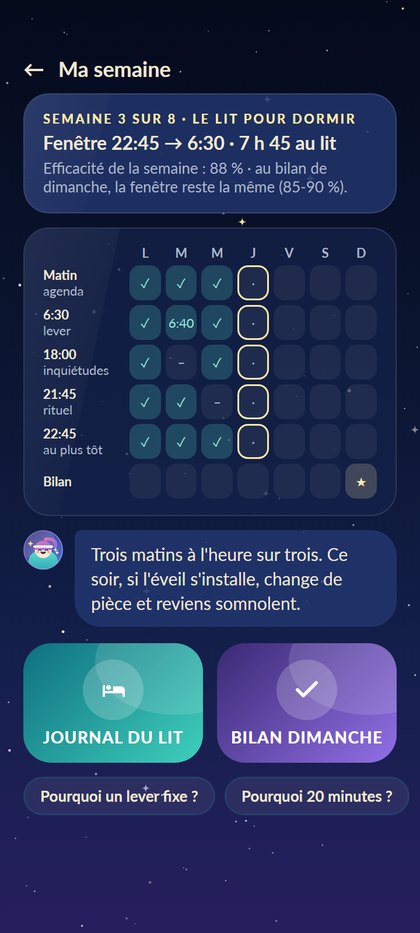
    一款关于身心健康与睡眠教育的 Android 应用:个性化计划、课程与引导式练习。

  2. 2025年至今
    教育

    公共卫生博士 · ESPUM(加拿大)

    加拿大蒙特利尔大学公共卫生学院(École de santé publique de l’Université de Montréal,ESPUM),卫生系统、组织与政策方向;蒙特利尔大学医院研究中心(Centre de recherche du CHUM,CRCHUM)研究实习生。

    累计平均绩点:4.1

  3. 2026年秋季
    工作经历

    助教 · SPU 7001、ASA 6754 与 ASA 6765

    Université de Montréal。

  4. 2026年冬季
    工作经历

    助教 · ASA 6754

    卫生系统与人群健康,Université de Montréal:辅导学生,批改笔试与口试。

  5. 2025年
    教育

    公法硕士,专攻卫生法与社会法

    公法、社会法与卫生法 · Université Paris Panthéon-Assas(巴黎-先贤祠-阿萨斯大学),获评审委员会特别嘉许。

  6. 2024–2025年
    工作经历

    医疗社会服务项目专员 · ANAP(法国)

    法国国家绩效支持署(Agence nationale d’appui à la performance,ANAP),巴黎(法国)。共同主持专家网络、网络研讨会、数据分析和实践社群活动。

  7. 2024年
    教育

    医疗社会服务机构管理硕士级文凭 · UBO(法国)

    法国西布列塔尼大学(Université de Bretagne Occidentale,UBO),获评审团特别嘉许。

  8. 2024年
    工作经历

    EHPAD 管理实习 · Fondation Ildys

    Fondation Ildys,法国朗代诺(Landerneau)。EHPAD(établissement d’hébergement pour personnes âgées dépendantes),即法国失能老人住宿照护机构,相当于魁北克长期照护中心 CHSLD;参与管理实习。

  9. 2024年
    教育

    创业与管理大学文凭

    法国布雷斯特 IAE(Institut d’administration des entreprises de Brest),获评审委员会特别嘉许。

  10. 2023年
    教育

    国家特殊教育工作者文凭

    Académie de Rennes(雷恩学区)。

  11. 2020–2023年
    工作经历

    特殊教育工作者

    残障人士居住型安置机构,Adapei 35,圣马洛:评估需求,共同制定个别化计划,协调多学科团队。

  12. 2016–2024年
    工作经历

    适应性度假及喘息服务项目负责人

    法国布雷斯特:为残障人士组织适应性度假及喘息服务,负责教育项目、社会教育陪伴、团队、预算与后勤管理。

03.3 · 经历

卫生法与社会法领域的法律专业人士

我在巴黎-先贤祠-阿萨斯大学接受卫生与社会法训练(硕士,获评审团特别表扬),分析医疗卫生机构、专业人员与卫生政策所处的法律环境,涵盖个人权利直至诉讼。

卫生法与社会保障法

  • 卫生法的重大议题
  • 卫生经济与卫生政策
  • 患者与弱势人群的权利
  • 社会保障法
  • 社会救助与社会行动法
  • 残障与失能法

机构与服务的规制

  • 规划与许可制度
  • 对机构与服务的检查和监督
  • 合作与合同化
  • 评估与筹资模式

机构与服务的管理

  • 医疗机构治理
  • 社会与医疗社会机构及服务的治理
  • 定价、财务与会计管理
  • 卫生职业法
  • 人员管理与身份制度

责任与诉讼

  • 社会保障、社会救助与社会行动诉讼
  • 行政责任与行政诉讼
  • 民事责任与民事诉讼
  • 刑事责任与刑事诉讼

劳动法

  • 劳动法
  • 社会与医疗社会领域的特别劳动法
  • 人力资源管理与劳动关系

法律研究成果

  • 硕士论文:《居家养老:居家转向的现实与实施——法国与魁北克比较研究》,导师 Benoît Apollis
  • 撰写中的法学论文:《法律检验下的居家养老:法国法与魁北克法中居住地选择的实效性》

03.4 · 经历

社会与医疗社会机构的管理者

我在西布列塔尼大学接受医疗社会机构与个人服务机构领导方面的训练(硕士,获评审团特别表扬),曾作为适应性度假项目负责人从事日常管理,并在一家养老院(EHPAD)完成管理实习。

战略与项目

  • 战略规划
  • 机构计划与服务计划
  • 项目统筹与管理
  • 质量管理与评估

管理与人力资源

  • 组织管理
  • 组织临床学
  • 人力资源与薪酬总额管理
  • 工作排班、会议主持与管理沟通

财务与会计

  • 会计管理
  • 预算与财务管理(多年期目标合同、收支预测)
  • 公共会计与地方财政
  • 定价原则

筹资与合作

  • 筹资与慈善
  • 合作与合同化
  • 社会政策

行业知识

  • 社会与医疗社会机构及服务的类型
  • 残障、老年人、居家服务与庇护性就业
  • 个体、社会联系与脆弱性

经验

  • 适应性度假项目负责人(2016–2024):团队、预算、后勤与服务计划
  • EHPAD 管理实习,Fondation Ildys,法国朗代诺(2024 年,相当于魁北克 CHSLD)
  • 法国国家绩效支持署(ANAP)项目专员(2024–2025)

03.5 · 经历

特殊教育工作者

我持有国家文凭(雷恩学区,2023),曾在住宿之家和适应性度假项目中陪伴残障人士,其中包括自闭症人士,并始终坚持一个信念:支持他们的自我决定。

专业教育关系

  • 日常的社会教育陪伴
  • 促进自主的教育关系
  • 支持自我决定与赋权

项目的设计与实施

  • 评估需求与期望
  • 共同制定个性化计划
  • 协调与跟进项目

团队合作与沟通

  • 协调多学科团队
  • 专业书面材料与交接
  • 与家庭和亲属合作

合作与网络

  • 机构间协作
  • 与地方各方的合作
  • 照护路径协调

运用的知识

  • 发展心理学与精神病理学
  • 残障、自闭症与老龄化
  • 社会学与社会行动法

经验

  • 住宿之家特殊教育工作者(Adapei 35,2020–2023)
  • 适应性度假项目负责人(2016–2024)
  • 论文:人生历程与自我决定(2023)

魁北克的对应职业类别

岗位分类取决于实际职责及服务对象。在残障人士住宿服务中,工作可能同时涉及日常社会支持和适应性教育;以下两类职业可帮助说明这些不同侧面。

CNP 42201 · 社会与社区服务工作者

提供心理社会支持、协助获取资源、支持日常生活和社会参与。此类别涵盖社会与社区服务中的专业教育支持岗位,以及团体居住服务中的工作。

查看官方职业介绍

CNP 42203 · 残障人士教育与康复指导

面向残障人士的适应性教育支持,重点包括沟通、学习、社会与实用技能、自主生活及康复。

查看官方职业介绍

服务中运用的专业能力

  • 为面临多种问题(心理健康、成瘾、语言障碍、情绪调节)的人提供干预
  • 识别认知、社会与情感方面的障碍
  • 制定包含目标与具体行动的干预计划
  • 评估受限情况与能力,以确定适应与康复目标
  • 帮助当事人获得社交与实用技能
  • 与其他专业人员合作(康复顾问、言语治疗师、作业治疗师)

数字作品

用于学习与自我照护的应用

两个从具体需求出发的数字项目:让知识变得实用、易于获取,并能应用于日常生活。

OWNNIGHT

你的睡眠科学,掌握在你手中。

进行中的创业项目 · Android

是什么

一款关于睡眠健康与睡眠教育的 Android 应用,提供法语和英语版本。它提供根据每次回答调整的个性化计划、简短课程、引导练习、帮助平静心绪的工具、睡前仪式以及有声故事。

目标

让每个人都有能力改善自己的睡眠:自我评估、理解夜间发生的事情,并学会照顾自己的睡眠。这一切依托于以失眠认知行为疗法(CBT-I)为基础的睡眠教育。

填补的空白

以失眠认知行为疗法(失眠的一线治疗)为基础的支持仍然难以获得,而许多应用只测量睡眠,却不帮助人们理解睡眠,同时还利用个人数据。OWNNIGHT 注重赋能:让人们学习、自我评估,并成为自己睡眠的主导者。所有数据都加密保存在手机上,无需账户。

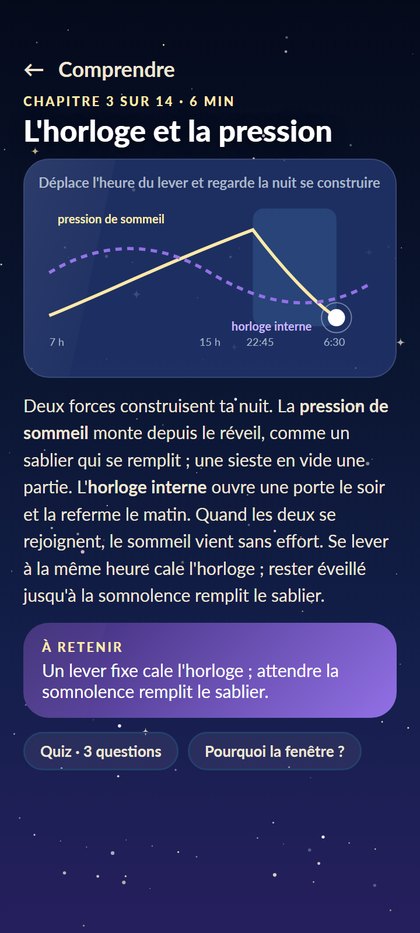
OWNNIGHT 主屏幕:当晚安排与本周计划OWNNIGHT 的一节课:生物钟与睡眠压力OWNNIGHT 的每周追踪

Sphères 系列

Épisphère 与 Statosphère:按自己的节奏理解流行病学与统计学。

电脑、平板与手机 · 可离线使用

是什么

两款姊妹学习应用,一款面向流行病学,另一款面向统计学。它们可在电脑、平板和手机上离线使用:逐步讲解的课程、带讲解的幻灯片、知识卡片、带反馈的选择题、记忆卡、附答案的练习和进度追踪,并配有内置导师 Sigma。

目标

帮助人们理解方法而不是死记硬背:每个公式都先说明它的作用,再逐步解读,每个人都可以根据自己的需要安排复习。

填补的空白

定量方法常常让来自其他学科的人望而却步,而相关资源分散,往往是英文或过于技术化。Sphères 将一切集中在一处,以法语呈现,循序渐进,并用通俗语言讲解。
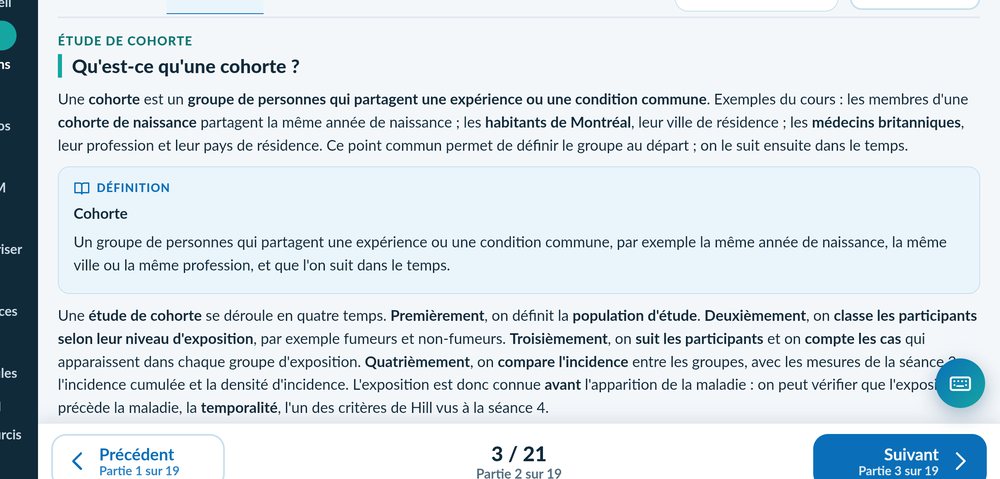
逐步讲解的课程带反馈的选择题记忆卡

学习软件

在实践中理解研究方法

两个独立学习空间,支持阅读、计算、练习与错题复习。目前课程内容和测验使用法语。

Statosphère

描述统计、概率、推断、回归模型、因果图、实验与 R 语言练习。

27 章1,544 道附解析选择题

在浏览器中启动 ↗

Épisphère

频率与关联测量、研究设计、偏倚、标准化、筛查、试验、生存分析与评价。

20 章2,100 道附解析选择题

在浏览器中启动 ↗
  1. 01理解概念
  2. 02列出计算
  3. 03作答并解释
  4. 04复习错误

公开版与个人应用相互独立,包括概念、课程、公式、记忆卡片和测验;计算练习使用新的虚构数据。学习进度仅保存在此浏览器中。

03.7 · 价值观

指引我实践的价值

从实践到研究,指引我工作的六项价值。

座右铭Ad astra per aspera循艰难之路,抵璀璨群星

01

批判性思维

探索其他学科与思考方式,对照不同观点,质疑看似理所当然的事物、数据与制度,首先从自身的信念开始。

02

韧性

将经历过的考验化为前进的资源。

03

自主

独立思考,并支持每个人选择自己生活的能力。

04

共同建构,服务公共利益

与人们一起做,而不是替人们做:开展与民众共同完成、并服务于民众的有影响力的研究。

05

勇于创新

敢于提出、创新、创造并实施新的应对方案。

06

公平

尽可能使每个人都能充分发挥自己的能力,并实现自己的意愿。

04.1 · 社会参与

代表、贡献与投入

积极参与学生生活与学术生活,与个人历程一脉相承。

学生代表7

  • 自2026年起 · 至今

    公共卫生博士项目协调人 · AÉÉSPUM(ESPUM 学生会)

    经选举产生。

  • 进行中

    团结互助导师计划协调人 · 公共卫生博士项目

    ESPUM,Université de Montréal。

  • 进行中

    公共卫生博士项目委员会学生代表

    ESPUM,Université de Montréal。

  • 自2026年起 · 至今

    博士生代表 · DGEPS

    Département de gestion, d’évaluation et de politique de santé(卫生管理、评估与政策系),ESPUM。

  • 2026年冬季

    Université de Montréal(蒙特利尔大学)形象大使

  • 2022–2024年

    CROUS(法国地区大学及学校事务中心)董事会当选代表

    法国。

  • 2021年

    Askoria 社会工作学生地区委员会主席

    法国。

04.2 · 社会参与

代表、贡献与投入

学生会员

Chaire de recherche GSK en gestion optimale des maladies chroniques(GSK 慢性病优化管理研究讲席)Groupe francophone en soins primaires(GFSP,法语区初级保健学会)Réseau québécois de recherche sur le vieillissement(RQRV,魁北克老龄化研究网络)Canadian Association for Health Services and Policy Research(CAHSPR,加拿大卫生服务与政策研究协会)Centre de recherche en santé publique (CReSP)Centre de recherche du CISSS de Chaudière-AppalachesCentre interuniversitaire de recherche en analyse des organisations (CIRANO)

学术共同体2

  • 进行中

    AÉÉSPUM 大会学生学术委员会

    成员。

  • 2026年6月

    GFSP(法语区初级保健学会)青年学者日科学委员会

    学生委员。

04.3 · 社会参与

代表、贡献与投入

奖学金与荣誉4

  • 2026年

    最佳海报展示奖,博士及博士后组

    青年学者日,Groupe francophone en soins primaires。

  • 2025年
  • 2025年

    国际招生奖学金

    Études supérieures et postdoctorales(研究生与博士后研究院),Université de Montréal。

  • 2023–2025年

    三次获评审委员会特别嘉许

    学业卓越。

04.4 · 社会参与

代表、贡献与投入

公民参与2

  • 2023年

    志愿消防员

    Centre d’incendie et de secours de Dinard(迪纳尔消防救援中心),法国。

  • 2013年

    志愿服务与公民服务

    Association de la fondation étudiante pour la ville(AFEV,学生城市基金会协会),法国:协调学生志愿者,并陪伴一名年轻人走过她的学业与文化成长历程。

04.5 · 社会参与

代表、贡献与投入

运动与爱好8

插图:虚构跑者在巴黎跑步,背景为凯旋门
运动马拉松运动2025年和2026年巴黎马拉松,2026年蒙特利尔马拉松。插图 · 巴黎
钢琴、音乐创作与吉他
音乐钢琴、音乐创作与吉他
冰球
运动冰球
数字工具开发
编程数字工具开发
科学思考与科普
文化科学思考与科普生命与地球科学、哲学、地缘政治、政治学、物理学、天文学。
人犬越野跑插图:一只黑白母犬与后方奔跑的男子
运动人犬越野跑与我的爱犬一起跑步。插图
放在手写书信上的笔
写作正在创作的小说一位生活在2026年的男性与一位生活在2250年的女性,通过书信展开回溯与反思。他们之间的柏拉图式爱情,以易于理解的叙事探索人的处境、系统思维,以及人类与其环境之间的关系。
我的身心福祉应用 OWNNIGHT 的界面
创作身心福祉与放松工具以认知行为疗法(CBT)的基本原则和感官参与为基础,开发促进身心福祉与放松的工具。

资源

05.1 · 学习软件

在实践中理解研究方法

两个独立学习空间,支持阅读、计算、练习与错题复习。目前课程内容和测验使用法语。

Statosphère

描述统计、概率、推断、回归模型、因果图、实验与 R 语言练习。

27 章1,544 道附解析选择题

在浏览器中启动 ↗

Épisphère

频率与关联测量、研究设计、偏倚、标准化、筛查、试验、生存分析与评价。

20 章2,100 道附解析选择题

在浏览器中启动 ↗
  1. 01理解概念
  2. 02列出计算
  3. 03作答并解释
  4. 04复习错误

公开版与个人应用相互独立,包括概念、课程、公式、记忆卡片和测验;计算练习使用新的虚构数据。学习进度仅保存在此浏览器中。

参考文献

知识图书馆

网站引用的全部参考文献,采用 APA 格式并按字母排序。

1,003 条参考文献 · APA

知识图书馆

1003 条参考文献

A

  • Aalikhani, R., Rasouli, M. R., Ghanbari, H., Fathian, M., & Aliahmadi, A. (2026). Exploring the role of fundamental factors on developing an effective network governance in healthcare systems: A structural equation modeling-based study. Journal of Health Organization and Management, 40(1), 71–91. https://doi.org/10.1108/jhom-08-2024-0355
  • Abbott, A. (1988). The system of professions: An essay on the division of expert labor. University of Chicago Press. https://doi.org/10.7208/chicago/9780226189666.001.0001
  • Abelson, J., Forest, P.-G., Eyles, J., Smith, P., Martin, E., & Gauvin, F.-P. (2003). Deliberations about deliberative methods: Issues in the design and evaluation of public participation processes. Social Science & Medicine, 57(2), 239–251. https://doi.org/10.1016/S0277-9536(02)00343-X
  • Abidin, C. (2018). Internet celebrity: Understanding fame online. Emerald Publishing. https://doi.org/10.1108/9781787560765
  • ABIM Foundation, ACP–ASIM Foundation, & European Federation of Internal Medicine. (2002). Medical professionalism in the new millennium: A physician charter. Annals of Internal Medicine, 136(3), 243–246. https://doi.org/10.7326/0003-4819-136-3-200202050-00012
  • Abramson, J., Adler, J., Dunger, J., Evans, R., Green, T., Pritzel, A., Ronneberger, O., Willmore, L., Ballard, A. J., Bambrick, J., Bodenstein, S. W., Evans, D. A., Hung, C. C., O’Neill, M., Reiman, D., Tunyasuvunakool, K., Wu, Z., Žemgulytė, A., Arvaniti, E., …, Jumper, J. M. (2024). Accurate structure prediction of biomolecular interactions with AlphaFold 3. Nature, 630(8016), 493-500. https://doi.org/10.1038/s41586-024-07487-w
  • Adéquation des donnéesExaminer population couverte, unité d’observation, calendrier, dictionnaire de variables et comparabilité. Distinguer un indicateur administratif d’une mesure directe du besoin ou de l’expérience.Préparation reproductibleDocumenter accès autorisé, nettoyage, recodages, appariements et exclusions. Tenir compte du plan d’enquête et des changements de définition ; tracer les transformations dans des scripts.Biais et transparenceExaminer erreurs de mesure, données manquantes, sélection et confusion. RECORD précise le compte rendu des données de santé courantes ; leur disponibilité ne garantit ni représentativité ni identification causale.Cheng, H. G., & Phillips, M. R. (2014). Secondary analysis of existing data: Opportunities and implementation. Shanghai Archives of Psychiatry, 26(6), 371–375. https://pmc.ncbi.nlm.nih.gov/articles/PMC4311114/
  • Adi, S., Bosson-Rieutort, D., Breton, M., Smithman, M. A., Laberge, M., & Sourial, N. (2026). The use of centralized waiting lists for attachment to family physicians in Quebec, Canada: predictive factors and association with non-urgent emergency department use. BMC Health Services Research, 26(1), 192. https://doi.org/10.1186/s12913-025-13941-w
  • Agarwal, G., Pirrie, M., Edwards, D., Delleman, B., Crowe, S., Tye, H., & Mallin, J. (2024). Effect of a Legal Clinic Program Within an Urban Primary Health Care Center on Social Determinants of Health: A Program Evaluation. Journal of Primary Care & Community Health, 15, Article 21501319241245849. https://doi.org/10.1177/21501319241245849
  • Agarwal, G., Ziesmann, A., Paramalingam, A., Nair, K., Delleman, B., Edwards, D., Crowe, S., & Tye, H. (2025). Perceptions of primary care patients attending a legal health clinic: a qualitative descriptive study. BMC Health Services Research, 25(1), Article 1614. https://doi.org/10.1186/s12913-025-13759-6
  • Agence de la santé publique du Canada. (2024). Stratégie scientifique 2024-2025 à 2029-2030. Rapport institutionnel intégral . https://www.canada.ca/fr/sante-publique/services/publications/science-recherche-et-donnees/strategie-scientifique-2024-2025-2029-2030.html
  • Agence nationale d’appui à la performance. (2023, 7 septembre). Franchissez le cap de l’habitat intermédiaire ! https://anap.fr/s/article/franchissez-le-cap-de-l-habitat-intermediaire
  • Agence nationale d’appui à la performance. (2024, 19 novembre). Le Centre de Ressources Territorial : une ambition nouvelle. https://anap.fr/s/article/centre-ressources-territorial-crt-ambition-nouvelle
  • Agence nationale d’appui à la performance. (2024, 2 avril). Réforme des SAD : tous les outils Anap. https://www.anap.fr/s/article/reforme-services-autonomie-a-domicile
  • Agence nationale d’appui à la performance. (s.d.). Domicile du futur [Programme thématique].
  • Akgün, F. E., & Akgün, M. (2026). Governing generative AI in healthcare: A normative conceptual framework for epistemic authority, trust, and the architecture of responsibility. Healthcare, 14(8), 1098. https://doi.org/10.3390/healthcare14081098
  • Akrich, M. et Rabeharisoa, V. (2012). L'expertise profane dans les associations de patients, un outil de démocratie sanitaire. Santé Publique, 24(1), 69–74. https://doi.org/10.3917/spub.121.0069
  • Alami, H., Fortin, J.-P., Gagnon, M.-P., Pollender, H., Têtu, B., & Tanguay, F. (2017). The challenges of a complex and innovative telehealth project: A qualitative evaluation of the Eastern Quebec Telepathology Network. International Journal of Health Policy and Management, 7(5), 421–432. https://doi.org/10.15171/ijhpm.2017.106
  • Alasia, A., Bédard, F., Bélanger, J., Guimond, E., & Penney, C. (2017). Measuring remoteness and accessibility: A set of indices for Canadian communities (Reports on Special Business Projects, Catalogue no. 18-001-X). Statistics Canada.
  • Alba, C. (2026). Sentiments and discourse surrounding the Make America Healthy Again (#MAHA) movement on social media. Journal of Epidemiology and Population Health, 74(1), 203167. https://doi.org/10.1016/j.jeph.2026.203167
  • Albert, S. M., McCracken, P., Bui, T., Hanmer, J., Fischer, G. S., Hariharan, J., & James, A. E. (2022). Do patients want clinicians to ask about social needs and include this information in their medical record?. BMC Health Services Research, 22(1), Article 1275. https://doi.org/10.1186/s12913-022-08652-5
  • Alderwick, H., & Gottlieb, L. M. (2019). Meanings and misunderstandings: A social determinants of health lexicon for health care systems. The Milbank Quarterly, 97(2), 407–419. https://doi.org/10.1111/1468-0009.12390
  • Alderwick, H., Hutchings, A., Briggs, A., & Mays, N. (2021). The impacts of collaboration between local health care and non-health care organizations and factors shaping how they work: A systematic review of reviews. BMC Public Health, 21(1), 753. https://doi.org/10.1186/s12889-021-10630-1
  • Aldridge, W. N. (1996). Mechanisms and concepts in toxicology. Taylor & Francis. https://doi.org/10.4324/9780203211212
  • Alexander, R. (2023). Telling stories with data: With applications in R. CRC Press. https://doi.org/10.1201/9781003229407
  • Alfrink, K., Keller, I., Kortuem, G., & Doorn, N. (2023). Contestable AI by design: Towards a framework. Minds and Machines, 33(4), 613–639. https://doi.org/10.1007/s11023-022-09611-z
  • Alliance for Health Policy and Systems Research. (2026, February 2). Systems thinking for health systems strengthening – changing the frame . World Health Organization. https://ahpsr.who.int/newsroom/news/item/02-02-2026-systems-thinking-for-health-systems-strengthening-changing-the-frame
  • Amri, M., Chatur, A., & O'Campo, P. (2022). An umbrella review of intersectoral and multisectoral approaches to health policy. Social Science & Medicine, 315, 115469. https://doi.org/10.1016/j.socscimed.2022.115469
  • Anaf, J., Baum, F., Freeman, T., Labonte, R., Javanparast, S., Jolley, G., Lawless, A., & Bentley, M. (2014). Factors shaping intersectoral action in primary health care services. Australian and New Zealand Journal of Public Health, 38(6), 553–559. https://doi.org/10.1111/1753-6405.12284
  • Anderson, W. (2006). Colonial pathologies: American tropical medicine, race, and hygiene in the Philippines. Duke University Press. https://doi.org/10.1215/9780822388081
  • Angrist, J. D., & Pischke, J.-S. (2015). Mastering ’metrics: The path from cause to effect. Princeton University Press.
  • Anselin, L. (1995). Local indicators of spatial association—LISA. Geographical Analysis, 27(2), 93–115. https://doi.org/10.1111/j.1538-4632.1995.tb00338.x
  • Ansell, C., & Gash, A. (2008). Collaborative governance in theory and practice. Journal of Public Administration Research and Theory, 18(4), 543–571. https://doi.org/10.1093/jopart/mum032
  • Apparicio, P., Abdelmajid, M., Riva, M., & Shearmur, R. (2008). Comparing alternative approaches to measuring the geographical accessibility of urban health services: Distance types and aggregation-error issues. International Journal of Health Geographics, 7(1), 7. https://doi.org/10.1186/1476-072x-7-7
  • Arel-Bundock, V. (2021). Analyse causale et méthodes quantitatives : une introduction avec R, Stata et SPSS. Presses de l'Université de Montréal. https://doi.org/10.1515/9782760643222
  • Arel-Bundock, V. (2021). Analyse causale et méthodes quantitatives. Presses de l’Université de Montréal.
  • Arel-Bundock, V. (2026). Model to meaning: How to interpret statistical models with R and Python. CRC Press.
  • Argyris, C., & Schön, D. A. (1978). Organizational learning: A theory of action perspective. Addison-Wesley.
  • Ariaans, M., Linden, P., & Wendt, C. (2021). Worlds of long-term care: A typology of OECD countries. Health Policy, 125(5), 609–617. https://doi.org/10.1016/j.healthpol.2021.02.009
  • Arksey, H., & O'Malley, L. (2005). Scoping studies: Towards a methodological framework. International Journal of Social Research Methodology, 8(1), 19–32. https://doi.org/10.1080/1364557032000119616
  • Arnstein, S. R. (1969). A ladder of citizen participation. Journal of the American Institute of Planners, 35 (4), 216–224. https://doi.org/10.1080/01944366908977225
  • Arpin, E., Gautier, L., & Quesnel-Vallée, A. (2025). Quebec: A health system profile. University of Toronto Press. https://doi.org/10.3138/9781487561123
  • Arrow, K. J. (1963). Uncertainty and the welfare economics of medical care. American Economic Review, 53(5), 941–973.
  • Arsenault-Lapierre, G., Bui, T., Godard-Sebillotte, C., Kang, N., Sourial, N., Rochette, L., Massamba, V., Quesnel-Vallée, A., & Vedel, I. (2024). Sex Differences in Healthcare Utilization in Persons Living with Dementia Between 2000 and 2017: A Population-Based Study in Quebec, Canada. Journal of Aging and Health, 37(3-4), 243–254. https://doi.org/10.1177/08982643241242512
  • Arxer, S. L. (2026). Differentiated trust: Navigating credibility landscapes in community-engaged research. Frontiers in Public Health, 14, 1846231. https://doi.org/10.3389/fpubh.2026.1846231
  • Asirvatham, R., Nelson, A., Northam, J., & Lucyk, K. (2024). Methods for evaluating intersectoral action partnerships to address the social determinants of health: A scoping review. Health Promotion and Chronic Disease Prevention in Canada, 44(10), 440–449. https://doi.org/10.24095/hpcdp.44.10.04
  • ASPIRE: a pedagogical framework for integrating generative artificial intelligence in public health education (2026). Frontiers in Education. https://www.frontiersin.org/journals/education/articles/10.3389/feduc.2026.1831419/full
  • Aujla, N., Frost, H., Guthrie, B., Hanratty, B., Kaner, E., O'Donnell, A., Ogden, M. E., Pain, H. G., Shenkin, S. D., & Mercer, S. W. (2023). A comparative overview of health and social care policy for older people in England and Scotland, United Kingdom (UK). Health Policy, 132, 104814. https://doi.org/10.1016/j.healthpol.2023.104814
  • Azari, R., & Borisch, B. (2023). What is public health? A scoping review. Archives of Public Health, 81(1), 86. https://doi.org/10.1186/s13690-023-01091-6

B

  • Barbazza, E., & Tello, J. E. (2014). A review of health governance: Definitions, dimensions and tools to govern. Health Policy, 116(1), 1–11. https://doi.org/10.1016/j.healthpol.2014.01.007
  • Bardsley, M., Blunt, I., Davies, S., & Dixon, J. (2013). Is secondary preventive care improving? Observational study of 10-year trends in emergency admissions for conditions amenable to ambulatory care. BMJ Open, 3(1), e002007. https://doi.org/10.1136/bmjopen-2012-002007
  • Barlet, M., Coldefy, M., Collin, C. et Lucas-Gabrielli, V. (2012). L'accessibilité potentielle localisée (APL) : une nouvelle mesure de l'accessibilité aux soins appliquée aux médecins généralistes libéraux en France (Document de travail no 51). Institut de recherche et documentation en économie de la santé.
  • Barnett, R. (2004). Learning for an unknown future. Higher Education Research & Development, 23(3), 247–260. https://doi.org/10.1080/0729436042000235382
  • Barré, R. (2015). Le contrat science-société : dynamiques politiques et sociales d'une refondation. Le cas de l'expertise scientifique. Dans J. Lesourne et D. Randet (dir.), La recherche et l'innovation en France (p. 287–322). Odile Jacob. https://doi.org/10.3917/oj.lesou.2015.01.0287
  • Barros, P. P., Brouwer, W. B. F., Thomson, S., & Varkevisser, M. (2016). Competition among health care providers: Helpful or harmful? The European Journal of Health Economics, 17(3), 229–233. https://doi.org/10.1007/s10198-015-0736-3
  • Bartsch, A., Neuberger, C., Stark, B., Karnowski, V., Maurer, M., Pentzold, C., Quandt, T., Quiring, O., & Schemer, C. (2025). Epistemic authority in the digital public sphere. An integrative conceptual framework and research agenda. Communication Theory, 35(1), 37–50. https://doi.org/10.1093/ct/qtae020
  • Barwick, M., Phipps, D., Myers, G., Johnny, M., & Coriandoli, R. (2014). Knowledge translation and strategic communications: Unpacking differences and similarities for scholarly and research communications. Scholarly and Research Communication, 5(3). https://doi.org/10.22230/src.2014v5n3a175
  • Bashford, A. (2004). Imperial hygiene: A critical history of colonialism, nationalism and public health. Palgrave Macmillan. https://doi.org/10.1057/9780230508187
  • Bassoli, E., Lefebvre, M., & Schoenmaeckers, J. (2025). Home vs. nursing care: Unpacking the impact on health and well-being. Social Science & Medicine, 385, 118533. https://doi.org/10.1016/j.socscimed.2025.118533
  • Bastani, H., Bastani, O., Sungu, A., Ge, H., Kabakcı, Ö., & Mariman, R. (2025). Generative AI without guardrails can harm learning: Evidence from high school mathematics. Proceedings of the National Academy of Sciences, 122(26), Article e2422633122. ↗. https://doi.org/10.1073/pnas.2422633122
  • Basu, S., Berkowitz, S. A., Davis, C., Drake, C., Phillips, R. L., & Landon, B. E. (2023). Estimated costs of intervening in health-related social needs detected in primary care. JAMA Internal Medicine, 183(8), 762–774. https://doi.org/10.1001/jamainternmed.2023.1964
  • Bauer, M. S., & Kirchner, J. (2020). Implementation science: What is it and why should I care? Psychiatry Research, 283, Article 112376. https://doi.org/10.1016/j.psychres.2019.04.025
  • Baugh Littlejohns, L. K., & Willis, C. D. (2018). Collaborative value creation framework: The potential for strengthening intersectoral partnerships in chronic disease prevention. Progress in Community Health Partnerships: Research, Education, and Action, 12(4), 463–472. https://doi.org/10.1353/cpr.2018.0071
  • Baum, F. (2008). The new public health (3rd ed.). Oxford University Press.
  • Baum, F., Delany-Crowe, T., MacDougall, C., Lawless, A., van Eyk, H., & Williams, C. (2017). Ideas, actors and institutions: Lessons from South Australian Health in All Policies on what encourages other sectors’ involvement. BMC Public Health, 17(1), 811. https://doi.org/10.1186/s12889-017-4821-7
  • Baum, F., Lawless, A., & Williams, C. (2013). Health in All Policies from international ideas to local implementation: Policies, systems, and organizations. In C. Clavier & E. de Leeuw (Eds.), Health promotion and the policy process (pp. 188–217). Oxford University Press. https://doi.org/10.1093/acprof:oso/9780199658039.003.0010
  • Bayley, J. E., & Phipps, D. (2019). Building the concept of research impact literacy. Evidence & Policy, 15(4), 597–606. https://doi.org/10.1332/174426417X15034894876108
  • Beaulieu, M.-D. (2016). Construction et hiérarchisation des données probantes en santé : savoirs scientifiques, expérientiels et contextuels. Revue du CREMIS, 9(2), 9-15. https://cremis.ca/publications/articles-et-medias/construction-et-hierarchisation-des-donnees-probantes-en-sante-savoirs-scientifiques-experientiels-et-contextuels/
  • Becker, J., Rush, N., Barnes, E., & Rein, D. (2025). Measuring the impact of early-2025 AI on experienced open-source developer productivity [Preprint]. arXiv. https://doi.org/10.48550/arXiv.2507.09089
  • Beer, D. (2017). The social power of algorithms. Information, Communication & Society, 20(1), 1–13. https://doi.org/10.1080/1369118x.2016.1216147
  • Beidler, L. B., Razon, N., Lang, H., & Fraze, T. K. (2022). “More than just giving them a piece of paper”: Interviews with Primary Care on Social Needs Referrals to Community-Based Organizations. Journal of General Internal Medicine, 37(16), 4160-4167. https://doi.org/10.1007/s11606-022-07531-3
  • Béland, F., Bergman, H., Lebel, P., Clarfield, A. M., Tousignant, P., Contandriopoulos, A.-P., & Dallaire, L. (2006). A system of integrated care for older persons with disabilities in Canada: Results from a randomized controlled trial. The Journals of Gerontology: Series A, 61(4), 367–373. https://doi.org/10.1093/gerona/61.4.367
  • Benchimol, E. I., Smeeth, L., Guttmann, A., Harron, K., Moher, D., Petersen, I., Sørensen, H. T., von Elm, E., Langan, S. M., & RECORD Working Committee. (2015). The REporting of studies Conducted using Observational Routinely-collected health Data (RECORD) Statement. PLOS Medicine, 12(10), Article e1001885. https://doi.org/10.1371/journal.pmed.1001885
  • Bengio, Y., Clare, S., Prunkl, C., Murray, M., Andriushchenko, M., Bucknall, B., Bommasani, R., Casper, S., Davidson, T., Douglas, R., Duvenaud, D., Fox, P., Gohar, U., Hadshar, R., Ho, A., Hu, T., Jones, C., Kapoor, S., Kasirzadeh, A., … Mindermann, S. (2026). International AI Safety Report 2026 (DSIT 2026/001). Department for Science, Innovation and Technology. https://internationalaisafetyreport.org/publication/international-ai-safety-report-2026
  • Benoit, M., & Marier, P. (2024). When hidden politics become visible: Administrative burden experiences of older adults and professionals in home care. International Journal of Social Welfare, 33(4), 832–845. https://doi.org/10.1111/ijsw.12664
  • Benson, J. K. (1977). Organizations: A dialectical view. Administrative Science Quarterly, 22(1), 1–21. https://doi.org/10.2307/2391741
  • Berger, P. L., & Luckmann, T. (1966). The social construction of reality: A treatise in the sociology of knowledge. Doubleday.
  • Bergholtz, J., Wolf, A., Crine, V., Cleeve, H., Santana, M.-J., & Björkman, I. (2024). Patient and public involvement in healthcare: A systematic mapping review of systematic reviews – identification of current research and possible directions for future research. BMJ Open, 14(9), e083215. https://doi.org/10.1136/bmjopen-2023-083215
  • Berkman, L. F., Kawachi, I., & Glymour, M. M. (Eds.). (2014). Social epidemiology (2nd ed.). Oxford University Press. https://doi.org/10.1093/med/9780195377903.001.0001
  • Berrada, M. (2026, 2 juin). Recherche et politiques publiques : comment mieux faire circuler les savoirs ? Affaires universitaires. https://www.affairesuniversitaires.ca/actualites/recherche-et-politiques-publiques-comment-mieux-faire-circuler-les-savoirs/
  • Bevan, G., & Hood, C. (2006). What's measured is what matters: Targets and gaming in the English public health care system. Public Administration, 84(3), 517–538. https://doi.org/10.1111/j.1467-9299.2006.00600.x
  • Bickler, P. E., Feiner, J. R., & Severinghaus, J. W. (2005). Effects of skin pigmentation on pulse oximeter accuracy at low saturation. Anesthesiology, 102(4), 715–719. https://doi.org/10.1097/00000542-200504000-00004
  • Biehl, J. (2016). Patient-citizen-consumers: Judicialization of health and metamorphosis of biopolitics. Lua Nova, (98), 77–105. https://doi.org/10.1590/0102-6445077-105/98
  • Biesta, G. (2009). Good education in an age of measurement: On the need to reconnect with the question of purpose in education. Educational Assessment, Evaluation and Accountability, 21, 33–46. https://doi.org/10.1007/s11092-008-9064-9
  • Biggs, J. (1996). Enhancing teaching through constructive alignment. Higher Education, 32, 347–364. https://doi.org/10.1007/BF00138871
  • Bilodeau, A., Chabot, C., Di Sante, M., Martin, N., & Potvin, L. (2023). Two strategies used by local intersectoral networks to create healthier environments: A cross-case analysis in the Montreal urban setting. Critical Public Health, 33(5), 672–682. https://doi.org/10.1080/09581596.2023.2260936
  • Bilodeau, A., Galarneau, M., Fournier, M. et Potvin, L. (2011). L’Outil diagnostique de l’action en partenariat : fondements, élaboration et validation. Canadian Journal of Public Health, 102(4), 298–302. https://doi.org/10.1007/bf03404054
  • Birk, H. O., Vrangbæk, K., Rudkjøbing, A., Krasnik, A., Eriksen, A., Richardson, E., & Jervelund, S. S. (2024). Denmark: Health system review. Health Systems in Transition, 26(1), i–152.
  • Birn, A.-E., Pillay, Y., & Holtz, T. H. (2017). Textbook of global health (4th ed.). Oxford University Press.
  • Bivand, R. S., & Wong, D. W. S. (2018). Comparing implementations of global and local indicators of spatial association. TEST, 27(3), 716–748. https://doi.org/10.1007/s11749-018-0599-x
  • Bleacher, H., English, A., Leblanc, W., & Dickinson, L. M. (2020). Associations Between Patients’ Unmet Social Needs and Self-Reported Health Confidence at One Primary Care Clinic. Journal of Primary Care & Community Health, 11, Article 2150132720921329. https://doi.org/10.1177/2150132720921329
  • Blondel, V. D., Guillaume, J.-L., Lambiotte, R. et Lefebvre, E. (2008). Fast unfolding of communities in large networks. Journal of Statistical Mechanics , P10008. https://arxiv.org/abs/0803.0476
  • Blumenthal, D. (2005). Reverse translation in health policy and management: From bedside to bench and beyond. Health Services Research, 40(1), 9–18. https://doi.org/10.1111/j.1475-6773.2005.00339.x
  • Blus-Kadosh, I., & Hartal, G. (2024). “We have knowledge that is unique”: Patient activism and the promotion of trans-inclusive primary care. Social Science & Medicine, 344, 116654. https://doi.org/10.1016/j.socscimed.2024.116654
  • Boaz, A., Hanney, S., Borst, R., O’Shea, A., & Kok, M. (2018). How to engage stakeholders in research: Design principles to support improvement. Health Research Policy and Systems, 16, Article 60. https://doi.org/10.1186/s12961-018-0337-6
  • Boch, S., Keedy, H., Chavez, L., Dolce, M., & Chisolm, D. (2020). An Integrative Review of Social Determinants of Health Screenings used in Primary Care Settings. Journal of Health Care for the Poor and Underserved, 31(2), 603-622. https://doi.org/10.1353/hpu.2020.0048
  • Bögenhold, D. (2020). History of economic thought as an analytic tool: Why past intellectual ideas must be acknowledged as lighthouses for the future. International Advances in Economic Research, 26(1), 73–87. https://doi.org/10.1007/s11294-020-09775-3
  • Böhm, K., Schmid, A., Götze, R., Landwehr, C., & Rothgang, H. (2013). Five types of OECD healthcare systems: Empirical results of a deductive classification. Health Policy, 113(3), 258–269. https://doi.org/10.1016/j.healthpol.2013.09.003
  • Bolen, S. D., Lever, J., Mundorf, C., Jenkins, A., Waitzman, R., Smith, S., Finley, M., Daprano, J., Johnson, E., Masotya, M., Joshi, S., Gunder, A., Lohr, M. E., Bar-Shain, D., Kaelber, D. C., Khaled, T., Sumerauer, D., Gullet, H., & Stange, K. C. (2025). The Impact of a Bidirectional Clinic to Community Social Care Referral Program. Medical Care, 63(6), 449-457. https://doi.org/10.1097/MLR.0000000000002144
  • Bollyky, T. J., Hulland, E. N., Barber, R. M., Collins, J. K., Kiernan, S., Moses, M., Pigott, D. M., Reiner Jr, R. C., Sorensen, R. J. D., Abbafati, C., Adolph, C., Allorant, A., Amlag, J. O., Aravkin, A. Y., Bang-Jensen, B., Carter, A., Castellano, R., Castro, E., Chakrabarti, S., . . . Dieleman, J. L. (2022). Pandemic preparedness and COVID-19: An exploratory analysis of infection and fatality rates, and contextual factors associated with preparedness in 177 countries, from Jan 1, 2020, to Sept 30, 2021. The Lancet, 399(10334), 1489–1512. https://doi.org/10.1016/s0140-6736(22)00172-6
  • Bolster-Foucault, C., Vedel, I., Busa, G., Hacker, G., Sourial, N., & Quesnel-Vallée, A. (2024). Social inequity in ageing in place among older adults in Organisation for Economic Cooperation and Development countries: A mixed studies systematic review. Age and Ageing, 53(8), afae166. https://doi.org/10.1093/ageing/afae166
  • Bonal, M., Padilla, C., Chevillard, G. et Lucas-Gabrielli, V. (2025). Une approche multiprofessionnelle de l'accessibilité aux soins de premier recours : des configurations territoriales très diverses (Document de travail no 93). Institut de recherche et documentation en économie de la santé.
  • Bonnan, D., Kröger, E., Maheu, A., Morin, M., Bélanger, L., Vedel, I., Wilchesky, M., Sirois, C., Dallaire, C., Durand, É., Couturier, Y., Sourial, N., & Guénette, L. (2026). Implementation of pharmacists' services into the care trajectory of older adults with neurocognitive disorder in multidisciplinary primary care clinics: A mixed-methods study. Exploratory Research in Clinical and Social Pharmacy, 23, 100786. https://doi.org/10.1016/j.rcsop.2026.100786
  • Bonnan, D., Kröger, E., Maheu, A., Morin, M., Bélanger, L., Vedel, I., Wilchesky, M., Sirois, C., Dallaire, C., Durand, É., Couturier, Y., Sourial, N., Audet, A. S., Coulombe, M., Audet, M., Archambault, P., & Guénette, L. (2026). Pharmacist-led interventions to optimize the pharmacotherapy of older adults under evaluation for or living with a neurocognitive disorder in the community: A quasi-experimental study. Journal of the American Pharmacists Association, 66(3), 103053. https://doi.org/10.1016/j.japh.2026.103053
  • Borkman, T. (1976). Experiential knowledge: A new concept for the analysis of self-help groups. Social Service Review, 50 (3), 445–456. https://doi.org/10.1086/643401
  • Boswell, C. (2009). The political uses of expert knowledge: Immigration policy and social research. Cambridge University Press. https://doi.org/10.1017/cbo9780511581120
  • Bouckaert, G. (2023). The neo-Weberian state: From ideal type model to reality? Max Weber Studies, 23(1), 13–59. https://doi.org/10.1353/max.2023.0002
  • Boulkedid, R., Abdoul, H., Loustau, M., Sibony, O., & Alberti, C. (2011). Using and reporting the Delphi method for selecting healthcare quality indicators: A systematic review. PLoS ONE, 6(6), e20476. https://doi.org/10.1371/journal.pone.0020476
  • Boulton, R., Sandall, J., & Sevdalis, N. (2020). The cultural politics of ‘implementation science’. Journal of Medical Humanities, 41(3), 379–394. https://doi.org/10.1007/s10912-020-09607-9
  • Bourdieu, P. (1975). The specificity of the scientific field and the social conditions of the progress of reason. Social Science Information, 14(6), 19–47. https://doi.org/10.1177/053901847501400602
  • Bourdieu, P. (1991). Language and symbolic power. Harvard University Press.
  • Bourdieu, P. (2001). Science de la science et réflexivité. Raisons d'agir.
  • Bovens, M. (2007). Analysing and assessing accountability: A conceptual framework. European Law Journal, 13(4), 447–468. https://doi.org/10.1111/j.1468-0386.2007.00378.x
  • Bowen, S. J., & Graham, I. D. (2013). From knowledge translation to engaged scholarship: Promoting research relevance and utilization. Archives of Physical Medicine and Rehabilitation, 94(1 Suppl.), S3–S8. https://doi.org/10.1016/j.apmr.2012.04.037
  • Bowker, G. C., & Star, S. L. (1999). Sorting things out: Classification and its consequences. The MIT Press. https://doi.org/10.7551/mitpress/6352.001.0001
  • Boyko, J. A., Lavis, J. N., Abelson, J., Dobbins, M., & Carter, N. (2012). Deliberative dialogues as a mechanism for knowledge translation and exchange in health systems decision-making. Social Science & Medicine, 75(11), 1938–1945. https://doi.org/10.1016/j.socscimed.2012.06.016
  • Braun, V., & Clarke, V. (2006). Using thematic analysis in psychology. Qualitative Research in Psychology, 3(2), 77–101. https://doi.org/10.1191/1478088706qp063oa
  • Braveman, P., & Gruskin, S. (2003). Defining equity in health. Journal of Epidemiology & Community Health, 57 (4), 254–258. https://doi.org/10.1136/jech.57.4.254
  • Breton, H. (2025). Savoirs expérientiels en santé : revue systématique de littérature. Santé Publique, 37(3), 241-251. https://doi.org/10.3917/spub.255.0241
  • Breton, M., Denis, J.-L., & Lamothe, L. (2010). Incorporating public health more closely into local governance of health care delivery: Lessons from the Québec experience. Canadian Journal of Public Health, 101(4), 314–317. https://doi.org/10.1007/bf03405293
  • Breton, M., Maillet, L., Haggerty, J., & Vedel, I. (2014). Mandated local health networks across the province of Québec: A better collaboration with primary care working in the communities? London Journal of Primary Care, 6(4), 71–78. https://doi.org/10.1080/17571472.2014.11493420
  • Breton, M., Pineault, R., Levesque, J.-F., Roberge, D., Da Silva, R. B., & Prud’homme, A. (2013). Reforming healthcare systems on a locally integrated basis: Is there a potential for increasing collaborations in primary healthcare? BMC Health Services Research, 13(1), 262. https://doi.org/10.1186/1472-6963-13-262
  • Brière-Dulude, S., Melgares, L., Labourot, J., Deslauriers, T., Gélinas, I., Layani, G., & Vachon, B. (2023). [Sondage sur les pratiques des médecins de famille et sur la collaboration interprofessionnelle avec des ergothérapeutes en GMF quant au dépistage des conducteurs à risque]. Canadian Journal on Aging, 43(2), 266–274. https://doi.org/10.1017/S0714980823000673
  • Broaddus‐Shea, E. T., Fife Duarte, K., Jantz, K., Reno, J., Connelly, L., & Nederveld, A. (2022). Implementing health‐related social needs screening in western Colorado primary care practices: Qualitative research to inform improved communication with patients. Health & Social Care in the Community, 30(5). https://doi.org/10.1111/hsc.13752
  • Brown, P. (1992). Popular epidemiology and toxic waste contamination: Lay and professional ways of knowing. Journal of Health and Social Behavior, 33(3), 267–281. https://doi.org/10.2307/2137356
  • Brown, P. (1997). Popular epidemiology revisited. Current Sociology, 45(3), 137–156. https://doi.org/10.1177/001139297045003008
  • Brown, P., & Mikkelsen, E. J. (1990). No safe place: Toxic waste, leukemia, and community action. University of California Press.
  • Brownson, R. C., Fielding, J. E., & Maylahn, C. M. (2009). Evidence-based public health: A fundamental concept for public health practice. Annual Review of Public Health, 30(1), 175–201. https://doi.org/10.1146/annurev.publhealth.031308.100134
  • Brownson, R. C., Iwelunmor, J., Odeny, T. A., Proctor, E. K., & Geng, E. H. (2026). So what? Elevating the impact of implementation science. Implementation Science Communications, 7, 2. https://doi.org/10.1186/s43058-025-00831-9
  • Brownson, R. C., Kumanyika, S. K., Kreuter, M. W., & Haire-Joshu, D. (2021). Implementation science should give higher priority to health equity. Implementation Science, 16(1), 28. https://doi.org/10.1186/s13012-021-01097-0
  • Brugnara, L., Jaramillo, C., Olarte-Peña, M., Karl, L., Deckert, A., Marx, M., Horstick, O., Dambach, P., & Fehr, A. (2023). Strengthening national public health institutes: A systematic review on institution building in the public sector. Frontiers in Public Health, 11, 1146655. https://doi.org/10.3389/fpubh.2023.1146655
  • Bucher, T. (2018). If...then: Algorithmic power and politics. Oxford University Press. https://doi.org/10.1093/oso/9780190493028.001.0001
  • Buitron de la Vega, P., Losi, S., Sprague Martinez, L., Bovell-Ammon, A., Garg, A., James, T., Ewen, A. M., Stack, M., DeCarvalho, H., Sandel, M., Mishuris, R. G., Deych, S., Pelletier, P., & Kressin, N. R. (2019). Implementing an EHR-based Screening and Referral System to Address Social Determinants of Health in Primary Care. Medical Care, 57(Suppl 2), S133-S139. https://doi.org/10.1097/MLR.0000000000001029
  • Bujold, M., Pluye, P., Légaré, F., the Participatory Review Team, Hong, Q. N., Beaulieu, M.-C., Bush, P. L., Couturier, Y., El Sherif, R., Gagnon, J., Giguère, A., Gore, G., Goulet, S., Grad, R., Granikov, V., Hudon, C., Kröger, E., Kudrina, I., Loignon, C., … Wensin, M. (2022). Decision-making and related outcomes of patients with complex care needs in primary care settings: a systematic literature review with a case-based qualitative synthesis. BMC Primary Care, 23(1), Article 279. https://doi.org/10.1186/s12875-022-01879-5
  • Bull, C., Teede, H., Watson, D., & Callander, E. J. (2022). Selecting and implementing patient-reported outcome and experience measures to assess health system performance. JAMA Health Forum, 3(4), e220326. https://doi.org/10.1001/jamahealthforum.2022.0326
  • Bunton, R., & Macdonald, G. (Eds.). (2002). Health promotion: Disciplines, diversity and developments (2nd ed.). Routledge.
  • Burau, V., & Blank, R. H. (2006). Comparing health policy: An assessment of typologies of health systems. Journal of Comparative Policy Analysis: Research and Practice, 8(1), 63–76. https://doi.org/10.1080/13876980500513558
  • Burlacu, D., & Roescu, A. (2021). Public opinion on healthcare. In E. M. Immergut, K. M. Anderson, C. Devitt, & T. Popic (Eds.), Health politics in Europe: A handbook (pp. 49–68). Oxford University Press. https://doi.org/10.1093/oso/9780198860525.003.0003
  • Buxton, M., & Hanney, S. (1996). How can payback from health services research be assessed? Journal of Health Services Research & Policy, 1(1), 35–43. https://doi.org/10.1177/135581969600100107

C

  • Cacace, M., Ettelt, S., Mays, N., & Nolte, E. (2013). Assessing quality in cross-country comparisons of health systems and policies: Towards a set of generic quality criteria. Health Policy, 112(1-2), 156–162. https://doi.org/10.1016/j.healthpol.2013.03.020
  • Cairney, P. (2016). The politics of evidence-based policy making. Palgrave Macmillan. https://doi.org/10.1057/978-1-137-51781-4
  • Cairney, P., & Oliver, K. (2017). Evidence-based policymaking is not like evidence-based medicine, so how far should you go to bridge the divide between evidence and policy? Health Research Policy and Systems, 15(1), 35. https://doi.org/10.1186/s12961-017-0192-x
  • Callon, M., Lascoumes, P. et Barthe, Y. (2001). Agir dans un monde incertain : essai sur la démocratie technique. Seuil.
  • Calvó-Perxas, L., Vilalta-Franch, J., Litwin, H., Mira, P., & Garre-Olmo, J. (2021). A longitudinal study on public policy and the health of in-house caregivers in Europe. Health Policy, 125(4), 436–441. https://doi.org/10.1016/j.healthpol.2021.02.001
  • Campbell, D. T. (1979). Assessing the impact of planned social change. Evaluation and Program Planning, 2(1), 67–90. https://doi.org/10.1016/0149-7189(79)90048-x
  • Camus, A. (1985). L’Homme révolté. Gallimard. (Œuvre originale publiée en 1951). https://www.cercle-enseignement.com/Ouvrages/Gallimard/Folio-essais/L-Homme-revolte
  • Canadian Institute for Health Information. (2025). Primary health care, 2025.
  • Canguilhem, G. (1966). Le normal et le pathologique. Presses universitaires de France.
  • Car, J., Ke, Y., Jin, L., Ong, J. C. L., Thirunavukarasu, A. J., Cheung, C. Y., Tham, Y. C., Ting, D. S. W., Ong, M. E. H., Compton, S., Narayan, A., Keane, P. A., Wong, T. Y., Bates, D. W., Tan, P., & Liu, N. (2026). AI-induced never-skilling in medical education. Nature Medicine, 32, 1997–2006. ↗. https://doi.org/10.1038/s41591-026-04438-y
  • Carless, D., & Boud, D. (2018). The development of student feedback literacy: Enabling uptake of feedback. Assessment & Evaluation in Higher Education, 43(8), 1315–1325. https://doi.org/10.1080/02602938.2018.1463354
  • Carman, K. L., Dardess, P., Maurer, M., Sofaer, S., Adams, K., Bechtel, C., & Sweeney, J. (2013). Patient and family engagement: A framework for understanding the elements and developing interventions and policies. Health Affairs, 32 (2), 223–231. https://doi.org/10.1377/hlthaff.2012.1133
  • Carnegie Mellon University, Eberly Center. (n.d.). Articulate your learning objectives. https://www.cmu.edu/teaching/designteach/design/learningobjectives.html
  • Carnegie Mellon University, Eberly Center. (n.d.). Formative vs summative assessment. https://www.cmu.edu/teaching/assessment/basics/formative-summative.html
  • Carnevale, C. R., Woldetsadik, M. A., Shiver, A., Gutierrez, M., Chhea, C., Ilori, E., Jani, I., MaCauley, J., Mukonka, V., Nsanzimana, S., Ospina, M. L., Raji, T., Spotts Whitney, E. A., & Bratton, S. (2023). Benefits and challenges of consolidating public health functions into a national public health institute: A policy analysis. Health Policy and Planning, 38(3), 342–350. https://doi.org/10.1093/heapol/czac102
  • Carroll, C., Booth, A., Leaviss, J., & Rick, J. (2013). “Best fit” framework synthesis: Refining the method. BMC Medical Research Methodology, 13(1), 37. https://doi.org/10.1186/1471-2288-13-37
  • Carroll, J. K., Fernald, D. H., Hall, T. L., Groves, H. M., Grant, G., Sherrill, A., Crispe, K., Brown, A., Lampe, S., & Perry Dickinson, W. (2023). A Unique Model and Workforce to Address Health-Related Social Needs and Health Equity: Regional Health Connectors in Colorado. Health Promotion Practice, 25(5), 885-894. https://doi.org/10.1177/15248399231173703
  • Cash, D. W., Clark, W. C., Alcock, F., Dickson, N. M., Eckley, N., Guston, D. H., Jäger, J., & Mitchell, R. B. (2003). Knowledge systems for sustainable development. Proceedings of the National Academy of Sciences, 100(14), 8086–8091. https://doi.org/10.1073/pnas.1231332100
  • Casper, S., Galeev, O., Bengio, Y., Kankanhalli, M., Sie, L. W., Maharaj, T., Meserole, C., Ong, L., Russell, S., Song, D., Tegmark, M., Tse, B., Lan, X., Yao, A., Ya-Qin, Z., Bowen, Z., Bello, I., Ng, K. Y., Wilfred, V., … Mindermann, S. (2026). The 2026 Singapore consensus on global AI safety research priorities [Preprint]. arXiv. https://doi.org/10.48550/arXiv.2608.14611
  • CAST (2024). UDL Guidelines 3.0: Strategy Development. https://udlguidelines.cast.org/action-expression/strategy-development/
  • CAST. (2024). Strategy development. Universal Design for Learning Guidelines, version 3.0. https://udlguidelines.cast.org/action-expression/strategy-development/
  • CAST. (2024). Universal Design for Learning Guidelines, version 3.0. https://udlguidelines.cast.org/
  • Castel, R. (1995). Les métamorphoses de la question sociale : une chronique du salariat. Fayard.
  • Celentano, D. D., Szklo, M., & Farag, Y. M. K. (2024). Gordis epidemiology (7th ed.). Elsevier.
  • Cené, C. W., Buys, E., Clark, J. W., Foley, K., True, V., Kiger, J., & Salter, A. S. (2022). Better Together: A Descriptive Analysis of a Medical-Legal Partnership in Western North Carolina. North Carolina Medical Journal, 83(5), 375-381. https://doi.org/10.18043/ncm.83.5.375
  • Centers for Disease Control and Prevention. (2012). Cartographic guidelines for public health.
  • Centers for Disease Control and Prevention. (2024). Cognitive interviewing. Collaborating Center for Question Design and Evaluation Research. https://www.cdc.gov/nchs/ccqder/question-evaluation/cognitive-interviewing.html
  • Centers for Disease Control and Prevention. (n.d.). How to use the Index. The CDC Clear Communication Index. https://www.cdc.gov/ccindex/tool/how-to-use.html
  • Centre de collaboration nationale des méthodes et outils. (2016, 4 juillet). CCNMO - Prise de décisions fondée sur des données probantes [Vidéo]. YouTube. https://www.youtube.com/watch?v=XrZjc3Flrz8
  • Cepeda, N. J., Pashler, H., Vul, E., Wixted, J. T., & Rohrer, D. (2006). Distributed practice in verbal recall tasks: A review and quantitative synthesis. Psychological Bulletin, 132(3), 354–380. https://doi.org/10.1037/0033-2909.132.3.354
  • Cetin-Sahin, D., Godard-Sebillotte, C., Bronskill, S. E., Seitz, D., Morgan, D. G., Maclagan, L. C., Sourial, N., Quail, J., Gruneir, A., Wilchesky, M., Rochette, L., Massamba, V. K., Youngson, E., Diong, C., Smith, E. E., Arsenault-Lapierre, G., Le Berre, M., Maxwell, C. J., Kosteniuk, J., … Vedel, I. (2025). The COVID-19 Pandemic and Dementia: a Multijurisdictional Meta-Analysis of the Impact of the First Two Pandemic Waves on Acute Health-care Utilization and Mortality in Canada. Canadian Geriatrics Journal, 28(1), 16–30. https://doi.org/10.5770/cgj.28.776
  • Cetin-Sahin, D., Sourial, N., Bronskill, S. E., Seitz, D., Maclagan, L. C., Godard-Sebillotte, C., Massamba, V. K., Rochette, L., Wilchesky, M., Feldman, S., Gruneir, A., Smith, E. E., Beuscart, J. B., Montero-Odasso, M., Diong, C., Arsenault-Lapierre, G., Kosteniuk, J., Sivananthan, S., Bosson-Rieutort, D., … Vedel, I. (2025). Family physician and specialist care for persons with dementia living in the community: through thick and thin. Family Practice, 43(1). https://doi.org/10.1093/fampra/cmaf105
  • Chan, M.-p. S., & Albarracín, D. (2023). A meta-analysis of correction effects in science-relevant misinformation. Nature Human Behaviour, 7 , 1514–1525. https://doi.org/10.1038/s41562-023-01623-8
  • Chang, E., Guzman, I., Glowacki, N., & Khatib, R. (2026). Implementation of social needs screening and intervention in primary care: A systematic review of program-level determinants. Annals of Internal Medicine, 179(1), 95–106. https://doi.org/10.7326/annals-25-00308
  • Charette, A. (2026). Autonomy and the governance of ‘ageing in place’. Social Policy and Society, 25(4), 827–840. https://doi.org/10.1017/s1474746425000260
  • Charles, A. (2022). Integrated care systems explained: Making sense of systems, places and neighbourhoods. The King's Fund.
  • Charmaz, K. (2014). Constructing grounded theory (2nd ed.). SAGE.
  • Chevreul, K., & Berg Brigham, K. (2013). Financing long-term care for frail elderly in France: The ghost reform. Health Policy, 111(3), 213–220. https://doi.org/10.1016/j.healthpol.2013.05.013
  • Chilvers, J., & Kearnes, M. (Eds.). (2016). Remaking participation: Science, environment and emergent publics. Routledge. https://doi.org/10.4324/9780203797693
  • Chircop, A., Bassett, R., & Taylor, E. (2015). Evidence on how to practice intersectoral collaboration for health equity: A scoping review. Critical Public Health, 25(2), 178–191. https://doi.org/10.1080/09581596.2014.887831
  • Clapp, J., Calvo-Friedman, A., Tan, Y. J., Kumar, S. L., Lupi, J., Conley, D., Perdomo, E., & Davis, N. J. (2024). Implementing and monitoring high-quality community health worker care in adult primary care at New York City Health + Hospitals. BMC Primary Care, 25(1), Article 320. https://doi.org/10.1186/s12875-024-02571-6
  • Clavier, C., & de Leeuw, E. (Eds.). (2013). Health promotion and the policy process. Oxford University Press. https://doi.org/10.1093/acprof:oso/9780199658039.001.0001
  • Cohen, A. J., Ross Anderson, H., Ostro, B., Pandey, K. D., Krzyzanowski, M., Künzli, N., Gutschmidt, K., Pope, A., Romieu, I., Samet, J. M., & Smith, K. (2005). The global burden of disease due to outdoor air pollution. Journal of Toxicology and Environmental Health, Part A, 68(13-14), 1301–1307. https://doi.org/10.1080/15287390590936166
  • Coleman, M. D. (2005). Human drug metabolism: An introduction. Wiley. https://doi.org/10.1002/0470032669
  • Collin, S. et Lamothe, L. (2020). Le difficile pilotage d’une réforme d’un système de santé : cas du Nouveau-Brunswick (Canada). Santé Publique, 32(2), 211–219. https://doi.org/10.3917/spub.202.0211
  • Collins, H. M., & Evans, R. (2002). The third wave of science studies: Studies of expertise and experience. Social Studies of Science, 32(2), 235–296. https://doi.org/10.1177/0306312702032002003
  • Collins, H. M., & Evans, R. (2007). Rethinking expertise. University of Chicago Press.
  • Collonnaz, M., Riglea, T., Kalubi, J., O'Loughlin, J., Naud, A., Kestens, Y., Agrinier, N., & Minary, L. (2022). Social network analysis to study health behaviours in adolescents: A systematic review of methods. Social Science & Medicine, 315, 115519. https://doi.org/10.1016/j.socscimed.2022.115519
  • Cologna, V., Mede, N. G., Berger, S., Besley, J., Brick, C., Joubert, M., Maibach, E. W., Mihelj, S., Oreskes, N., Schäfer, M. S., van der Linden, S., Abdul Aziz, N. I., Abdulsalam, S., Shamsi, N. A., Aczel, B., Adinugroho, I., Alabrese, E., Aldoh, A., Alfano, M., . . . Zwaan, R. A. (2025). Trust in scientists and their role in society across 68 countries. Nature Human Behaviour, 9(4), 713–730. https://doi.org/10.1038/s41562-024-02090-5
  • Commissaire à la santé et au bien-être. (2023). Bien vieillir chez soi. Tome 3 : poser un diagnostic pour agir. Gouvernement du Québec.
  • Commissaire à la santé et au bien-être. (2024). Bien vieillir chez soi. Tome 4 : une transformation qui s'impose. Gouvernement du Québec.
  • Commissaire à la santé et au bien-être. (2025). La contribution de l'approche de santé populationnelle au développement d'un système de santé et de services sociaux axé sur la valeur. Gouvernement du Québec.
  • Commission d'enquête sur les services de santé et les services sociaux. (1988). Rapport de la Commission d'enquête sur les services de santé et les services sociaux. Les Publications du Québec.
  • Commission on Social Determinants of Health. (2008). Closing the gap in a generation: Health equity through action on the social determinants of health. World Health Organization.
  • Construire les mesuresDéfinir les concepts, privilégier des items adaptés et préciser les périodes de référence. Pour une échelle nouvelle, examiner validité de contenu, structure et fidélité ; un questionnaire n’est pas automatiquement une échelle psychométrique.Prétester puis déployerUtiliser des entretiens cognitifs pour comprendre l’interprétation des questions, puis un pilote. Prévoir accessibilité, langues, durée, consentement, confidentialité et relances adaptées.Qualifier les estimationsDocumenter couverture, participation, non-réponse et données manquantes. Appliquer les pondérations lorsque le plan l’exige ; un grand effectif ne corrige pas à lui seul un biais de sélection.Boateng, G. O., Neilands, T. B., Frongillo, E. A., Melgar-Quiñonez, H. R., & Young, S. L. (2018). Best practices for developing and validating scales for health, social, and behavioral research: A primer. Frontiers in Public Health, 6, Article 149. https://doi.org/10.3389/fpubh.2018.00149
  • Contandriopoulos, A.-P., Denis, J.-L., Touati, N. et Rodriguez, R. (2001). Intégration des soins : dimensions et mise en œuvre. Ruptures, revue transdisciplinaire en santé, 8(2), 38–52.
  • Contandriopoulos, D., & Law, M. R. (2021). Policy changes and physicians opting out from Medicare in Quebec: An interrupted time-series analysis. Canadian Medical Association Journal, 193(7), E237–E241. https://doi.org/10.1503/cmaj.201216
  • Contandriopoulos, D., Champagne, F., & Denis, J.-L. (2014). The multiple causal pathways between performance measures’ use and effects. Medical Care Research and Review, 71(1), 3–20. https://doi.org/10.1177/1077558713496320
  • Controller and Auditor-General. (2015). Whānau Ora: The first four years. Office of the Auditor-General.
  • Cook, N., Pisciotta, M., Larson, Z., Fein, H. L., Donovan, J., McGrath, B. M., Gunn, R., Owens‐Jasey, C., Templeton, A., Volk‐Britton, M., Nishiike, Y., Stowe, S., & Gold, R. (2025). Using a Modified Delphi Process to Develop an Intervention to Support Care Coordination of Patient Social Needs in Primary Care. Journal of Advanced Nursing, 82(4), 3779-3787. https://doi.org/10.1111/jan.70109
  • Corbière, M., & Larivière, N. (2020). Méthodes qualitatives, quantitatives et mixtes, 2e édition. Presses de l'Université du Québec. https://doi.org/10.2307/j.ctv1c29qz7
  • Corbin, J. H., Jones, J., & Barry, M. M. (2018). What makes intersectoral partnerships for health promotion work? A review of the international literature. Health Promotion International, 33(1), 4–26. https://doi.org/10.1093/heapro/daw061
  • Corburn, J. (2005). Street science: Community knowledge and environmental health justice. The MIT Press. https://doi.org/10.7551/mitpress/6494.001.0001
  • Courcy, I., Bureau, A., & Grenier, G. (2022). L’art visuel comme outil de pratique en mobilisation et transfert de connaissances : retour sur un projet de cocréation d’une murale alliant la recherche, l’art et des savoirs expérientiels. Revue francophone de recherche sur le transfert et l’utilisation des connaissances, 6(3). https://doi.org/10.18166/tuc.2022.6.3.25
  • Couturier, Y., Bonin, L. et Belzile, L. (2016). L'intégration des services en santé : une approche populationnelle. Presses de l'Université de Montréal. https://doi.org/10.4000/books.pum.2767
  • Couturier, Y., Lanoue, S., Karam, M., Guillette, M., & Hudon, C. (2023). Social workers coordination in primary healthcare for patients with complex needs: A scoping review. International Journal of Care Coordination, 26(1), 5–25. https://doi.org/10.1177/20534345221122952
  • Crépault, J.-F., Russell, C., Watson, T. M., Strike, C., Bonato, S., & Rehm, J. (2023). What is a public health approach to substance use? A qualitative systematic review and thematic synthesis. International Journal of Drug Policy, 112, 103958. https://doi.org/10.1016/j.drugpo.2023.103958
  • Creswell, J. W. (2007). Qualitative inquiry and research design: Choosing among five approaches (2nd ed.). SAGE.
  • Creswell, J. W., & Creswell, J. D. (2023). Research design: Qualitative, quantitative, and mixed methods approaches (6th ed.). SAGE.
  • Creswell, J. W., & Plano Clark, V. L. (2017). Designing and conducting mixed methods research (3rd ed.). SAGE.
  • Crowley, D. M., & Scott, J. T. (2023). To support evidence-based policymaking, bring researchers and policymakers together. Issues in Science and Technology, 39(2), 31-35. https://issues.org/evidence-based-policymaking-researchers-policymakers-collaborate-crowley-scott/
  • Culyer, A. J. (1985). A health economist on medical sociology: Reflections by an unreconstructed reductionist. Social Science & Medicine, 20(10), 1013–1021. https://doi.org/10.1016/0277-9536(85)90257-6
  • Culyer, A. J. (2007). Equity of what in healthcare? Why the traditional answers don't help policy—and what to do in the future. HealthcarePapers, 8(sp), 12–26. https://doi.org/10.12927/hcpap.2007.19216
  • Culyer, A. J., & Evans, R. G. (1996). Mark Pauly on welfare economics: Normative rabbits from positive hats. Journal of Health Economics, 15(2), 243–251. https://doi.org/10.1016/0167-6296(95)00040-2
  • Currie, G., Dingwall, R., Kitchener, M., & Waring, J. (2012). Let’s dance: Organization studies, medical sociology and health policy. Social Science & Medicine, 74(3), 273–280. https://doi.org/10.1016/j.socscimed.2011.11.002
  • Cutler, D. M., & Zeckhauser, R. J. (1998). Adverse selection in health insurance. Forum for Health Economics & Policy, 1(1). https://doi.org/10.2202/1558-9544.1056

D

  • da Silveira Fleck, A., Vachon, J., Buteau, S., Laouan-Sidi, E. A., Hatzopoulou, M., Weichenthal, S., & Smargiassi, A. (2022). Exposure to ultrafine particles and the incidence of asthma in children: A population-based cohort study in Montreal, Canada. Environmental Epidemiology, 7(1), e236. https://doi.org/10.1097/ee9.0000000000000236
  • Dab, W. (2020). Santé et environnement. Presses universitaires de France. https://doi.org/10.3917/puf.dab.2020.01
  • Dagenais, C., Hot, A., & Ridde, V. (2023, 21 février). Communiquer efficacement les connaissances scientifiques permet de sauver des vies. The Conversation. https://theconversation.com/communiquer-efficacement-les-connaissances-scientifiques-permet-de-sauver-des-vies-197191
  • Dahler-Larsen, P. (2014). Constitutive effects of performance indicators: Getting beyond unintended consequences. Public Management Review, 16(7), 969–986. https://doi.org/10.1080/14719037.2013.770058
  • Dahrouge, S., Gauthier, A. P., Durand, F., Lemonde, M., Timony, P., Saluja, K., Kendall, C. E., Premji, K., Chomienne, M.-H., Taljaard, M., Hoyles, J., Toal-Sullivan, D., James, K., Presseau, J., & Prud’homme, D. (2026). A randomized controlled trial of social prescribing: Comparing a comprehensive navigation model with signposting. The Annals of Family Medicine, 24(4), 301–310. https://doi.org/10.1370/afm.250265
  • Dale, E., Peacocke, E. F., Movik, E., Voorhoeve, A., Ottersen, T., Kurowski, C., Evans, D. B., Norheim, O. F., & Gopinathan, U. (2023). Criteria for the procedural fairness of health financing decisions: A scoping review. Health Policy and Planning, 38(Supplement_1), i13–i35. https://doi.org/10.1093/heapol/czad066
  • Dalmer, N. K. (2019). A logic of choice: Problematizing the documentary reality of Canadian aging in place policies. Journal of Aging Studies, 48, 40–49. https://doi.org/10.1016/j.jaging.2019.01.002
  • Dalsania, K. A., Ménard, A., Sundararaman, S., Rahgozar, A., de Lima, S., Lu, X., Al-Ali, A., Singh, K., Hakimjavadi, R., Yan, H., Sethuram, C., Bergman, H., LaPlante, J., McIsaac, D., Rahimi, S. A., Sourial, N., Thandi, M., Wong, S., Liddy, C., … Karunananthan, S. (2026). Use of Conventional Artificial Intelligence Methods in the Identification of Frailty: A Scoping Review. Journal of the American Geriatrics Society, 74(7), 2103–2114. https://doi.org/10.1111/jgs.70387
  • Dambha-Miller, H., Simpson, G., Hobson, L., Roderick, P., Little, P., Everitt, H., & Santer, M. (2021). Integrated primary care and social services for older adults with multimorbidity in England: a scoping review. BMC Geriatrics, 21(1), Article 674. https://doi.org/10.1186/s12877-021-02618-8
  • Damschroder, L. J., Reardon, C. M., Widerquist, M. A. O., & Lowery, J. (2022). The updated Consolidated Framework for Implementation Research based on user feedback. Implementation Science, 17 , Article 75. https://doi.org/10.1186/s13012-022-01245-0
  • Dancause, L. (2023). Guide pédagogique sur la mobilisation des connaissances (L. Cardinal & J. Luckerhoff, dir.). Laboratoire interdisciplinaire de recherche sur l’enseignement supérieur. https://www.erudit.org/fr/livres/hors-collection/guide-pedagogique-sur-la-mobilisation-des-connaissances/
  • Daniel, W. W., & Cross, C. L. (2013). Biostatistics: A foundation for analysis in the health sciences (10th ed.). Wiley.
  • Daniels, N., & Sabin, J. (1997). Limits to health care: Fair procedures, democratic deliberation, and the legitimacy problem for insurers. Philosophy & Public Affairs, 26(4), 303–350. https://doi.org/10.1111/j.1088-4963.1997.tb00082.x
  • Dassieu, L., Develay, E., Beauchet, O., Quesnel-Vallée, A., Godard-Sebillotte, C., Tchouaket, E., Puzhko, S., Karunananthan, S., Archambault, P., Launay, C., Holyoke, P., Sauriol, C., Galery, K., & Sourial, N. (2022). Implementing a Telehealth Support Tool for Community-Dwelling Older Adults During the COVID-19 Pandemic: A Qualitative Investigation of Provider Experiences. Journal of Aging & Social Policy, 36(6), 1200–1217. https://doi.org/10.1080/08959420.2022.2111166
  • Daston, L., & Galison, P. (2007). Objectivity. Zone Books.
  • David, G., & Grégoire, A. (2018). Guide pratique – Stratégie de partenariat avec les patients et le public en recherche. Unité de soutien SRAP du Québec. https://ceppp.ca/wp-content/uploads/2021/01/USSQ_Guide-pratique-SPPP-en-recherche_V1.pdf
  • Davies, T. M., Marshall, J. C., & Hazelton, M. L. (2018). Tutorial on kernel estimation of continuous spatial and spatiotemporal relative risk. Statistics in Medicine, 37(7), 1191–1221. https://doi.org/10.1002/sim.7577
  • De Bruycker, I., & Hanegraaff, M. (2024). The people versus the money: What drives interest group influence in the European Union? European Journal of Political Research, 63(1), 26–44. https://doi.org/10.1111/1475-6765.12582
  • de Leeuw, E. (2017). Engagement of sectors other than health in integrated health governance, policy, and action. Annual Review of Public Health, 38(1), 329–349. https://doi.org/10.1146/annurev-publhealth-031816-044309
  • de Leeuw, E. (2021). One Health(y) Cities: Cities are pandemic ecosystems and that’s where the action ought to happen. Cities & Health, 5(sup1), S26–S31. https://doi.org/10.1080/23748834.2020.1801114
  • De Leon, E., Panganamamula, S., & Schoenthaler, A. (2025). Health-related social needs discussions in primary care encounters in safety-net clinics: A qualitative analysis. JAMA Network Open, 8(3), e251997. https://doi.org/10.1001/jamanetworkopen.2025.1997
  • De Marchis, E. H., Alderwick, H., & Gottlieb, L. M. (2020). Do patients want help addressing social risks? The Journal of the American Board of Family Medicine, 33(2), 170–175. https://doi.org/10.3122/jabfm.2020.02.190309
  • De Marchis, E. H., Hessler, D., Fichtenberg, C., Fleegler, E. W., Huebschmann, A. G., Clark, C. R., Cohen, A. J., Byhoff, E., Ommerborn, M. J., Adler, N., & Gottlieb, L. M. (2020). Assessment of social risk factors and interest in receiving health care–based social assistance among adult patients and adult caregivers of pediatric patients. JAMA Network Open, 3(10), e2021201. https://doi.org/10.1001/jamanetworkopen.2020.21201
  • de Montigny, J. G., Desjardins, S., & Bouchard, L. (2019). The fundamentals of cross-sector collaboration for social change to promote population health. Global Health Promotion, 26(2), 41–50. https://doi.org/10.1177/1757975917714036
  • de Savigny, D., & Adam, T. (Eds.). (2009). Systems thinking for health systems strengthening . World Health Organization. https://ahpsr.who.int/publications/i/item/2009-11-13-systems-thinking-for-health-systems-strengthening
  • Défenseur des droits. (2021). Les droits fondamentaux des personnes âgées accueillies en EHPAD.
  • Degeling, C., Carter, S. M., & Rychetnik, L. (2015). Which public and why deliberate? – A scoping review of public deliberation in public health and health policy research. Social Science & Medicine, 131, 114–121. https://doi.org/10.1016/j.socscimed.2015.03.009
  • Degeling, C., Rychetnik, L., Street, J., Thomas, R., & Carter, S. M. (2017). Influencing health policy through public deliberation: Lessons learned from two decades of citizens'/community juries. Social Science & Medicine, 179, 166–171. https://doi.org/10.1016/j.socscimed.2017.03.003
  • Delamater, P. L. (2013). Spatial accessibility in suboptimally configured health care systems: A modified two-step floating catchment area (M2SFCA) metric. Health & Place, 24, 30–43. https://doi.org/10.1016/j.healthplace.2013.07.012
  • Délimiter et sélectionnerExpliciter l’unité d’analyse, les frontières temporelles et organisationnelles et la raison du choix des cas : cas typique, contrasté ou particulièrement informatif.Croiser les matériauxArticuler entretiens, documents, observations et données chiffrées. Construire une analyse de chaque cas, puis une comparaison transversale si le devis comporte plusieurs cas.Portée des conclusionsConserver une chaîne de preuves, examiner les explications rivales et décrire le contexte. La transférabilité repose sur le raisonnement analytique, sans présumer une représentativité statistique.Crowe, S., Cresswell, K., Robertson, A., Huby, G., Avery, A., & Sheikh, A. (2011). The case study approach. BMC Medical Research Methodology, 11, Article 100. https://doi.org/10.1186/1471-2288-11-100
  • Dell’Olio, M., Whybrow, P., & Reeve, J. (2023). Examining the knowledge work of person-centred care: Towards epistemic reciprocity. Patient Education and Counseling, 107, 107575. https://doi.org/10.1016/j.pec.2022.107575
  • Denis, J.-L. (2025). The big swing: Reforming governance authorities in Canadian health systems. HealthcarePapers, 23(2), 10–22. https://doi.org/10.12927/hcpap.2025.27705
  • Denis, J.-L., & Usher, S. (2017). Governance must dive into organizations to make a real difference: Comment on "Governance, government, and the search for new provider models". International Journal of Health Policy and Management, 6(1), 49–51. https://doi.org/10.15171/ijhpm.2016.89
  • DeSalvo, K. B., Wang, Y. C., Harris, A., Auerbach, J., Koo, D., & O’Carroll, P. (2017). Public Health 3.0: A call to action for public health to meet the challenges of the 21st century. Preventing Chronic Disease, 14 , Article E78. https://doi.org/10.5888/pcd14.170017
  • Desjeux, C. (2022). Droit de vote des aînés sous tutelle : variations d'interprétation de l'inclusion et droits de vote des personnes protégées. Gérontologie et société, 44(167), 99–116. https://doi.org/10.3917/gs1.167.0099
  • Deslauriers, L., McCarty, L. S., Miller, K., Callaghan, K., & Kestin, G. (2019). Measuring actual learning versus feeling of learning in response to being actively engaged in the classroom. Proceedings of the National Academy of Sciences, 116(39), 19251–19257. https://doi.org/10.1073/pnas.1821936116
  • Develay, É., Dassieu, L., Beauchet, O., Galery, K., Quesnel-Vallée, A., Karunananthan, S., Godard-Sebillotte, C., Archambault, P., Launay, C., Tchouaket, É., Puzhko, S., Holyoke, P., & Sourial, N. (2024). Prioritizing Protecting Oneself Over the COVID-19 Virus Versus Other Health and Social Needs Among Older Adults Living Alone: A Qualitative Study. The Gerontologist, 64(9). https://doi.org/10.1093/geront/gnae089
  • Dewey, J. (1927). The public and its problems. Henry Holt and Company. https://www.gutenberg.org/ebooks/71000
  • Diany, R., Fitzgibbon-Collins, L. K., & Gagliano Taliun, S. A. (2025). Ten simple rules for getting started with knowledge mobilization. PLOS Computational Biology, 21(4), e1012888. https://doi.org/10.1371/journal.pcbi.1012888
  • Dixon-Woods, M., Cavers, D., Agarwal, S., Annandale, E., Arthur, A., Harvey, J., Hsu, R., Katbamna, S., Olsen, R., Smith, L., Riley, R., & Sutton, A. J. (2006). Conducting a critical interpretive synthesis of the literature on access to healthcare by vulnerable groups. BMC Medical Research Methodology, 6(1), 35. https://doi.org/10.1186/1471-2288-6-35
  • Dobbins, M., & Buckeridge, D. (2020). Precision public health: Dream or reality? Canada Communicable Disease Report, 46(6), 160. https://doi.org/10.14745/ccdr.v46i06a01
  • Donabedian, A. (1988). The quality of care: How can it be assessed? JAMA, 260(12), 1743–1748. https://doi.org/10.1001/jama.1988.03410120089033
  • Donabedian, A. (2005). Evaluating the quality of medical care. The Milbank Quarterly, 83(4), 691–729. https://doi.org/10.1111/j.1468-0009.2005.00397.x
  • Dorfman, L., & Krasnow, I. D. (2014). Public health and media advocacy. Annual Review of Public Health, 35(1), 293–306. https://doi.org/10.1146/annurev-publhealth-032013-182503
  • dos Anjos Fonseca, A., Martufi, V., de Araújo, W. A., Pimenta, D. M., de Lima, A. M. P., de Faria, J. A. P., Dias, D. L. C., dos Anjos, E. F., Flores Quispe, M. D. P., Piloto, G. R., Lima, V. M. Q., Ferré, F., Sampaio, M. A. G. A., de Souza Lopes, E., de Mello, B. H., Daltro, D. C. T., de Almeida, M. R. S., Lima, R. T., Pinto Junior, E. P., . . . Ichihara, M. Y. T. (2025). Public engagement with science: An inclusive approach to innovate in health research with real-world data. BMC Medical Research Methodology, 25(1), 88. https://doi.org/10.1186/s12874-025-02530-4
  • Dotson, K. (2011). Tracking epistemic violence, tracking practices of silencing. Hypatia, 26(2), 236–257. https://doi.org/10.1111/j.1527-2001.2011.01177.x
  • Drake, C., Alfaro, J. M., Rader, A., Maciejewski, M. L., Lee, M. S., Xu, H., Wilson, L. E., Berkowitz, S. A., & Eisenson, H. (2024). Association of Patient-Reported Social Needs with Emergency Department Visits and Hospitalizations Among Federally Qualified Health Center Patients. Journal of General Internal Medicine, 39(11), 2069-2078. https://doi.org/10.1007/s11606-024-08774-y
  • Drake, C., Batchelder, H., Lian, T., Cannady, M., Weinberger, M., Eisenson, H., Esmaili, E., Lewinski, A., Zullig, L. L., Haley, A., Edelman, D., & Shea, C. M. (2021). Implementation of social needs screening in primary care: a qualitative study using the health equity implementation framework. BMC Health Services Research, 21(1), Article 975. https://doi.org/10.1186/s12913-021-06991-3
  • Dries, C., McDowell, M., Rebitschek, F. G., & Leuker, C. (2024). When evidence changes: Communicating uncertainty protects against a loss of trust. Public Understanding of Science, 33(6), 777–794. https://doi.org/10.1177/09636625241228449
  • Drulhe, M. (1996). Santé et société : le façonnement sociétal de la santé. Presses universitaires de France.
  • Dubuc, N., Dubois, M.-F., Raîche, M., Gueye, N. R., & Hébert, R. (2011). Meeting the home-care needs of disabled older persons living in the community: Does integrated services delivery make a difference? BMC Geriatrics, 11(1), 67. https://doi.org/10.1186/1471-2318-11-67
  • Dubuc, N., Hébert, R., Desrosiers, J., Buteau, M., & Trottier, L. (2006). Disability-based classification system for older people in integrated long-term care services: The Iso-SMAF profiles. Archives of Gerontology and Geriatrics, 42(2), 191–206. https://doi.org/10.1016/j.archger.2005.07.001
  • Duc, J., Veljanovic, N., Barbat-Artigas, S., Buckeridge, D. L., & Bosson-Rieutort, D. (2026). Spatial analysis of healthcare services availability and demand for people aged 65 and over in Québec. Research in Health Services & Regions, 5(1), Article 2. https://doi.org/10.1007/s43999-026-00085-5
  • Dudo, A. (2013). Toward a model of scientists’ public communication activity: The case of biomedical researchers. Science Communication, 35(4), 476–501. https://doi.org/10.1177/1075547012460845
  • Dumez, H. (2016). Méthodologie de la recherche qualitative : les 10 questions clés de la démarche compréhensive (2e éd.). Vuibert.
  • Duminy, L., Ress, V., & Wild, E.-M. (2022). Complex community health and social care interventions – Which features lead to reductions in hospitalizations for ambulatory care sensitive conditions? A systematic literature review. Health Policy, 126(12), 1206–1225. https://doi.org/10.1016/j.healthpol.2022.10.003
  • Duncan, E., O'Cathain, A., Rousseau, N., Croot, L., Sworn, K., Turner, K. M., Yardley, L., & Hoddinott, P. (2020). Guidance for reporting intervention development studies in health research (GUIDED): An evidence-based consensus study. BMJ Open, 10(4), e033516. https://doi.org/10.1136/bmjopen-2019-033516
  • Dunlosky, J., Rawson, K. A., Marsh, E. J., Nathan, M. J., & Willingham, D. T. (2013). Improving students’ learning with effective learning techniques: Promising directions from cognitive and educational psychology. Psychological Science in the Public Interest, 14(1), 4–58. https://doi.org/10.1177/1529100612453266
  • Durovich, C. J., & Roberts, P. W. (2018). Designing a community-based population health model. Population Health Management, 21(1), 13–19. https://doi.org/10.1089/pop.2017.0015

E

  • Eaton, D. L., & Gilbert, S. G. (2013). Principles of toxicology. In C. D. Klaassen (Ed.), Casarett and Doull's toxicology: The basic science of poisons (8th ed., pp. 13–48). McGraw-Hill.
  • Eccles, M. P., & Mittman, B. S. (2006). Welcome to implementation science. Implementation Science, 1(1), 1. https://doi.org/10.1186/1748-5908-1-1
  • Échantillonnage raisonnéRechercher des perspectives pertinentes et contrastées. Ajuster le recrutement à la richesse informative, à la spécificité de l’échantillon et à la qualité du dialogue, plutôt qu’à un effectif universel.Recueil et analysePrétester le guide, recueillir le consentement, documenter les conditions d’entretien et organiser transcription et pseudonymisation. Relier le codage aux extraits, par exemple dans une matrice de la Framework Method.Réflexivité et transparenceExpliciter la position du chercheur, les relations d’enquête et les choix interprétatifs. COREQ soutient la transparence du compte rendu ; un entretien ne permet pas d’estimer une prévalence.Malterud, K., Siersma, V. D., & Guassora, A. D. (2016). Sample size in qualitative interview studies: Guided by information power. Qualitative Health Research, 26(13), 1753–1760. https://doi.org/10.1177/1049732315617444
  • Ecker, U., Roozenbeek, J., van der Linden, S., Tay, L. Q., Cook, J., Oreskes, N., & Lewandowsky, S. (2024). Misinformation poses a bigger threat to democracy than you might think. Nature, 630(8015), 29–32. https://doi.org/10.1038/d41586-024-01587-3
  • Einav, L., & Finkelstein, A. (2018). Moral hazard in health insurance: What we know and how we know it. Journal of the European Economic Association, 16(4), 957–982. https://doi.org/10.1093/jeea/jvy017
  • Emerson, K., Nabatchi, T., & Balogh, S. (2012). An integrative framework for collaborative governance. Journal of Public Administration Research and Theory, 22(1), 1–29. https://doi.org/10.1093/jopart/mur011
  • Emmanuelli, J., Frossard, J.-B. et Vincent, B. (2024). Lieux de vie et accompagnement des personnes âgées en perte d’autonomie : les défis de la politique domiciliaire. Se sentir chez soi où que l’on soit (Rapport no 2023-014R). Inspection générale des affaires sociales. https://www.igas.gouv.fr/IMG/pdf/2023-014r_-_rapport-2.pdf
  • Entman, R. M. (1993). Framing: Toward clarification of a fractured paradigm. Journal of Communication, 43(4), 51–58. https://doi.org/10.1111/j.1460-2466.1993.tb01304.x
  • Epstein, S. (1995). The construction of lay expertise: AIDS activism and the forging of credibility in the reform of clinical trials. Science, Technology, & Human Values, 20(4), 408–437. https://doi.org/10.1177/016224399502000402
  • Epstein, S. (1996). Impure science: AIDS, activism, and the politics of knowledge. University of California Press. https://doi.org/10.1525/9780520921252
  • Équipe RENARD. (2023, 26 mai). Ancrage historique et évolution du courtage de connaissances [Vidéo]. YouTube. https://www.youtube.com/watch?v=3uucW5ZOp-g
  • Équipe RENARD. (2023, 29 mai). Les compétences clés pour agir en courtage de connaissances [Vidéo]. YouTube. https://www.youtube.com/watch?v=RGVmhf9Wyzo
  • Esmail, R., Hanson, H. M., Holroyd-Leduc, J., Brown, S., Strifler, L., Straus, S. E., Niven, D. J., & Clement, F. M. (2020). A scoping review of full-spectrum knowledge translation theories, models, and frameworks. Implementation Science, 15, Article 11. https://doi.org/10.1186/s13012-020-0964-5
  • Espeland, W. N., & Sauder, M. (2007). Rankings and reactivity: How public measures recreate social worlds. American Journal of Sociology, 113(1), 1–40. https://doi.org/10.1086/517897
  • Espeland, W. N., & Stevens, M. L. (2008). A sociology of quantification. European Journal of Sociology, 49(3), 401–436. https://doi.org/10.1017/s0003975609000150
  • Ethier, A., Dubois, M.-F., Savaria, V., & Carrier, A. (2024). Tensions experienced by case managers working in home care for older adults in Quebec: First level analysis of an institutional ethnography. BMC Health Services Research, 24(1), 296. https://doi.org/10.1186/s12913-024-10709-6
  • Étude expérimentale multinationale. (2023). Psychological inoculation strategies to fight climate disinformation across 12 countries. Nature Human Behaviour. https://doi.org/10.1038/s41562-023-01736-0
  • Evans, R. G. (1984). Strained mercy: The economics of Canadian health care. Butterworths.
  • Evans, R. G. (2007). Economic myths and political realities: The inequality agenda and the sustainability of Medicare. In B. Campbell & G. P. Marchildon (Eds.), Medicare: Facts, myths, problems, promise (pp. 113–155). James Lorimer.
  • Evans, R. G. (2012). A new paradigm for health economics? We have three already! Nordic Journal of Health Economics, 1(1). https://doi.org/10.5617/njhe.199
  • Evans, T., Whitehead, M., Diderichsen, F., Bhuiya, A., & Wirth, M. (Eds.). (2001). Challenging inequities in health: From ethics to action. Oxford University Press. https://doi.org/10.1093/acprof:oso/9780195137408.001.0001
  • Everitt, B. S., Landau, S., Leese, M., & Stahl, D. (2011). Cluster analysis (5th ed.). Wiley. https://doi.org/10.1002/9780470977811
  • Evetts, J. (2011). A new professionalism? Challenges and opportunities. Current Sociology, 59(4), 406–422. https://doi.org/10.1177/0011392111402585
  • Exley, J., Glover, R., McCarey, M., Reed, S., Ahmed, A., Vrijhoef, H., Manacorda, T., Vaccaro, C., Longo, F., Stewart, E., Mays, N., & Nolte, E. (2024). Governing integrated health and social care: An analysis of experiences in three European countries. International Journal of Integrated Care, 24, 9. https://doi.org/10.5334/ijic.7610

F

  • Facione, P. A. (1990). Critical thinking: A statement of expert consensus for purposes of educational assessment and instruction. Research findings and recommendations . American Philosophical Association. https://eric.ed.gov/?id=ED315423
  • Fafard, P., McNena, B., Suszek, A., & Hoffman, S. J. (2018). Contested roles of Canada’s chief medical officers of health. Canadian Journal of Public Health, 109(4), 585–589. https://doi.org/10.17269/s41997-018-0080-3
  • Fairclough, N. (1995). Critical discourse analysis: The critical study of language. Longman.
  • Fassin, D. (2009). Les économies morales revisitées. Annales. Histoire, Sciences Sociales, 64(6), 1235–1266. https://doi.org/10.1017/s0395264900027499
  • Fassin, D. (2018). La vie : mode d’emploi critique. Seuil. https://doi.org/10.3917/ls.fassi.2018.01
  • Fassin, D. (2018). Life: A critical user's manual. Polity Press.
  • Fassin, D. (2020). De l'inégalité des vies : leçon inaugurale prononcée au Collège de France le jeudi 16 janvier 2020. Collège de France. https://doi.org/10.4000/books.cdf.10093
  • Felder, M., Bal, R., Ree, E., Sogstad, M., Stoddart, S., Ellis, L. A., Tibu, F., Vola, F., Cantarelli, P., Delgado-Saborit, J. M., Aparicio, E., Lahti, M., Kankaanpää, E., Wiig, S., Wallenburg, I., & Lyng, H. B. (2026). Different systems, same challenges: A comparative analysis of long-term care resilience in Norway, Finland, the Netherlands, Romania, Spain, Italy and Australia. Health Policy, 163, 105484. https://doi.org/10.1016/j.healthpol.2025.105484
  • Fennelly, K. M., Calvo-Friedman, A., Clapp, J., Hyppolite, J., Massar, R., Kwok, L., Davis, N. J., & Berry, C. A. (2025). Comparison of the Performance of Three Health Related Social Needs Screening Tools. The Journal of the American Board of Family Medicine, 38(5), 855-867. https://doi.org/10.3122/jabfm.2025.250008R1
  • Ferlie, E., & McGivern, G. (2014). Bringing Anglo-governmentality into public management scholarship: The case of evidence-based medicine in UK health care. Journal of Public Administration Research and Theory, 24(1), 59–83. https://doi.org/10.1093/jopart/mut002
  • Fernainy, P., Godard-Sebillotte, C., Lacasse, A., Layani, G., Longo, C., Kaczorowski, J., Rodriguez, M. A., Poitras, M. E., Breton, M., Lussier, M. T., Couturier, Y., Hudon, C., & Sourial, N. (2025). Causal mediation analysis: what is it and how can it be used to inform practice and policy?. Family Practice, 42(4). https://doi.org/10.1093/fampra/cmaf043
  • Fetters, M. D., Curry, L. A., & Creswell, J. W. (2013). Achieving integration in mixed methods designs—Principles and practices. Health Services Research, 48(6pt2), 2134–2156. https://doi.org/10.1111/1475-6773.12117
  • Fillol, A., Traverson, L., Zitti, T., Bars, G., Minssieux, N., Hot, A., Dagenais, C., & Ridde, V. (2026). Évaluation d’une intervention de courtage de connaissances à l’Agence régionale de santé Île-de-France. Santé Publique, 38(1), 15-34. https://doi.org/10.3917/spub.261.0015
  • Fineberg, H. V. (2013). Public health in a time of government austerity. American Journal of Public Health, 103(1), 47–49. https://doi.org/10.2105/ajph.2012.301019
  • Fineberg, H. V. (2013). The paradox of disease prevention: Celebrated in principle, resisted in practice. JAMA, 310(1), 85. https://doi.org/10.1001/jama.2013.7518
  • Finkelstein, A., Zhou, A., Taubman, S., & Doyle, J. (2020). Health care hotspotting — A randomized, controlled trial. New England Journal of Medicine, 382(2), 152–162. https://doi.org/10.1056/nejmsa1906848
  • Finlay, L. (2002). Negotiating the swamp: The opportunity and challenge of reflexivity in research practice. Qualitative Research, 2 (2), 209–230. https://doi.org/10.1177/146879410200200205
  • Fiori, K. P., Heller, C. G., Flattau, A., Harris-Hollingsworth, N. R., Parsons, A., Rinke, M. L., Chambers, E., Hodgson, S., Chodon, T., & Racine, A. D. (2021). Scaling-up social needs screening in practice: a retrospective, cross-sectional analysis of data from electronic health records from Bronx county, New York, USA. BMJ Open, 11(9), e053633. https://doi.org/10.1136/bmjopen-2021-053633
  • Fischer, B. (2023). The continuous opioid death crisis in Canada: Changing characteristics and implications for path options forward. The Lancet Regional Health - Americas, 19, 100437. https://doi.org/10.1016/j.lana.2023.100437
  • Fiset-Laniel, J., Guyon, A., Perreault, R., & Strumpf, E. C. (2020). Public health investments: Neglect or wilful omission? Historical trends in Quebec and implications for Canada. Canadian Journal of Public Health, 111(3), 383–388. https://doi.org/10.17269/s41997-020-00342-1
  • Fiske, S. T., & Dupree, C. (2014). Gaining trust as well as respect in communicating to motivated audiences about science topics. Proceedings of the National Academy of Sciences, 111(supplement_4), 13593–13597. https://doi.org/10.1073/pnas.1317505111
  • Fitch, K., Bernstein, S. J., Aguilar, M. D., Burnand, B., LaCalle, J. R., Lázaro, P., van het Loo, M., McDonnell, J., Vader, J. P., & Kahan, J. P. (2001). The RAND/UCLA appropriateness method user's manual. RAND.
  • FitzGerald, M., Gunja, M. Z., & Tikkanen, R. (2022). Primary care in high-income countries: How the United States compares. The Commonwealth Fund. https://doi.org/10.26099/xz8y-3042
  • Fleuren, T., Thiel, A., & Frahsa, A. (2021). Identification of Network Promoters in a Regional and Intersectoral Health Promotion Network: A Qualitative Social Network Analysis in Southern Germany. International Journal of Environmental Research and Public Health, 18(16), 8372. https://doi.org/10.3390/ijerph18168372
  • Flye Sainte Marie, C., Querrioux, I., Baumann, C., & Di Patrizio, P. (2015). Difficultés des médecins généralistes dans la prise en charge de leurs patients précaires. Santé Publique, Vol. 27(5), 679-690. https://doi.org/10.3917/spub.155.0679
  • Folke, C., Hahn, T., Olsson, P., & Norberg, J. (2005). Adaptive governance of social-ecological systems. Annual Review of Environment and Resources, 30(1), 441–473. https://doi.org/10.1146/annurev.energy.30.050504.144511
  • Fontaine, G. (2020). Process tracing for comparative policy analysis: A realist approach. In B. G. Peters & G. Fontaine (Eds.), Handbook of research methods and applications in comparative policy analysis. Edward Elgar. https://doi.org/10.4337/9781788111195.00024
  • Forst, R. (2012). The right to justification: Elements of a constructivist theory of justice (J. Flynn, Trans.). Columbia University Press.
  • Foucault, M. (1976). Histoire de la sexualité : vol. 1. La volonté de savoir. Gallimard.
  • Foucault, M. (1982). The subject and power. Critical Inquiry, 8(4), 777–795. https://doi.org/10.1086/448181
  • Foucault, M. (1997). « Il faut défendre la société » : cours au Collège de France (1975-1976). Gallimard et Seuil.
  • Foucault, M. (2000). Truth and juridical forms. In J. D. Faubion (Ed.), Power: Essential works of Foucault, 1954–1984 (Vol. 3, pp. 1–89). The New Press.
  • Foucault, M. (2004). Naissance de la biopolitique : cours au Collège de France (1978-1979). Gallimard et Seuil.
  • Foucault, M. (2004). Sécurité, territoire, population : cours au Collège de France (1977-1978). Gallimard et Seuil.
  • Fournier, P., Gauvin, L. et Chambaud, L. (2023). Environnement et santé publique. Dans Environnement et santé publique : fondements et pratiques (p. 39–68). Presses de l'EHESP. https://doi.org/10.3917/ehesp.goupi.2023.01.0039
  • Frahsa, A., Liwanag, H. J., Kobler Betancourt, C., Ipekci, A. M., Minder, B., & Schow, D. (2025). A scoping review of community participation in public health research and action during the COVID-19 pandemic: Exploring approaches on the continuum between utilitarianism and empowerment. Social Science & Medicine, 385, 118556. https://doi.org/10.1016/j.socscimed.2025.118556
  • Frank, P., & Ottoboni, M. A. (2011). The dose makes the poison: A plain-language guide to toxicology (3rd ed.). Wiley. https://doi.org/10.1002/9780470918449
  • Freeman, R., & Frisina, L. (2010). Health care systems and the problem of classification. Journal of Comparative Policy Analysis: Research and Practice, 12(1-2), 163–178. https://doi.org/10.1080/13876980903076278
  • Freeman, S., Eddy, S. L., McDonough, M., Smith, M. K., Okoroafor, N., Jordt, H., & Wenderoth, M. P. (2014). Active learning increases student performance in science, engineering, and mathematics. Proceedings of the National Academy of Sciences, 111(23), 8410–8415. https://doi.org/10.1073/pnas.1319030111
  • Freidson, E. (1970). Profession of medicine: A study of the sociology of applied knowledge. Dodd, Mead.
  • Freidson, E. (2001). Professionalism: The third logic. University of Chicago Press.
  • Freidson, E. (2007). Professional dominance: The social structure of medical care (2nd ed.). Aldine Transaction.
  • Freire, P. (2018). Pedagogy of the oppressed (M. B. Ramos, Trans.; 50th anniversary ed.). Bloomsbury Academic. https://www.bloomsbury.com/us/pedagogy-of-the-oppressed-9781501314162/
  • Fricker, M. (2007). Epistemic injustice: Power and the ethics of knowing . Oxford University Press. https://doi.org/10.1093/acprof:oso/9780198237907.001.0001
  • Frieden, T. R., & Koplan, J. P. (2010). Stronger national public health institutes for global health. The Lancet, 376(9754), 1721–1722. https://doi.org/10.1016/s0140-6736(10)62007-7
  • Frisina Doetter, L., Schmid, A., de Carvalho, G., & Rothgang, H. (2021). Comparing apples to oranges? Minimizing typological biases to better classify healthcare systems globally. Health Policy OPEN, 2, 100035. https://doi.org/10.1016/j.hpopen.2021.100035
  • Frohlich, K. L., & Potvin, L. (2008). Transcending the known in public health practice: The inequality paradox: The population approach and vulnerable populations. American Journal of Public Health, 98(2), 216–221. https://doi.org/10.2105/ajph.2007.114777
  • Frumkin, H. (Ed.). (2016). Environmental health: From global to local (3rd ed.). Jossey-Bass.
  • Fung, A. (2006). Varieties of participation in complex governance. Public Administration Review, 66(s1), 66–75. https://doi.org/10.1111/j.1540-6210.2006.00667.x
  • Funtowicz, S. O., & Ravetz, J. R. (1993). Science for the post-normal age. Futures, 25(7), 739–755. https://doi.org/10.1016/0016-3287(93)90022-l

G

  • Gaid, D., Giasson, G., Gaboury, I., Houle, L., Layani, G., Menear, M., de Tilly, V. N., Pomey, M. P., & Vachon, B. (2024). Quality priorities related to the management of type 2 diabetes in primary care: results from the COMPAS + quality improvement collaborative. BMC Primary Care, 25(1), 397. https://doi.org/10.1186/s12875-024-02641-9
  • Gainforth, H. L., Hoekstra, F., McKay, R., McBride, C. B., Sweet, S. N., Martin Ginis, K. A., Anderson, K., Chernesky, J., Clarke, T., Forwell, S., Maffin, J., McPhail, L. T., Mortenson, W. B., Scarrow, G., Schaefer, L., Sibley, K. M., Athanasopoulos, P., & Willms, R. (2021). Integrated knowledge translation guiding principles for conducting and disseminating spinal cord injury research in partnership. Archives of Physical Medicine and Rehabilitation, 102(4), 656-663. https://doi.org/10.1016/j.apmr.2020.09.393
  • Gale, N. K., Heath, G., Cameron, E., Rashid, S., & Redwood, S. (2013). Using the framework method for the analysis of qualitative data in multi-disciplinary health research. BMC Medical Research Methodology, 13, Article 117. https://doi.org/10.1186/1471-2288-13-117
  • Galea, S., & Vaughan, R. D. (2019). The future of a public health of consequence: A public health of consequence, December 2019. American Journal of Public Health, 109(12), 1628–1629. https://doi.org/10.2105/ajph.2019.305381
  • Gartner, J. B., Benharbit, B., Layani, G., Sasseville, M., Lemaire, C., Bergeron, F., Wilhelmy, C., Menear, M., & Côté, A. (2023). Implementation model for a national learning health system (IMPLEMENT-National LHS): a concept analysis and systematic review protocol. BMJ Open, 13(10), e073767. https://doi.org/10.1136/bmjopen-2023-073767
  • Gautier, L., & Layani, G. (2026). Bridging the Gap in Social Prescribing: "Lived Territories" as Community Pivots for Proximity-Based Health Systems. HealthcarePapers, 23(4), 49–55. https://doi.org/10.12927/hcpap.2026.27927
  • GBD 2019 Acute and Chronic Care Collaborators. (2025). Characterising acute and chronic care needs: Insights from the Global Burden of Disease Study 2019. Nature Communications, 16(1), 4235. https://doi.org/10.1038/s41467-025-56910-x
  • Genet, N., Kroneman, M., & Boerma, W. G. W. (2013). Explaining governmental involvement in home care across Europe: An international comparative study. Health Policy, 110(1), 84–93. https://doi.org/10.1016/j.healthpol.2013.01.009
  • Georgalakis, J. (2023, 16 janvier). We need to talk about equity in knowledge mobilisation. Transforming Evidence. https://transforming-evidence.org/blog/we-need-to-talk-about-equity-in-knowledge-mobilisation
  • George, A. L., & Bennett, A. (2005). Case studies and theory development in the social sciences. MIT Press.
  • Germain, N., Jémus-Gonzalez, E., Couture, V., Côté, É., Morin, M., Toulouse-Fournier, A., Bert, L., Giguère, R., Sinha, S., Sourial, N., Chartier, L. B., Witteman, H. O., Légaré, F., Samb, R., Turcotte, S., Chandavong, S., Abrougui, L., Robitaille, J., & Archambault, P. M. (2024). Caregivers' burden of care during emergency department care transitions among older adults: a mixed methods cohort study. BMC Geriatrics, 24(1), 788. https://doi.org/10.1186/s12877-024-05388-1
  • Germain, N., Toulouse-Fournier, A., Samb, R., Côté, É., Couture, V., Turcotte, S., Morin, M., Couturier, Y., Chartier, L. B., Sourial, N., Sinha, S. K., Melady, D., Hardy, M. S., Fleet, R., Légaré, F., Roy, D. A., Witteman, H. O., Mercier, É., Rivard, J., … Archambault, P. M. (2025). Caregiver Burden and 30-Day Emergency Department Revisits. JAMA Network Open, 8(9), e2531166. https://doi.org/10.1001/jamanetworkopen.2025.31166
  • Gervais, M.-J., Souffez, K., & Ziam, S. (2016). Quel impact avons-nous ? Vers l’élaboration d’un cadre pour rendre visibles les retombées du transfert des connaissances. Revue francophone de recherche sur le transfert et l’utilisation des connaissances, 1(1). https://doi.org/10.18166/tuc.2016.1.1.5
  • Getis, A., & Ord, J. K. (1992). The analysis of spatial association by use of distance statistics. Geographical Analysis, 24(3), 189–206. https://doi.org/10.1111/j.1538-4632.1992.tb00261.x
  • Getzen, T. E. (2000). Health care is an individual necessity and a national luxury: Applying multilevel decision models to the analysis of health care expenditures. Journal of Health Economics, 19(2), 259–270. https://doi.org/10.1016/s0167-6296(99)00032-6
  • Gieryn, T. F. (1983). Boundary-work and the demarcation of science from non-science: Strains and interests in professional ideologies of scientists. American Sociological Review, 48(6), 781–795. https://doi.org/10.2307/2095325
  • Gieryn, T. F. (1999). Cultural boundaries of science: Credibility on the line. University of Chicago Press. https://doi.org/10.7208/chicago/9780226824420.001.0001
  • Gilbert, J. L., Brooks, E. M., Funk, A., Webel, B., Britz, J., Kelly, C., Wilson, J., Lee, J. H., Sabo, R. T., Huebschmann, A., Glasglow, R. E., & Krist, A. H. (2024). Patient Preferences for Addressing Unhealthy Behaviors, Mental Health Challenges, and Social Needs in Primary Care. Journal of Primary Care & Community Health, 15, Article 21501319241307741. https://doi.org/10.1177/21501319241307741
  • Gillespie, T. (2014). The relevance of algorithms. In T. Gillespie, P. J. Boczkowski, & K. A. Foot (Eds.), Media technologies: Essays on communication, materiality, and society (pp. 167–194). MIT Press. https://doi.org/10.7551/mitpress/9042.003.0013
  • Gillespie, T. (2018). Custodians of the internet: Platforms, content moderation, and the hidden decisions that shape social media. Yale University Press. https://doi.org/10.12987/9780300235029
  • Glavovic, B. C., Smith, T. F., & White, I. (2022). The tragedy of climate change science. Climate and Development, 14(9), 829–833. https://doi.org/10.1080/17565529.2021.2008855
  • Gobeil, J., Gaumond, V., Germain, S., Vézina, A., Duguay, A.-M., & Levasseur, M. (2023). Implantation de l’Accompagnement-citoyen personnalisé d’intégration communautaire (APIC) : vers l’optimisation de la mise en œuvre de cette approche novatrice visant la participation sociale des aînés. Canadian Journal on Aging / La Revue canadienne du vieillissement, 42(4), 551-564. https://doi.org/10.1017/S0714980823000132
  • Gobel, U. (2021, 8 février). Knowledge mobilization will help Canada face the next major challenge. Policy Options. https://policyoptions.irpp.org/magazines/february-2021/knowledge-mobilization-will-help-canada-face-the-next-major-challenge/
  • Godin, J., Theou, O., Black, K., McNeil, S. A., & Andrew, M. K. (2019). Long-term care admissions following hospitalization: The role of social vulnerability. Healthcare, 7(3), 91. https://doi.org/10.3390/healthcare7030091
  • Godin, K., Stapleton, J., Kirkpatrick, S. I., Hanning, R. M., & Leatherdale, S. T. (2015). Applying systematic review search methods to the grey literature: A case study examining guidelines for school-based breakfast programs in Canada. Systematic Reviews, 4(1), 138. https://doi.org/10.1186/s13643-015-0125-0
  • Goh, E., Gallo, R., Hom, J., Strong, E., Weng, Y., Kerman, H., Cool, J. A., Kanjee, Z., Parsons, A. S., Ahuja, N., Horvitz, E., Yang, D., Milstein, A., Olson, A. P. J., Rodman, A., & Chen, J. H. (2024). Large Language Model Influence on Diagnostic Reasoning. JAMA Network Open, 7(10), e2440969. https://doi.org/10.1001/jamanetworkopen.2024.40969
  • Gore, R., Engelberg, R. S., Johnson, D., Jebb, O., Schwartz, M. D., & Islam, N. (2023). Integrating Community Health Workers’ Dual Clinic-Community Role in Safety-Net Primary Care: Implementation Lessons from a Pragmatic Diabetes-Prevention Trial. Journal of General Internal Medicine, 39(5), 774-781. https://doi.org/10.1007/s11606-023-08512-w
  • Goria, S., Stempfelet, M. et de Crouy-Chanel, P. (2010). Introduction aux statistiques spatiales et aux systèmes d'information géographique en santé environnement : application aux études écologiques. Institut de veille sanitaire.
  • Gostin, L. O., Finch, A., & Lurie, P. (2025). Making America healthy again: Remedies for Robert F. Kennedy Jr.'s campaign against chronic disease. Hastings Center Report, 55(4), 2–8. https://doi.org/10.1002/hast.5020
  • Gottlieb, L. M., Wing, H., & Adler, N. E. (2017). A systematic review of interventions on patients’ social and economic needs. American Journal of Preventive Medicine, 53(5), 719–729. https://doi.org/10.1016/j.amepre.2017.05.011
  • Goudet, A., Doré, C., Hyppolite, S.-R., Lévesque, N., Joseph, J.-A., Maltais, D., Bourque, D., & Maillet, L. (2024). Integrated place-based primary interventions: Levers and tensions related to multilevel governance for community integrated pathways, a multiple case study. Health Services Insights, 17, 11786329241234997. https://doi.org/10.1177/11786329241234997
  • Graham, I. D., Logan, J., Harrison, M. B., Straus, S. E., Tetroe, J., Caswell, W., & Robinson, N. (2006). Lost in knowledge translation: Time for a map?. Journal of Continuing Education in the Health Professions, 26(1), 13–24. https://doi.org/10.1002/chp.47
  • Graham, I. D., McCutcheon, C., & Kothari, A. (2019). Exploring the frontiers of research co-production: The Integrated Knowledge Translation Research Network concept papers. Health Research Policy and Systems, 17, 88. https://doi.org/10.1186/s12961-019-0501-7
  • Graham, J. D., Kraschnewski, J. L., Allen, S. I., Makhlouf, M., Llavona-Ortiz, J., & Calo, W. A. (2026). Merging Law and Medicine: Patient Attitudes About and Experiences with Social Needs Screening and Medical-Legal Partnerships in Primary Care. Journal of Primary Care & Community Health, 17, Article 21501319251411488. https://doi.org/10.1177/21501319251411488
  • Graham, L., Brundle, C., Harrison, N., Andre, D., Clegg, A., Forster, A., & Spilsbury, K. (2024). What are the priorities for research of older people living in their own home, including those living with frailty? A systematic review and content analysis of studies reporting older people’s priorities and unmet needs. Age and Ageing, 53(1), afad232. https://doi.org/10.1093/ageing/afad232
  • Green-Pedersen, C., & Jensen, C. (2019). Electoral competition and the welfare state. West European Politics, 42(4), 803–823. https://doi.org/10.1080/01402382.2019.1565736
  • Green, L. W., & Kreuter, M. W. (2005). Health program planning: An educational and ecological approach (4th ed.). McGraw-Hill.
  • Greenhalgh, T., & Fahy, N. (2015). Research impact in the community-based health sciences: An analysis of 162 case studies from the 2014 UK Research Excellence Framework. BMC Medicine, 13(1), 232. https://doi.org/10.1186/s12916-015-0467-4
  • Greenhalgh, T., & Papoutsi, C. (2018). Studying complexity in health services research: Desperately seeking an overdue paradigm shift. BMC Medicine, 16(1), 95. https://doi.org/10.1186/s12916-018-1089-4
  • Greenhalgh, T., Hinton, L., Finlay, T., Macfarlane, A., Fahy, N., Clyde, B., & Chant, A. (2019). Frameworks for supporting patient and public involvement in research: Systematic review and co-design pilot. Health Expectations, 22(4), 785-801. https://doi.org/10.1111/hex.12888
  • Greenhalgh, T., Raftery, J., Hanney, S., & Glover, M. (2016). Research impact: A narrative review. BMC Medicine, 14(1), 78. https://doi.org/10.1186/s12916-016-0620-8
  • Greenhalgh, T., Robert, G., Macfarlane, F., Bate, P., Kyriakidou, O., & Peacock, R. (2005). Storylines of research in diffusion of innovation: A meta-narrative approach to systematic review. Social Science & Medicine, 61(2), 417–430. https://doi.org/10.1016/j.socscimed.2004.12.001
  • Greenhalgh, T., Wherton, J., Sugarhood, P., Hinder, S., Procter, R., & Stones, R. (2013). What matters to older people with assisted living needs? A phenomenological analysis of the use and non-use of telehealth and telecare. Social Science & Medicine, 93, 86–94. https://doi.org/10.1016/j.socscimed.2013.05.036
  • Greer, S. L., Vasev, N., & Wismar, M. (2017). Fences and ambulances: Governance for intersectoral action on health. Health Policy, 121(11), 1101–1104. https://doi.org/10.1016/j.healthpol.2017.09.014
  • Greer, S. L., Vasev, N., Jarman, H., Wismar, M., & Figueras, J. (2019). It's the governance, stupid! TAPIC: A governance framework to strengthen decision making and implementation (Policy Brief 33). European Observatory on Health Systems and Policies.
  • Greer, S. L., Wismar, M., & Figueras, J. (Eds.). (2016). Strengthening health system governance: Better policies, stronger performance. Open University Press.
  • Grimes, D. R. (2025). “Make America Healthy Again” will make the world sicker: The public health policies of the US administration will have dire results for national and global health. EMBO Reports, 26(23), 5639–5643. https://doi.org/10.1038/s44319-025-00639-7
  • Grimshaw, J. M., Eccles, M. P., Lavis, J. N., Hill, S. J., & Squires, J. E. (2012). Knowledge translation of research findings. Implementation Science, 7, Article 50. https://doi.org/10.1186/1748-5908-7-50
  • Grootjans, S. J. M., Stijnen, M. M. N., Kroese, M. E. A. L., Ruwaard, D., & Jansen, M. W. J. (2022). Collaborative governance at the start of an integrated community approach: A case study. BMC Public Health, 22(1), 1013. https://doi.org/10.1186/s12889-022-13354-y
  • Grossman, M. (1972). On the concept of health capital and the demand for health. Journal of Political Economy, 80(2), 223–255. https://doi.org/10.1086/259880
  • Gruber, E., Grisham, R., Arem, H., Starling, C. M., Smith, M., Dortch, F., & Perman, C. (2025). Experiences of Maryland Primary Care Practices in Addressing Social Needs Through a Novel Value‐Based Payment. Health Services Research, 61(1), Article e70058. https://doi.org/10.1111/1475-6773.70058
  • Gruß, I., Varga, A., Brooks, N., Gold, R., & Banegas, M. P. (2021). Patient Interest in Receiving Assistance with Self-Reported Social Risks. The Journal of the American Board of Family Medicine, 34(5), 914-924. https://doi.org/10.3122/jabfm.2021.05.210069
  • Guagliardo, M. F. (2004). Spatial accessibility of primary care: Concepts, methods and challenges. International Journal of Health Geographics, 3, Article 3. https://doi.org/10.1186/1476-072X-3-3
  • Guerrero-Torres, L., Shroff, Z. C., Hanefeld, J., Lee, V. J., Lynes, S., Muvunyi, C., Namara, G., Raji, T., Zuber, A., Hersey, S., & Rasanathan, K. (2025). Governance and structure of national public health agencies: A critical foundation for strengthening public health security. BMJ Global Health, 10(5), e017724. https://doi.org/10.1136/bmjgh-2024-017724
  • Guglielmin, M., Muntaner, C., O’Campo, P., & Shankardass, K. (2018). A scoping review of the implementation of Health in All Policies at the local level. Health Policy, 122(3), 284–292. https://doi.org/10.1016/j.healthpol.2017.12.005
  • Guleid, F. H., Barasa, E., Abiiro, G. A., & Nzinga, J. (2025). Beyond evidence: How actor dynamics and power shape knowledge translation for health policy in Kenya. Health Policy and Planning, 40(8), 819–830. https://doi.org/10.1093/heapol/czaf050
  • Guleid, F. H., Barasa, E., Abiiro, G. A., & Nzinga, J. (2026). Reframing knowledge translation for health policy in Kenya: Actors, practices and the constitutive role of context. Health Research Policy and Systems, 24(1), 47. https://doi.org/10.1186/s12961-026-01482-5

H

  • Habermas, J. (1989). The structural transformation of the public sphere: An inquiry into a category of bourgeois society. MIT Press.
  • Habib, H. H., Zhang, C., Hill, K., Vaz, L. M. E., Rawlins, B., Tunçalp, Ö., Muzigaba, M., Brownwood, I., & Afulani, P. A. (2026). Global scoping review of key domains of patient-reported experience of care measures across life stages and healthcare technical areas. BMJ Open, 16(1), e103782. https://doi.org/10.1136/bmjopen-2025-103782
  • Haby, M. M., Reveiz, L., Thomas, R., & Jordan, H. (2025). An integrated framework to guide evidence-informed public health policymaking. Journal of Public Health Policy, 46(1), 193–210. https://doi.org/10.1057/s41271-024-00535-9
  • Hacker, J. S. (2004). Dismantling the health care state? Political institutions, public policies and the comparative politics of health reform. British Journal of Political Science, 34(4), 693–724. https://doi.org/10.1017/S0007123404000250
  • Hacking, I. (1990). The taming of chance. Cambridge University Press. https://doi.org/10.1017/cbo9780511819766
  • Haggerty, J. L., Reid, R. J., Freeman, G. K., Starfield, B. H., Adair, C. E., & McKendry, R. (2003). Continuity of care: A multidisciplinary review. BMJ, 327(7425), 1219–1221. https://doi.org/10.1136/bmj.327.7425.1219
  • Hall, P. A., & Lamont, M. (Eds.). (2009). Successful societies: How institutions and culture affect health. Cambridge University Press. https://doi.org/10.1017/cbo9780511816192
  • Handcock, M. S., Hunter, D. R., Butts, C. T., Goodreau, S. M., & Morris, M. (2008). statnet: Software tools for the representation, visualization, analysis and simulation of network data. Journal of Statistical Software, 24(1), 1–11. https://doi.org/10.18637/jss.v024.i01
  • Handley, M. A., Lyles, C. R., McCulloch, C., & Cattamanchi, A. (2018). Selecting and improving quasi-experimental designs in effectiveness and implementation research. Annual Review of Public Health, 39(1), 5–25. https://doi.org/10.1146/annurev-publhealth-040617-014128
  • Hao, Q., Xu, F., Li, Y., & Evans, J. (2026). Artificial intelligence tools expand scientists’ impact but contract science’s focus. Nature, 649, 1237–1243. https://doi.org/10.1038/s41586-025-09922-y
  • Harrison, S., & Dowswell, G. (2002). Autonomy and bureaucratic accountability in primary care: What English general practitioners say. Sociology of Health & Illness, 24(2), 208–226. https://doi.org/10.1111/1467-9566.00291
  • Harvey, G., & Kitson, A. (2016). PARIHS revisited: From heuristic to integrated framework for the successful implementation of knowledge into practice. Implementation Science, 11, Article 33. https://doi.org/10.1186/s13012-016-0398-2
  • Hatef, E., Richards, T., Hail, S., Zhang, T., Topel, K., Kitchen, C., Shaw, K. C., & Weiner, J. P. (2025). An Electronic Health Record–Based Platform for Social Needs Assessment and Navigation Services: Preliminary Results of an RCT. AJPM Focus, 4(4), 100344. https://doi.org/10.1016/j.focus.2025.100344
  • Hausmann, L. R. M., Goodrich, D. E., Rodriguez, K. L., Beyer, N., Michaels, Z., Cantor, G., Armstrong, N., Eliacin, J., Gurewich, D. A., Cohen, A. J., & Mor, M. K. (2024). Participation of Veterans Affairs Medical Centers in veteran‐centric community‐based service navigation networks: A mixed methods study. Health Services Research, 59(3), Article e14286. https://doi.org/10.1111/1475-6773.14286
  • Hautea, S., Besley, J. C., & Choung, H. (2024). Communicating trust and trustworthiness through scientists’ biographies: Benevolence beliefs. Public Understanding of Science, 33(7), 872–883. https://doi.org/10.1177/09636625241228733
  • Hawe, P., Shiell, A., & Riley, T. (2004). Complex interventions: How “out of control” can a randomised controlled trial be? BMJ, 328(7455), 1561–1563. https://doi.org/10.1136/bmj.328.7455.1561
  • Hearld, L. R., & Alexander, J. A. (2012). Patient-centered care and emergency department utilization: A path analysis of the mediating effects of care coordination and delays in care. Medical Care Research and Review, 69(5), 560–580. https://doi.org/10.1177/1077558712453618
  • Hébert, R. (1997). Functional decline in old age. CMAJ, 157(8), 1037–1045.
  • Hébert, R. (2009). Home care: From adequate funding to integration of services. HealthcarePapers, 10(1), 58–64. https://doi.org/10.12927/hcpap.2009.21224
  • Hébert, R., Durand, P. J., Dubuc, N., & Tourigny, A. (2003). Frail elderly patients: New model for integrated service delivery. Canadian Family Physician, 49, 992–997.
  • Hébert, R., Durand, P. J., Dubuc, N., & Tourigny, A. (2003). PRISMA: A new model of integrated service delivery for the frail older people in Canada. International Journal of Integrated Care, 3(1), e08. https://doi.org/10.5334/ijic.73
  • Hébert, R., Raîche, M., Dubois, M.-F., Gueye, N. R., Dubuc, N., Tousignant, M., & PRISMA Group. (2010). Impact of PRISMA, a coordination-type integrated service delivery system for frail older people in Quebec (Canada): A quasi-experimental study. The Journals of Gerontology: Series B, 65B(1), 107–118. https://doi.org/10.1093/geronb/gbp027
  • Hegel, G. W. F. (2018). The phenomenology of spirit (T. Pinkard, Trans.). Cambridge University Press. (Original work published 1807). https://www.cambridge.org/core/books/georg-wilhelm-friedrich-hegel-the-phenomenology-of-spirit/6FEDB42FDEF2E5FF97FEAE0EEEDABE8E
  • Heiss, R., Woloshin, S., Dave, S., Engel, E., Gell, S., & Willis, E. (2025). Responding to public health challenges of medical advice from social media influencers. BMJ, 391, e086061. https://doi.org/10.1136/bmj-2025-086061
  • Heller, C. G., Rehm, C. D., Parsons, A. H., Chambers, E. C., Hollingsworth, N. H., & Fiori, K. P. (2021). The association between social needs and chronic conditions in a large, urban primary care population. Preventive Medicine, 153, 106752. https://doi.org/10.1016/j.ypmed.2021.106752
  • Hendriks, F., Kienhues, D., & Bromme, R. (2016). Trust in science and the science of trust. In B. Blöbaum (Ed.), Trust and communication in a digitized world: Models and concepts of trust research (pp. 143–159). Springer. https://doi.org/10.1007/978-3-319-28059-2_8
  • Hennink, M. M., Kaiser, B. N., & Marconi, V. C. (2017). Code saturation versus meaning saturation: How many interviews are enough? Qualitative Health Research, 27(4), 591–608. https://doi.org/10.1177/1049732316665344
  • Hernán, M. A., & Robins, J. M. (2020). Causal inference: What if. Chapman & Hall/CRC. https://miguelhernan.org/whatifbook
  • Hertzman, C., & Boyce, T. (2010). How experience gets under the skin to create gradients in developmental health. Annual Review of Public Health, 31(1), 329–347. https://doi.org/10.1146/annurev.publhealth.012809.103538
  • Hess, D. J. (2007). Alternative pathways in science and industry: Activism, innovation, and the environment in an era of globalization. MIT Press.
  • Hill, A. B. (1965). The environment and disease: Association or causation? Proceedings of the Royal Society of Medicine, 58(5), 295–300. https://doi.org/10.1177/003591576505800503
  • Hoekstra, F., Mrklas, K. J., Khan, M., McKay, R. C., Vis-Dunbar, M., Sibley, K. M., Nguyen, T., Graham, I. D., SCI Guiding Principles Consensus Panel, & Gainforth, H. L. (2020). A review of reviews on principles, strategies, outcomes and impacts of research partnerships approaches: A first step in synthesising the research partnership literature. Health Research Policy and Systems, 18, Article 51. https://doi.org/10.1186/s12961-020-0544-9
  • Hogan, B., Carrasco, J. A., & Wellman, B. (2007). Visualizing personal networks: Working with participant-aided sociograms. Field Methods, 19(2), 116–144. https://doi.org/10.1177/1525822X06298589
  • Hogg-Graham, R., Edwards, K., Ely, T., Mochizuki, M., & Varda, D. (2021). Exploring the capacity of community-based organisations to absorb health system patient referrals for unmet social needs. Health & Social Care in the Community, 29(2), 487–495. https://doi.org/10.1111/hsc.13109
  • Hogg, W., Rowan, M., Russell, G., Geneau, R., & Muldoon, L. (2008). Framework for primary care organizations: The importance of a structural domain. International Journal for Quality in Health Care, 20(5), 308–313. https://doi.org/10.1093/intqhc/mzm054
  • Holling, C. S. (Ed.). (1978). Adaptive environmental assessment and management. Wiley.
  • Hollstein, B. (2024). Qualitative and mixed methods. In J. McLevey, J. Scott, & P. J. Carrington (Eds.), The Sage handbook of social network analysis (2nd ed., pp. 562–574). Sage. https://doi.org/10.4135/9781529614695.n38
  • Holt-Lunstad, J. (2022). Social connection as a public health issue: The evidence and a systemic framework for prioritizing the “social” in social determinants of health. Annual Review of Public Health, 43(1), 193–213. https://doi.org/10.1146/annurev-publhealth-052020-110732
  • Holt-Lunstad, J., Smith, T. B., Baker, M., Harris, T., & Stephenson, D. (2015). Loneliness and social isolation as risk factors for mortality: A meta-analytic review. Perspectives on Psychological Science, 10(2), 227–237. https://doi.org/10.1177/1745691614568352
  • Hood, C. M., Gennuso, K. P., Swain, G. R., & Catlin, B. B. (2016). County health rankings: Relationships between determinant factors and health outcomes. American Journal of Preventive Medicine, 50(2), 129–135. https://doi.org/10.1016/j.amepre.2015.08.024
  • Hood, C., & Dixon, R. (2015). A government that worked better and cost less?: Evaluating three decades of reform and change in UK central government. Oxford University Press. https://doi.org/10.1093/acprof:oso/9780199687022.001.0001
  • hooks, b. (1994). Teaching to transgress: Education as the practice of freedom. Routledge. https://doi.org/10.4324/9780203700280
  • Hsu, C., Hertel, E., Johnson, E., Cahill, C., Lozano, P., Ross, T. R., Ehrlich, K., Coleman, K., BlueSpruce, J., Cheadle, A., Matthys, J., Chapdelaine, M., Gray, M., Tufte, J., & Robbins, M. (2018). Evaluation of the Learning to Integrate Neighborhoods and Clinical Care Project: Findings from Implementing a New Lay Role into Primary Care Teams to Address Social Determinants of Health. The Permanente Journal, 22(4S), Article 18-101. https://doi.org/10.7812/TPP/18-101
  • Hudon, C., Bisson, M., Chouinard, M.-C., Moullec, G., del Barrio, L. R., Angrignon-Girouard, É., Pratte, M.-M., & Poirier, M.-D. (2024). Opportunities of integrated care to improve equity for adults with complex needs: A qualitative study of case management in primary care. BMC Primary Care, 25(1), 391. https://doi.org/10.1186/s12875-024-02643-7
  • Hudon, C., Lemay-Compagnat, A., Bisson, M., Chouinard, M.-C., Moullec, G., Rodriguez del Barrio, L., Angrignon-Girouard, É., Poirier, M.-D., & Pratte, M.-M. (2025). Planning the scale-up of integrated care programs: A qualitative multiple-case study of case management for adults with complex needs in Quebec, Canada. Health Policy, 160, 105321. https://doi.org/10.1016/j.healthpol.2025.105321
  • Hunter, D. J., Littlejohns, P., & Weale, A. (2022). Reforming the public health system in England. The Lancet Public Health, 7(9), e797–e800. https://doi.org/10.1016/s2468-2667(22)00199-2
  • Hurley, J. (2000). An overview of the normative economics of the health sector. In A. J. Culyer & J. P. Newhouse (Eds.), Handbook of health economics (Vol. 1A, pp. 55–118). Elsevier. https://doi.org/10.1016/S1574-0064(00)80161-4

I

  • ICMJE (2026). Recommendations: Use of AI by Authors. Updated January 2026. https://icmje.org/recommendations/browse/artificial-intelligence/ai-use-by-authors.html
  • ICMJE (2026). Use of Artificial Intelligence in Publishing. https://icmje.org/recommendations/browse/artificial-intelligence/
  • Ienca, M., Gounder, C., & Emanuel, E. J. (2026). The paradox of trust in health care in the age of social media. The Lancet, 407(10531), 909–914. https://doi.org/10.1016/s0140-6736(25)02556-5
  • Immergut, E. M. (1992). Health politics: Interests and institutions in Western Europe. Cambridge University Press.
  • Infante-Rivard, C. (1993). Childhood asthma and indoor environmental risk factors. American Journal of Epidemiology, 137(8), 834–844. https://doi.org/10.1093/oxfordjournals.aje.a116745
  • Initiative sur le partage des connaissances et le développement des compétences. (2012). Référentiel de compétences pour relever le défi de l'exercice de la responsabilité populationnelle à l'intention des CSSS et de leurs partenaires. Institut national de santé publique du Québec.
  • Inspection générale des affaires sociales. (2023). Soutenir les aidants en levant les freins au développement de solutions de répit.
  • Institut de la statistique du Québec. (2025). Les pratiques culturelles au Québec : entre tradition et transformation. Enquête québécoise sur les loisirs culturels et le divertissement, 2024. Présentation des résultats et accès au rapport . https://statistique.quebec.ca/fr/communique/pratiques-culturelles-au-quebec-2024
  • Institut du Nouveau Monde. (2026, 31 mars). Quand l’expertise académique rencontre le vécu du terrain (Épisode 2) [Balado]. Dans Le Réverbère : mini-série sur la science citoyenne. YouTube. https://www.youtube.com/watch?v=J6gVGWA_yhc
  • Institut national de santé publique du Québec. (2023). Légionellose : méthode de détection d'agrégats spatiotemporels. Synthèse méthodologique.
  • Institut national de santé publique du Québec. (s. d.). Inégalités sociales de santé (ISS).
  • Institute of Medicine. (2013). Best care at lower cost: The path to continuously learning health care in America. National Academies Press. https://doi.org/10.17226/13444
  • Instituts de recherche en santé du Canada. (2012). Guide de planification de l’application des connaissances aux IRSC : approches intégrées et de fin de subvention. https://irsc-cihr.gc.ca/f/documents/kt_lm_ktplan-fr.pdf
  • Instituts de recherche en santé du Canada. (2014). Cadre d’engagement des patients de la Stratégie de recherche axée sur le patient. https://cihr-irsc.gc.ca/f/48413.html
  • International Commission on the Futures of Education. (2021). Reimagining our futures together: A new social contract for education. UNESCO. https://unesdoc.unesco.org/ark:/48223/pf0000379707
  • International Labour Organization & NASK. (2025). Generative AI and jobs: A refined global index of occupational exposure (ILO Working Paper No. 140). https://www.ilo.org/publications/generative-ai-and-jobs-2025-update
  • Irwin, A. (1995). Citizen science: A study of people, expertise and sustainable development. Routledge.
  • Israel, B. A., Schulz, A. J., Becker, A. B., Reyes, C. L., Parker, E. A., & Reyes, A. G. (2026). Community-based participatory research: Evolution and significant developments. Annual Review of Public Health, 47(1), 135–157. https://doi.org/10.1146/annurev-publhealth-082224-022223
  • Israel, B. A., Schulz, A. J., Parker, E. A., & Becker, A. B. (1998). Review of community-based research: Assessing partnership approaches to improve public health. Annual Review of Public Health, 19, 173–202. https://doi.org/10.1146/annurev.publhealth.19.1.173

J

  • Jaakkola, E. (2020). Designing conceptual articles: Four approaches. AMS Review, 10(1-2), 18–26. https://doi.org/10.1007/s13162-020-00161-0
  • Jabet, C., & Petitgand, C. (2022, 21 juillet). Au-delà de l’acceptabilité sociale, ouvrir le dialogue pour favoriser la participation citoyenne au débat sur l’utilisation des données de santé. Fonds de recherche du Québec. https://frq.gouv.qc.ca/ouvrir-le-dialogue-pour-favoriser-la-participation-citoyenne/
  • Jacques, O., & Noël, A. (2022). The politics of public health investments. Social Science & Medicine, 309, 115272. https://doi.org/10.1016/j.socscimed.2022.115272
  • Jacques, O., Arpin, E., Ammi, M., & Noël, A. (2023). The political and fiscal determinants of public health and curative care expenditures: Evidence from the Canadian provinces, 1980–2018. Canadian Journal of Public Health, 114(4), 584–592. https://doi.org/10.17269/s41997-023-00751-y
  • Jacques, O., Ben Jelili, E. et Arpin, E. (2024). Divergences et convergences idéologiques sur les dépenses sociales et de santé. Sociologie et sociétés, 56(1-2), 287–316. https://doi.org/10.7202/1121164ar
  • Jagosh, J., Macaulay, A. C., Pluye, P., Salsberg, J., Bush, P. L., Henderson, J., Sirett, E., Wong, G., Cargo, M., Herbert, C. P., Seifer, S. D., Green, L. W., & Greenhalgh, T. (2012). Uncovering the benefits of participatory research: Implications of a realist review for health research and practice. The Milbank Quarterly, 90(2), 311–346. https://doi.org/10.1111/j.1468-0009.2012.00665.x
  • Jaluzot, B. (2005). Méthodologie du droit comparé : bilan et prospective. Revue internationale de droit comparé, 57(1), 29–48. https://doi.org/10.3406/ridc.2005.19332
  • Jang, A., Lee, Y., & Choi, Y. (2026). A cross-national comparative study on the de-familialization in caring for older people: Focusing on the location of care. Journal of Applied Gerontology, 07334648261457770. https://doi.org/10.1177/07334648261457770
  • Janssen, N., Handels, R. L., Köhler, S., Gonçalves-Pereira, M., Marques, M. J., Irving, K., Hopper, L., Bieber, A., Orrell, M., Selbæk, G., Michelet, M., Wimo, A., Zanetti, O., Portolani, D. M., Woods, B., Jelley, H., Evers, S. M., & Verhey, F. R. (2020). Profiles of Met and Unmet Needs in People with Dementia According to Caregivers’ Perspective: Results from a European Multicenter Study. Journal of the American Medical Directors Association, 21(11), 1609-1616.e1. https://doi.org/10.1016/j.jamda.2020.05.009
  • Jara, K. T., Hernandez, J. I., Mouter, N., Brouwer, W., & van Exel, J. (2025). Preferences of citizens in Peru for school opening during a public-health crisis: A participatory value evaluation study. Social Science & Medicine, 365, 117581. https://doi.org/10.1016/j.socscimed.2024.117581
  • Jasanoff, S. (2003). Technologies of humility: Citizen participation in governing science. Minerva, 41(3), 223–244. https://doi.org/10.1023/a:1025557512320
  • Jasanoff, S. (2005). Designs on nature: Science and democracy in Europe and the United States. Princeton University Press. https://doi.org/10.1515/9781400837311
  • Jasanoff, S. (Ed.). (2004). States of knowledge: The co-production of science and social order. Routledge. https://doi.org/10.4324/9780203413845
  • Jatobá, A., Castro-Nunes, P., & Rodrigues de Carvalho, P. V. (2025). On the epistemology of resilience in public health: A novel perspective in a changing world. Frontiers in Health Services, 4, 1453006. https://doi.org/10.3389/frhs.2024.1453006
  • Javanparast, S., Baum, F., Ziersch, A., & Freeman, T. (2022). A framework to determine the extent to which regional primary healthcare organisations are comprehensive or selective in their approach. International Journal of Health Policy and Management, 11(4), 479–488. https://doi.org/10.34172/ijhpm.2020.182
  • Jenkins, E. L., Ilicic, J., Barklamb, A. M., & McCaffrey, T. A. (2020). Assessing the credibility and authenticity of social media content for applications in health communication: Scoping review. Journal of Medical Internet Research, 22(7), e17296. https://doi.org/10.2196/17296
  • Jennings, B., & Gostin, L. O. (2025). The crisis of public trust and legitimacy in public health: Being successful in a world in turmoil. Journal of Public Health, 47(Supplement_1), i5–i7. https://doi.org/10.1093/pubmed/fdaf099
  • Jensen, C., & Petersen, M. B. (2017). The deservingness heuristic and the politics of health care. American Journal of Political Science, 61(1), 68–83. https://doi.org/10.1111/ajps.12251
  • Jensen, P., Rouquier, J.-B., Kreimer, P., & Croissant, Y. (2008). Scientists who engage with society perform better academically. Science and Public Policy, 35(7), 527–541. https://doi.org/10.3152/030234208x329130
  • Jih, J., Nguyen, A., Cenzer, I., & Morrish, J. (2023). Burden of unmet health-related social needs in an academic adult primary care practice in San Francisco California. BMC Primary Care, 24(1), 166. https://doi.org/10.1186/s12875-023-02125-2
  • Johnson, S., & Bacsu, J. (2018). Understanding complex care for older adults within Canadian home care: a systematic literature review. Home Health Care Services Quarterly, 37(3), 232-246. https://doi.org/10.1080/01621424.2018.1456996
  • Johnston, K. J., Mittler, J., & Hockenberry, J. M. (2020). Patient social risk factors and continuity of care for Medicare beneficiaries. Health Services Research, 55(3), 445-456. https://doi.org/10.1111/1475-6773.13272
  • Jolley, G., Lawless, A., & Hurley, C. (2008). Framework and tools for planning and evaluating community participation, collaborative partnerships and equity in health promotion. Health Promotion Journal of Australia, 19(2), 152–157. https://doi.org/10.1071/he08152
  • Jones, K. G., Roth, S. E., & Vartanian, K. B. (2022). Health and Health Care Use Strongly Associated with Cumulative Burden of Social Determinants of Health. Population Health Management, 25(2), 218-226. https://doi.org/10.1089/pop.2021.0255
  • Jopling, S., Wodchis, W. P., Rayner, J., & Rudoler, D. (2022). Who gets access to an interprofessional team-based primary care programme for patients with complex health and social needs? A cross-sectional analysis. BMJ Open, 12(12), e065362. https://doi.org/10.1136/bmjopen-2022-065362
  • Jouzel, J.-N., Prete, G., Soutjis, B., & Demortain, D. (2026). Ask the dust: The rise of popular expology in pesticide activism in France. Science, Technology, & Human Values, 01622439261447071. https://doi.org/10.1177/01622439261447071
  • Joynt, K. E., Gawande, A. A., Orav, E. J., & Jha, A. K. (2013). Contribution of preventable acute care spending to total spending for high-cost Medicare patients. JAMA, 309(24), 2572–2578. https://doi.org/10.1001/jama.2013.7103
  • Jubran, A., & Tobin, M. J. (1990). Reliability of pulse oximetry in titrating supplemental oxygen therapy in ventilator-dependent patients. Chest, 97(6), 1420–1425. https://doi.org/10.1378/chest.97.6.1420
  • Jull, J., Giles, A., & Graham, I. D. (2017). Community-based participatory research and integrated knowledge translation: Advancing the co-creation of knowledge. Implementation Science, 12 , Article 150. https://doi.org/10.1186/s13012-017-0696-3
  • Jünger, S., Payne, S. A., Brine, J., Radbruch, L., & Brearley, S. G. (2017). Guidance on Conducting and REporting DElphi Studies (CREDES) in palliative care: Recommendations based on a methodological systematic review. Palliative Medicine, 31(8), 684–706. https://doi.org/10.1177/0269216317690685

K

  • Kangovi, S., Mitra, N., Grande, D., Long, J. A., & Asch, D. A. (2020). Evidence-based community health worker program addresses unmet social needs and generates positive return on investment. Health Affairs, 39(2), 207–213. https://doi.org/10.1377/hlthaff.2019.00981
  • Kao, Y.-H., Lin, W.-T., Chen, W.-H., Wu, S.-C., & Tseng, T.-S. (2019). Continuity of outpatient care and avoidable hospitalization: A systematic review. The American Journal of Managed Care, 25(4), e126–e134.
  • Karran, E. L., Cashin, A. G., Barker, T., Boyd, M. A., Chiarotto, A., Dewidar, O., Petkovic, J., Sharma, S., Tugwell, P., & Moseley, G. L. (2023). The 'what' and 'how' of screening for social needs in healthcare settings: A scoping review. PeerJ, 11, e15263. https://doi.org/10.7717/peerj.15263
  • Kass, N. E. (2001). An ethics framework for public health. American Journal of Public Health, 91(11), 1776–1782. https://doi.org/10.2105/ajph.91.11.1776
  • Kelly-Irving, M., & Delpierre, C. (2021). Framework for understanding health inequalities over the life course: The embodiment dynamic and biological mechanisms of exogenous and endogenous origin. Journal of Epidemiology and Community Health, 75(12), 1181–1186. https://doi.org/10.1136/jech-2021-216430
  • Kent, C. (1998). Basics of toxicology. Wiley.
  • Kerasidou, A., & Kerasidou, C. X. (2026). Epistemic authority and medical AI: Epistemological differences and challenges in medical practice. Medicine, Health Care and Philosophy, 29(1), 89–95. https://doi.org/10.1007/s11019-025-10306-2
  • Kestin, G., Miller, K., Klales, A., Milbourne, T., & Ponti, G. (2025). AI tutoring outperforms in-class active learning: an RCT introducing a novel research-based design in an authentic educational setting. Scientific Reports, 15(1), Article 17458. ↗. https://doi.org/10.1038/s41598-025-97652-6
  • Khan, A. I., Harris, J. K., Barnsley, J., & Wodchis, W. (2022). Exploring Intra and Interorganizational Integration Efforts Involving the Primary Care Sector – A Case Study from Ontario. International Journal of Integrated Care, 22(3), 15. https://doi.org/10.5334/ijic.5541
  • Khatri, R. B., Erku, D., Endalamaw, A., Wolka, E., Nigatu, F., Zewdie, A., & Assefa, Y. (2023). Multisectoral actions in primary health care: A realist synthesis of scoping review. PLOS ONE, 18(8), e0289816. https://doi.org/10.1371/journal.pone.0289816
  • Kickbusch, I. (2014). Governance for health, wellbeing and sustainability—What is at stake. Global Health Promotion, 21(1 Suppl.), 83. https://doi.org/10.1177/1757975914521352
  • Kickbusch, I. (2019). Health promotion 4.0. Health Promotion International, 34(2), 179–181. https://doi.org/10.1093/heapro/daz022
  • Kickbusch, I., & Gleicher, D. (2012). Governance for health in the 21st century. WHO Regional Office for Europe.
  • Kidd, M., Bates, S. M., & Greenfield, D. (2025). Improving primary care through multidisciplinary teamwork: Possibilities and challenges. International Journal for Quality in Health Care, 37(1), mzaf021. https://doi.org/10.1093/intqhc/mzaf021
  • Kilduff, M., & Tsai, W. (2003). Social networks and organizations. SAGE. https://doi.org/10.4135/9781849209915
  • Killian, L., & Coletti, M. (2017). The role of universal health literacy precautions in minimizing "medspeak" and promoting shared decision making. AMA Journal of Ethics, 19(3), 296–303. https://doi.org/10.1001/journalofethics.2017.19.3.pfor1-1703
  • Kindig, D. A. (2007). Understanding population health terminology. The Milbank Quarterly, 85(1), 139–161. https://doi.org/10.1111/j.1468-0009.2007.00479.x
  • Kingdon, J. W. (2011). Agendas, alternatives, and public policies (2nd ed., updated). Longman.
  • Kirkness, V. J., & Barnhardt, R. (1991). First Nations and higher education: The four R’s—Respect, relevance, reciprocity, responsibility. Journal of American Indian Education, 30(3), 1–15.
  • Kislov, R., Pope, C., Martin, G. P., & Wilson, P. M. (2019). Harnessing the power of theorising in implementation science. Implementation Science, 14(1), 103. https://doi.org/10.1186/s13012-019-0957-4
  • Klee, R. (1997). Introduction to the philosophy of science: Cutting nature at its seams. Oxford University Press.
  • Klein, R. (1993). Dimensions of rationing: Who should do what? BMJ, 307(6899), 309–311. https://doi.org/10.1136/bmj.307.6899.309
  • Kleinbaum, D. G., & Klein, M. (2010). Logistic regression: A self-learning text (3rd ed.). Springer. https://doi.org/10.1007/978-1-4419-1742-3
  • Kleinbaum, D. G., & Klein, M. (2012). Survival analysis: A self-learning text (3rd ed.). Springer. https://doi.org/10.1007/978-1-4419-6646-9
  • Klemke, E. D., Hollinger, R., & Rudge, D. W. (Eds.). (1998). Introductory readings in the philosophy of science (3rd ed.). Prometheus Books.
  • Knorr Cetina, K. (1999). Epistemic cultures: How the sciences make knowledge. Harvard University Press. https://doi.org/10.4159/9780674039681
  • Koetke, J., Schumann, K., Bowes, S. M., & Vaupotič, N. (2025). The effect of seeing scientists as intellectually humble on trust in scientists and their research. Nature Human Behaviour, 9(2), 331–344. https://doi.org/10.1038/s41562-024-02060-x
  • Kok, M. O., & Schuit, A. J. (2012). Contribution mapping: A method for mapping the contribution of research to enhance its impact. Health Research Policy and Systems, 10(1), 21. https://doi.org/10.1186/1478-4505-10-21
  • Kosowan, L., Katz, A., Howse, D., Adekoya, I., Delahunty-Pike, A., Seshie, A. Z., Marshall, E. G., Aubrey-Bassler, K., Abaga, E., Cooney, J., Robinson, M., Senior, D., Zsager, A., O’Rourke, J. J., Neudorf, C., Irwin, M., Muhajarine, N., & Pinto, A. D. (2025). Validation of a standardised approach to collect sociodemographic and social needs data in Canadian primary care: Cross-sectional study of the SPARK tool. BMJ Open, 15(9), e091318. https://doi.org/10.1136/bmjopen-2024-091318
  • Kosowan, L., O’Rourke, J. J., Howse, D., Williams, L., Adekoya, I., Seshie, A. Z., Delahunty-Pike, A., Smithman, M. A., Katz, A., Abaga, E., Zsager, A., Cooney, J., Robinson, M., Senior, D. M., Aubrey-Bassler, K., Marshall, E. G., Neudorf, C., Muhajarine, N., Fortuna, I., … Pinto, A. D. (2026). Implementing the screening for poverty and related social determinants and intervening to improve knowledge of and links to resources (SPARK) in primary care clinics across Canada. Family Practice, 43(3), Article cmaf109. https://doi.org/10.1093/fampra/cmaf109
  • Kothari, A., Sibbald, S. L., McCutcheon, C., Berta, W., Urquhart, R., Horsley, T., Comer, L., & Graham, I. D. (2025). How does integrated knowledge translation work? A realist review. Health Research Policy and Systems, 23(1), 102. https://doi.org/10.1186/s12961-025-01374-0
  • Kreuter, M. W., Garg, R., Li, L., McNulty, L., Thompson, T., McQueen, A., & Luke, A. A. (2021). How do social needs cluster among low-income individuals? Population Health Management, 24(3), 322–332. https://doi.org/10.1089/pop.2020.0107
  • Kreuter, M. W., Thompson, T., McQueen, A., & Garg, R. (2021). Addressing social needs in health care settings: Evidence, challenges, and opportunities for public health. Annual Review of Public Health, 42(1), 329–344. https://doi.org/10.1146/annurev-publhealth-090419-102204
  • Kreuter, M., Garg, R., Thompson, T., McQueen, A., Javed, I., Golla, B., Caburnay, C., & Greer, R. (2020). Assessing The Capacity Of Local Social Services Agencies To Respond To Referrals From Health Care Providers. Health Affairs, 39(4), 679-688. https://doi.org/10.1377/hlthaff.2019.01256
  • Kröger, T. (2022). Care poverty: When older people’s needs remain unmet. Springer. https://doi.org/10.1007/978-3-030-97243-1
  • Kroneman, M., Boerma, W., van den Berg, M., Groenewegen, P., de Jong, J., & van Ginneken, E. (2016). Netherlands: Health system review. Health Systems in Transition, 18(2), 1–239.
  • Kuhlmann, E., Blank, R. H., Bourgeault, I. L., & Wendt, C. (Eds.). (2015). The Palgrave international handbook of healthcare policy and governance. Palgrave Macmillan. https://doi.org/10.1057/9781137384935
  • Kwan, B. M., Brownson, R. C., Glasgow, R. E., Morrato, E. H., & Luke, D. A. (2022). Designing for dissemination and sustainability to promote equitable impacts on health. Annual Review of Public Health, 43, 331-353. https://doi.org/10.1146/annurev-publhealth-052220-112457
  • Kwan, M.-P. (2012). The uncertain geographic context problem. Annals of the Association of American Geographers, 102(5), 958–968. https://doi.org/10.1080/00045608.2012.687349
  • Kwon, J.-Y., Mehdipour, A., Verdam, M., Moynihan, M., O'Rourke, J. J., Kosowan, L., Schick-Makaroff, K., & Sawatzky, R. (2026). Patterns of social determinants of health and their associations with health indicators: A latent class analysis. Journal of Clinical Epidemiology, 198, 112392. https://doi.org/10.1016/j.jclinepi.2026.112392

L

  • Laberge, M., Carrier, M., Breton, M., Boulanger, É., Gogovor, A., Layani, G., Landa, P., Poitras, M. E., Sourial, N., & Strumpf, E. (2026). Having or losing a family physician: a protocol for a survey-based study of patient's continuity of primary care experience in Quebec, Canada. BMJ Open, 16(7), e123562. https://doi.org/10.1136/bmjopen-2026-123562
  • Labonté, R., & Ruckert, A. (2019). Health equity in a globalizing era: Past challenges, future prospects. Oxford University Press. https://doi.org/10.1093/oso/9780198835356.001.0001
  • Lachapelle, Y., Wehmeyer, M. L., Haelewyck, M.-C., Courbois, Y., Keith, K. D., Schalock, R., Verdugo, M. A., & Walsh, P. N. (2005). The relationship between quality of life and self-determination: An international study. Journal of Intellectual Disability Research, 49 (10), 740–744. https://doi.org/10.1111/j.1365-2788.2005.00743.x
  • Lalonde, M. (1974). Nouvelle perspective de la santé des Canadiens : un document de travail. Gouvernement du Canada.
  • Lamarche, P., & Maillet, L. (2016). The performance of primary health care organizations depends on interdependences with the local environment. Journal of Health Organization and Management, 30(6), 836–854. https://doi.org/10.1108/jhom-09-2015-0150
  • Lane, C., McCrabb, S., Turon, H., Bialek, C., Couper, L., Wilczynska, M., Gray, S., Barnes, C., Fee, M., Kuchenmüller, T., Marques Romao, D. M., & Wolfenden, L. (2026). Learning health system for implementation, scale-up, and sustainment: A systematic review to consolidate guidance for improvement. Implementation Science, 21. ↗. https://doi.org/10.1186/s13012-025-01482-z
  • Lang, T. (2015). Déterminants sociaux, santé et politiques publiques : mobiliser toutes les connaissances. Santé Publique, 27(5), 619–621. https://doi.org/10.3917/spub.155.0619
  • Larson, M. S. (1977). The rise of professionalism: A sociological analysis. University of California Press. https://doi.org/10.1525/9780520323070
  • Lash, T. L., VanderWeele, T. J., Haneuse, S., & Rothman, K. J. (2021). Modern epidemiology (4th ed.). Wolters Kluwer.
  • Latapy, M., Magnien, C. et Del Vecchio, N. (2008). Basic notions for the analysis of large two-mode networks. Social Networks, 30 (1), 31–48. https://www-complexnetworks.lip6.fr/~magnien/Publis/16bipartis/article.pdf
  • Latif, A. A., Lee, K. W., Phang, K., Rashid, A. A., Chan, N. N., Peh, S. C., Thilaganathan, T., & Ooi, P. B. (2022). Patient-related factors associated with medication adherence behavior in patients with end-stage renal disease: A systematic review. Tzu Chi Medical Journal, 34(4), 473–484. https://doi.org/10.4103/tcmj.tcmj_212_21
  • Lauwerys, R. (2007). Toxicologie industrielle et intoxications professionnelles (5e éd.). Elsevier Masson.
  • Lavis, J. N., Boyko, J. A., Oxman, A. D., Lewin, S., & Fretheim, A. (2009). SUPPORT Tools for evidence-informed health Policymaking (STP) 14: Organising and using policy dialogues to support evidence-informed policymaking. Health Research Policy and Systems, 7(Suppl. 1), S14. https://doi.org/10.1186/1478-4505-7-S1-S14
  • Layani, G., Schweitzer, A., Yapi, S. M., Balasingam, T., Berthelet, L., Pierre, M., Tremblay, A., Sourial, N., Boivin, A., Sasseville, M., Gartner, J. B., Côté, A., Bergeron, F., Lessard, L., & Vachon, B. (2025). Identifying characteristics of intersectoral health interventions between the primary care and community settings for people living with obesity: an environmental scan protocol. BMJ Open, 15(3), e091610. https://doi.org/10.1136/bmjopen-2024-091610
  • Layani, G., Tremblay, A., Lussier, M. T., Godbout, I., Bihan, H., Gosselin, C., Pierre, M., Motulsky, A., Brault, I., Rodrigues, I., Kaczorowski, J., Vanier, M. C., & Yapi, S. M. (2024). Cross-Sector Collaboration to Improve Access to Community Services for People Living With Diabetes: Contributions From Actor-Network Theory. Health Services Insights, 17, 11786329231222408. https://doi.org/10.1177/11786329231222408
  • Layani, G., Yapi, S. M., Schweitzer, A., Balasingam, T., Berthelet, L., Bergeron, F., Gartner, J.-B., L’Espérance, A., Sasseville, M., Lessard, L., Coté, A., Boivin, A., Vachon, B., Lentilhac, B., & Sourial, N. (2026). Intersectoral interventions for people living with obesity: A scoping review and bibliometric analysis. BMC Public Health, 26(1), 2249. https://doi.org/10.1186/s12889-026-27953-6
  • Le Bihan, B. (2012). The redefinition of the familialist home care model in France: The complex formalization of care through cash payment. Health & Social Care in the Community, 20(3), 238–246. https://doi.org/10.1111/j.1365-2524.2011.01051.x
  • Le Bihan, B., & Martin, C. (2010). Reforming long-term care policy in France: Private–public complementarities. Social Policy & Administration, 44(4), 392–410. https://doi.org/10.1111/j.1467-9515.2010.00720.x
  • Le Bossé, Y. (2003). De l’« habilitation » au « pouvoir d’agir » : vers une appréhension plus circonscrite de la notion d’empowerment. Nouvelles pratiques sociales, 16 (2), 30–51. https://doi.org/10.7202/009841ar
  • LeBeau, K., Bergner, E. M., Harris, J. W., Novak, L. L., Schlotterbeck, I., Kripalani, S., & Nelson, L. A. (2025). Optimizing the Collection, Integration, and Use of Health-Related Social Needs Data in the Primary Care Setting: Recommendations Derived From Key Interest-Holders. Journal of Primary Care & Community Health, 16, Article 21501319251398627. https://doi.org/10.1177/21501319251398627
  • Lee, D., Kim, S., Kwon, S., Yun, S., Kanda, M., Lee, S., Sutton, N., Ong, P., & Inder, A. (2025). Are long-term care systems aligned with person-centered integrated care? Evidence from the Western Pacific. Health Policy, 162, 105442. https://doi.org/10.1016/j.healthpol.2025.105442
  • Legrand, P. (2015). Le droit comparé (5e éd.). Presses universitaires de France.
  • Lehoux, P., Roncarolo, F., Rocha Oliveira, R., & Pacifico Silva, H. (2016). Medical innovation and the sustainability of health systems: A historical perspective on technological change in health. Health Services Management Research, 29(4), 115–123. https://doi.org/10.1177/0951484816670192
  • Lello, E., & Bertuzzi, N. (2025). From big farms to big pharma? Problematizing science-related populism. Public Understanding of Science, 34(4), 495–510. https://doi.org/10.1177/09636625251316727
  • Lemire, N., Souffez, K., & Laurendeau, M.-C. (2009). Animer un processus de transfert des connaissances : bilan des connaissances et outil d’animation. Institut national de santé publique du Québec. https://www.inspq.qc.ca/publications/1012
  • Lemoine, M. (2017). Introduction à la philosophie des sciences médicales. Hermann.
  • Leppin, A. L., Okamoto, J. M., Organick, P. W., Thota, A. D., Barrera-Flores, F. J., Wieland, M. L., McCoy, R. G., Bonacci, R. P., & Montori, V. M. (2018). Applying Social Network Analysis to Evaluate Implementation of a Multisector Population Health Collaborative That Uses a Bridging Hub Organization. Frontiers in Public Health, 6, Article 315. https://doi.org/10.3389/fpubh.2018.00315
  • Les humains derrière la recherche en soins palliatifs. (2025, 13 novembre). Le pont entre la recherche et le terrain [Balado]. Apple Podcasts. https://podcasts.apple.com/ca/podcast/le-pont-entre-la-recherche-et-le-terrain/id1608211841?i=1000736634362
  • Lessard, R. (2023). La prévention et l'acceptabilité sociale. Dans R. Dufour et R. Lessard (dir.), La santé publique (p. 283–302). Presses de l'Université de Montréal. https://doi.org/10.1515/9782760647121-025
  • Leung, C. W., Patel, M. R., Miller, M., Spring, E., Wang, Z., Wolfson, J. A., Cohen, A. J., Heisler, M., & Hao, W. (2024). Food Insecurity Prevalence and Risk Factors at a Large Academic Medical Center in Michigan. JAMA Network Open, 7(3), e243723. https://doi.org/10.1001/jamanetworkopen.2024.3723
  • Levac, D., Colquhoun, H., & O'Brien, K. K. (2010). Scoping studies: Advancing the methodology. Implementation Science, 5(1), 69. https://doi.org/10.1186/1748-5908-5-69
  • Levesque, J.-F., Harris, M. F., & Russell, G. (2013). Patient-centred access to health care: Conceptualising access at the interface of health systems and populations. International Journal for Equity in Health, 12(1), 18. https://doi.org/10.1186/1475-9276-12-18
  • Levesque, J.-F., Pineault, R., Hamel, M., Roberge, D., Kapetanakis, C., Simard, B., & Prud'homme, A. (2012). Emerging organisational models of primary healthcare and unmet needs for care: Insights from a population-based survey in Quebec province. BMC Family Practice, 13, 66. https://doi.org/10.1186/1471-2296-13-66
  • Lewis, C. C., Boyd, M. R., Walsh-Bailey, C., Lyon, A. R., Beidas, R., Mittman, B., Aarons, G. A., Weiner, B. J., & Chambers, D. A. (2020). A systematic review of empirical studies examining mechanisms of implementation in health. Implementation Science, 15(1), 21. https://doi.org/10.1186/s13012-020-00983-3
  • Lewis, C. C., Jones, S. M. W., Wellman, R., Sharp, A. L., Gottlieb, L. M., Banegas, M. P., De Marchis, E., & Steiner, J. F. (2022). Social risks and social needs in a health insurance exchange sample: A longitudinal evaluation of utilization. BMC Health Services Research, 22(1), 1430. https://doi.org/10.1186/s12913-022-08740-6
  • Lewis, C. C., Pullmann, M. D., Hsu, C., Norris, C., Mogk, J., Pardee, R., Walsh-Bailey, C., Westbrook, E., Lee, A., Ridpath, J., DeWitt, C., Mahmud, A., Coleman, K., & Lozano, P. (2025). Optimizing the community resource specialist to address social needs in primary care: results from a pragmatic quality improvement evaluation. BMC Primary Care, 26(1), Article 330. https://doi.org/10.1186/s12875-025-02922-x
  • Lian, T., Kutzer, K., Gautam, D., Eisenson, H., Crowder, J. C., Esmaili, E., Sandhu, S., Trachtman, L., Prvu Bettger, J., & Drake, C. (2021). Factors Associated with Patients’ Connection to Referred Social Needs Resources at a Federally Qualified Health Center. Journal of Primary Care & Community Health, 12, Article 21501327211024390. https://doi.org/10.1177/21501327211024390
  • Liévin, V., Palepu, A., Weng, W. H., Saab, K., Stutz, D., Cheng, Y., Kulkarni, K., Mahdavi, S. S., Barral, J., Webster, D. R., Chou, K., Hassidim, A., Matias, Y., Manyika, J., Tanno, R., Natarajan, V., Rodman, A., Tu, T., Karthikesalingam, A., & Schaekermann, M. (2026). Towards conversational artificial intelligence for disease management. Nature, 655(8125), 1292-1299. https://doi.org/10.1038/s41586-026-10764-5
  • Litvak, É. et Dufour, R. (2023). La typologie des interventions de santé publique. Dans R. Dufour et R. Lessard (dir.), La santé publique (p. 37–48). Presses de l'Université de Montréal. https://doi.org/10.1515/9782760647121-007
  • Liu, Y., Geng, X., Smargiassi, A., Fournier, M., Gamage, S. M., Zalzal, J., Yamanouchi, S., Torbatian, S., Minet, L., Hatzopoulou, M., Buteau, S., Laouan-Sidi, E.-A., & Liu, L. (2024). Changes in industrial air pollution and the onset of childhood asthma in Quebec, Canada. Environmental Research, 243, 117831. https://doi.org/10.1016/j.envres.2023.117831
  • Llamocca, E. N., Bossick, A. S., Perkins, D. W., Ahmedani, B. K., Behrendt, R., Bloemen, A., Murphy, A., Kulkarni, A., & Lockhart, E. (2025). Health-related social needs screening, reporting, and assistance in a large health system. Preventive Medicine, 190, 108182. https://doi.org/10.1016/j.ypmed.2024.108182
  • Loban, E., Scott, C., Lewis, V., & Haggerty, J. (2021). Measuring partnership synergy and functioning: Multi-stakeholder collaboration in primary health care. PLOS ONE, 16(5), e0252299. https://doi.org/10.1371/journal.pone.0252299
  • Loban, E., Scott, C., Lewis, V., Law, S., & Haggerty, J. (2021). Activating partnership assets to produce synergy in primary health care: A mixed methods study. Healthcare, 9(8), 1060. https://doi.org/10.3390/healthcare9081060
  • Lomas, J. (2007). The in-between world of knowledge brokering. BMJ, 334(7585), 129-132. https://doi.org/10.1136/bmj.39038.593380.AE
  • Longino, H. E. (1990). Science as social knowledge: Values and objectivity in scientific inquiry. Princeton University Press.
  • Longino, H. E. (2002). The fate of knowledge. Princeton University Press. https://doi.org/10.1515/9780691187013
  • Loo, S. S., Ogden, S. N., Ospina, J., Khemraj, U. D., Cole, M. B., Gunn, C. M., Buitron de la Vega, P., & Clark, J. A. (2026). Experiences of Social Risk Screening in the Safety-Net Among Patients with Mental Health Needs. Journal of General Internal Medicine, 41(11), 3157-3165. https://doi.org/10.1007/s11606-025-10115-6
  • Lopez Bernal, J., Cummins, S., & Gasparrini, A. (2017). Interrupted time series regression for the evaluation of public health interventions: A tutorial. International Journal of Epidemiology, 46(1), 348–355. https://doi.org/10.1093/ije/dyw098
  • Lord, S., Negron-Poblete, P. et Després, M. (2017). Vieillir chez soi dans la diversité des formes urbaines et rurales du Québec, Canada : une exploration des enjeux d'aménagement des territoires vus par leurs habitants. Retraite et société, (76), 43–66. https://doi.org/10.3917/rs1.076.0043
  • Lorenzini, D. (2016). From counter-conduct to critical attitude: Michel Foucault and the art of not being governed quite so much. Foucault Studies, (21), 7–21. https://doi.org/10.22439/fs.v0i0.5011
  • Losi, L. (2026). Socio-economic status and authority deference: Understanding public (dis)engagement with science in Europe. Public Understanding of Science, 35(3), 313–332. https://doi.org/10.1177/09636625251374514
  • Lucas-Gabrielli, V., Mangeney, C., Duchaine, F., Com-Ruelle, L., Gueye, A. et Raynaud, D. (2022). Inégalités spatiales d'accessibilité aux médecins spécialistes : proposition de méthodologie pour trois spécialités (Document de travail no 87). Institut de recherche et documentation en économie de la santé.
  • Ludlow, N. C., de Grood, J., Yang, C., Murphy, S., Berg, S., Leischner, R., McBrien, K. A., Santana, M. J., Leslie, M., Clement, F., Cepoiu-Martin, M., Ghali, W. A., & McCaughey, D. (2022). A multi-step approach to developing a health system evaluation framework for community-based health care. BMC Health Services Research, 22(1), 889. https://doi.org/10.1186/s12913-022-08241-6
  • Luke, D. A., Malone, S., & Galea, S. (2026). The road from science to health: The importance of designing for, measuring, and communicating impact in public health. Annual Review of Public Health, 47(1), 439–457. https://doi.org/10.1146/annurev-publhealth-091624-015015
  • Luke, D. A., Sarli, C. C., Suiter, A. M., Carothers, B. J., Combs, T. B., Allen, J. L., Beers, C. E., & Evanoff, B. A. (2018). The translational science benefits model: A new framework for assessing the health and societal benefits of clinical and translational sciences. Clinical and Translational Science, 11(1), 77–84. https://doi.org/10.1111/cts.12495
  • Luo, W., & Qi, Y. (2009). An enhanced two-step floating catchment area (E2SFCA) method for measuring spatial accessibility to primary care physicians. Health & Place, 15(4), 1100–1107. https://doi.org/10.1016/j.healthplace.2009.06.002
  • Luo, W., & Wang, F. (2003). Measures of spatial accessibility to health care in a GIS environment: Synthesis and a case study in the Chicago region. Environment and Planning B: Planning and Design, 30(6), 865–884. https://doi.org/10.1068/b29120

M

  • MacAdam, M. (2015). PRISMA: Program of Research to Integrate the Services for the Maintenance of Autonomy. A system-level integration model in Quebec. International Journal of Integrated Care, 15(6). https://doi.org/10.5334/ijic.2246
  • Macinko, J., & Guanais, F. C. (2015). Population experiences of primary care in 11 Organization for Economic Cooperation and Development countries. International Journal for Quality in Health Care, 27(6), 443–450. https://doi.org/10.1093/intqhc/mzv074
  • Mackenbach, J. P. (2014). Political determinants of health. The European Journal of Public Health, 24(1), 2. https://doi.org/10.1093/eurpub/ckt183
  • Magurran, A. E. (2004). Measuring biological diversity. Blackwell.
  • Mahl, D., Schäfer, M. S., Voinea, S. A., Adib, K., Duncan, B., Salvi, C., & Novillo-Ortiz, D. (2025). Responsible artificial intelligence in public health: A Delphi study on risk communication, community engagement and infodemic management. BMJ Global Health, 10(5), e018545. https://doi.org/10.1136/bmjgh-2024-018545
  • Maillet, L., Lamarche, P. A., Lemire, M., & Roy, B. (2023). Journey through the fractalization of multilevel governance: Levers for adapt healthcare organizations toward migrant populations in Canada. Health Services Insights, 16, 11786329231163006. https://doi.org/10.1177/11786329231163006
  • Maillet, L., Thiebaut, G.-C., Goudet, A., & Marchand, J.-S. (2025). Promoting coevolution between healthcare organizations and communities as part of social and health pathways management in Quebec: Contributions of the complex adaptive systems approach. Health Services Insights, 18, 11786329251332797. https://doi.org/10.1177/11786329251332797
  • Maisonneuve, H., Besson, A., Fuentes, E., Layani, G., Lentilhac, B., Haller, D. M., & Tudrej, B. (2026). [Addressing social determinants in primary care : from office to community]. Revue Medicale Suisse, 22(961), 822–827. https://doi.org/10.53738/REVMED.2026.22.961.48636
  • Malpass, A., Le Poidevin, A., Bamford, A., Lowndes, S., Grant, G., & Selman, L. (2025). From trusted intruder to real collaborator: Mapping the ecosystem of stakeholders and community assets in a coastal region in England, with a focus on end-of-life care and bereavement support. Social Science & Medicine, 365, 117555. https://doi.org/10.1016/j.socscimed.2024.117555
  • Manian, N., Wagner, C., Placzek, H., Darby, B., Kaiser, T., & Rog, D. (2020). Relationship between intervention dosage and success of resource connections in a social needs intervention. Public Health, 185, 324-331. https://doi.org/10.1016/j.puhe.2020.05.058
  • Mannoubi, C., Kairy, D., Menezes, K. V., Desroches, S., Layani, G., & Vachon, B. (2024). The Key Digital Tool Features of Complex Telehealth Interventions Used for Type 2 Diabetes Self-Management and Monitoring With Health Professional Involvement: Scoping Review. JMIR Medical Informatics, 12, e46699. https://doi.org/10.2196/46699
  • Mansoor, J., Abdul Hameed, A., Waqar Zaidi, T., Naeem, F. U. A., Mansoor, F., Bilal, M., & Kadir, M. M. (2026). Use of case-based, problem-based and team-based learning in public health education: A scoping review. BMJ Open, 16, e108317. https://doi.org/10.1136/bmjopen-2025-108317
  • Marmot, M. (2007). Achieving health equity: From root causes to fair outcomes. The Lancet, 370(9593), 1153–1163. https://doi.org/10.1016/s0140-6736(07)61385-3
  • Marmot, M., Allen, J., Boyce, T., Goldblatt, P., & Morrison, J. (2020). Health equity in England: The Marmot review 10 years on. Institute of Health Equity.
  • Marmot, M., Allen, J., Goldblatt, P., Boyce, T., McNeish, D., Grady, M., & Geddes, I. (2010). Fair society, healthy lives: The Marmot review. The Marmot Review.
  • Marres, N. (2007). The issues deserve more credit: Pragmatist contributions to the study of public involvement in controversy. Social Studies of Science, 37(5), 759–780. https://doi.org/10.1177/0306312706077367
  • Marres, N. (2012). Material participation: Technology, the environment and everyday publics. Palgrave Macmillan. https://doi.org/10.1057/9781137029669
  • Marron-Delabre, A., Rivollier, E., & Bois, C. (2016). Relation médecin-patient en situation de précarité économique : point de vue des patients. Santé Publique, Vol. 27(6), 837-840. https://doi.org/10.3917/spub.156.0837
  • Marsh, K., IJzerman, M., Thokala, P., Baltussen, R., Boysen, M., Kaló, Z., Lönngren, T., Mussen, F., Peacock, S., Watkins, J., & Devlin, N. (2016). Multiple criteria decision analysis for health care decision making—Emerging good practices: Report 2 of the ISPOR MCDA Emerging Good Practices Task Force. Value in Health, 19(2), 125–137. https://doi.org/10.1016/j.jval.2015.12.016
  • Martin-Moreno, J. M., Harris, M., Jakubowski, E., & Kluge, H. (2016). Defining and assessing public health functions: A global analysis. Annual Review of Public Health, 37(1), 335–355. https://doi.org/10.1146/annurev-publhealth-032315-021429
  • Marwick, A. E. (2013). Status update: Celebrity, publicity, and branding in the social media age. Yale University Press.
  • Massé, R. (2003). Éthique et santé publique : enjeux, valeurs et normativité. Presses de l'Université Laval.
  • Massuard, M. (2023). Guide pour accompagner l’implantation de pratiques prometteuses dans un établissement : soutien à l’implantation de pratiques prometteuses et au transfert de connaissances dans le réseau de la santé et des services sociaux (J. Lane, dir.). Ministère de la Santé et des Services sociaux. https://publications.msss.gouv.qc.ca/msss/fichiers/2023/23-516-04W.pdf
  • Masten, A. S. (2001). Ordinary magic: Resilience processes in development. American Psychologist, 56 (3), 227–238. https://doi.org/10.1037/0003-066X.56.3.227
  • May, C. (2013). Agency and implementation: Understanding the embedding of healthcare innovations in practice. Social Science & Medicine, 78, 26–33. https://doi.org/10.1016/j.socscimed.2012.11.021
  • Mayne, J. (2012). Contribution analysis: Coming of age? Evaluation, 18(3), 270-280. https://doi.org/10.1177/1356389012451663
  • Mazzucca, S., Arredondo, E. M., Hoelscher, D. M., Haire-Joshu, D., Tabak, R. G., Kumanyika, S. K., & Brownson, R. C. (2021). Expanding implementation research to prevent chronic diseases in community settings. Annual Review of Public Health, 42(1), 135–158. https://doi.org/10.1146/annurev-publhealth-090419-102547
  • McCutcheon, C., Graham, I. D., Kothari, A., & Rycroft-Malone, J. (2025). Reinforcing the research coproduction impact pathway: A response to recent commentaries. International Journal of Health Policy and Management, 14, 9302. https://doi.org/10.34172/ijhpm.9302
  • McDonald, K. M., Sundaram, V., Bravata, D. M., Lewis, R., Lin, N., Kraft, S. A., McKinnon, M., Paguntalan, H., & Owens, D. K. (2007). Closing the quality gap: A critical analysis of quality improvement strategies: Vol. 7. Care coordination (AHRQ Publication No. 04(07)-0051-7). Agency for Healthcare Research and Quality.
  • McGinnis, J. M., Williams-Russo, P., & Knickman, J. R. (2002). The case for more active policy attention to health promotion. Health Affairs, 21(2), 78–93. https://doi.org/10.1377/hlthaff.21.2.78
  • McGregor, J., Mercer, S. W., & Harris, F. M. (2016). Health benefits of primary care social work for adults with complex health and social needs: a systematic review. Health & Social Care in the Community, 26(1), 1-13. https://doi.org/10.1111/hsc.12337
  • McKay, A. M. (2022). Stealth lobbying: Interest group influence and health care reform. Cambridge University Press. https://doi.org/10.1017/9781009188937
  • McQueen, A., Kreuter, M. W., Herrick, C. J., Li, L., Brown, D. S., & Haire‐Joshu, D. (2021). Associations among social needs, health and healthcare utilization, and desire for navigation services among US Medicaid beneficiaries with type 2 diabetes. Health & Social Care in the Community, 30(3), 1035-1044. https://doi.org/10.1111/hsc.13296
  • McQueen, A., Li, L., Herrick, C. J., Verdecias, N., Brown, D. S., Broussard, D. J., Smith, R. E., & Kreuter, M. (2021). Social needs, chronic conditions, and health care utilization among Medicaid beneficiaries. Population Health Management, 24(6), 681–690. https://doi.org/10.1089/pop.2021.0065
  • McQueen, D. V., Kickbusch, I., Potvin, L., Pelikan, J. M., Balbo, L., & Abel, T. (2007). Health and modernity: The role of theory in health promotion. Springer. https://doi.org/10.1007/978-0-387-37759-9
  • McQueen, D. V., Wismar, M., Lin, V., Jones, C. M., & Davies, M. (Eds.). (2012). Intersectoral governance for health in all policies: Structures, actions and experiences (Observatory Studies Series 26). World Health Organization, on behalf of the European Observatory on Health Systems and Policies.
  • Mechanic, D. (1995). Emerging trends in the application of the social sciences to health and medicine. Social Science & Medicine, 40(11), 1491–1496. https://doi.org/10.1016/0277-9536(95)00024-2
  • Mede, N. G., & Schäfer, M. S. (2020). Science-related populism: Conceptualizing populist demands toward science. Public Understanding of Science, 29(5), 473–491. https://doi.org/10.1177/0963662520924259
  • Meek, M. E., & Hughes, K. (1995). Approach to health risk determination for metals and their compounds under the Canadian Environmental Protection Act. Regulatory Toxicology and Pharmacology, 22(3), 206–212. https://doi.org/10.1006/rtph.1995.0002
  • Melchinger, H., Omer, S. B., & Malik, A. A. (2025). Change in confidence in public health entities among US adults between 2020–2024. PLOS Global Public Health, 5(6), e0004747. https://doi.org/10.1371/journal.pgph.0004747
  • Meltzer, K. K., Rhodes, C. M., Morgan, A. U., Lautenbach, G. L., Shea, J. A., & Balasta, M. A. (2023). Insights Into Patients’ Perceptions of Health-Related Social Needs and the Role of the Adult Primary Care Clinic. Journal of Primary Care & Community Health, 14, Article 21501319231184380. https://doi.org/10.1177/21501319231184380
  • Mensour, E. A., Tran, C., Li, T., Mallawaarachchi, I., Shaw, J., & Blissett, S. (2025). Evaluating the outcomes of problem-based learning in postgraduate medical education: a systematic review and meta-analysis. Canadian Medical Education Journal. https://doi.org/10.36834/cmej.77394
  • Merry, S. E. (2016). The seductions of quantification: Measuring human rights, gender violence, and sex trafficking. University of Chicago Press. https://doi.org/10.7208/chicago/9780226261317.001.0001
  • Merton, R. K. (1973). The normative structure of science. In N. W. Storer (Ed.), The sociology of science: Theoretical and empirical investigations (pp. 267–278). University of Chicago Press.
  • Messeri, L., & Crockett, M. J. (2024). Artificial intelligence and illusions of understanding in scientific research. Nature, 627, 49–58. ↗. https://doi.org/10.1038/s41586-024-07146-0
  • METR. (2026, February 24). We are changing our developer productivity experiment design [Research update]. https://metr.org/blog/2026-02-24-uplift-update/
  • Mettert, K., Lewis, C., Dorsey, C., Halko, H., & Weiner, B. (2020). Measuring implementation outcomes: An updated systematic review of measures’ psychometric properties. Implementation Research and Practice, 1, 2633489520936644. https://doi.org/10.1177/2633489520936644
  • Meyer, J. W. (2009). Reflections: Institutional theory and world society. In G. Krücken & G. S. Drori (Eds.), World society: The writings of John W. Meyer (pp. 36–63). Oxford University Press.
  • Michie, S., van Stralen, M. M., & West, R. (2011). The behaviour change wheel: A new method for characterising and designing behaviour change interventions. Implementation Science, 6(1), 42. https://doi.org/10.1186/1748-5908-6-42
  • Ministère de la Santé et des Services sociaux. (2013). L’autonomie pour tous : livre blanc sur la création d’une assurance autonomie. Gouvernement du Québec.
  • Ministère de la Santé et des Services sociaux. (2017). Le soutien à l'action intersectorielle favorable à la santé : stratégie ministérielle. Gouvernement du Québec.
  • Ministère de la Santé et des Services sociaux. (2023). Améliorer l'accès, la qualité et la continuité des services de proximité : cadre de référence. Gouvernement du Québec.
  • Ministère de la Santé et des Services sociaux. (2024). La fierté de vieillir : plan d'action gouvernemental 2024-2029. Gouvernement du Québec.
  • Ministère de la Santé et des Services sociaux. (2026). Innover pour mieux répondre aux besoins des personnes et des communautés : politique gouvernementale sur les soins et services de première ligne. Gouvernement du Québec.
  • Ministère de la Santé et des Services sociaux. (2026). Mieux chez soi : politique nationale de soutien à domicile. Gouvernement du Québec.
  • Minnillo, S., Ok, J., & Whithaus, C. (2026). Building Critical AI Literacy through PAIRR: Student Attitudes about Feedback and Academic Integrity. Preprint posted 6 April 2026, SSRN 6517041. https://papers.ssrn.com/sol3/papers.cfm?abstract_id=6517041
  • Mishra, J., Mishra, P., & Arora, N. K. (2021). Linkages between environmental issues and zoonotic diseases: With reference to COVID-19 pandemic. Environmental Sustainability, 4(3), 455–467. https://doi.org/10.1007/s42398-021-00165-x
  • Moffatt, F., Martin, P., & Timmons, S. (2014). Constructing notions of healthcare productivity: The call for a new professionalism? Sociology of Health & Illness, 36(5), 686–702. https://doi.org/10.1111/1467-9566.12093
  • Moon, S., Wu, Y., Doughty, J. B., Wieland, M. L., Philpot, L. M., Fan, J. W., & Njeru, J. W. (2024). Automated Identification of Patients’ Unmet Social Needs in Clinical Text Using Natural Language Processing. Mayo Clinic Proceedings: Digital Health, 2(3), 411-420. https://doi.org/10.1016/j.mcpdig.2024.06.008
  • Moore, J., Grabb, D., Agnew, W., Klyman, K., Chancellor, S., Ong, D. C., & Haber, N. (2025). Expressing stigma and inappropriate responses prevents LLMs from safely replacing mental health providers. Proceedings of the 2025 ACM Conference on Fairness, Accountability, and Transparency. https://doi.org/10.1145/3715275.3732039
  • Morin, E. (1990). Introduction à la pensée complexe. ESF.
  • Morton Ninomiya, M. E., Maddox, R., Brascoupé, S., Robinson, N., Atkinson, D., Firestone, M., Ziegler, C., & Smylie, J. (2022). Knowledge translation approaches and practices in Indigenous health research: A systematic review. Social Science & Medicine, 301, Article 114898. https://doi.org/10.1016/j.socscimed.2022.114898
  • Morton, S. (2015). Progressing research impact assessment: A “contributions” approach. Research Evaluation, 24(4), 405–419. https://doi.org/10.1093/reseval/rvv016
  • MSSD · Systèmes les plus similairesComparer des systèmes proches sur des dimensions de contexte, mais différents sur le résultat étudié, afin d’examiner les différences organisationnelles ou politiques susceptibles de l’éclairer.MDSD · Systèmes les plus différentsComparer des systèmes contrastés présentant un résultat commun pour explorer les facteurs partagés susceptibles d’y contribuer. Ces logiques orientent la sélection ; elles ne constituent pas une randomisation.Comparer ce qui est comparableJustifier les pays ou territoires, harmoniser concepts, périodes et indicateurs, puis analyser mécanismes et trajectoires. Prendre en compte les différences internes, l’histoire des réformes et les limites d’une inférence à partir d’un petit nombre de systèmes.Anckar, C. (2008). On the applicability of the most similar systems design and the most different systems design in comparative research. International Journal of Social Research Methodology, 11(5), 389–401. https://doi.org/10.1080/13645570701401552
  • Munerol, L., Cambon, L., & Alla, F. (2013). Le courtage en connaissances, définition et mise en œuvre : une revue de la littérature. Santé Publique, 25(5), 587-597. https://doi.org/10.3917/spub.135.0587
  • Murray, C. J. L., & Frenk, J. (2000). A framework for assessing the performance of health systems. Bulletin of the World Health Organization, 78(6), 717–731.

N

O

  • O’Loughlin, K., Shadowen, H. M., Haley, A. D., Gilbert, J., Lail Kashiri, P., Webel, B., Huebschmann, A. G., & Krist, A. H. (2022). Patient preferences for discussing and acting on health-related needs in primary care. Journal of Primary Care & Community Health, 13, 21501319221115946. https://doi.org/10.1177/21501319221115946
  • O’Neill, O. (2018). Linking trust to trustworthiness. International Journal of Philosophical Studies, 26(2), 293–300. https://doi.org/10.1080/09672559.2018.1454637
  • Obermeyer, Z., Powers, B., Vogeli, C., & Mullainathan, S. (2019). Dissecting racial bias in an algorithm used to manage the health of populations. Science, 366(6464), 447–453. https://doi.org/10.1126/science.aax2342
  • OECD. (2021). Health at a glance 2021: OECD indicators. OECD Publishing. https://doi.org/10.1787/ae3016b9-en
  • OECD. (2022). OECD guidelines for citizen participation processes. OECD Publishing. https://doi.org/10.1787/f765caf6-en
  • OECD. (2023). Health at a glance 2023: OECD indicators. OECD Publishing. https://doi.org/10.1787/7a7afb35-en
  • Oleckno, W. A. (2008). Epidemiology: Concepts and methods. Waveland Press.
  • Oliver, K., & Cairney, P. (2019). The dos and don’ts of influencing policy: A systematic review of advice to academics. Palgrave Communications, 5, Article 21. https://doi.org/10.1057/s41599-019-0232-y
  • Oliver, K., Kothari, A., & Mays, N. (2019). The dark side of coproduction: Do the costs outweigh the benefits for health research? Health Research Policy and Systems, 17(1), 33. https://doi.org/10.1186/s12961-019-0432-3
  • Oliver, K., Malin, J., Akerlof, K. L., Day, E., Grant, S., McGill, E., Lorenc, T., Martin, P., Lam, J., Williamson, L. E., Mouthaan, M., Pleguezuelo, V. C., Iqbal, S., Jaques, L., Nyanchoka, M., Cesar Alejandre, J., Lane, L., Persson, E., Forde, H., . . . Falconer, J. (2026). What factors influence evidence use in policy? An updated systematic map. Humanities and Social Sciences Communications. Publication en ligne anticipée. https://doi.org/10.1057/s41599-026-08391-6
  • Olson, A. W., Allen, N., Elmayan, A., Green, K., Harry, M. L., Kempfert, J., Kuenstler, E., Maki, H., Nelson, S., Rapps, M., St. John, R., Witherspoon, S., Brown, S., Castaldo, A., Grimes, M., Jenkins, T., & Mosher, K. (2025). Getting Inside Closed‐Loop Referrals: Exploring the Patient Experience of Finding and Connecting to Social Care With a Community Resource Referral System Using a Community‐Based Participatory Approach. Health Services Research, 60(S3), Article e14451. https://doi.org/10.1111/1475-6773.14451
  • Omar, M., Sorin, V., Wieler, L. H., Charney, A. W., Kovatch, P., Horowitz, C. R., Korfiatis, P., Glicksberg, B. S., Freeman, R., Nadkarni, G. N., & Klang, E. (2026). Mapping the susceptibility of large language models to medical misinformation across clinical notes and social media: A cross-sectional benchmarking analysis. The Lancet Digital Health, 8(1), 100949. https://doi.org/10.1016/j.landig.2025.100949
  • Openshaw, S. (1984). The modifiable areal unit problem. Geo Books.
  • Oreskes, N., & Conway, E. M. (2010). Merchants of doubt: How a handful of scientists obscured the truth on issues from tobacco smoke to global warming. Bloomsbury Press.
  • Organisation mondiale de la Santé. (1986). Charte d'Ottawa pour la promotion de la santé.
  • Otero Varela, L., Doktorchik, C., Wiebe, N., Quan, H., & Eastwood, C. (2021). Exploring the differences in ICD and hospital morbidity data collection features across countries: An international survey. BMC Health Services Research, 21(1), 308. https://doi.org/10.1186/s12913-021-06302-w
  • Ottinger, G. (2010). Buckets of resistance: Standards and the effectiveness of citizen science. Science, Technology, & Human Values, 35(2), 244–270. https://doi.org/10.1177/0162243909337121
  • Ottinger, G. (2013). Refining expertise: How responsible engineers subvert environmental justice challenges. New York University Press.
  • Ouanhnon, L., Esquerre, B., Champrobert, K., Buerba, A. et Pariente, K. (2022). Projet e-CARE : un dispositif expérimental d'aide au parcours de soin pour les patients en situation de précarité. Bilan après deux ans. Médecine, 18(7), 304–310. https://doi.org/10.1684/med.2022.796

P

  • Page-Reeves, J., Kaufman, W., Bleecker, M., Norris, J., McCalmont, K., Ianakieva, V., Ianakieva, D., & Kaufman, A. (2016). Addressing Social Determinants of Health in a Clinic Setting: The WellRx Pilot in Albuquerque, New Mexico. The Journal of the American Board of Family Medicine, 29(3), 414-418. https://doi.org/10.3122/jabfm.2016.03.150272
  • Paillé, P. et Mucchielli, A. (2012). L'analyse qualitative en sciences humaines et sociales. Armand Colin. https://doi.org/10.3917/arco.paill.2012.01
  • Palakshappa, D., Benefield, A. J., Furgurson, K. F., Harley, M. G., Bundy, R., Moses, A., Taxter, A. J., Bensinger, A. S., Cao, X., Denizard-Thompson, N., Rosenthal, G. E., & Miller, D. P. (2021). Feasibility of Mobile Technology to Identify and Address Patients' Unmet Social Needs in a Primary Care Clinic. Population Health Management, 24(3), 385-392. https://doi.org/10.1089/pop.2020.0059
  • Palinkas, L. A., Horwitz, S. M., Green, C. A., Wisdom, J. P., Duan, N., & Hoagwood, K. (2015). Purposeful sampling for qualitative data collection and analysis in mixed method implementation research. Administration and Policy in Mental Health and Mental Health Services Research, 42(5), 533–544. https://doi.org/10.1007/s10488-013-0528-y
  • Palmer, A., & Gorman, S. (2025). Misinformation, trust, and health: The case for information environment as a major independent social determinant of health. Social Science & Medicine, 381, 118272. https://doi.org/10.1016/j.socscimed.2025.118272
  • Pampalon, R., Hamel, D., Gamache, P., & Raymond, G. (2009). A deprivation index for health planning in Canada. Chronic Diseases in Canada, 29(4), 178–191. https://doi.org/10.24095/hpcdp.29.4.05
  • Pan American Health Organization. (2025). Integrated health service delivery networks: Updated conceptual and operational framework for the Region of the Americas. https://doi.org/10.37774/9789275130834
  • Panel on Return on Investment in Health Research. (2009). Making an impact: A preferred framework and indicators to measure returns on investment in health research. Canadian Academy of Health Sciences.
  • Panteli, D., Adib, K., Buttigieg, S., Goiana-da-Silva, F., Ladewig, K., Azzopardi-Muscat, N., Figueras, J., Novillo-Ortiz, D., & McKee, M. (2025). Artificial intelligence in public health: Promises, challenges, and an agenda for policy makers and public health institutions. The Lancet Public Health, 10(5), e428–e432. https://doi.org/10.1016/s2468-2667(25)00036-2
  • Paraponaris, A., Davin, B., & Verger, P. (2012). Formal and informal care for disabled elderly living in the community: An appraisal of French care composition and costs. The European Journal of Health Economics, 13(3), 327–336. https://doi.org/10.1007/s10198-011-0305-3
  • Parchman, M. L., Stefanik-Guizlo, K., Penfold, R. B., Holden, E., & Shah, A. C. (2024). Improving Diabetes Control in a Medicaid Managed Care Population With Complex Needs. The Permanente Journal, 28(1), 62-67. https://doi.org/10.7812/TPP/23.106
  • Parkhurst, J. (2017). The politics of evidence: From evidence-based policy to the good governance of evidence. Routledge. https://doi.org/10.4324/9781315675008
  • Pashler, H., McDaniel, M., Rohrer, D., & Bjork, R. (2008). Learning Styles. Psychological Science in the Public Interest, 9(3), 105-119. https://doi.org/10.1111/j.1539-6053.2009.01038.x
  • Payne, R. A., Abel, G. A., Guthrie, B., & Mercer, S. W. (2013). The effect of physical multimorbidity, mental health conditions and socioeconomic deprivation on unplanned admissions to hospital: A retrospective cohort study. Canadian Medical Association Journal, 185(5), E221–E228. https://doi.org/10.1503/cmaj.121349
  • Pebesma, E. (2018). Simple features for R: Standardized support for spatial vector data. The R Journal, 10(1), 439–446. https://doi.org/10.32614/RJ-2018-009
  • Peng, R. D. (2014). R programming for data science. Leanpub.
  • Pereira Gray, D. J., Sidaway-Lee, K., White, E., Thorne, A., & Evans, P. H. (2018). Continuity of care with doctors—a matter of life and death? A systematic review of continuity of care and mortality. BMJ Open, 8(6), e021161. https://doi.org/10.1136/bmjopen-2017-021161
  • Pereira, R. H. M., Saraiva, M., Herszenhut, D., Braga, C. K. V., & Conway, M. W. (2021). r5r: Rapid realistic routing on multimodal transport networks with R5 in R. Findings. https://doi.org/10.32866/001c.21262
  • Peresman, A., Larsen, L. T., Mazepus, H., & Petersen, M. B. (2026). Do populists listen to expertise? A five-country study of authority, arguments, and expert sources. Political Studies, 74(1), 306–330. https://doi.org/10.1177/00323217251323402
  • Perry, B. L., Pescosolido, B. A., & Borgatti, S. P. (2018). Egocentric network analysis: Foundations, methods, and models. Cambridge University Press. https://doi.org/10.1017/9781316443255
  • Peters, M. D. J., Marnie, C., Tricco, A. C., Pollock, D., Munn, Z., Alexander, L., McInerney, P., Godfrey, C. M., & Khalil, H. (2020). Updated methodological guidance for the conduct of scoping reviews. JBI Evidence Synthesis, 18(10), 2119–2126. https://doi.org/10.11124/jbies-20-00167
  • Petersen, A., Schermuly, A. C., & Anderson, A. (2019). The shifting politics of patient activism: From bio-sociality to bio-digital citizenship. Health: An Interdisciplinary Journal for the Social Study of Health, Illness and Medicine, 23(4), 478–494. https://doi.org/10.1177/1363459318815944
  • Petryna, A. (2004). Biological citizenship: The science and politics of Chernobyl-exposed populations. Osiris, 19, 250–265. https://doi.org/10.1086/649405
  • Petryna, A. (2013). Life exposed: Biological citizens after Chernobyl. Princeton University Press. https://doi.org/10.23943/princeton/9780691151663.001.0001
  • Pham, J. C., Seth Trueger, N., Hilton, J., Khare, R. K., Smith, J. P., & Bernstein, S. L. (2011). Interventions to improve patient-centered care during times of emergency department crowding. Academic Emergency Medicine, 18(12), 1289–1294. https://doi.org/10.1111/j.1553-2712.2011.01224.x
  • Pickett, K. E., Costanza, R., De Vogli, R., Kubiszewski, I., McGlade, J., Mortensen, L. F., Ragnasdottir, K. V., Wallis, S., & Wilkinson, R. G. (2026). Wellbeing for people and the planet: how to value everyone and everything on a thriving planet beyond 2030. The Lancet Planetary Health, 10(6), 101475. https://www.thelancet.com/journals/lanplh/article/PIIS2542-5196(26)00048-3/fulltext
  • Pierson, P. (1998). Irresistible forces, immovable objects: Post-industrial welfare states confront permanent austerity. Journal of European Public Policy, 5(4), 539–560. https://doi.org/10.1080/13501769880000011
  • Pineault, R. (2012). Comprendre le système de santé pour mieux le gérer. Presses de l’Université de Montréal.
  • Piraux, A., Layani, G., Belche, J. L., Bourgueil, Y., Chapron, A., Cohidon, C., Dufour, I., Fiquet, L., Gautier, S., Hassenteufel, P., Lamoureux-Lamarche, C., Levaillant, M., Van Durme, T., Hudon, C., Breton, M., & Ramond-Roquin, A. (2026). [Politic(s) and primary care A retrospective on the 7symposium of the Francophone Primary Care Group]. Revue Medicale Suisse, 22(961), 1–4. https://doi.org/10.53738/REVMED.2026.22.961.e48307
  • Plamondon, K. M., & Shahram, S. Z. (2024). Defining equity, its determinants, and the foundations of equity science. Social Science & Medicine, 351, 116940. https://doi.org/10.1016/j.socscimed.2024.116940
  • Plamondon, K. M., Caxaj, C. S., Graham, I. D., & Bottorff, J. L. (2019). Connecting knowledge with action for health equity: A critical interpretive synthesis of promising practices. International Journal for Equity in Health, 18, Article 202. https://doi.org/10.1186/s12939-019-1108-x
  • Plouffe, L. (2015, 20 novembre). Les retombées vers les milieux : dans quelle mesure l’évaluation du transfert des connaissances est-elle possible? [Vidéo]. Institut de recherche Robert-Sauvé en santé et en sécurité du travail. https://www.irsst.qc.ca/publications-et-outils/video/i/100291/n/les-retombees-vers-les-milieux-dans-quelle-mesure-l-evaluation-du-transfert-des-connaissances-est-elle-possible-
  • Pola-Garcia, M., Enríquez Martín, N., Turón Lanuza, A., Méndez-López, F., Gasch-Gallén, Á., Lou Alcaine, M. L., & Benedé Azagra, C. B. (2025). Assessing the implementation and impact of a social prescribing protocol in primary care. BMC Primary Care, 26(1), Article 169. https://doi.org/10.1186/s12875-025-02862-6
  • Pomey, M.-P., Flora, L., Karazivan, P., Dumez, V., Lebel, P., Vanier, M.-C., Débarges, B., Clavel, N., & Jouet, E. (2015). Le « Montreal model » : enjeux du partenariat relationnel entre patients et professionnels de la santé. Santé Publique, 27(1, suppl.), S41-S50. https://doi.org/10.3917/spub.150.0041
  • Pommier, J. et Grimaud, O. (2007). Les fonctions essentielles de santé publique : histoire, définition et applications possibles. Santé Publique, 19(hs), 9–14. https://doi.org/10.3917/spub.070.0009
  • Popa, E. (2024). Values in public health: An argument from trust. Synthese, 203(6), 200. https://doi.org/10.1007/s11229-024-04650-8
  • Popay, J., Kowarzik, U., Mallinson, S., Mackian, S., & Barker, J. (2007). Social problems, primary care and pathways to help and support: addressing health inequalities at the individual level. Part I: the GP perspective. Journal of Epidemiology and Community Health, 61(11), 966-971. https://doi.org/10.1136/jech.2007.061937
  • Porter, D. (1999). Health, civilization and the state: A history of public health from ancient to modern times. Routledge.
  • Porter, M. E. (2010). What is value in health care? New England Journal of Medicine, 363(26), 2477–2481. https://doi.org/10.1056/nejmp1011024
  • Porter, M. E., & Lee, T. H. (2013). The strategy that will fix health care. Harvard Business Review, 91(10), 50–70.
  • Porter, T. M. (1995). Trust in numbers: The pursuit of objectivity in science and public life. Princeton University Press. https://doi.org/10.1515/9781400821617
  • Poupart, J., Deslauriers, J.-P., Groulx, L.-H., Laperrière, A., Mayer, R. et Pires, A. P. (1997). La recherche qualitative : enjeux épistémologiques et méthodologiques. Gaëtan Morin.
  • Powell, B. J., Waltz, T. J., Chinman, M. J., Damschroder, L. J., Smith, J. L., Matthieu, M. M., Proctor, E. K., & Kirchner, J. E. (2015). A refined compilation of implementation strategies: Results from the Expert Recommendations for Implementing Change (ERIC) project. Implementation Science, 10, Article 21. ↗. https://doi.org/10.1186/s13012-015-0209-1
  • Power, M. (1997). The audit society: Rituals of verification. Oxford University Press.
  • Proctor, E., Silmere, H., Raghavan, R., Hovmand, P., Aarons, G., Bunger, A., Griffey, R., & Hensley, M. (2011). Outcomes for implementation research: Conceptual distinctions, measurement challenges, and research agenda. Administration and Policy in Mental Health and Mental Health Services Research, 38(2), 65–76. https://doi.org/10.1007/s10488-010-0319-7
  • Proctor, R. N. (2011). Golden holocaust: Origins of the cigarette catastrophe and the case for abolition. University of California Press. https://doi.org/10.1525/9780520950436
  • Proctor, R. N., & Schiebinger, L. (Eds.). (2008). Agnotology: The making and unmaking of ignorance. Stanford University Press.
  • Provan, K. G., & Kenis, P. (2008). Modes of network governance: Structure, management, and effectiveness. Journal of Public Administration Research and Theory, 18(2), 229–252. https://doi.org/10.1093/jopart/mum015
  • Provan, K. G., & Milward, H. B. (2001). Do networks really work? A framework for evaluating public-sector organizational networks. Public Administration Review, 61(4), 414–423. https://doi.org/10.1111/0033-3352.00045
  • Provan, K. G., Fish, A., & Sydow, J. (2007). Interorganizational networks at the network level: A review of the empirical literature on whole networks. Journal of Management, 33(3), 479–516. https://doi.org/10.1177/0149206307302554
  • Provan, K. G., Veazie, M. A., Staten, L. K., & Teufel-Shone, N. I. (2005). The use of network analysis to strengthen community partnerships. Public Administration Review, 65(5), 603–613. https://doi.org/10.1111/j.1540-6210.2005.00487.x
  • Puska, P. (2014). Health in All Policies—From what to how. The European Journal of Public Health, 24(1), 1. https://doi.org/10.1093/eurpub/ckt133

R

  • Rabeharisoa, V., Moreira, T., & Akrich, M. (2014). Evidence-based activism: Patients’, users’ and activists’ groups in knowledge society. BioSocieties, 9(2), 111–128. https://doi.org/10.1057/biosoc.2014.2
  • Rabinow, P. (1996). Artificiality and enlightenment: From sociobiology to biosociality. In P. Rabinow, Essays on the anthropology of reason (pp. 91–111). Princeton University Press.
  • Rabinowitz, P. M., & Conti, L. A. (2013). Links among human health, animal health, and ecosystem health. Annual Review of Public Health, 34, 189–204. https://doi.org/10.1146/annurev-publhealth-031912-114426
  • Rafferty, M. A., & Limonik, E. (2013). Is shale gas drilling an energy solution or public health crisis? Public Health Nursing, 30(5), 454–462. https://doi.org/10.1111/phn.12036
  • Raîche, M., Hébert, R., & Dubois, M.-F. (2008). PRISMA-7: A case-finding tool to identify older adults with moderate to severe disabilities. Archives of Gerontology and Geriatrics, 47(1), 9–18. https://doi.org/10.1016/j.archger.2007.06.004
  • Rajpurkar, P., Chen, E., Banerjee, O., & Topol, E. J. (2022). AI in health and medicine. Nature Medicine, 28, 31–38. https://doi.org/10.1038/s41591-021-01614-0
  • Ralston, J. D., Gleason, K. S., Bayliss, E. A., Estacio, K., Healy, L., Holden, E., McCloskey, J., Peterson, I., Shulman, L., Taylor-McPhail, T., Uratsu, C. S., & Grant, R. W. (2025). Outreach Assessment for Social Health Needs in Patients with Multiple Chronic Conditions: Qualitative Study of Patient Experience. Journal of General Internal Medicine, 41(2), 417-423. https://doi.org/10.1007/s11606-025-09650-z
  • Rappaport, J. (1987). Terms of empowerment/exemplars of prevention: Toward a theory for community psychology. American Journal of Community Psychology, 15 (2), 121–148. https://doi.org/10.1007/BF00919275
  • Raymond, M., Roussille, B. et Strohl, H. (2009). Enquête sur les conditions de la qualité des services d’aide à domicile pour les personnes âgées (Rapport no RM2009-035P). Inspection générale des affaires sociales. https://igas.gouv.fr/sites/igas/files/files-spip/pdf/rm2009-035p_enquete_sur_les_conditions_de_la_qualite_des_services_d_aide_a_domicile_pour_les_personnes_agees.pdf
  • Redman, S., Greenhalgh, T., Adedokun, L., Staniszewska, S., & Denegri, S. (2021). Co-production of knowledge: The future. BMJ, 372 , Article n434. https://doi.org/10.1136/bmj.n434
  • Reibling, N., Ariaans, M., & Wendt, C. (2019). Worlds of healthcare: A healthcare system typology of OECD countries. Health Policy, 123(7), 611–620. https://doi.org/10.1016/j.healthpol.2019.05.001
  • Reid, R. J., Wodchis, W. P., Kuluski, K., Lee-Foon, N. K., Lavis, J. N., Rosella, L. C., & Desveaux, L. (2024). Actioning the learning health system: An applied framework for integrating research into health systems. SSM - Health Systems, 2, 100010. https://doi.org/10.1016/j.ssmhs.2024.100010
  • Reinhardt, U. E. (2001). Can efficiency in health care be left to the market? Journal of Health Politics, Policy and Law, 26(5), 967–992. https://doi.org/10.1215/03616878-26-5-967
  • Renaud, J., McClellan, S. R., DePriest, K., Witgert, K., O’Connor, S., Abowd Johnson, K., Barolin, N., Gottlieb, L. M., De Marchis, E. H., Rojas-Smith, L., & Haber, S. G. (2023). Addressing Health-Related Social Needs Via Community Resources: Lessons From Accountable Health Communities. Health Affairs, 42(6), 832-840. https://doi.org/10.1377/hlthaff.2022.01507
  • Réseau international sur le Processus de production du handicap. (s. d.). Concepts-clés du Modèle de développement humain – Processus de production du handicap (MDH-PPH). https://ripph.qc.ca/modele-mdh-pph/concepts-cles/
  • Réseau québécois de recherche sur le vieillissement. (2025). Livre blanc : vieillir au Québec. Perspectives de la recherche. https://rqrv.com/wp-content/uploads/2025/10/2025-RQRV-LivreBlanc_compressed.pdf
  • Réseau québécois de recherche sur le vieillissement. (s.d.). Répertoire des innovations. https://rqrv.com/livre-blanc-et-innovations/repertoire-des-innovations/
  • Reves, S. R., O’Neal, J. P., Gonzalez, M. M., McHenry, C., Favour, M., & Etz, R. S. (2019). A 60-Second Survey to Identify Patients’ Unmet Social Needs. The Annals of Family Medicine, 17(3), 274-274. https://doi.org/10.1370/afm.2391
  • Rhodes, R. A. W. (1996). The new governance: Governing without government. Political Studies, 44(4), 652–667. https://doi.org/10.1111/j.1467-9248.1996.tb01747.x
  • Rhodes, T., & Lancaster, K. (2019). Evidence-making interventions in health: A conceptual framing. Social Science & Medicine, 238, 112488. https://doi.org/10.1016/j.socscimed.2019.112488
  • Ricci, P. F., Rice, D., Ziagos, J., & Cox, L. A. (2003). Precaution, uncertainty and causation in environmental decisions. Environment International, 29(1), 1–19. https://doi.org/10.1016/s0160-4120(02)00191-5
  • Ricœur, P. (1990). Soi-même comme un autre. Seuil. https://catalogue.bnf.fr/ark:/12148/cb35071032c
  • Ridde, V., Alla, F., Cambon, L., Chouaïd, A. et Goudet, J.-M. (2025). L’efficacité des interventions de santé publique en France : un retour en arrière ? Santé Publique, 37(4), 119–122. https://doi.org/10.3917/spub.254.0119
  • Ridde, V., Hot, A., & Dagenais, C. (2025, 16 février). Pour mieux communiquer la science, commençons par bien choisir nos mots. The Conversation. https://theconversation.com/pour-mieux-communiquer-la-science-commencons-par-bien-choisir-nos-mots-247661
  • Robertson, S. (2025). Blurred boundaries at the Intergovernmental Panel on Climate Change: The role of integrated assessment models in the science–society contract. Royal Society Open Science, 12(9), 250286. https://doi.org/10.1098/rsos.250286
  • Rocks, S., Berntson, D., Gil-Salmerón, A., Kadu, M., Ehrenberg, N., Stein, V., & Tsiachristas, A. (2020). Cost and effects of integrated care: A systematic literature review and meta-analysis. The European Journal of Health Economics, 21(8), 1211–1221. https://doi.org/10.1007/s10198-020-01217-5
  • Rod, N. H., Broadbent, A., Rod, M. H., Russo, F., Arah, O. A., & Stronks, K. (2023). Complexity in epidemiology and public health: Addressing complex health problems through a mix of epidemiologic methods and data. Epidemiology, 34(4), 505–514. https://doi.org/10.1097/EDE.0000000000001612
  • Rodrigues, L. P., de Oliveira Rezende, A. T., Delpino, F. M., Mendonça, C. R., Noll, M., Nunes, B. P., de Oliviera, C., & Silveira, E. A. (2022). Association between multimorbidity and hospitalization in older adults: Systematic review and meta-analysis. Age and Ageing, 51(7), afac155. https://doi.org/10.1093/ageing/afac155
  • Rodriguez-Duarte, M. A., Fernainy, P., Gauvin, L., Layani, G., Poitras, M. E., Breton, M., Godard-Sebillotte, C., Hudon, C., Kaczorowski, J., Couturier, Y., Lacasse, A., Lussier, M. T., Longo, C., & Sourial, N. (2024). Development of an organizational typology of interprofessional primary care teams in Quebec, Canada: A multivariate analysis. Health Policy (Amsterdam, Netherlands), 152, 105202. https://doi.org/10.1016/j.healthpol.2024.105202
  • Roediger, H. L., & Karpicke, J. D. (2006). Test-enhanced learning: Taking memory tests improves long-term retention. Psychological Science, 17(3), 249–255. https://doi.org/10.1111/j.1467-9280.2006.01693.x
  • Rogers, A. J., Hamity, C., Sharp, A. L., Jackson, A. H., & Schickedanz, A. B. (2020). Patients’ Attitudes and Perceptions Regarding Social Needs Screening and Navigation: Multi-site Survey in a Large Integrated Health System. Journal of General Internal Medicine, 35(5), 1389-1395. https://doi.org/10.1007/s11606-019-05588-1
  • Rojas-Rozo, L., Arsenault-Lapierre, G., Dumaresq, D., Trépanier, T., Lea, P., Myers Barnett, K., O'Connor, D., Fernandez Loughlin, R., Miskucza, K., Wighton, M. B., Godard-Sebillotte, C., Gruneir, A., Beuscart, J. B., Bronskill, S. E., Sourial, N., Smith, E. E., Bethell, J., & Vedel, I. (2024). Unlocking Engagement: Enhancing Participation in Research With Vulnerable Populations. International Journal of Public Health, 69, 1606705. https://doi.org/10.3389/ijph.2024.1606705
  • Rollins, N. C., Bhandari, N., Hajeebhoy, N., Horton, S., Lutter, C. K., Martines, J. C., Piwoz, E. G., Richter, L. M., & Victora, C. G. (2016). Why invest, and what it will take to improve breastfeeding practices? The Lancet, 387(10017), 491–504. https://doi.org/10.1016/s0140-6736(15)01044-2
  • Rootman, I., Pederson, A., Frohlich, K. L., & Dupéré, S. (Eds.). (2017). Health promotion in Canada: New perspectives on theory, practice, policy, and research (4th ed.). Canadian Scholars.
  • Roquebert, Q., & Tenand, M. (2017). Pay less, consume more? The price elasticity of home care for the disabled elderly in France. Health Economics, 26(9), 1162–1174. https://doi.org/10.1002/hec.3531
  • Rosano, A., Loha, C. A., Falvo, R., van der Zee, J., Ricciardi, W., Guasticchi, G., & de Belvis, A. G. (2013). The relationship between avoidable hospitalization and accessibility to primary care: A systematic review. European Journal of Public Health, 23(3), 356–360. https://doi.org/10.1093/eurpub/cks053
  • Rose, G. (1985). Sick individuals and sick populations. International Journal of Epidemiology, 14(1), 32–38. https://doi.org/10.1093/ije/14.1.32
  • Rose, N., & Novas, C. (2005). Biological citizenship. In A. Ong & S. J. Collier (Eds.), Global assemblages: Technology, politics, and ethics as anthropological problems (pp. 439–463). Blackwell.
  • Rosen, G. (1993). A history of public health (Expanded ed.). Johns Hopkins University Press. https://doi.org/10.56021/9780801846458
  • Rothman, K. J. (1976). Causes. American Journal of Epidemiology, 104(6), 587–592. https://doi.org/10.1093/oxfordjournals.aje.a112335
  • Rothman, K. J. (2012). Epidemiology: An introduction (2nd ed.). Oxford University Press.
  • Rouleau, L. (2011). Théories des organisations : approches classiques, contemporaines et de l'avant-garde. Presses de l'Université du Québec. https://doi.org/10.1353/book15206
  • Rowe, G., & Frewer, L. J. (2005). A typology of public engagement mechanisms. Science, Technology, & Human Values, 30(2), 251–290. https://doi.org/10.1177/0162243904271724
  • Ruiz Escobar, E., Pathak, S., & Blanchard, C. M. (2021). Screening and referral care delivery services and unmet health-related social needs: A systematic review. Preventing Chronic Disease, 18, 200569. https://doi.org/10.5888/pcd18.200569
  • Rummery, K., Kröger, T., & Rodrigues, R. (2025). Ageing and care poverty: Theoretical and empirical challenges. KZfSS Kölner Zeitschrift für Soziologie und Sozialpsychologie, 77(4), 711–726. https://doi.org/10.1007/s11577-025-01011-2
  • Russell, L. E., Frank, D. A., Purkayastha, S., McCoy, J. L., Leder, S. M., Gordon, J. H., Lamba, S., Procario, G. T., Moy, E. M., & Hausmann, L. R. M. (2026). Racial, Ethnic, and Sex Differences in Social Risks and Social Needs Concordance Among Veterans. JAMA Network Open, 9(2), e2559892. https://doi.org/10.1001/jamanetworkopen.2025.59892
  • Ryan, R. M., & Deci, E. L. (2000). Self-determination theory and the facilitation of intrinsic motivation, social development, and well-being. American Psychologist, 55 (1), 68–78. https://doi.org/10.1037/0003-066X.55.1.68
  • Rydin, Y., Bleahu, A., Davies, M., Dávila, J. D., Friel, S., De Grandis, G., Groce, N., Hallal, P. C., Hamilton, I., Howden-Chapman, P., Lai, K.-M., Lim, C., Martins, J., Osrin, D., Ridley, I., Scott, I., Taylor, M., Wilkinson, P., & Wilson, J. (2012). Shaping cities for health: Complexity and the planning of urban environments in the 21st century. The Lancet, 379(9831), 2079–2108. https://doi.org/10.1016/s0140-6736(12)60435-8

S

  • Sabatino, M. J., Sullivan, K., Alcusky, M. J., & Nicholson, J. (2024). Identifying and addressing health-related social needs: a Medicaid member perspective. BMC Health Services Research, 24(1), Article 1203. https://doi.org/10.1186/s12913-024-11605-9
  • Sabel, C. F., & Zeitlin, J. (2008). Learning from difference: The new architecture of experimentalist governance in the EU. European Law Journal, 14(3), 271–327. https://doi.org/10.1111/j.1468-0386.2008.00415.x
  • Sahsuvaroglu, T., Jerrett, M., Sears, M. R., McConnell, R., Finkelstein, N., Arain, A., Newbold, B., & Burnett, R. (2009). Spatial analysis of air pollution and childhood asthma in Hamilton, Canada: Comparing exposure methods in sensitive subgroups. Environmental Health, 8(1), 14. https://doi.org/10.1186/1476-069x-8-14
  • Saikat, S., Seifeldin, R., Zhang, Y., Nweje, M., Shivji, S., Schmets, G., Squires, N., Viso, A.-C., & Selbie, D. (2025). Governance for public health across health and allied sectors: A scoping review. BMJ Public Health, 3(2), e003542. https://doi.org/10.1136/bmjph-2025-003542
  • Saltelli, A., & Giampietro, M. (2017). What is wrong with evidence based policy, and how can it be improved? Futures, 91, 62–71. https://doi.org/10.1016/j.futures.2016.11.012
  • Saltman, R. B., & Duran, A. (2016). Governance, government, and the search for new provider models. International Journal of Health Policy and Management, 5(1), 33–42. https://doi.org/10.15171/ijhpm.2015.198
  • Saluja, K., Mahbub, A., Gauthier, A. P., Lemonde, M., Timony, P., Durand, F., & Dahrouge, S. (2025). Understanding patient barriers and enablers to accessing community resources: A qualitative study to inform navigation service delivery. BMC Primary Care, 26(1), 322. https://doi.org/10.1186/s12875-025-03029-z
  • Sandhu, S., Lian, T., Smeltz, L., Drake, C., Eisenson, H., & Bettger, J. P. (2022). Patient Barriers to Accessing Referred Resources for Unmet Social Needs. The Journal of the American Board of Family Medicine, 35(4), 793-802. https://doi.org/10.3122/jabfm.2022.04.210462
  • Sandhu, S., Xu, J., Eisenson, H., & Prvu Bettger, J. (2021). Workforce Models to Screen for and Address Patients’ Unmet Social Needs in the Clinic Setting: A Scoping Review. Journal of Primary Care & Community Health, 12, Article 21501327211021021. https://doi.org/10.1177/21501327211021021
  • Santo, E. C., Vo, M. T., Uratsu, C. S., & Grant, R. W. (2019). Patient-Defined Visit Priorities in Primary Care: Psychosocial Versus Medically-Related Concerns. The Journal of the American Board of Family Medicine, 32(4), 513-520. https://doi.org/10.3122/jabfm.2019.04.180380
  • Sarewitz, D. (2004). How science makes environmental controversies worse. Environmental Science & Policy, 7(5), 385–403. https://doi.org/10.1016/j.envsci.2004.06.001
  • Sartre, J.-P. (1996). L’existentialisme est un humanisme. Gallimard. (Œuvre originale publiée en 1946). https://www.cercle-enseignement.com/Ouvrages/Gallimard/Folio-essais/L-existentialisme-est-un-humanisme
  • Sasie, S. D., Aragaw, F. M., Gebeyehu, T. A., Shikur, S. A., Fekadu, L., Ali, N. Z., & Argaw, Z. M. (2026). Building systems for preparedness: Global scoping studies on institutional governance and national public health agencies. PLOS Global Public Health, 6(2), e0005427. https://doi.org/10.1371/journal.pgph.0005427
  • Sasseville, M., Supper, W., Gartner, J. B., Layani, G., Amil, S., Sheffield, P., Gagnon, M. P., Hudon, C., Lambert, S., Attisso, E., Bureau Lagarde, V., Breton, M., Poitras, M. E., Pluye, P., Roux-Levy, P. H., Plaisimond, J., Bergeron, F., Ashcroft, R., Wong, S., … LeBlanc, A. (2023). Clinical Integration of Digital Patient-Reported Outcome Measures in Primary Health Care for Chronic Disease Management: Protocol for a Systematic Review. JMIR Research Protocols, 12, e48155. https://doi.org/10.2196/48155
  • Sasseville, M., Supper, W., Gartner, J. B., Layani, G., Amil, S., Sheffield, P., Gagnon, M. P., Hudon, C., Lambert, S., Attisso, E., Ouellet, S., Breton, M., Poitras, M. E., Roux-Lévy, P. H., Plaisimond, J., Bergeron, F., Ashcroft, R., Wong, S. T., Groulx, A., … LeBlanc, A. (2025). Electronic Implementation of Patient-Reported Outcome Measures in Primary Health Care: Mixed Methods Systematic Review. Journal of Medical Internet Research, 27, e63639. https://doi.org/10.2196/63639
  • Satterfield, J. M., Spring, B., Brownson, R. C., Mullen, E. J., Newhouse, R. P., Walker, B. B., & Whitlock, E. P. (2009). Toward a transdisciplinary model of evidence-based practice. The Milbank Quarterly, 87(2), 368–390. https://doi.org/10.1111/j.1468-0009.2009.00561.x
  • Schaink, A. K., Kuluski, K., Lyons, R. F., Fortin, M., Jadad, A. R., Upshur, R., & Wodchis, W. P. (2012). A scoping review and thematic classification of patient complexity: Offering a unifying framework. Journal of Comorbidity, 2(1), 1–9. https://doi.org/10.15256/joc.2012.2.15
  • Schmidt, V. A. (2008). Discursive institutionalism: The explanatory power of ideas and discourse. Annual Review of Political Science, 11(1), 303–326. https://doi.org/10.1146/annurev.polisci.11.060606.135342
  • Schneider, E. C., Shah, A., Doty, M. M., Tikkanen, R., Fields, K., & Williams, R. D., II. (2021). Mirror, mirror 2021: Reflecting poorly: Health care in the U.S. compared to other high-income countries. The Commonwealth Fund. https://doi.org/10.26099/01dv-h208
  • Schön, D. A. (1983). The reflective practitioner: How professionals think in action. Basic Books.
  • Schorderet, C., Bastiaenen, C. H. G., Verloo, H., de Bie, R. A., & Allet, L. (2022). A social network analysis to explore collaborative practice in home care: research protocol. BMC Health Services Research, 22(1), Article 1174. https://doi.org/10.1186/s12913-022-08548-4
  • Schrijvers, G., van Hoorn, A., & Huiskes, N. (2012). The care pathway: Concepts and theories: An introduction. International Journal of Integrated Care, 12(6), e192. https://doi.org/10.5334/ijic.812
  • Schünemann, H. J., Vist, G. E., Higgins, J. P. T., Santesso, N., Deeks, J. J., Glasziou, P., Akl, E. A., & Guyatt, G. H. (2024). Chapter 15: Interpreting results and drawing conclusions. In J. P. T. Higgins, J. Thomas, J. Chandler, M. Cumpston, T. Li, M. J. Page, & V. A. Welch (Eds.), Cochrane handbook for systematic reviews of interventions (Version 6.5). Cochrane. https://training.cochrane.org/handbook/current/chapter-15
  • Schuster, C., & Scheu, A. M. (2026). How communication of scientific uncertainty affects trust in science—A systematic review. Risk Analysis, 46(5), e70233. https://doi.org/10.1111/risa.70233
  • Scott, W. R. (1966). Some implications of organization theory for research on health services. The Milbank Memorial Fund Quarterly, 44(4), 35–64. https://doi.org/10.2307/3349059
  • Scott, W. R. (2014). Institutions and organizations: Ideas, interests, and identities (4th ed.). SAGE.
  • Sen, A. (1999). Development as freedom. Oxford University Press. https://india.oup.com/product/development-as-freedom-9780195655261
  • Sen, A. K. (1977). Rational fools: A critique of the behavioral foundations of economic theory. Philosophy & Public Affairs, 6(4), 317–344.
  • Seyd, B. (2026). What is trust (in science and scientists) and is it in crisis? Current Opinion in Psychology, 67, 102201. https://doi.org/10.1016/j.copsyc.2025.102201
  • Shakhnovich, V. (2018). It's time to reverse our thinking: The reverse translation research paradigm. Clinical and Translational Science, 11(2), 98–99. https://doi.org/10.1111/cts.12538
  • Shanahan, E. A., Jones, M. D., & McBeth, M. K. (2018). How to conduct a Narrative Policy Framework study. The Social Science Journal, 55(3), 332–345. https://doi.org/10.1016/j.soscij.2017.12.002
  • Shankardass, K., Solar, O., Murphy, K., Greaves, L., & O’Campo, P. (2012). A scoping review of intersectoral action for health equity involving governments. International Journal of Public Health, 57(1), 25–33. https://doi.org/10.1007/s00038-011-0302-4
  • Shapin, S. (1994). A social history of truth: Civility and science in seventeenth-century England. University of Chicago Press. https://doi.org/10.7208/chicago/9780226148847.001.0001
  • Shapiro, M. (1992). The giving reasons requirement. University of Chicago Legal Forum, 1992, 179–220.
  • Shi, C., Goodall, M., Dumville, J., Hill, J., Norman, G., Hamer, O., Clegg, A., Watkins, C. L., Georgiou, G., Hodkinson, A., Lightbody, C. E., Dark, P., & Cullum, N. (2022). The accuracy of pulse oximetry in measuring oxygen saturation by levels of skin pigmentation: A systematic review and meta-analysis. BMC Medicine, 20(1), 267. https://doi.org/10.1186/s12916-022-02452-8
  • Shi, M., Fiori, K., Kim, R. S., Gao, Q., Umanski, G., Thomas, I., Telzak, A., & Chambers, E. (2023). Social Needs Assessment and Linkage to Community Health Workers in a Large Urban Hospital System. Journal of Primary Care & Community Health, 14, Article 21501319231166918. https://doi.org/10.1177/21501319231166918
  • Shippee, N. D., Shah, N. D., May, C. R., Mair, F. S., & Montori, V. M. (2012). Cumulative complexity: A functional, patient-centered model of patient complexity can improve research and practice. Journal of Clinical Epidemiology, 65(10), 1041–1051. https://doi.org/10.1016/j.jclinepi.2012.05.005
  • Sicotte, C., Champagne, F., Contandriopoulos, A. P., Barnsley, J., Beland, F., Leggat, S. G., Denis, J. L., Bilodeau, H., Langley, A., Bremond, M., & Baker, G. R. (1998). A conceptual framework for the analysis of health care organizations' performance. Health Services Management Research, 11(1), 24–41. https://doi.org/10.1177/095148489801100106
  • Sidebottom, A. C., Martins, S., Vacquier, M. C., Dechaine, C., & Behrens, D. (2025). Health-Related Social Needs and Health Care Utilization in the Accountable Health Communities Model. JAMA Network Open, 8(12), e2548036. https://doi.org/10.1001/jamanetworkopen.2025.48036
  • Sidhu, K. S. (1991). Standard setting processes and regulations for environmental contaminants in drinking water: State versus federal needs and viewpoints. Regulatory Toxicology and Pharmacology, 13(3), 293–308. https://doi.org/10.1016/0273-2300(91)90069-8
  • Simis, M. J., Madden, H., Cacciatore, M. A., & Yeo, S. K. (2016). The lure of rationality: Why does the deficit model persist in science communication? Public Understanding of Science, 25(4), 400–414. https://doi.org/10.1177/0963662516629749
  • Simpson, G., Mutindi Kaluvu, L., Stokes, J., Roderick, P., Chapman, A., Akyea, R. K., Zaccardi, F., Santer, M., Farmer, A., & Dambha-Miller, H. (2022). Understanding social care need through primary care big data: a rapid scoping review. BJGP Open, 6(4), BJGPO.2022.0016. https://doi.org/10.3399/BJGPO.2022.0016
  • Sjoding, M. W., Dickson, R. P., Iwashyna, T. J., Gay, S. E., & Valley, T. S. (2020). Racial bias in pulse oximetry measurement. New England Journal of Medicine, 383(25), 2477–2478. https://doi.org/10.1056/nejmc2029240
  • Skipper, Y., & Pepler, D. J. (2020). Knowledge mobilization: Stepping into interdependent and relational space using co-creation. Action Research. Publication anticipée en ligne. https://doi.org/10.1177/1476750320960810
  • Skivington, K., Matthews, L., Simpson, S. A., Craig, P., Baird, J., Blazeby, J. M., Boyd, K. A., Craig, N., French, D. P., McIntosh, E., Petticrew, M., Rycroft-Malone, J., White, M., & Moore, L. (2021). A new framework for developing and evaluating complex interventions: Update of Medical Research Council guidance. BMJ, 374, Article n2061. ↗. https://doi.org/10.1136/bmj.n2061
  • Smith, A. K. J., Lancaster, K., Rhodes, T., & Holt, M. (2023). Understanding how PrEP is made successful: Implementation science needs an evidence-making approach. Global Public Health, 18(1), 2250426. https://doi.org/10.1080/17441692.2023.2250426
  • Smith, K. (2013). Beyond evidence-based policy in public health. Palgrave Macmillan. https://doi.org/10.1057/9781137026583
  • Smithman, M. A., Ogundele, O. J., Perrier, L., Komeiha, M., Artyukh, I., Kapoor, P., & Pinto, A. D. (2025). Collecting and using social needs data in health settings: A systematic review of the literature on health service utilization and costs. BMC Health Services Research, 25(1), 1258. https://doi.org/10.1186/s12913-025-13458-2
  • Snell-Rood, C., Jaramillo, E. T., Hamilton, A. B., Raskin, S. E., Nicosia, F. M., & Willging, C. (2021). Advancing health equity through a theoretically critical implementation science. Translational Behavioral Medicine, 11(8), 1617–1625. https://doi.org/10.1093/tbm/ibab008
  • Sosso, J. L., Fischer, K. M., Lampman, M. A., Garrison, G. M., Stacey, S. K., Bernard, M. E., Foss, R. M., Jegen, D. A., Allen, S. V., & Thacher, T. D. (2024). Relationship Between Social Risks and Diabetes Metrics in a US Health System. The Journal of the American Board of Family Medicine, 37(5), 939-947. https://doi.org/10.3122/jabfm.2023.230498R2
  • Souffez, K., & Laurendeau, M.-C. (s. d.). Outil pour soutenir l’élaboration d’un plan de transfert des connaissances. Institut national de santé publique du Québec. https://www.inspq.qc.ca/sites/default/files/publications/outil_pour_soutenir_l_elaboration_d_un_plan_de_transfert_des_connaissances.pdf
  • Sourial, N., Longo, C., Vedel, I., & Schuster, T. (2018). Daring to draw causal claims from non-randomized studies of primary care interventions. Family Practice, 35(5), 639–643. https://doi.org/10.1093/fampra/cmy005
  • Sperber, L., MacArthur, M., Minnillo, S., Stillman, N., & Whithaus, C. (2025). Peer and AI review + reflection (PAIRR): A human-centered approach to formative assessment. Computers and Composition, Article 102921. https://doi.org/10.1016/j.compcom.2025.102921
  • Squires, H., Chilcott, J., Akehurst, R., Burr, J., & Kelly, M. P. (2016). A framework for developing the structure of public health economic models. Value in Health, 19(5), 588–601. https://doi.org/10.1016/j.jval.2016.02.011
  • Staniszewska, S., Brett, J., Simera, I., Seers, K., Mockford, C., Goodlad, S., Altman, D. G., Moher, D., Barber, R., Denegri, S., Entwistle, A., Littlejohns, P., Morris, C., Suleman, R., Thomas, V., & Tysall, C. (2017). GRIPP2 reporting checklists: Tools to improve reporting of patient and public involvement in research. BMJ, 358, j3453. https://doi.org/10.1136/bmj.j3453
  • Steeves-Reece, A. L., Totten, A. M., Broadwell, K. D., Richardson, D. M., Nicolaidis, C., & Davis, M. M. (2022). Social needs resource connections: A systematic review of barriers, facilitators, and evaluation. American Journal of Preventive Medicine, 62(5), e303–e315. https://doi.org/10.1016/j.amepre.2021.12.002
  • Stengers, I. (1993). L'invention des sciences modernes. La Découverte.
  • Stengers, I. (2010). Cosmopolitics I (R. Bononno, Trans.). University of Minnesota Press.
  • Stilgoe, J., Owen, R., & Macnaghten, P. (2013). Developing a framework for responsible innovation. Research Policy, 42(9), 1568–1580. https://doi.org/10.1016/j.respol.2013.05.008
  • Stine, K. E., & Brown, T. M. (2015). Principles of toxicology (3rd ed.). CRC Press. https://doi.org/10.1201/b18343
  • Stirling, A. (2008). “Opening up” and “closing down”: Power, participation, and pluralism in the social appraisal of technology. Science, Technology, & Human Values, 33(2), 262–294. https://doi.org/10.1177/0162243907311265
  • Stoll, M., Kerwer, M., Lieb, K., & Chasiotis, A. (2022). Plain language summaries: A systematic review of theory, guidelines and empirical research. PLOS ONE, 17(6), Article e0268789. https://doi.org/10.1371/journal.pone.0268789
  • Strauss, R. P., Sengupta, S., Quinn, S. C., Goeppinger, J., Spaulding, C., Kegeles, S. M., & Millett, G. (2001). The role of community advisory boards: Involving communities in the informed consent process. American Journal of Public Health, 91(12), 1938–1943. https://doi.org/10.2105/ajph.91.12.1938
  • Street, J., Duszynski, K., Krawczyk, S., & Braunack-Mayer, A. (2014). The use of citizens' juries in health policy decision-making: A systematic review. Social Science & Medicine, 109, 1–9. https://doi.org/10.1016/j.socscimed.2014.03.005
  • Stronks, K., Rod, M. H., Rutter, H., & Rod, N. H. (2025). Towards a complex systems model of evidence for public health. BMJ Global Health, 10(10), e021061. https://doi.org/10.1136/bmjgh-2025-021061
  • Such, E., Smith, K., Woods, H. B., & Meier, P. (2022). Governance of intersectoral collaborations for population health and to reduce health inequalities in high-income countries: A complexity-informed systematic review. International Journal of Health Policy and Management, 11(12), 2780–2792. https://doi.org/10.34172/ijhpm.2022.6550
  • Suchman, M. C. (1995). Managing legitimacy: Strategic and institutional approaches. The Academy of Management Review, 20(3), 571–611. https://doi.org/10.2307/258788
  • Sundar, K. R. (2018). Universal Screening for Social Needs in a Primary Care Clinic: A Quality Improvement Approach Using the Your Current Life Situation Survey. The Permanente Journal, 22(4S), Article 18-089. https://doi.org/10.7812/TPP/18-089
  • Szklo, M., & Nieto, F. J. (2018). Epidemiology: Beyond the basics (4.ª ed.). Jones & Bartlett Learning.
  • Szklo, M., & Nieto, F. J. (2018). Epidemiology: Beyond the basics (4e éd.). Jones & Bartlett Learning.
  • Szklo, M., & Nieto, F. J. (2018). Epidemiology: Beyond the basics (4th ed.). Jones & Bartlett Learning.
  • Szklo, M., & Nieto, F. J. (2018). Epidemiology: Beyond the basics (ط. 4). Jones & Bartlett Learning.
  • Szklo, M., & Nieto, F. J. (2019). Epidemiology: Beyond the basics (4th ed.). Jones & Bartlett Learning.

T

  • Tabachnick, B. G., & Fidell, L. S. (2019). Using multivariate statistics (7th ed.). Pearson.
  • Tandan, M., Dunlea, S., Cullen, W., & Bury, G. (2024). Teamwork and its impact on chronic disease clinical outcomes in primary care: A systematic review and meta-analysis. Public Health, 229, 88–115. https://doi.org/10.1016/j.puhe.2024.01.019
  • Tanzer, M., Campbell, C., Saunders, R., Booker, T., Luyten, P., & Fonagy, P. (2024). The role of epistemic trust and epistemic disruption in vaccine hesitancy, conspiracy thinking and the capacity to identify fake news. PLOS Global Public Health, 4(12), e0003941. https://doi.org/10.1371/journal.pgph.0003941
  • Tarasuk, V., Cheng, J., de Oliveira, C., Dachner, N., Gundersen, C., & Kurdyak, P. (2015). Association between household food insecurity and annual health care costs. Canadian Medical Association Journal, 187(14), E429–E436. https://doi.org/10.1503/cmaj.150234
  • Tchameni Ngamo, S., Souffez, K., Lord, C., & Dagenais, C. (2016). Do knowledge translation (KT) plans help to structure KT practices? Health Research Policy and Systems, 14, Article 46. https://doi.org/10.1186/s12961-016-0118-z
  • Teggart, K., Neil-Sztramko, S. E., Nadarajah, A., Wang, A., Moore, C., Carter, N., Adams, J., Jain, K., Petrie, P., Alshaikhahmed, A., Yugendranag, S., & Ganann, R. (2023). Effectiveness of system navigation programs linking primary care with community-based health and social services: A systematic review. BMC Health Services Research, 23(1), 450. https://doi.org/10.1186/s12913-023-09424-5
  • Tennekes, M. (2018). tmap: Thematic maps in R. Journal of Statistical Software, 84(6), 1–39. https://doi.org/10.18637/jss.v084.i06
  • Tevaearai, M., Hangartner, E., Dory, É., Abelairas, H., Marion-Veyron, R., Pahud Vermeulen, B., Bodenmann, P., & Dory, É. (2022). Vulnérabilités, diversités et équité en santé. Vulnérabilités, diversités et équité en santé, 607-617. https://doi.org/10.3917/mh.boden.2022.01.0607
  • Theobald, E. J., Hill, M. J., Tran, E., Agrawal, S., Arroyo, E. N., Behling, S., Chambwe, N., Cintrón, D. L., Cooper, J. D., Dunster, G., Grummer, J. A., Hennessey, K., Hsiao, J., Iranon, N., Jones, L., Jordt, H., Keller, M., Lacey, M. E., Littlefield, C. E., …, Freeman, S. (2020). Active learning narrows achievement gaps for underrepresented students in undergraduate science, technology, engineering, and math. Proceedings of the National Academy of Sciences, 117(12), 6476-6483. https://doi.org/10.1073/pnas.1916903117
  • Thiam, Y., Allaire, J.-F., Morin, P., Hyppolite, S.-R., Doré, C., Zomahoun, H. T. V., & Garon, S. (2021). A conceptual framework for integrated community care. International Journal of Integrated Care, 21(1), 5. https://doi.org/10.5334/ijic.5555
  • Till, B., Niederkrotenthaler, T., & Naderer, B. (2025). Effects of a video of science rejection by a social media influencer and user comments: Randomized controlled trial. Journal of Medical Internet Research, 27, e79917. https://doi.org/10.2196/79917
  • Timmermans, S., & Epstein, S. (2010). A world of standards but not a standard world: Toward a sociology of standards and standardization. Annual Review of Sociology, 36(1), 69–89. https://doi.org/10.1146/annurev.soc.012809.102629
  • Toal-Sullivan, D., Dahrouge, S., Tesfaselassie, J., & Olejnik, L. (2024). Access to primary health care: Perspectives of primary care physicians and community stakeholders. BMC Primary Care, 25(1), 152. https://doi.org/10.1186/s12875-024-02312-9
  • Tong, A., Sainsbury, P., & Craig, J. (2007). Consolidated criteria for reporting qualitative research (COREQ): A 32-item checklist for interviews and focus groups. International Journal for Quality in Health Care, 19(6), 349–357. https://doi.org/10.1093/intqhc/mzm042
  • Touati, N., Maillet, L., Paquette, M.-A., Denis, J.-L., & Rodríguez, C. (2019). Understanding multilevel governance processes through complexity theory: An empirical case study of the Quebec health-care system. International Journal of Public Administration, 42(3), 205–217. https://doi.org/10.1080/01900692.2017.1423501
  • Tourigny, A., Durand, P., Bonin, L., Hébert, R., & Rochette, L. (2004). Quasi-experimental study of the effectiveness of an integrated service delivery network for the frail elderly. Canadian Journal on Aging, 23(3), 231–246.
  • Tricco, A. C., Lillie, E., Zarin, W., O'Brien, K. K., Colquhoun, H., Levac, D., Moher, D., Peters, M. D. J., Horsley, T., Weeks, L., Hempel, S., Akl, E. A., Chang, C., McGowan, J., Stewart, L., Hartling, L., Aldcroft, A., Wilson, M. G., Garritty, C., . . . Straus, S. E. (2018). PRISMA extension for scoping reviews (PRISMA-ScR): Checklist and explanation. Annals of Internal Medicine, 169(7), 467–473. https://doi.org/10.7326/m18-0850
  • Tsao, C. W., & Vasan, R. S. (2015). Cohort profile: The Framingham Heart Study (FHS): Overview of milestones in cardiovascular epidemiology. International Journal of Epidemiology, 44(6), 1800–1813. https://doi.org/10.1093/ije/dyv337
  • Tu, T., Schaekermann, M., Palepu, A., Saab, K., Freyberg, J., Tanno, R., Wang, A., Li, B., Amin, M., Cheng, Y., Vedadi, E., Tomasev, N., Azizi, S., Singhal, K., Hou, L., Webson, A., Kulkarni, K., Mahdavi, S. S., Semturs, C., …, Natarajan, V. (2025). Towards conversational diagnostic artificial intelligence. Nature, 642(8067), 442-450. https://doi.org/10.1038/s41586-025-08866-7
  • Tucher, E. L., Knox, M. J., Grant, R. W., & Brown, M. C. (2026). Factors Associated With Patients Wanting Assistance With Their Social Risks. American Journal of Preventive Medicine, 71(1), 108084. https://doi.org/10.1016/j.amepre.2025.108084
  • Tulchinsky, T. H., & Varavikova, E. A. (2009). The new public health (2nd ed.). Elsevier Academic Press.
  • Turcotte, P.-L., Larivière, N., Desrosiers, J., Voyer, P., Champoux, N., Carbonneau, H., Carrier, A., & Levasseur, M. (2015). Participation needs of older adults having disabilities and receiving home care: Met needs mainly concern daily activities, while unmet needs mostly involve social activities. BMC Geriatrics, 15(1), 95. https://doi.org/10.1186/s12877-015-0077-1
  • Turnhout, E., Metze, T., Wyborn, C., Klenk, N., & Louder, E. (2020). The politics of co-production: Participation, power, and transformation. Current Opinion in Environmental Sustainability, 42, 15–21. https://doi.org/10.1016/j.cosust.2019.11.009
  • Turnock, B. J. (2009). Public health: What it is and how it works (4th ed.). Jones and Bartlett.

U

V

  • Valente, T. W., Palinkas, L. A., Czaja, S., Chu, K.-H., & Brown, C. H. (2015). Social network analysis for program implementation. PLOS ONE, 10(6), Article e0131712. https://doi.org/10.1371/journal.pone.0131712
  • Valentijn, P. P., Schepman, S. M., Opheij, W., & Bruijnzeels, M. A. (2013). Understanding integrated care: A comprehensive conceptual framework based on the integrative functions of primary care. International Journal of Integrated Care, 13 , Article e010. https://doi.org/10.5334/ijic.886
  • Van de Vijver, F. J. R., & Leung, K. (1997). Methods and data analysis for cross-cultural research. SAGE.
  • van der Bles, A. M., van der Linden, S., Freeman, A. L. J., & Spiegelhalter, D. J. (2020). The effects of communicating uncertainty on public trust in facts and numbers. Proceedings of the National Academy of Sciences, 117 (14), 7672–7683. DOI . Figure reproduite sous CC BY 4.0. https://doi.org/10.1073/pnas.1913678117
  • van der Bles, A. M., van der Linden, S., Freeman, A. L. J., Mitchell, J., Galvao, A. B., Zaval, L., & Spiegelhalter, D. J. (2019). Communicating uncertainty about facts, numbers and science. Royal Society Open Science, 6(5), 181870. https://doi.org/10.1098/rsos.181870
  • van der Meer, T. G. L. A., & Hameleers, M. (2026). Science and the crisis of trust. Current Opinion in Psychology, 67, 102202. https://doi.org/10.1016/j.copsyc.2025.102202
  • van der Weert, G., Burzynska, K., & Knoben, J. (2022). An integrative perspective on interorganizational multilevel healthcare networks: A systematic literature review. BMC Health Services Research, 22(1), 923. https://doi.org/10.1186/s12913-022-08314-6
  • van Dijck, J., Poell, T., & de Waal, M. (2018). The platform society. Oxford University Press. https://doi.org/10.1093/oso/9780190889760.001.0001
  • van Dijk, T. A. (1993). Principles of critical discourse analysis. Discourse & Society, 4(2), 249–283. https://doi.org/10.1177/0957926593004002006
  • Van Durme, T., Cohidon, C., Jamart, H., Layani, G., Ramond-Roquin, A., Senn, N., Van Maele, L., & Breton, M. (2025). [Health Promotion in Primary Care: Lessons from the 6Francophone Primary Care Group symposium]. Revue Medicale Suisse, 21(917), 975–979. https://doi.org/10.53738/REVMED.2025.21.917.47195
  • van Loenen, T., van den Berg, M. J., Westert, G. P., & Faber, M. J. (2014). Organizational aspects of primary care related to avoidable hospitalization: A systematic review. Family Practice, 31(5), 502–516. https://doi.org/10.1093/fampra/cmu053
  • van Veenendaal, H., Chernova, G., Bouman, C. M., van Etten-Jamaludin, F. S., van Dieren, S., & Ubbink, D. T. (2023). Shared decision-making and the duration of medical consultations: A systematic review and meta-analysis. Patient Education and Counseling, 107, 107561. https://doi.org/10.1016/j.pec.2022.11.003
  • Varian, H. R. (2016). How to build an economic model in your spare time. The American Economist, 61(1), 81–90. https://doi.org/10.1177/0569434515627089
  • Vasan, A., Knowles, M., Flerchinger, S., Tandy, T. K., Mosen, D., Soltesz, J., Paradis, O., Friedman, N., Long, J. A., Ertz-Berger, B. L., & Kangovi, S. (2025). Effects of a Standardized Community Health Worker Intervention on Health Care Utilization Within an Integrated Delivery System. Journal of General Internal Medicine, 41(2), 383-390. https://doi.org/10.1007/s11606-025-09495-6
  • Većkalov, B., Geiger, S. J., Bartoš, F., White, M. P., Rutjens, B. T., van Harreveld, F., Stablum, F., Akın, B., Aldoh, A., Bai, J., Berglund, F., Bratina Zimic, A., Broyles, M., Catania, A., Chen, A., Chorzępa, M., Farahat, E., Götz, J., Hoter-Ishay, B., …, van der Linden, S. (2024). A 27-country test of communicating the scientific consensus on climate change. Nature Human Behaviour, 8(10), 1892-1905. https://doi.org/10.1038/s41562-024-01928-2
  • Verbakel, E., Glaser, K., Amzour, Y., Brandt, M., & van Groenou, M. B. (2023). Indicators of familialism and defamilialization in long-term care: A theoretical overview and introduction of macro-level indicators. Journal of European Social Policy, 33(1), 34–51. https://doi.org/10.1177/09589287221115669
  • Verhoest, K., Peters, B. G., Bouckaert, G., & Verschuere, B. (2004). The study of organisational autonomy: A conceptual review. Public Administration and Development, 24(2), 101–118. https://doi.org/10.1002/pad.316
  • Vest, J. R., Wu, W., & Conner, K. (2025). Clusters of health-related social needs among adult primary care patients. The Journal of the American Board of Family Medicine, 38(1), 119–124. https://doi.org/10.3122/jabfm.2024.240173r1
  • Vest, J. R., Wu, W., Gregory, M. E., Kasturi, S. N., Mendonca, E. A., Bian, J., Magoc, T., Grannis, S., McNamee, C., & Harle, C. A. (2025). Performance of 4 Methods to Assess Health-Related Social Needs. JAMA Network Open, 8(8), e2527426. https://doi.org/10.1001/jamanetworkopen.2025.27426
  • Vignon-Barrault, A. (2022). Les droits fondamentaux de la personne âgée. Journal du droit de la santé et de l'assurance maladie, (31), 8–17. https://doi.org/10.3917/jdsam.221.0008
  • Vijayasingham, L., Chopra, M., Mukantwari, E., Prawira, B., Shannan, E., Wako, J., O'Brien, M. D., & Barone, M. (2025). People with lived experience of chronic conditions are key epistemic authorities in global health. PLOS Global Public Health, 5(10), e0005317. https://doi.org/10.1371/journal.pgph.0005317
  • Voß, J.-P., Bauknecht, D., & Kemp, R. (Eds.). (2006). Reflexive governance for sustainable development. Edward Elgar. https://doi.org/10.4337/9781847200266
  • Vyas, D. A., Eisenstein, L. G., & Jones, D. S. (2020). Hidden in plain sight — Reconsidering the use of race correction in clinical algorithms. New England Journal of Medicine, 383(9), 874–882. https://doi.org/10.1056/nejmms2004740

W

  • Walker, R. J., Gebregziabher, M., Martin-Harris, B., & Egede, L. E. (2014). Independent effects of socioeconomic and psychological social determinants of health on self-care and outcomes in Type 2 diabetes. General Hospital Psychiatry, 36(6), 662–668. https://doi.org/10.1016/j.genhosppsych.2014.06.011
  • Walker, R. J., Williams, J. S., Linde, S., & Egede, L. E. (2024). Social Risk and Clinical Outcomes Among Adults With Type 2 Diabetes. JAMA Network Open, 7(8), e2425996. https://doi.org/10.1001/jamanetworkopen.2024.25996
  • Wallar, L. E., & Papadopoulos, A. (2015). Collaboration, competencies and the classroom: A public health approach. The Canadian Journal for the Scholarship of Teaching and Learning, 6(1). https://doi.org/10.5206/cjsotl-rcacea.2015.1.6
  • Wang, Z., Ma, X., Su, C., Zhang, Y., Zou, X., Balogun, M., Bergman, H., Liu, X., Sourial, N., & Vedel, I. (2026). Older adults' experiences of health seeking in rural areas in low- and middle-income countries: a systematic review of qualitative studies. Health Policy and Planning, 41(2), 299–313. https://doi.org/10.1093/heapol/czaf061
  • Ward, V. (2017). Why, whose, what and how? A framework for knowledge mobilisers. Evidence and Policy, 13(3), 477–497. https://doi.org/10.1332/174426416x14634763278725
  • Ward, V., Smith, S., House, A., & Hamer, S. (2012). Exploring knowledge exchange: A useful framework for practice and policy. Social Science & Medicine, 74(3), 297-304. https://doi.org/10.1016/j.socscimed.2011.09.021
  • Weale, A., Hunter, D. J., Littlejohns, P., Khatun, T., & Johnson, J. (2023). Public health by organizational fix? Health Economics, Policy and Law, 18(3), 274–288. https://doi.org/10.1017/s1744133123000051
  • Webb, R. M., & Kurtz, L. (2022). Politics v. science: How President Trump's war on science impacted public health and environmental regulation. Progress in Molecular Biology and Translational Science, 188(1), 65–80. https://doi.org/10.1016/bs.pmbts.2021.11.006
  • Webster, P., & Neal, K. (2024). Leave no one behind–public health challenges for 2024. Journal of Public Health, 46(1), 1–2. https://doi.org/10.1093/pubmed/fdae026
  • Weed, D. L. (2004). Precaution, prevention, and public health ethics. The Journal of Medicine and Philosophy, 29(3), 313–332. https://doi.org/10.1080/03605310490500527
  • Wehmeyer, M. L. (2005). Self-determination and individuals with severe disabilities: Re-examining meanings and misinterpretations. Research and Practice for Persons with Severe Disabilities, 30 (3), 113–120. https://doi.org/10.2511/rpsd.30.3.113
  • Weingart, P. (1999). Scientific expertise and political accountability: Paradoxes of science in politics. Science and Public Policy, 26(3), 151–161. https://doi.org/10.3152/147154399781782437
  • Welbourne, D. J., & Grant, W. J. (2016). Science communication on YouTube: Factors that affect channel and video popularity. Public Understanding of Science, 25(6), 706–718. https://doi.org/10.1177/0963662515572068
  • Weld‐Blundell, I., Learmonth, Y. C., Klaic, M., Haartsen, J., Ayton, D., Kavanagh, A., Hawkins, M. R., & Marck, C. H. (2026). Social Needs Screening Tools for Clinical Populations in Australia and New Zealand: A Scoping Review and Critical Analysis. Health Expectations, 29(2), Article e70626. https://doi.org/10.1111/hex.70626
  • Wellcome Trust. (2026). Global Monitor — data dashboards and methodology. Exploration des séries, questionnaires et méthodologie . https://wellcome.org/insights/reports/wellcome-global-monitor-2026/data
  • Wellcome Trust. (2026). Wellcome Global Monitor: Trust in Science Under Pressure. Rapport, données et tableaux ; DOI . Enquête 2025 : 140 pays, plus de 140 000 réponses ; avertissements de comparabilité pour les vagues historiques. https://wellcome.org/insights/reports/wellcome-global-monitor-2026
  • Wendt, C. (2009). Mapping European healthcare systems: A comparative analysis of financing, service provision and access to healthcare. Journal of European Social Policy, 19(5), 432–445. https://doi.org/10.1177/0958928709344247
  • Wendt, C. (2014). Changing healthcare system types. Social Policy & Administration, 48(7), 864–882. https://doi.org/10.1111/spol.12061
  • Wendt, C., Frisina, L., & Rothgang, H. (2009). Healthcare system types: A conceptual framework for comparison. Social Policy & Administration, 43(1), 70–90. https://doi.org/10.1111/j.1467-9515.2008.00647.x
  • Whitford, D. L., & Chan, W.-S. (2007). A randomised controlled trial of a lengthened and multi-disciplinary consultation model in a socially deprived community: a study protocol. BMC Family Practice, 8(1), Article 38. https://doi.org/10.1186/1471-2296-8-38
  • WHO Regional Office for Europe. (2023). Guidance on intersectoral monitoring for health.
  • Wickham, H., Averick, M., Bryan, J., Chang, W., McGowan, L. D., François, R., Grolemund, G., Hayes, A., Henry, L., Hester, J., Kuhn, M., Pedersen, T. L., Miller, E., Bache, S. M., Müller, K., Ooms, J., Robinson, D., Seidel, D. P., Spinu, V., . . . Yutani, H. (2019). Welcome to the tidyverse. Journal of Open Source Software, 4(43), Article 1686. https://doi.org/10.21105/joss.01686
  • Wilkinson, D. J. C. (2021). Ethics and evidence: Learning lessons from pandemic triage. The Lancet Respiratory Medicine, 9(4), 328–330. https://doi.org/10.1016/s2213-2600(21)00132-6
  • Willis, J. W. (2007). Foundations of qualitative research: Interpretive and critical approaches. SAGE. https://doi.org/10.4135/9781452230108
  • Wiltsey Stirman, S., Baumann, A. A., & Miller, C. J. (2019). The FRAME: an expanded framework for reporting adaptations and modifications to evidence-based interventions. Implementation Science, 14(1), Article 58. ↗. https://doi.org/10.1186/s13012-019-0898-y
  • Wodak, R., & Meyer, M. (Eds.). (2009). Methods of critical discourse analysis (2nd ed.). SAGE.
  • World Health Organization (2024). Ethics and governance of artificial intelligence for health: Guidance on large multi-modal models. ISBN 9789240084759. https://www.who.int/publications/i/item/9789240084759
  • World Health Organization (2026). Artificial intelligence-related health research: ethics review and oversight. Published 21 July 2026. ISBN 9789240124073. https://www.who.int/publications/i/item/9789240124073
  • World Health Organization & European Observatory on Health Systems and Policies. (2022). Health system performance assessment: A framework for policy analysis. World Health Organization. https://www.who.int/publications/i/item/9789240042476/
  • World Health Organization Regional Office for Europe. (2021). WHO-ASPHER competency framework for the public health workforce in the European Region. https://www.who.int/europe/publications/i/item/WHO-EURO-2020-3997-43756-61569
  • World Health Organization, & United Nations Children's Fund. (2018). Declaration of Astana: Global Conference on Primary Health Care.
  • World Health Organization, & United Nations Children's Fund. (2020). Operational framework for primary health care: Transforming vision into action. World Health Organization.
  • World Health Organization. (2010). Adelaide Statement on Health in All Policies: Moving towards a shared governance for health and well-being.
  • World Health Organization. (2014). Health in all policies: Helsinki statement. Framework for country action . https://www.who.int/publications/i/item/9789241506908
  • World Health Organization. (2015). World report on ageing and health.
  • World Health Organization. (2016). Framework on integrated, people-centred health services (Document A69/39). World Health Organization.
  • World Health Organization. (2019). WHO guideline: Recommendations on digital interventions for health system strengthening.
  • World Health Organization. (2021). Social isolation and loneliness among older people: Advocacy brief.
  • World Health Organization. (2024). Achieving well-being: A global framework for integrating well-being into public health utilizing a health promotion approach . https://iris.who.int/handle/10665/376200
  • World Health Organization. (2024). Operational framework for monitoring social determinants of health equity.
  • World Health Organization. (2025). Governance for public health across the health and allied sectors: A report to guide country-level institutional capacity for essential public health functions underpinning multisectoral approaches.
  • World Health Organization. (2025). Social listening in infodemic management for public health emergencies: Guidance on ethical considerations. https://www.who.int/publications/i/item/9789240108202
  • World Health Organization. (2025). World report on social determinants of health equity.
  • World Health Organization. (2026). Framework for health emergency preparedness and response capabilities for national public health agencies. https://doi.org/10.2471/B09726
  • World Wide Web Consortium, Web Accessibility Initiative. (n.d.). Images tutorial. https://www.w3.org/WAI/tutorials/images/
  • World Wide Web Consortium, Web Accessibility Initiative. (n.d.). Making audio and video media accessible. https://www.w3.org/WAI/media/av/
  • Wright, T., Jenkinson, D. J., Yu, D., Tierney, S., Ford, J., Tatton, S., Yameen, F., Jinks, C., & Parry, E. (2026). Screening for social determinants of health in primary care: protocol for a feasibility study. BJGP Open, BJGPO.2026.0066. https://doi.org/10.3399/BJGPO.2026.0066
  • Wright, V., Nelson, S., & Metcalfe, K. (2026). Bridging governance and practice in cross-sector integrated care: Toward a continuum of collaboration. Frontiers in Political Science, 8, 1819648. https://doi.org/10.3389/fpos.2026.1819648
  • Wynne, B. (1992). Misunderstood misunderstanding: Social identities and public uptake of science. Public Understanding of Science, 1(3), 281–304. https://doi.org/10.1088/0963-6625/1/3/004
  • Wynne, B. (1996). May the sheep safely graze? A reflexive view of the expert–lay knowledge divide. In S. Lash, B. Szerszynski, & B. Wynne (Eds.), Risk, environment and modernity: Towards a new ecology (pp. 44–83). SAGE.

Y

  • Yan, A. F., Chen, Z., Wang, Y., Campbell, J. A., Xue, Q.-L., Williams, M. Y., Weinhardt, L. S., & Egede, L. E. (2022). Effectiveness of social needs screening and interventions in clinical settings on utilization, cost, and clinical outcomes: A systematic review. Health Equity, 6(1), 454–475. https://doi.org/10.1089/heq.2022.0010
  • Yang, D., Alkot, M., Faucher-Jabado, G., Kamyab, R., Quaiattini, A., Desmarais, P., Huang, Y. Q., Ahmad, S., Richer, C., Rouabhia, D., Pageau, F., Brown-Johnson, A., Tannou, T., Yilmaz, G., Couture, S., Morais, J., Layani, G., Chabot, J., Duque, G., & Godard-Sebillotte, C. (2026). Information Transfer Practices Between Hospitals and Primary Care for Older Adults: A Scoping Review. Journal of the American Medical Directors Association, 27(9), 106372. https://doi.org/10.1016/j.jamda.2026.106372
  • Yang, D., Alkot, M., Quaiattini, A., Lessard, S., Zaripova, A., Pavoni, C., Couture, S., Desmarais, P., Huang, Y. Q., McDonald, E. G., Richer, C., Chabot, J., Pageau, F., Tannou, T., Layani, G., Rouabhia, D., Calafiore, M., Fink, K., Yilmaz, G., … Godard-Sebillotte, C. (2024). Identifying practices of information transfer between the hospital and primary care for older adults: a scoping review protocol. BMJ Open, 14(11), e090764. https://doi.org/10.1136/bmjopen-2024-090764
  • Yapi, S. M., Boudrias, M., Tremblay, A., Belanger, G., Sourial, N., Boivin, A., Sasseville, M., Côté, A., Gartner, J.-B., Taleb, N., Lavoie, M.-E., Trépanier, E., Vachon, B., Labelle, M., & Layani, G. (2024). Intersectoral health interventions to improve the well-being of people living with type 2 diabetes: A scoping review protocol. BMJ Open, 14(5), e080659. https://doi.org/10.1136/bmjopen-2023-080659
  • Yapi, S. M., Poitras, M. E., Donnelly, C., Ashcroft, R., Greiver, M., Couturier, Y., Nikiema, J. N., Breton, M., Layani, G., Kaczorowski, J., Bergman, H., Lussier, M. T., Aggarwal, M., Fernainy, P., McGraw, M., Milius, D., Mehta, K., Samson, K., & Sourial, N. (2023). Identify and classify interprofessional primary care performance indicators: a scoping review protocol. BMJ Open, 13(5), e072186. https://doi.org/10.1136/bmjopen-2023-072186
  • Yashadhana, A., Jaques, K., Chaudhuri, A., Pry, J., & Harris, P. (2024). Intersectoral partnerships between local governments and health organisations in high-income contexts: A scoping review. International Journal of Health Policy and Management, 13, 7841. https://doi.org/10.34172/ijhpm.2024.7841
  • Yeh, R. W., Valsdottir, L. R., Yeh, M. W., Shen, C., Kramer, D. B., Strom, J. B., Secemsky, E. A., Healy, J. L., Domeier, R. M., Kazi, D. S., & Nallamothu, B. K. (2018). Parachute use to prevent death and major trauma when jumping from aircraft: Randomized controlled trial. BMJ, 363, k5094. https://doi.org/10.1136/bmj.k5094
  • Yin, R. K. (2018). Case study research and applications: Design and methods (6th ed.). SAGE.
  • Ylä-Anttila, T. (2018). Populist knowledge: ‘Post-truth’ repertoires of contesting epistemic authorities. European Journal of Cultural and Political Sociology, 5(4), 356–388. https://doi.org/10.1080/23254823.2017.1414620

Z

  • Zein, D., Gogia, K., Clapp, J., Calvo-Friedman, A., Davis, N. J., & Chang, J. E. (2026). Comparison of social needs identified through structured screeners and clinical assessments. American Journal of Preventive Medicine, 71(6), 108442. https://doi.org/10.1016/j.amepre.2026.108442
  • Zeng, C., Kaur, M. N., Malapati, S. H., Liu, J. B., Bryant, A. S., Meyers, P. M., Bates, D. W., McCleary, N. J., Pusic, A. L., & Edelen, M. O. (2024). Patterns of social needs predict quality-of-life and healthcare utilization outcomes in patients from a large hospital system. Journal of General Internal Medicine, 39(11), 2060–2068. https://doi.org/10.1007/s11606-024-08788-6
  • Zhang, A. L., & Lu, H. (2024). Behind the lab coat: How scientists’ self-disclosure on Twitter influences source perceptions, tweet engagement, and scientific attitudes through social presence. New Media & Society, 26(10), 5784–5801. https://doi.org/10.1177/14614448221141681
  • Zhang, W. J., & Fornili, K. (2023). Screening for Social Determinants of Health Among Medicare Beneficiaries in Primary Care During the Covid-19 Pandemic in Prince George’s County, Maryland. Journal of Community Health, 48(5), 903-911. https://doi.org/10.1007/s10900-023-01236-2
  • Zhang, W., Sun, H., & L'Heureux, J. (2021). Substitutes or complements between informal and formal home care in the Canadian Longitudinal Study on Aging: Functional impairment as an effect modifier. Health Policy, 125(9), 1267–1275. https://doi.org/10.1016/j.healthpol.2021.07.004
  • Ziam, S., Lanoue, S., McSween-Cadieux, E., Gervais, M.-J., Lane, J., Gaid, D., Chouinard, L. J., Dagenais, C., Ridde, V., Jean, E., Fleury, F. C., Hong, Q. N., & Prigent, O. (2024). A scoping review of theories, models and frameworks used or proposed to evaluate knowledge mobilization strategies. Health Research Policy and Systems, 22, Article 8. https://doi.org/10.1186/s12961-023-01090-7
  • Zimmerman, F. J. (2017). Public health autonomy: A critical reappraisal. Hastings Center Report, 47(6), 38–45. https://doi.org/10.1002/hast.784
  • Zinsstag, J., Kaiser-Grolimund, A., Heitz-Tokpa, K., Sreedharan, R., Lubroth, J., Caya, F., Stone, M., Brown, H., Bonfoh, B., Dobell, E., Morgan, D., Homaira, N., Kock, R., Hattendorf, J., Crump, L., Mauti, S., del Rio Vilas, V., Saikat, S., Zumla, A., . . . de la Rocque, S. (2023). Advancing One human–animal–environment Health for global health security: What does the evidence say? The Lancet, 401(10376), 591–604. https://doi.org/10.1016/s0140-6736(22)01595-1
  • Zorbas, C., Monaghan, J., Browne, J., Nagorcka-Smith, P., Brown, A. D., Jeyapalan, D., Allender, S., Peeters, A., Christidis, R., & Backholer, K. (2025). Informing equitable noncommunicable disease prevention policies through lived experience: A scoping review of research approaches. Health Research Policy and Systems, 23(1), 155. https://doi.org/10.1186/s12961-025-01348-2
  • Zuiderent-Jerak, T., Strating, M., Nieboer, A., & Bal, R. (2009). Sociological refigurations of patient safety; ontologies of improvement and ‘acting with’ quality collaboratives in healthcare. Social Science & Medicine, 69(12), 1713–1721. https://doi.org/10.1016/j.socscimed.2009.09.049

05.2 · 资源

开放获取论文与分主题阅读

一份附有说明的精选清单,以法语和英语深入了解知识动员与实施科学。

开放获取科学论文6

英语

阅读文献692

公共卫生:基础、历史与实践24

法语

  1. Drulhe, M. (1996). Santé et société : le façonnement sociétal de la santé. Presses universitaires de France.
  2. Lalonde, M. (1974). Nouvelle perspective de la santé des Canadiens : un document de travail. Gouvernement du Canada.
  3. Lessard, R. (2023). La prévention et l'acceptabilité sociale. Dans R. Dufour et R. Lessard (dir.), La santé publique (p. 283–302). Presses de l'Université de Montréal. doi:10.1515/9782760647121-025
  4. Litvak, É. et Dufour, R. (2023). La typologie des interventions de santé publique. Dans R. Dufour et R. Lessard (dir.), La santé publique (p. 37–48). Presses de l'Université de Montréal. doi:10.1515/9782760647121-007
  5. Pommier, J. et Grimaud, O. (2007). Les fonctions essentielles de santé publique : histoire, définition et applications possibles. Santé Publique, 19(hs), 9–14. doi:10.3917/spub.070.0009

英语

  1. Anderson, W. (2006). Colonial pathologies: American tropical medicine, race, and hygiene in the Philippines. Duke University Press. doi:10.1215/9780822388081
  2. Azari, R., & Borisch, B. (2023). What is public health? A scoping review. Archives of Public Health, 81(1), 86. doi:10.1186/s13690-023-01091-6
  3. Bashford, A. (2004). Imperial hygiene: A critical history of colonialism, nationalism and public health. Palgrave Macmillan. doi:10.1057/9780230508187
  4. Baum, F. (2008). The new public health (3rd ed.). Oxford University Press.
  5. Birn, A.-E., Pillay, Y., & Holtz, T. H. (2017). Textbook of global health (4th ed.). Oxford University Press.
  6. Crépault, J.-F., Russell, C., Watson, T. M., Strike, C., Bonato, S., & Rehm, J. (2023). What is a public health approach to substance use? A qualitative systematic review and thematic synthesis. International Journal of Drug Policy, 112, 103958. doi:10.1016/j.drugpo.2023.103958
  7. DeSalvo, K. B., Wang, Y. C., Harris, A., Auerbach, J., Koo, D., & O’Carroll, P. (2017). Public health 3.0: A call to action for public health to meet the challenges of the 21st century. Preventing Chronic Disease, 14, 170017. doi:10.5888/pcd14.170017
  8. Dobbins, M., & Buckeridge, D. (2020). Precision public health: Dream or reality? Canada Communicable Disease Report, 46(6), 160. doi:10.14745/ccdr.v46i06a01
  9. Fafard, P., McNena, B., Suszek, A., & Hoffman, S. J. (2018). Contested roles of Canada’s chief medical officers of health. Canadian Journal of Public Health, 109(4), 585–589. doi:10.17269/s41997-018-0080-3
  10. Fineberg, H. V. (2013). Public health in a time of government austerity. American Journal of Public Health, 103(1), 47–49. doi:10.2105/ajph.2012.301019
  11. Fischer, B. (2023). The continuous opioid death crisis in Canada: Changing characteristics and implications for path options forward. The Lancet Regional Health - Americas, 19, 100437. doi:10.1016/j.lana.2023.100437
  12. Galea, S., & Vaughan, R. D. (2019). The future of a public health of consequence: A public health of consequence, December 2019. American Journal of Public Health, 109(12), 1628–1629. doi:10.2105/ajph.2019.305381
  13. Kindig, D. A. (2007). Understanding population health terminology. The Milbank Quarterly, 85(1), 139–161. doi:10.1111/j.1468-0009.2007.00479.x
  14. Martin-Moreno, J. M., Harris, M., Jakubowski, E., & Kluge, H. (2016). Defining and assessing public health functions: A global analysis. Annual Review of Public Health, 37(1), 335–355. doi:10.1146/annurev-publhealth-032315-021429
  15. Porter, D. (1999). Health, civilization and the state: A history of public health from ancient to modern times. Routledge.
  16. Rosen, G. (1993). A history of public health (Expanded ed.). Johns Hopkins University Press. doi:10.56021/9780801846458
  17. Tulchinsky, T. H., & Varavikova, E. A. (2009). The new public health (2nd ed.). Elsevier Academic Press.
  18. Turnock, B. J. (2009). Public health: What it is and how it works (4th ed.). Jones and Bartlett.
  19. Zimmerman, F. J. (2017). Public health autonomy: A critical reappraisal. Hastings Center Report, 47(6), 38–45. doi:10.1002/hast.784
流行病学与因果关系18

英语

  1. Berkman, L. F., Kawachi, I., & Glymour, M. M. (Eds.). (2014). Social epidemiology (2nd ed.). Oxford University Press. doi:10.1093/med/9780195377903.001.0001
  2. Bollyky, T. J., Hulland, E. N., Barber, R. M., Collins, J. K., Kiernan, S., Moses, M., Pigott, D. M., Reiner Jr, R. C., Sorensen, R. J. D., Abbafati, C., Adolph, C., Allorant, A., Amlag, J. O., Aravkin, A. Y., Bang-Jensen, B., Carter, A., Castellano, R., Castro, E., Chakrabarti, S., . . . Dieleman, J. L. (2022). Pandemic preparedness and COVID-19: An exploratory analysis of infection and fatality rates, and contextual factors associated with preparedness in 177 countries, from Jan 1, 2020, to Sept 30, 2021. The Lancet, 399(10334), 1489–1512. doi:10.1016/s0140-6736(22)00172-6
  3. Celentano, D. D., Szklo, M., & Farag, Y. M. K. (2024). Gordis epidemiology (7th ed.). Elsevier.
  4. da Silveira Fleck, A., Vachon, J., Buteau, S., Laouan-Sidi, E. A., Hatzopoulou, M., Weichenthal, S., & Smargiassi, A. (2022). Exposure to ultrafine particles and the incidence of asthma in children: A population-based cohort study in Montreal, Canada. Environmental Epidemiology, 7(1), e236. doi:10.1097/ee9.0000000000000236
  5. GBD 2019 Acute and Chronic Care Collaborators. (2025). Characterising acute and chronic care needs: Insights from the Global Burden of Disease Study 2019. Nature Communications, 16(1), 4235. doi:10.1038/s41467-025-56910-x
  6. Hill, A. B. (1965). The environment and disease: Association or causation? Proceedings of the Royal Society of Medicine, 58(5), 295–300. doi:10.1177/003591576505800503
  7. Infante-Rivard, C. (1993). Childhood asthma and indoor environmental risk factors. American Journal of Epidemiology, 137(8), 834–844. doi:10.1093/oxfordjournals.aje.a116745
  8. Lash, T. L., VanderWeele, T. J., Haneuse, S., & Rothman, K. J. (2021). Modern epidemiology (4th ed.). Wolters Kluwer.
  9. Liu, Y., Geng, X., Smargiassi, A., Fournier, M., Gamage, S. M., Zalzal, J., Yamanouchi, S., Torbatian, S., Minet, L., Hatzopoulou, M., Buteau, S., Laouan-Sidi, E.-A., & Liu, L. (2024). Changes in industrial air pollution and the onset of childhood asthma in Quebec, Canada. Environmental Research, 243, 117831. doi:10.1016/j.envres.2023.117831
  10. Oleckno, W. A. (2008). Epidemiology: Concepts and methods. Waveland Press.
  11. Otero Varela, L., Doktorchik, C., Wiebe, N., Quan, H., & Eastwood, C. (2021). Exploring the differences in ICD and hospital morbidity data collection features across countries: An international survey. BMC Health Services Research, 21(1), 308. doi:10.1186/s12913-021-06302-w
  12. Rose, G. (1985). Sick individuals and sick populations. International Journal of Epidemiology, 14(1), 32–38. doi:10.1093/ije/14.1.32
  13. Rothman, K. J. (1976). Causes. American Journal of Epidemiology, 104(6), 587–592. doi:10.1093/oxfordjournals.aje.a112335
  14. Rothman, K. J. (2012). Epidemiology: An introduction (2nd ed.). Oxford University Press.
  15. Sahsuvaroglu, T., Jerrett, M., Sears, M. R., McConnell, R., Finkelstein, N., Arain, A., Newbold, B., & Burnett, R. (2009). Spatial analysis of air pollution and childhood asthma in Hamilton, Canada: Comparing exposure methods in sensitive subgroups. Environmental Health, 8(1), 14. doi:10.1186/1476-069x-8-14
  16. Szklo, M., & Nieto, F. J. (2019). Epidemiology: Beyond the basics (4th ed.). Jones & Bartlett Learning.
  17. Tsao, C. W., & Vasan, R. S. (2015). Cohort profile: The Framingham Heart Study (FHS): Overview of milestones in cardiovascular epidemiology. International Journal of Epidemiology, 44(6), 1800–1813. doi:10.1093/ije/dyv337
  18. Yeh, R. W., Valsdottir, L. R., Yeh, M. W., Shen, C., Kramer, D. B., Strom, J. B., Secemsky, E. A., Healy, J. L., Domeier, R. M., Kazi, D. S., & Nallamothu, B. K. (2018). Parachute use to prevent death and major trauma when jumping from aircraft: Randomized controlled trial. BMJ, 363, k5094. doi:10.1136/bmj.k5094
生物统计、定量方法与因果推断12

法语

  1. Arel-Bundock, V. (2021). Analyse causale et méthodes quantitatives : une introduction avec R, Stata et SPSS. Presses de l'Université de Montréal. doi:10.1515/9782760643222

英语

  1. Alexander, R. (2023). Telling stories with data: With applications in R. CRC Press. doi:10.1201/9781003229407
  2. Angrist, J. D., & Pischke, J.-S. (2015). Mastering 'metrics: The path from cause to effect. Princeton University Press.
  3. Arel-Bundock, V. (2026). Model to meaning: How to interpret statistical models with R and Python. CRC Press.
  4. Daniel, W. W., & Cross, C. L. (2013). Biostatistics: A foundation for analysis in the health sciences (10th ed.). Wiley.
  5. Everitt, B. S., Landau, S., Leese, M., & Stahl, D. (2011). Cluster analysis (5th ed.). Wiley. doi:10.1002/9780470977811
  6. Kleinbaum, D. G., & Klein, M. (2010). Logistic regression: A self-learning text (3rd ed.). Springer. doi:10.1007/978-1-4419-1742-3
  7. Kleinbaum, D. G., & Klein, M. (2012). Survival analysis: A self-learning text (3rd ed.). Springer. doi:10.1007/978-1-4419-6646-9
  8. Magurran, A. E. (2004). Measuring biological diversity. Blackwell.
  9. Peng, R. D. (2014). R programming for data science. Leanpub.
  10. Sourial, N., Longo, C., Vedel, I., & Schuster, T. (2018). Daring to draw causal claims from non-randomized studies of primary care interventions. Family Practice, 35(5), 639–643. doi:10.1093/fampra/cmy005
  11. Tabachnick, B. G., & Fidell, L. S. (2019). Using multivariate statistics (7th ed.). Pearson.
定性与混合方法及证据综合39

法语

  1. Corbière, M. et Larivière, N. (dir.). (2020). Méthodes qualitatives, quantitatives et mixtes dans la recherche en sciences humaines, sociales et de la santé (2e éd.). Presses de l'Université du Québec. doi:10.2307/j.ctv1c29qz7
  2. Dumez, H. (2016). Méthodologie de la recherche qualitative : les 10 questions clés de la démarche compréhensive (2e éd.). Vuibert.
  3. Paillé, P. et Mucchielli, A. (2012). L'analyse qualitative en sciences humaines et sociales. Armand Colin. doi:10.3917/arco.paill.2012.01
  4. Poupart, J., Deslauriers, J.-P., Groulx, L.-H., Laperrière, A., Mayer, R. et Pires, A. P. (1997). La recherche qualitative : enjeux épistémologiques et méthodologiques. Gaëtan Morin.

英语

  1. Anckar, C. (2008). On the applicability of the most similar systems design and the most different systems design in comparative research. International Journal of Social Research Methodology, 11(5), 389–401. doi:10.1080/13645570701401552
  2. Arksey, H., & O'Malley, L. (2005). Scoping studies: Towards a methodological framework. International Journal of Social Research Methodology, 8(1), 19–32. doi:10.1080/1364557032000119616
  3. Boulkedid, R., Abdoul, H., Loustau, M., Sibony, O., & Alberti, C. (2011). Using and reporting the Delphi method for selecting healthcare quality indicators: A systematic review. PLoS ONE, 6(6), e20476. doi:10.1371/journal.pone.0020476
  4. Braun, V., & Clarke, V. (2006). Using thematic analysis in psychology. Qualitative Research in Psychology, 3(2), 77–101. doi:10.1191/1478088706qp063oa
  5. Cacace, M., Ettelt, S., Mays, N., & Nolte, E. (2013). Assessing quality in cross-country comparisons of health systems and policies: Towards a set of generic quality criteria. Health Policy, 112(1-2), 156–162. doi:10.1016/j.healthpol.2013.03.020
  6. Carroll, C., Booth, A., Leaviss, J., & Rick, J. (2013). “Best fit” framework synthesis: Refining the method. BMC Medical Research Methodology, 13(1), 37. doi:10.1186/1471-2288-13-37
  7. Charmaz, K. (2014). Constructing grounded theory (2nd ed.). SAGE.
  8. Creswell, J. W. (2007). Qualitative inquiry and research design: Choosing among five approaches (2nd ed.). SAGE.
  9. Creswell, J. W., & Creswell, J. D. (2023). Research design: Qualitative, quantitative, and mixed methods approaches (6th ed.). SAGE.
  10. Creswell, J. W., & Plano Clark, V. L. (2017). Designing and conducting mixed methods research (3rd ed.). SAGE.
  11. Dixon-Woods, M., Cavers, D., Agarwal, S., Annandale, E., Arthur, A., Harvey, J., Hsu, R., Katbamna, S., Olsen, R., Smith, L., Riley, R., & Sutton, A. J. (2006). Conducting a critical interpretive synthesis of the literature on access to healthcare by vulnerable groups. BMC Medical Research Methodology, 6(1), 35. doi:10.1186/1471-2288-6-35
  12. Duncan, E., O'Cathain, A., Rousseau, N., Croot, L., Sworn, K., Turner, K. M., Yardley, L., & Hoddinott, P. (2020). Guidance for reporting intervention development studies in health research (GUIDED): An evidence-based consensus study. BMJ Open, 10(4), e033516. doi:10.1136/bmjopen-2019-033516
  13. Fairclough, N. (1995). Critical discourse analysis: The critical study of language. Longman.
  14. Fetters, M. D., Curry, L. A., & Creswell, J. W. (2013). Achieving integration in mixed methods designs—Principles and practices. Health Services Research, 48(6pt2), 2134–2156. doi:10.1111/1475-6773.12117
  15. Fitch, K., Bernstein, S. J., Aguilar, M. D., Burnand, B., LaCalle, J. R., Lázaro, P., van het Loo, M., McDonnell, J., Vader, J. P., & Kahan, J. P. (2001). The RAND/UCLA appropriateness method user's manual. RAND.
  16. Fontaine, G. (2020). Process tracing for comparative policy analysis: A realist approach. In B. G. Peters & G. Fontaine (Eds.), Handbook of research methods and applications in comparative policy analysis. Edward Elgar. doi:10.4337/9781788111195.00024
  17. George, A. L., & Bennett, A. (2005). Case studies and theory development in the social sciences. MIT Press.
  18. Godin, K., Stapleton, J., Kirkpatrick, S. I., Hanning, R. M., & Leatherdale, S. T. (2015). Applying systematic review search methods to the grey literature: A case study examining guidelines for school-based breakfast programs in Canada. Systematic Reviews, 4(1), 138. doi:10.1186/s13643-015-0125-0
  19. Greenhalgh, T., & Papoutsi, C. (2018). Studying complexity in health services research: Desperately seeking an overdue paradigm shift. BMC Medicine, 16(1), 95. doi:10.1186/s12916-018-1089-4
  20. Greenhalgh, T., Robert, G., Macfarlane, F., Bate, P., Kyriakidou, O., & Peacock, R. (2005). Storylines of research in diffusion of innovation: A meta-narrative approach to systematic review. Social Science & Medicine, 61(2), 417–430. doi:10.1016/j.socscimed.2004.12.001
  21. Hennink, M. M., Kaiser, B. N., & Marconi, V. C. (2017). Code saturation versus meaning saturation: How many interviews are enough? Qualitative Health Research, 27(4), 591–608. doi:10.1177/1049732316665344
  22. Jaakkola, E. (2020). Designing conceptual articles: Four approaches. AMS Review, 10(1-2), 18–26. doi:10.1007/s13162-020-00161-0
  23. Jünger, S., Payne, S. A., Brine, J., Radbruch, L., & Brearley, S. G. (2017). Guidance on Conducting and REporting DElphi Studies (CREDES) in palliative care: Recommendations based on a methodological systematic review. Palliative Medicine, 31(8), 684–706. doi:10.1177/0269216317690685
  24. Levac, D., Colquhoun, H., & O'Brien, K. K. (2010). Scoping studies: Advancing the methodology. Implementation Science, 5(1), 69. doi:10.1186/1748-5908-5-69
  25. Malterud, K., Siersma, V. D., & Guassora, A. D. (2016). Sample size in qualitative interview studies: Guided by information power. Qualitative Health Research, 26(13), 1753–1760. doi:10.1177/1049732315617444
  26. Palinkas, L. A., Horwitz, S. M., Green, C. A., Wisdom, J. P., Duan, N., & Hoagwood, K. (2015). Purposeful sampling for qualitative data collection and analysis in mixed method implementation research. Administration and Policy in Mental Health and Mental Health Services Research, 42(5), 533–544. doi:10.1007/s10488-013-0528-y
  27. Peters, M. D. J., Marnie, C., Tricco, A. C., Pollock, D., Munn, Z., Alexander, L., McInerney, P., Godfrey, C. M., & Khalil, H. (2020). Updated methodological guidance for the conduct of scoping reviews. JBI Evidence Synthesis, 18(10), 2119–2126. doi:10.11124/jbies-20-00167
  28. Shanahan, E. A., Jones, M. D., & McBeth, M. K. (2018). How to conduct a narrative policy framework study. The Social Science Journal, 55(3), 332–345. doi:10.1016/j.soscij.2017.12.002
  29. Tong, A., Sainsbury, P., & Craig, J. (2007). Consolidated criteria for reporting qualitative research (COREQ): A 32-item checklist for interviews and focus groups. International Journal for Quality in Health Care, 19(6), 349–357. doi:10.1093/intqhc/mzm042
  30. Tricco, A. C., Lillie, E., Zarin, W., O'Brien, K. K., Colquhoun, H., Levac, D., Moher, D., Peters, M. D. J., Horsley, T., Weeks, L., Hempel, S., Akl, E. A., Chang, C., McGowan, J., Stewart, L., Hartling, L., Aldcroft, A., Wilson, M. G., Garritty, C., . . . Straus, S. E. (2018). PRISMA extension for scoping reviews (PRISMA-ScR): Checklist and explanation. Annals of Internal Medicine, 169(7), 467–473. doi:10.7326/m18-0850
  31. Van de Vijver, F. J. R., & Leung, K. (1997). Methods and data analysis for cross-cultural research. SAGE.
  32. van Dijk, T. A. (1993). Principles of critical discourse analysis. Discourse & Society, 4(2), 249–283. doi:10.1177/0957926593004002006
  33. Willis, J. W. (2007). Foundations of qualitative research: Interpretive and critical approaches. SAGE. doi:10.4135/9781452230108
  34. Wodak, R., & Meyer, M. (Eds.). (2009). Methods of critical discourse analysis (2nd ed.). SAGE.
  35. Yin, R. K. (2018). Case study research and applications: Design and methods (6th ed.). SAGE.
空间分析与地理可及性20

法语

  1. Barlet, M., Coldefy, M., Collin, C. et Lucas-Gabrielli, V. (2012). L'accessibilité potentielle localisée (APL) : une nouvelle mesure de l'accessibilité aux soins appliquée aux médecins généralistes libéraux en France (Document de travail no 51). Institut de recherche et documentation en économie de la santé.
  2. Bonal, M., Padilla, C., Chevillard, G. et Lucas-Gabrielli, V. (2025). Une approche multiprofessionnelle de l'accessibilité aux soins de premier recours : des configurations territoriales très diverses (Document de travail no 93). Institut de recherche et documentation en économie de la santé.
  3. Goria, S., Stempfelet, M. et de Crouy-Chanel, P. (2010). Introduction aux statistiques spatiales et aux systèmes d'information géographique en santé environnement : application aux études écologiques. Institut de veille sanitaire.
  4. Lucas-Gabrielli, V., Mangeney, C., Duchaine, F., Com-Ruelle, L., Gueye, A. et Raynaud, D. (2022). Inégalités spatiales d'accessibilité aux médecins spécialistes : proposition de méthodologie pour trois spécialités (Document de travail no 87). Institut de recherche et documentation en économie de la santé.

英语

  1. Alasia, A., Bédard, F., Bélanger, J., Guimond, E., & Penney, C. (2017). Measuring remoteness and accessibility: A set of indices for Canadian communities (Reports on Special Business Projects, Catalogue no. 18-001-X). Statistics Canada.
  2. Anselin, L. (1995). Local indicators of spatial association—LISA. Geographical Analysis, 27(2), 93–115. doi:10.1111/j.1538-4632.1995.tb00338.x
  3. Apparicio, P., Abdelmajid, M., Riva, M., & Shearmur, R. (2008). Comparing alternative approaches to measuring the geographical accessibility of urban health services: Distance types and aggregation-error issues. International Journal of Health Geographics, 7(1), 7. doi:10.1186/1476-072x-7-7
  4. Bivand, R. S., & Wong, D. W. S. (2018). Comparing implementations of global and local indicators of spatial association. TEST, 27(3), 716–748. doi:10.1007/s11749-018-0599-x
  5. Centers for Disease Control and Prevention. (2012). Cartographic guidelines for public health.
  6. Davies, T. M., Marshall, J. C., & Hazelton, M. L. (2018). Tutorial on kernel estimation of continuous spatial and spatiotemporal relative risk. Statistics in Medicine, 37(7), 1191–1221. doi:10.1002/sim.7577
  7. Delamater, P. L. (2013). Spatial accessibility in suboptimally configured health care systems: A modified two-step floating catchment area (M2SFCA) metric. Health & Place, 24, 30–43. doi:10.1016/j.healthplace.2013.07.012
  8. Getis, A., & Ord, J. K. (1992). The analysis of spatial association by use of distance statistics. Geographical Analysis, 24(3), 189–206. doi:10.1111/j.1538-4632.1992.tb00261.x
  9. Kwan, M.-P. (2012). The uncertain geographic context problem. Annals of the Association of American Geographers, 102(5), 958–968. doi:10.1080/00045608.2012.687349
  10. Luo, W., & Qi, Y. (2009). An enhanced two-step floating catchment area (E2SFCA) method for measuring spatial accessibility to primary care physicians. Health & Place, 15(4), 1100–1107. doi:10.1016/j.healthplace.2009.06.002
  11. Luo, W., & Wang, F. (2003). Measures of spatial accessibility to health care in a GIS environment: Synthesis and a case study in the Chicago region. Environment and Planning B: Planning and Design, 30(6), 865–884. doi:10.1068/b29120
  12. Newstead, N., Hobbs, K., Giunta, C., & Birkett, S. (2024). Active and public transportation spatial accessibility measures: Methodology and key results (Reports on Special Business Projects, Catalogue no. 18-001-X). Statistics Canada.
  13. Openshaw, S. (1984). The modifiable areal unit problem. Geo Books.
  14. Pebesma, E. (2018). Simple features for R: Standardized support for spatial vector data. The R Journal, 10(1), 439–446. https://doi.org/10.32614/RJ-2018-009
  15. Pereira, R. H. M., Saraiva, M., Herszenhut, D., Braga, C. K. V., & Conway, M. W. (2021). r5r: Rapid realistic routing on multimodal transport networks with R5 in R. Findings. doi:10.32866/001c.21262
  16. Tennekes, M. (2018). tmap: Thematic maps in R. Journal of Statistical Software, 84(6), 1–39. doi:10.18637/jss.v084.i06
网络分析8

英语

  1. Aalikhani, R., Rasouli, M. R., Ghanbari, H., Fathian, M., & Aliahmadi, A. (2026). Exploring the role of fundamental factors on developing an effective network governance in healthcare systems: A structural equation modeling-based study. Journal of Health Organization and Management, 40(1), 71–91. doi:10.1108/jhom-08-2024-0355
  2. Collonnaz, M., Riglea, T., Kalubi, J., O'Loughlin, J., Naud, A., Kestens, Y., Agrinier, N., & Minary, L. (2022). Social network analysis to study health behaviours in adolescents: A systematic review of methods. Social Science & Medicine, 315, 115519. doi:10.1016/j.socscimed.2022.115519
  3. Kilduff, M., & Tsai, W. (2003). Social networks and organizations. SAGE. doi:10.4135/9781849209915
  4. Provan, K. G., & Kenis, P. (2008). Modes of network governance: Structure, management, and effectiveness. Journal of Public Administration Research and Theory, 18(2), 229–252. doi:10.1093/jopart/mum015
  5. Provan, K. G., & Milward, H. B. (2001). Do networks really work? A framework for evaluating public-sector organizational networks. Public Administration Review, 61(4), 414–423. doi:10.1111/0033-3352.00045
  6. Provan, K. G., Fish, A., & Sydow, J. (2007). Interorganizational networks at the network level: A review of the empirical literature on whole networks. Journal of Management, 33(3), 479–516. doi:10.1177/0149206307302554
  7. Valente, T. W., Palinkas, L. A., Czaja, S., Chu, K.-H., & Brown, C. H. (2015). Social network analysis for program implementation. PLOS ONE, 10(6), e0131712. doi:10.1371/journal.pone.0131712
  8. van der Weert, G., Burzynska, K., & Knoben, J. (2022). An integrative perspective on interorganizational multilevel healthcare networks: A systematic literature review. BMC Health Services Research, 22(1), 923. doi:10.1186/s12913-022-08314-6
社会决定因素、不平等与社会需求59

法语

  1. Bourdieu, P. (dir.). (1993). La misère du monde. Seuil.
  2. Castel, R. (1995). Les métamorphoses de la question sociale : une chronique du salariat. Fayard.
  3. Evans, R. G., Barer, M. L. et Marmor, T. R. (dir.). (1996). Être ou ne pas être en bonne santé : biologie et déterminants sociaux de la maladie. Presses de l'Université de Montréal.
  4. Lang, T. (2015). Déterminants sociaux, santé et politiques publiques : mobiliser toutes les connaissances. Santé Publique, 27(5), 619–621. doi:10.3917/spub.155.0619
  5. Ouanhnon, L., Esquerre, B., Champrobert, K., Buerba, A. et Pariente, K. (2022). Projet e-CARE : un dispositif expérimental d'aide au parcours de soin pour les patients en situation de précarité. Bilan après deux ans. Médecine, 18(7), 304–310. doi:10.1684/med.2022.796

英语

  1. Alderwick, H., & Gottlieb, L. M. (2019). Meanings and misunderstandings: A social determinants of health lexicon for health care systems. The Milbank Quarterly, 97(2), 407–419. doi:10.1111/1468-0009.12390
  2. Basu, S., Berkowitz, S. A., Davis, C., Drake, C., Phillips, R. L., & Landon, B. E. (2023). Estimated costs of intervening in health-related social needs detected in primary care. JAMA Internal Medicine, 183(8), 762–774. doi:10.1001/jamainternmed.2023.1964
  3. Bickler, P. E., Feiner, J. R., & Severinghaus, J. W. (2005). Effects of skin pigmentation on pulse oximeter accuracy at low saturation. Anesthesiology, 102(4), 715–719. doi:10.1097/00000542-200504000-00004
  4. Chang, E., Guzman, I., Glowacki, N., & Khatib, R. (2026). Implementation of social needs screening and intervention in primary care: A systematic review of program-level determinants. Annals of Internal Medicine, 179(1), 95–106. doi:10.7326/annals-25-00308
  5. Culyer, A. J. (2007). Equity of what in healthcare? Why the traditional answers don't help policy—and what to do in the future. HealthcarePapers, 8(sp), 12–26. doi:10.12927/hcpap.2007.19216
  6. Dahrouge, S., Gauthier, A. P., Durand, F., Lemonde, M., Timony, P., Saluja, K., Kendall, C. E., Premji, K., Chomienne, M.-H., Taljaard, M., Hoyles, J., Toal-Sullivan, D., James, K., Presseau, J., & Prud’homme, D. (2026). A randomized controlled trial of social prescribing: Comparing a comprehensive navigation model with signposting. The Annals of Family Medicine, 24(4), 301–310. doi:10.1370/afm.250265
  7. De Leon, E., Panganamamula, S., & Schoenthaler, A. (2025). Health-related social needs discussions in primary care encounters in safety-net clinics: A qualitative analysis. JAMA Network Open, 8(3), e251997. doi:10.1001/jamanetworkopen.2025.1997
  8. De Marchis, E. H., Alderwick, H., & Gottlieb, L. M. (2020). Do patients want help addressing social risks? The Journal of the American Board of Family Medicine, 33(2), 170–175. doi:10.3122/jabfm.2020.02.190309
  9. De Marchis, E. H., Hessler, D., Fichtenberg, C., Fleegler, E. W., Huebschmann, A. G., Clark, C. R., Cohen, A. J., Byhoff, E., Ommerborn, M. J., Adler, N., & Gottlieb, L. M. (2020). Assessment of social risk factors and interest in receiving health care–based social assistance among adult patients and adult caregivers of pediatric patients. JAMA Network Open, 3(10), e2021201. doi:10.1001/jamanetworkopen.2020.21201
  10. Evans, T., Whitehead, M., Diderichsen, F., Bhuiya, A., & Wirth, M. (Eds.). (2001). Challenging inequities in health: From ethics to action. Oxford University Press. doi:10.1093/acprof:oso/9780195137408.001.0001
  11. Frohlich, K. L., & Potvin, L. (2008). Transcending the known in public health practice: The inequality paradox: The population approach and vulnerable populations. American Journal of Public Health, 98(2), 216–221. doi:10.2105/ajph.2007.114777
  12. Gottlieb, L. M., Wing, H., & Adler, N. E. (2017). A systematic review of interventions on patients’ social and economic needs. American Journal of Preventive Medicine, 53(5), 719–729. doi:10.1016/j.amepre.2017.05.011
  13. Hall, P. A., & Lamont, M. (Eds.). (2009). Successful societies: How institutions and culture affect health. Cambridge University Press. doi:10.1017/cbo9780511816192
  14. Hertzman, C., & Boyce, T. (2010). How experience gets under the skin to create gradients in developmental health. Annual Review of Public Health, 31(1), 329–347. doi:10.1146/annurev.publhealth.012809.103538
  15. Hogg-Graham, R., Edwards, K., Ely, T., Mochizuki, M., & Varda, D. (2021). Exploring the capacity of community-based organisations to absorb health system patient referrals for unmet social needs. Health & Social Care in the Community, 29(2), 487–495. doi:10.1111/hsc.13109
  16. Holt-Lunstad, J. (2022). Social connection as a public health issue: The evidence and a systemic framework for prioritizing the “social” in social determinants of health. Annual Review of Public Health, 43(1), 193–213. doi:10.1146/annurev-publhealth-052020-110732
  17. Holt-Lunstad, J., Smith, T. B., Baker, M., Harris, T., & Stephenson, D. (2015). Loneliness and social isolation as risk factors for mortality: A meta-analytic review. Perspectives on Psychological Science, 10(2), 227–237. doi:10.1177/1745691614568352
  18. Hood, C. M., Gennuso, K. P., Swain, G. R., & Catlin, B. B. (2016). County health rankings: Relationships between determinant factors and health outcomes. American Journal of Preventive Medicine, 50(2), 129–135. doi:10.1016/j.amepre.2015.08.024
  19. Hudon, C., Bisson, M., Chouinard, M.-C., Moullec, G., del Barrio, L. R., Angrignon-Girouard, É., Pratte, M.-M., & Poirier, M.-D. (2024). Opportunities of integrated care to improve equity for adults with complex needs: A qualitative study of case management in primary care. BMC Primary Care, 25(1), 391. doi:10.1186/s12875-024-02643-7
  20. Jih, J., Nguyen, A., Cenzer, I., & Morrish, J. (2023). Burden of unmet health-related social needs in an academic adult primary care practice in San Francisco California. BMC Primary Care, 24(1), 166. doi:10.1186/s12875-023-02125-2
  21. Jubran, A., & Tobin, M. J. (1990). Reliability of pulse oximetry in titrating supplemental oxygen therapy in ventilator-dependent patients. Chest, 97(6), 1420–1425. doi:10.1378/chest.97.6.1420
  22. Kangovi, S., Mitra, N., Grande, D., Long, J. A., & Asch, D. A. (2020). Evidence-based community health worker program addresses unmet social needs and generates positive return on investment. Health Affairs, 39(2), 207–213. doi:10.1377/hlthaff.2019.00981
  23. Karran, E. L., Cashin, A. G., Barker, T., Boyd, M. A., Chiarotto, A., Dewidar, O., Petkovic, J., Sharma, S., Tugwell, P., & Moseley, G. L. (2023). The 'what' and 'how' of screening for social needs in healthcare settings: A scoping review. PeerJ, 11, e15263. doi:10.7717/peerj.15263
  24. Kelly-Irving, M., & Delpierre, C. (2021). Framework for understanding health inequalities over the life course: The embodiment dynamic and biological mechanisms of exogenous and endogenous origin. Journal of Epidemiology and Community Health, 75(12), 1181–1186. doi:10.1136/jech-2021-216430
  25. Kosowan, L., Katz, A., Howse, D., Adekoya, I., Delahunty-Pike, A., Seshie, A. Z., Marshall, E. G., Aubrey-Bassler, K., Abaga, E., Cooney, J., Robinson, M., Senior, D., Zsager, A., O’Rourke, J. J., Neudorf, C., Irwin, M., Muhajarine, N., & Pinto, A. D. (2025). Validation of a standardised approach to collect sociodemographic and social needs data in Canadian primary care: Cross-sectional study of the SPARK tool. BMJ Open, 15(9), e091318. doi:10.1136/bmjopen-2024-091318
  26. Kreuter, M. W., Garg, R., Li, L., McNulty, L., Thompson, T., McQueen, A., & Luke, A. A. (2021). How do social needs cluster among low-income individuals? Population Health Management, 24(3), 322–332. doi:10.1089/pop.2020.0107
  27. Kreuter, M. W., Thompson, T., McQueen, A., & Garg, R. (2021). Addressing social needs in health care settings: Evidence, challenges, and opportunities for public health. Annual Review of Public Health, 42(1), 329–344. doi:10.1146/annurev-publhealth-090419-102204
  28. Kwon, J.-Y., Mehdipour, A., Verdam, M., Moynihan, M., O'Rourke, J. J., Kosowan, L., Schick-Makaroff, K., & Sawatzky, R. (2026). Patterns of social determinants of health and their associations with health indicators: A latent class analysis. Journal of Clinical Epidemiology, 198, 112392. doi:10.1016/j.jclinepi.2026.112392
  29. Labonté, R., & Ruckert, A. (2019). Health equity in a globalizing era: Past challenges, future prospects. Oxford University Press. doi:10.1093/oso/9780198835356.001.0001
  30. Lewis, C. C., Jones, S. M. W., Wellman, R., Sharp, A. L., Gottlieb, L. M., Banegas, M. P., De Marchis, E., & Steiner, J. F. (2022). Social risks and social needs in a health insurance exchange sample: A longitudinal evaluation of utilization. BMC Health Services Research, 22(1), 1430. doi:10.1186/s12913-022-08740-6
  31. Marmot, M. (2007). Achieving health equity: From root causes to fair outcomes. The Lancet, 370(9593), 1153–1163. doi:10.1016/s0140-6736(07)61385-3
  32. Marmot, M., Allen, J., Boyce, T., Goldblatt, P., & Morrison, J. (2020). Health equity in England: The Marmot review 10 years on. Institute of Health Equity.
  33. Marmot, M., Allen, J., Goldblatt, P., Boyce, T., McNeish, D., Grady, M., & Geddes, I. (2010). Fair society, healthy lives: The Marmot review. The Marmot Review.
  34. McQueen, A., Li, L., Herrick, C. J., Verdecias, N., Brown, D. S., Broussard, D. J., Smith, R. E., & Kreuter, M. (2021). Social needs, chronic conditions, and health care utilization among Medicaid beneficiaries. Population Health Management, 24(6), 681–690. doi:10.1089/pop.2021.0065
  35. Ngo Bikoko Piemeu, C. S., Loignon, C., Dionne, É., Paré-Plante, A.-A., Haggerty, J., & Breton, M. (2021). Expectations and needs of socially vulnerable patients for navigational support of primary health care services. BMC Health Services Research, 21(1), 999. doi:10.1186/s12913-021-06811-8
  36. O’Loughlin, K., Shadowen, H. M., Haley, A. D., Gilbert, J., Lail Kashiri, P., Webel, B., Huebschmann, A. G., & Krist, A. H. (2022). Patient preferences for discussing and acting on health-related needs in primary care. Journal of Primary Care & Community Health, 13, 21501319221115946. doi:10.1177/21501319221115946
  37. Pampalon, R., Hamel, D., Gamache, P., & Raymond, G. (2009). A deprivation index for health planning in Canada. Chronic Diseases in Canada, 29(4), 178–191. doi:10.24095/hpcdp.29.4.05
  38. Plamondon, K. M., & Shahram, S. Z. (2024). Defining equity, its determinants, and the foundations of equity science. Social Science & Medicine, 351, 116940. doi:10.1016/j.socscimed.2024.116940
  39. Ruiz Escobar, E., Pathak, S., & Blanchard, C. M. (2021). Screening and referral care delivery services and unmet health-related social needs: A systematic review. Preventing Chronic Disease, 18, 200569. doi:10.5888/pcd18.200569
  40. Saluja, K., Mahbub, A., Gauthier, A. P., Lemonde, M., Timony, P., Durand, F., & Dahrouge, S. (2025). Understanding patient barriers and enablers to accessing community resources: A qualitative study to inform navigation service delivery. BMC Primary Care, 26(1), 322. doi:10.1186/s12875-025-03029-z
  41. Schaink, A. K., Kuluski, K., Lyons, R. F., Fortin, M., Jadad, A. R., Upshur, R., & Wodchis, W. P. (2012). A scoping review and thematic classification of patient complexity: Offering a unifying framework. Journal of Comorbidity, 2(1), 1–9. doi:10.15256/joc.2012.2.15
  42. Shi, C., Goodall, M., Dumville, J., Hill, J., Norman, G., Hamer, O., Clegg, A., Watkins, C. L., Georgiou, G., Hodkinson, A., Lightbody, C. E., Dark, P., & Cullum, N. (2022). The accuracy of pulse oximetry in measuring oxygen saturation by levels of skin pigmentation: A systematic review and meta-analysis. BMC Medicine, 20(1), 267. doi:10.1186/s12916-022-02452-8
  43. Shippee, N. D., Shah, N. D., May, C. R., Mair, F. S., & Montori, V. M. (2012). Cumulative complexity: A functional, patient-centered model of patient complexity can improve research and practice. Journal of Clinical Epidemiology, 65(10), 1041–1051. doi:10.1016/j.jclinepi.2012.05.005
  44. Sjoding, M. W., Dickson, R. P., Iwashyna, T. J., Gay, S. E., & Valley, T. S. (2020). Racial bias in pulse oximetry measurement. New England Journal of Medicine, 383(25), 2477–2478. doi:10.1056/nejmc2029240
  45. Smithman, M. A., Ogundele, O. J., Perrier, L., Komeiha, M., Artyukh, I., Kapoor, P., & Pinto, A. D. (2025). Collecting and using social needs data in health settings: A systematic review of the literature on health service utilization and costs. BMC Health Services Research, 25(1), 1258. doi:10.1186/s12913-025-13458-2
  46. Steeves-Reece, A. L., Totten, A. M., Broadwell, K. D., Richardson, D. M., Nicolaidis, C., & Davis, M. M. (2022). Social needs resource connections: A systematic review of barriers, facilitators, and evaluation. American Journal of Preventive Medicine, 62(5), e303–e315. doi:10.1016/j.amepre.2021.12.002
  47. Tarasuk, V., Cheng, J., de Oliveira, C., Dachner, N., Gundersen, C., & Kurdyak, P. (2015). Association between household food insecurity and annual health care costs. Canadian Medical Association Journal, 187(14), E429–E436. doi:10.1503/cmaj.150234
  48. Teggart, K., Neil-Sztramko, S. E., Nadarajah, A., Wang, A., Moore, C., Carter, N., Adams, J., Jain, K., Petrie, P., Alshaikhahmed, A., Yugendranag, S., & Ganann, R. (2023). Effectiveness of system navigation programs linking primary care with community-based health and social services: A systematic review. BMC Health Services Research, 23(1), 450. doi:10.1186/s12913-023-09424-5
  49. Vest, J. R., Wu, W., & Conner, K. (2025). Clusters of health-related social needs among adult primary care patients. The Journal of the American Board of Family Medicine, 38(1), 119–124. doi:10.3122/jabfm.2024.240173r1
  50. Vyas, D. A., Eisenstein, L. G., & Jones, D. S. (2020). Hidden in plain sight — Reconsidering the use of race correction in clinical algorithms. New England Journal of Medicine, 383(9), 874–882. doi:10.1056/nejmms2004740
  51. Walker, R. J., Gebregziabher, M., Martin-Harris, B., & Egede, L. E. (2014). Independent effects of socioeconomic and psychological social determinants of health on self-care and outcomes in Type 2 diabetes. General Hospital Psychiatry, 36(6), 662–668. doi:10.1016/j.genhosppsych.2014.06.011
  52. Yan, A. F., Chen, Z., Wang, Y., Campbell, J. A., Xue, Q.-L., Williams, M. Y., Weinhardt, L. S., & Egede, L. E. (2022). Effectiveness of social needs screening and interventions in clinical settings on utilization, cost, and clinical outcomes: A systematic review. Health Equity, 6(1), 454–475. doi:10.1089/heq.2022.0010
  53. Zein, D., Gogia, K., Clapp, J., Calvo-Friedman, A., Davis, N. J., & Chang, J. E. (2026). Comparison of social needs identified through structured screeners and clinical assessments. American Journal of Preventive Medicine, 71(6), 108442. doi:10.1016/j.amepre.2026.108442
  54. Zeng, C., Kaur, M. N., Malapati, S. H., Liu, J. B., Bryant, A. S., Meyers, P. M., Bates, D. W., McCleary, N. J., Pusic, A. L., & Edelen, M. O. (2024). Patterns of social needs predict quality-of-life and healthcare utilization outcomes in patients from a large hospital system. Journal of General Internal Medicine, 39(11), 2060–2068. doi:10.1007/s11606-024-08788-6
环境卫生、“同一健康”与毒理学23

法语

  1. Dab, W. (2020). Santé et environnement. Presses universitaires de France. doi:10.3917/puf.dab.2020.01
  2. Fournier, P., Gauvin, L. et Chambaud, L. (2023). Environnement et santé publique. Dans Environnement et santé publique : fondements et pratiques (p. 39–68). Presses de l'EHESP. doi:10.3917/ehesp.goupi.2023.01.0039
  3. Lauwerys, R. (2007). Toxicologie industrielle et intoxications professionnelles (5e éd.). Elsevier Masson.

英语

  1. Aldridge, W. N. (1996). Mechanisms and concepts in toxicology. Taylor & Francis. doi:10.4324/9780203211212
  2. Cohen, A. J., Ross Anderson, H., Ostro, B., Pandey, K. D., Krzyzanowski, M., Künzli, N., Gutschmidt, K., Pope, A., Romieu, I., Samet, J. M., & Smith, K. (2005). The global burden of disease due to outdoor air pollution. Journal of Toxicology and Environmental Health, Part A, 68(13-14), 1301–1307. doi:10.1080/15287390590936166
  3. Coleman, M. D. (2005). Human drug metabolism: An introduction. Wiley. doi:10.1002/0470032669
  4. de Leeuw, E. (2021). One Health(y) Cities: Cities are pandemic ecosystems and that’s where the action ought to happen. Cities & Health, 5(sup1), S26–S31. doi:10.1080/23748834.2020.1801114
  5. Eaton, D. L., & Gilbert, S. G. (2013). Principles of toxicology. In C. D. Klaassen (Ed.), Casarett and Doull's toxicology: The basic science of poisons (8th ed., pp. 13–48). McGraw-Hill.
  6. Folke, C., Hahn, T., Olsson, P., & Norberg, J. (2005). Adaptive governance of social-ecological systems. Annual Review of Environment and Resources, 30(1), 441–473. doi:10.1146/annurev.energy.30.050504.144511
  7. Frank, P., & Ottoboni, M. A. (2011). The dose makes the poison: A plain-language guide to toxicology (3rd ed.). Wiley. doi:10.1002/9780470918449
  8. Frumkin, H. (Ed.). (2016). Environmental health: From global to local (3rd ed.). Jossey-Bass.
  9. Holling, C. S. (Ed.). (1978). Adaptive environmental assessment and management. Wiley.
  10. Kent, C. (1998). Basics of toxicology. Wiley.
  11. Meek, M. E., & Hughes, K. (1995). Approach to health risk determination for metals and their compounds under the Canadian Environmental Protection Act. Regulatory Toxicology and Pharmacology, 22(3), 206–212. doi:10.1006/rtph.1995.0002
  12. Mishra, J., Mishra, P., & Arora, N. K. (2021). Linkages between environmental issues and zoonotic diseases: With reference to COVID-19 pandemic. Environmental Sustainability, 4(3), 455–467. doi:10.1007/s42398-021-00165-x
  13. Nieuwenhuijsen, M. J. (Ed.). (2015). Exposure assessment in environmental epidemiology (2nd ed.). Oxford University Press.
  14. Rabinowitz, P. M., & Conti, L. A. (2013). Links among human health, animal health, and ecosystem health. Annual Review of Public Health, 34, 189–204. doi:10.1146/annurev-publhealth-031912-114426
  15. Rafferty, M. A., & Limonik, E. (2013). Is shale gas drilling an energy solution or public health crisis? Public Health Nursing, 30(5), 454–462. doi:10.1111/phn.12036
  16. Ricci, P. F., Rice, D., Ziagos, J., & Cox, L. A. (2003). Precaution, uncertainty and causation in environmental decisions. Environment International, 29(1), 1–19. doi:10.1016/s0160-4120(02)00191-5
  17. Rydin, Y., Bleahu, A., Davies, M., Dávila, J. D., Friel, S., De Grandis, G., Groce, N., Hallal, P. C., Hamilton, I., Howden-Chapman, P., Lai, K.-M., Lim, C., Martins, J., Osrin, D., Ridley, I., Scott, I., Taylor, M., Wilkinson, P., & Wilson, J. (2012). Shaping cities for health: Complexity and the planning of urban environments in the 21st century. The Lancet, 379(9831), 2079–2108. doi:10.1016/s0140-6736(12)60435-8
  18. Sidhu, K. S. (1991). Standard setting processes and regulations for environmental contaminants in drinking water: State versus federal needs and viewpoints. Regulatory Toxicology and Pharmacology, 13(3), 293–308. doi:10.1016/0273-2300(91)90069-8
  19. Stine, K. E., & Brown, T. M. (2015). Principles of toxicology (3rd ed.). CRC Press. doi:10.1201/b18343
  20. Zinsstag, J., Kaiser-Grolimund, A., Heitz-Tokpa, K., Sreedharan, R., Lubroth, J., Caya, F., Stone, M., Brown, H., Bonfoh, B., Dobell, E., Morgan, D., Homaira, N., Kock, R., Hattendorf, J., Crump, L., Mauti, S., del Rio Vilas, V., Saikat, S., Zumla, A., . . . de la Rocque, S. (2023). Advancing One human–animal–environment Health for global health security: What does the evidence say? The Lancet, 401(10376), 591–604. doi:10.1016/s0140-6736(22)01595-1
健康促进与预防10

英语

  1. Bunton, R., & Macdonald, G. (Eds.). (2002). Health promotion: Disciplines, diversity and developments (2nd ed.). Routledge.
  2. Clavier, C., & de Leeuw, E. (Eds.). (2013). Health promotion and the policy process. Oxford University Press. doi:10.1093/acprof:oso/9780199658039.001.0001
  3. Dorfman, L., & Krasnow, I. D. (2014). Public health and media advocacy. Annual Review of Public Health, 35(1), 293–306. doi:10.1146/annurev-publhealth-032013-182503
  4. Fineberg, H. V. (2013). The paradox of disease prevention: Celebrated in principle, resisted in practice. JAMA, 310(1), 85. doi:10.1001/jama.2013.7518
  5. Green, L. W., & Kreuter, M. W. (2005). Health program planning: An educational and ecological approach (4th ed.). McGraw-Hill.
  6. Kickbusch, I. (2019). Health promotion 4.0. Health Promotion International, 34(2), 179–181. doi:10.1093/heapro/daz022
  7. McGinnis, J. M., Williams-Russo, P., & Knickman, J. R. (2002). The case for more active policy attention to health promotion. Health Affairs, 21(2), 78–93. doi:10.1377/hlthaff.21.2.78
  8. McQueen, D. V., Kickbusch, I., Potvin, L., Pelikan, J. M., Balbo, L., & Abel, T. (2007). Health and modernity: The role of theory in health promotion. Springer. doi:10.1007/978-0-387-37759-9
  9. Rollins, N. C., Bhandari, N., Hajeebhoy, N., Horton, S., Lutter, C. K., Martines, J. C., Piwoz, E. G., Richter, L. M., & Victora, C. G. (2016). Why invest, and what it will take to improve breastfeeding practices? The Lancet, 387(10017), 491–504. doi:10.1016/s0140-6736(15)01044-2
  10. Rootman, I., Pederson, A., Frohlich, K. L., & Dupéré, S. (Eds.). (2017). Health promotion in Canada: New perspectives on theory, practice, policy, and research (4th ed.). Canadian Scholars.
跨部门行动、将健康融入所有政策与协作治理37

法语

  1. Bilodeau, A., Galarneau, M., Fournier, M. et Potvin, L. (2011). L’Outil diagnostique de l’action en partenariat : fondements, élaboration et validation. Canadian Journal of Public Health, 102(4), 298–302. doi:10.1007/bf03404054
  2. Initiative sur le partage des connaissances et le développement des compétences. (2012). Référentiel de compétences pour relever le défi de l'exercice de la responsabilité populationnelle à l'intention des CSSS et de leurs partenaires. Institut national de santé publique du Québec.

英语

  1. Alderwick, H., Hutchings, A., Briggs, A., & Mays, N. (2021). The impacts of collaboration between local health care and non-health care organizations and factors shaping how they work: A systematic review of reviews. BMC Public Health, 21(1), 753. doi:10.1186/s12889-021-10630-1
  2. Amri, M., Chatur, A., & O'Campo, P. (2022). An umbrella review of intersectoral and multisectoral approaches to health policy. Social Science & Medicine, 315, 115469. doi:10.1016/j.socscimed.2022.115469
  3. Anaf, J., Baum, F., Freeman, T., Labonte, R., Javanparast, S., Jolley, G., Lawless, A., & Bentley, M. (2014). Factors shaping intersectoral action in primary health care services. Australian and New Zealand Journal of Public Health, 38(6), 553–559. doi:10.1111/1753-6405.12284
  4. Ansell, C., & Gash, A. (2008). Collaborative governance in theory and practice. Journal of Public Administration Research and Theory, 18(4), 543–571. doi:10.1093/jopart/mum032
  5. Asirvatham, R., Nelson, A., Northam, J., & Lucyk, K. (2024). Methods for evaluating intersectoral action partnerships to address the social determinants of health: A scoping review. Health Promotion and Chronic Disease Prevention in Canada, 44(10), 440–449. doi:10.24095/hpcdp.44.10.04
  6. Baugh Littlejohns, L. K., & Willis, C. D. (2018). Collaborative value creation framework: The potential for strengthening intersectoral partnerships in chronic disease prevention. Progress in Community Health Partnerships: Research, Education, and Action, 12(4), 463–472. doi:10.1353/cpr.2018.0071
  7. Baum, F., Delany-Crowe, T., MacDougall, C., Lawless, A., van Eyk, H., & Williams, C. (2017). Ideas, actors and institutions: Lessons from South Australian Health in All Policies on what encourages other sectors’ involvement. BMC Public Health, 17(1), 811. doi:10.1186/s12889-017-4821-7
  8. Baum, F., Lawless, A., & Williams, C. (2013). Health in All Policies from international ideas to local implementation: Policies, systems, and organizations. In C. Clavier & E. de Leeuw (Eds.), Health promotion and the policy process (pp. 188–217). Oxford University Press. doi:10.1093/acprof:oso/9780199658039.003.0010
  9. Bilodeau, A., Chabot, C., Di Sante, M., Martin, N., & Potvin, L. (2023). Two strategies used by local intersectoral networks to create healthier environments: A cross-case analysis in the Montreal urban setting. Critical Public Health, 33(5), 672–682. doi:10.1080/09581596.2023.2260936
  10. Chircop, A., Bassett, R., & Taylor, E. (2015). Evidence on how to practice intersectoral collaboration for health equity: A scoping review. Critical Public Health, 25(2), 178–191. doi:10.1080/09581596.2014.887831
  11. Controller and Auditor-General. (2015). Whānau Ora: The first four years. Office of the Auditor-General.
  12. Corbin, J. H., Jones, J., & Barry, M. M. (2018). What makes intersectoral partnerships for health promotion work? A review of the international literature. Health Promotion International, 33(1), 4–26. doi:10.1093/heapro/daw061
  13. de Leeuw, E. (2017). Engagement of sectors other than health in integrated health governance, policy, and action. Annual Review of Public Health, 38(1), 329–349. doi:10.1146/annurev-publhealth-031816-044309
  14. de Montigny, J. G., Desjardins, S., & Bouchard, L. (2019). The fundamentals of cross-sector collaboration for social change to promote population health. Global Health Promotion, 26(2), 41–50. doi:10.1177/1757975917714036
  15. Durovich, C. J., & Roberts, P. W. (2018). Designing a community-based population health model. Population Health Management, 21(1), 13–19. doi:10.1089/pop.2017.0015
  16. Emerson, K., Nabatchi, T., & Balogh, S. (2012). An integrative framework for collaborative governance. Journal of Public Administration Research and Theory, 22(1), 1–29. doi:10.1093/jopart/mur011
  17. Goudet, A., Doré, C., Hyppolite, S.-R., Lévesque, N., Joseph, J.-A., Maltais, D., Bourque, D., & Maillet, L. (2024). Integrated place-based primary interventions: Levers and tensions related to multilevel governance for community integrated pathways, a multiple case study. Health Services Insights, 17, 11786329241234997. doi:10.1177/11786329241234997
  18. Greer, S. L., Vasev, N., & Wismar, M. (2017). Fences and ambulances: Governance for intersectoral action on health. Health Policy, 121(11), 1101–1104. doi:10.1016/j.healthpol.2017.09.014
  19. Grootjans, S. J. M., Stijnen, M. M. N., Kroese, M. E. A. L., Ruwaard, D., & Jansen, M. W. J. (2022). Collaborative governance at the start of an integrated community approach: A case study. BMC Public Health, 22(1), 1013. doi:10.1186/s12889-022-13354-y
  20. Guglielmin, M., Muntaner, C., O’Campo, P., & Shankardass, K. (2018). A scoping review of the implementation of Health in All Policies at the local level. Health Policy, 122(3), 284–292. doi:10.1016/j.healthpol.2017.12.005
  21. Khatri, R. B., Erku, D., Endalamaw, A., Wolka, E., Nigatu, F., Zewdie, A., & Assefa, Y. (2023). Multisectoral actions in primary health care: A realist synthesis of scoping review. PLOS ONE, 18(8), e0289816. doi:10.1371/journal.pone.0289816
  22. Kickbusch, I. (2014). Governance for health, wellbeing and sustainability—What is at stake. Global Health Promotion, 21(1 Suppl.), 83. doi:10.1177/1757975914521352
  23. Kickbusch, I., & Gleicher, D. (2012). Governance for health in the 21st century. WHO Regional Office for Europe.
  24. Layani, G., Yapi, S. M., Schweitzer, A., Balasingam, T., Berthelet, L., Bergeron, F., Gartner, J.-B., L’Espérance, A., Sasseville, M., Lessard, L., Coté, A., Boivin, A., Vachon, B., Lentilhac, B., & Sourial, N. (2026). Intersectoral interventions for people living with obesity: A scoping review and bibliometric analysis. BMC Public Health, 26(1), 2249. doi:10.1186/s12889-026-27953-6
  25. Loban, E., Scott, C., Lewis, V., & Haggerty, J. (2021). Measuring partnership synergy and functioning: Multi-stakeholder collaboration in primary health care. PLOS ONE, 16(5), e0252299. doi:10.1371/journal.pone.0252299
  26. Maillet, L., Lamarche, P. A., Lemire, M., & Roy, B. (2023). Journey through the fractalization of multilevel governance: Levers for adapt healthcare organizations toward migrant populations in Canada. Health Services Insights, 16, 11786329231163006. doi:10.1177/11786329231163006
  27. Maillet, L., Thiebaut, G.-C., Goudet, A., & Marchand, J.-S. (2025). Promoting coevolution between healthcare organizations and communities as part of social and health pathways management in Quebec: Contributions of the complex adaptive systems approach. Health Services Insights, 18, 11786329251332797. doi:10.1177/11786329251332797
  28. McQueen, D. V., Wismar, M., Lin, V., Jones, C. M., & Davies, M. (Eds.). (2012). Intersectoral governance for health in all policies: Structures, actions and experiences (Observatory Studies Series 26). World Health Organization, on behalf of the European Observatory on Health Systems and Policies.
  29. Puska, P. (2014). Health in All Policies—From what to how. The European Journal of Public Health, 24(1), 1. doi:10.1093/eurpub/ckt133
  30. Saikat, S., Seifeldin, R., Zhang, Y., Nweje, M., Shivji, S., Schmets, G., Squires, N., Viso, A.-C., & Selbie, D. (2025). Governance for public health across health and allied sectors: A scoping review. BMJ Public Health, 3(2), e003542. doi:10.1136/bmjph-2025-003542
  31. Shankardass, K., Solar, O., Murphy, K., Greaves, L., & O’Campo, P. (2012). A scoping review of intersectoral action for health equity involving governments. International Journal of Public Health, 57(1), 25–33. doi:10.1007/s00038-011-0302-4
  32. Such, E., Smith, K., Woods, H. B., & Meier, P. (2022). Governance of intersectoral collaborations for population health and to reduce health inequalities in high-income countries: A complexity-informed systematic review. International Journal of Health Policy and Management, 11(12), 2780–2792. doi:10.34172/ijhpm.2022.6550
  33. WHO Regional Office for Europe. (2023). Guidance on intersectoral monitoring for health.
  34. Yapi, S. M., Boudrias, M., Tremblay, A., Belanger, G., Sourial, N., Boivin, A., Sasseville, M., Côté, A., Gartner, J.-B., Taleb, N., Lavoie, M.-E., Trépanier, E., Vachon, B., Labelle, M., & Layani, G. (2024). Intersectoral health interventions to improve the well-being of people living with type 2 diabetes: A scoping review protocol. BMJ Open, 14(5), e080659. doi:10.1136/bmjopen-2023-080659
  35. Yashadhana, A., Jaques, K., Chaudhuri, A., Pry, J., & Harris, P. (2024). Intersectoral partnerships between local governments and health organisations in high-income contexts: A scoping review. International Journal of Health Policy and Management, 13, 7841. doi:10.34172/ijhpm.2024.7841
卫生系统、治理与绩效42

法语

  1. Collin, S. et Lamothe, L. (2020). Le difficile pilotage d’une réforme d’un système de santé : cas du Nouveau-Brunswick (Canada). Santé Publique, 32(2), 211–219. doi:10.3917/spub.202.0211
  2. Pineault, R. (2012). Comprendre le système de santé pour mieux le gérer. Presses de l'Université de Montréal.

英语

  1. Arpin, E., Gautier, L., & Quesnel-Vallée, A. (2025). Quebec: A health system profile. University of Toronto Press. doi:10.3138/9781487561123
  2. Barbazza, E., & Tello, J. E. (2014). A review of health governance: Definitions, dimensions and tools to govern. Health Policy, 116(1), 1–11. doi:10.1016/j.healthpol.2014.01.007
  3. Bevan, G., & Hood, C. (2006). What's measured is what matters: Targets and gaming in the English public health care system. Public Administration, 84(3), 517–538. doi:10.1111/j.1467-9299.2006.00600.x
  4. Birk, H. O., Vrangbæk, K., Rudkjøbing, A., Krasnik, A., Eriksen, A., Richardson, E., & Jervelund, S. S. (2024). Denmark: Health system review. Health Systems in Transition, 26(1), i–152.
  5. Böhm, K., Schmid, A., Götze, R., Landwehr, C., & Rothgang, H. (2013). Five types of OECD healthcare systems: Empirical results of a deductive classification. Health Policy, 113(3), 258–269. doi:10.1016/j.healthpol.2013.09.003
  6. Breton, M., Denis, J.-L., & Lamothe, L. (2010). Incorporating public health more closely into local governance of health care delivery: Lessons from the Québec experience. Canadian Journal of Public Health, 101(4), 314–317. doi:10.1007/bf03405293
  7. Brugnara, L., Jaramillo, C., Olarte-Peña, M., Karl, L., Deckert, A., Marx, M., Horstick, O., Dambach, P., & Fehr, A. (2023). Strengthening national public health institutes: A systematic review on institution building in the public sector. Frontiers in Public Health, 11, 1146655. doi:10.3389/fpubh.2023.1146655
  8. Burau, V., & Blank, R. H. (2006). Comparing health policy: An assessment of typologies of health systems. Journal of Comparative Policy Analysis: Research and Practice, 8(1), 63–76. doi:10.1080/13876980500513558
  9. Carnevale, C. R., Woldetsadik, M. A., Shiver, A., Gutierrez, M., Chhea, C., Ilori, E., Jani, I., MaCauley, J., Mukonka, V., Nsanzimana, S., Ospina, M. L., Raji, T., Spotts Whitney, E. A., & Bratton, S. (2023). Benefits and challenges of consolidating public health functions into a national public health institute: A policy analysis. Health Policy and Planning, 38(3), 342–350. doi:10.1093/heapol/czac102
  10. Contandriopoulos, D., Champagne, F., & Denis, J.-L. (2014). The multiple causal pathways between performance measures’ use and effects. Medical Care Research and Review, 71(1), 3–20. doi:10.1177/1077558713496320
  11. Dahler-Larsen, P. (2014). Constitutive effects of performance indicators: Getting beyond unintended consequences. Public Management Review, 16(7), 969–986. doi:10.1080/14719037.2013.770058
  12. Denis, J.-L. (2025). The big swing: Reforming governance authorities in Canadian health systems. HealthcarePapers, 23(2), 10–22. doi:10.12927/hcpap.2025.27705
  13. Denis, J.-L., & Usher, S. (2017). Governance must dive into organizations to make a real difference: Comment on "Governance, government, and the search for new provider models". International Journal of Health Policy and Management, 6(1), 49–51. doi:10.15171/ijhpm.2016.89
  14. Donabedian, A. (1988). The quality of care: How can it be assessed? JAMA, 260(12), 1743–1748. doi:10.1001/jama.1988.03410120089033
  15. Donabedian, A. (2005). Evaluating the quality of medical care. The Milbank Quarterly, 83(4), 691–729. doi:10.1111/j.1468-0009.2005.00397.x
  16. Freeman, R., & Frisina, L. (2010). Health care systems and the problem of classification. Journal of Comparative Policy Analysis: Research and Practice, 12(1-2), 163–178. doi:10.1080/13876980903076278
  17. Frieden, T. R., & Koplan, J. P. (2010). Stronger national public health institutes for global health. The Lancet, 376(9754), 1721–1722. doi:10.1016/s0140-6736(10)62007-7
  18. Frisina Doetter, L., Schmid, A., de Carvalho, G., & Rothgang, H. (2021). Comparing apples to oranges? Minimizing typological biases to better classify healthcare systems globally. Health Policy OPEN, 2, 100035. doi:10.1016/j.hpopen.2021.100035
  19. Greer, S. L., Vasev, N., Jarman, H., Wismar, M., & Figueras, J. (2019). It's the governance, stupid! TAPIC: A governance framework to strengthen decision making and implementation (Policy Brief 33). European Observatory on Health Systems and Policies.
  20. Greer, S. L., Wismar, M., & Figueras, J. (Eds.). (2016). Strengthening health system governance: Better policies, stronger performance. Open University Press.
  21. Guerrero-Torres, L., Shroff, Z. C., Hanefeld, J., Lee, V. J., Lynes, S., Muvunyi, C., Namara, G., Raji, T., Zuber, A., Hersey, S., & Rasanathan, K. (2025). Governance and structure of national public health agencies: A critical foundation for strengthening public health security. BMJ Global Health, 10(5), e017724. doi:10.1136/bmjgh-2024-017724
  22. Hunter, D. J., Littlejohns, P., & Weale, A. (2022). Reforming the public health system in England. The Lancet Public Health, 7(9), e797–e800. doi:10.1016/s2468-2667(22)00199-2
  23. Kroneman, M., Boerma, W., van den Berg, M., Groenewegen, P., de Jong, J., & van Ginneken, E. (2016). Netherlands: Health system review. Health Systems in Transition, 18(2), 1–239.
  24. Kuhlmann, E., Blank, R. H., Bourgeault, I. L., & Wendt, C. (Eds.). (2015). The Palgrave international handbook of healthcare policy and governance. Palgrave Macmillan. doi:10.1057/9781137384935
  25. Lehoux, P., Roncarolo, F., Rocha Oliveira, R., & Pacifico Silva, H. (2016). Medical innovation and the sustainability of health systems: A historical perspective on technological change in health. Health Services Management Research, 29(4), 115–123. doi:10.1177/0951484816670192
  26. Ludlow, N. C., de Grood, J., Yang, C., Murphy, S., Berg, S., Leischner, R., McBrien, K. A., Santana, M. J., Leslie, M., Clement, F., Cepoiu-Martin, M., Ghali, W. A., & McCaughey, D. (2022). A multi-step approach to developing a health system evaluation framework for community-based health care. BMC Health Services Research, 22(1), 889. doi:10.1186/s12913-022-08241-6
  27. Murray, C. J. L., & Frenk, J. (2000). A framework for assessing the performance of health systems. Bulletin of the World Health Organization, 78(6), 717–731.
  28. Papanicolas, I., Rajan, D., Karanikolos, M., Soucat, A., & Figueras, J. (Eds.). (2022). Health system performance assessment: A framework for policy analysis. World Health Organization.
  29. Porter, M. E. (2010). What is value in health care? New England Journal of Medicine, 363(26), 2477–2481. doi:10.1056/nejmp1011024
  30. Porter, M. E., & Lee, T. H. (2013). The strategy that will fix health care. Harvard Business Review, 91(10), 50–70.
  31. Reibling, N., Ariaans, M., & Wendt, C. (2019). Worlds of healthcare: A healthcare system typology of OECD countries. Health Policy, 123(7), 611–620. doi:10.1016/j.healthpol.2019.05.001
  32. Saltman, R. B., & Duran, A. (2016). Governance, government, and the search for new provider models. International Journal of Health Policy and Management, 5(1), 33–42. doi:10.15171/ijhpm.2015.198
  33. Sasie, S. D., Aragaw, F. M., Gebeyehu, T. A., Shikur, S. A., Fekadu, L., Ali, N. Z., & Argaw, Z. M. (2026). Building systems for preparedness: Global scoping studies on institutional governance and national public health agencies. PLOS Global Public Health, 6(2), e0005427. doi:10.1371/journal.pgph.0005427
  34. Schneider, E. C., Shah, A., Doty, M. M., Tikkanen, R., Fields, K., & Williams, R. D., II. (2021). Mirror, mirror 2021: Reflecting poorly: Health care in the U.S. compared to other high-income countries. The Commonwealth Fund. doi:10.26099/01dv-h208
  35. Sicotte, C., Champagne, F., Contandriopoulos, A. P., Barnsley, J., Beland, F., Leggat, S. G., Denis, J. L., Bilodeau, H., Langley, A., Bremond, M., & Baker, G. R. (1998). A conceptual framework for the analysis of health care organizations' performance. Health Services Management Research, 11(1), 24–41. doi:10.1177/095148489801100106
  36. Touati, N., Maillet, L., Paquette, M.-A., Denis, J.-L., & Rodríguez, C. (2019). Understanding multilevel governance processes through complexity theory: An empirical case study of the Quebec health-care system. International Journal of Public Administration, 42(3), 205–217. doi:10.1080/01900692.2017.1423501
  37. Weale, A., Hunter, D. J., Littlejohns, P., Khatun, T., & Johnson, J. (2023). Public health by organizational fix? Health Economics, Policy and Law, 18(3), 274–288. doi:10.1017/s1744133123000051
  38. Wendt, C. (2009). Mapping European healthcare systems: A comparative analysis of financing, service provision and access to healthcare. Journal of European Social Policy, 19(5), 432–445. doi:10.1177/0958928709344247
  39. Wendt, C. (2014). Changing healthcare system types. Social Policy & Administration, 48(7), 864–882. doi:10.1111/spol.12061
  40. Wendt, C., Frisina, L., & Rothgang, H. (2009). Healthcare system types: A conceptual framework for comparison. Social Policy & Administration, 43(1), 70–90. doi:10.1111/j.1467-9515.2008.00647.x
政治学与卫生政策分析16

法语

  1. Lascoumes, P. et Le Galès, P. (dir.). (2005). Gouverner par les instruments. Presses de Sciences Po. doi:10.3917/scpo.lasco.2005.01

英语

  1. Burlacu, D., & Roescu, A. (2021). Public opinion on healthcare. In E. M. Immergut, K. M. Anderson, C. Devitt, & T. Popic (Eds.), Health politics in Europe: A handbook (pp. 49–68). Oxford University Press. doi:10.1093/oso/9780198860525.003.0003
  2. Contandriopoulos, D., & Law, M. R. (2021). Policy changes and physicians opting out from Medicare in Quebec: An interrupted time-series analysis. Canadian Medical Association Journal, 193(7), E237–E241. doi:10.1503/cmaj.201216
  3. De Bruycker, I., & Hanegraaff, M. (2024). The people versus the money: What drives interest group influence in the European Union? European Journal of Political Research, 63(1), 26–44. doi:10.1111/1475-6765.12582
  4. Entman, R. M. (1993). Framing: Toward clarification of a fractured paradigm. Journal of Communication, 43(4), 51–58. doi:10.1111/j.1460-2466.1993.tb01304.x
  5. Green-Pedersen, C., & Jensen, C. (2019). Electoral competition and the welfare state. West European Politics, 42(4), 803–823. doi:10.1080/01402382.2019.1565736
  6. Hacker, J. S. (2004). Dismantling the health care state? Political institutions, public policies and the comparative politics of health reform. British Journal of Political Science, 34(4), 693–724. https://doi.org/10.1017/S0007123404000250
  7. Immergut, E. M. (1992). Health politics: Interests and institutions in Western Europe. Cambridge University Press.
  8. Jensen, C., & Petersen, M. B. (2017). The deservingness heuristic and the politics of health care. American Journal of Political Science, 61(1), 68–83. doi:10.1111/ajps.12251
  9. Kingdon, J. W. (2011). Agendas, alternatives, and public policies (2nd ed., updated). Longman.
  10. Mackenbach, J. P. (2014). Political determinants of health. The European Journal of Public Health, 24(1), 2. doi:10.1093/eurpub/ckt183
  11. McKay, A. M. (2022). Stealth lobbying: Interest group influence and health care reform. Cambridge University Press. doi:10.1017/9781009188937
  12. Pierson, P. (1998). Irresistible forces, immovable objects: Post-industrial welfare states confront permanent austerity. Journal of European Public Policy, 5(4), 539–560. doi:10.1080/13501769880000011
  13. Rhodes, R. A. W. (1996). The new governance: Governing without government. Political Studies, 44(4), 652–667. doi:10.1111/j.1467-9248.1996.tb01747.x
  14. Sabel, C. F., & Zeitlin, J. (2008). Learning from difference: The new architecture of experimentalist governance in the EU. European Law Journal, 14(3), 271–327. doi:10.1111/j.1468-0386.2008.00415.x
  15. Schmidt, V. A. (2008). Discursive institutionalism: The explanatory power of ideas and discourse. Annual Review of Political Science, 11(1), 303–326. doi:10.1146/annurev.polisci.11.060606.135342
初级卫生保健、服务整合与可避免住院78

法语

  1. Brière-Dulude, S., Melgares, L., Labourot, J., Deslauriers, T., Gélinas, I., Layani, G., & Vachon, B. (2023). [Sondage sur les pratiques des médecins de famille et sur la collaboration interprofessionnelle avec des ergothérapeutes en GMF quant au dépistage des conducteurs à risque]. Canadian Journal on Aging, 43(2), 266–274. doi:10.1017/S0714980823000673
  2. Contandriopoulos, A.-P., Denis, J.-L., Touati, N. et Rodriguez, R. (2001). Intégration des soins : dimensions et mise en œuvre. Ruptures, revue transdisciplinaire en santé, 8(2), 38–52.
  3. Couturier, Y., Bonin, L. et Belzile, L. (2016). L'intégration des services en santé : une approche populationnelle. Presses de l'Université de Montréal. doi:10.4000/books.pum.2767
  4. Maisonneuve, H., Besson, A., Fuentes, E., Layani, G., Lentilhac, B., Haller, D. M., & Tudrej, B. (2026). [Addressing social determinants in primary care : from office to community]. Revue Medicale Suisse, 22(961), 822–827. doi:10.53738/REVMED.2026.22.961.48636
  5. Piraux, A., Layani, G., Belche, J. L., Bourgueil, Y., Chapron, A., Cohidon, C., Dufour, I., Fiquet, L., Gautier, S., Hassenteufel, P., Lamoureux-Lamarche, C., Levaillant, M., Van Durme, T., Hudon, C., Breton, M., & Ramond-Roquin, A. (2026). [Politic(s) and primary care A retrospective on the 7symposium of the Francophone Primary Care Group]. Revue Medicale Suisse, 22(961), 1–4. doi:10.53738/REVMED.2026.22.961.e48307
  6. Van Durme, T., Cohidon, C., Jamart, H., Layani, G., Ramond-Roquin, A., Senn, N., Van Maele, L., & Breton, M. (2025). [Health Promotion in Primary Care: Lessons from the 6Francophone Primary Care Group symposium]. Revue Medicale Suisse, 21(917), 975–979. doi:10.53738/REVMED.2025.21.917.47195

英语

  1. Adi, S., Bosson-Rieutort, D., Breton, M., Smithman, M. A., Laberge, M., & Sourial, N. (2026). The use of centralized waiting lists for attachment to family physicians in Quebec, Canada: predictive factors and association with non-urgent emergency department use. BMC Health Services Research, 26(1), 192. doi:10.1186/s12913-025-13941-w
  2. Arsenault-Lapierre, G., Bui, T., Godard-Sebillotte, C., Kang, N., Sourial, N., Rochette, L., Massamba, V., Quesnel-Vallée, A., & Vedel, I. (2024). Sex Differences in Healthcare Utilization in Persons Living with Dementia Between 2000 and 2017: A Population-Based Study in Quebec, Canada. Journal of Aging and Health, 37(3-4), 243–254. doi:10.1177/08982643241242512
  3. Bardsley, M., Blunt, I., Davies, S., & Dixon, J. (2013). Is secondary preventive care improving? Observational study of 10-year trends in emergency admissions for conditions amenable to ambulatory care. BMJ Open, 3(1), e002007. doi:10.1136/bmjopen-2012-002007
  4. Bonnan, D., Kröger, E., Maheu, A., Morin, M., Bélanger, L., Vedel, I., Wilchesky, M., Sirois, C., Dallaire, C., Durand, É., Couturier, Y., Sourial, N., & Guénette, L. (2026). Implementation of pharmacists' services into the care trajectory of older adults with neurocognitive disorder in multidisciplinary primary care clinics: A mixed-methods study. Exploratory Research in Clinical and Social Pharmacy, 23, 100786. doi:10.1016/j.rcsop.2026.100786
  5. Bonnan, D., Kröger, E., Maheu, A., Morin, M., Bélanger, L., Vedel, I., Wilchesky, M., Sirois, C., Dallaire, C., Durand, É., Couturier, Y., Sourial, N., Audet, A. S., Coulombe, M., Audet, M., Archambault, P., & Guénette, L. (2026). Pharmacist-led interventions to optimize the pharmacotherapy of older adults under evaluation for or living with a neurocognitive disorder in the community: A quasi-experimental study. Journal of the American Pharmacists Association, 66(3), 103053. doi:10.1016/j.japh.2026.103053
  6. Breton, M., Maillet, L., Haggerty, J., & Vedel, I. (2014). Mandated local health networks across the province of Québec: A better collaboration with primary care working in the communities? London Journal of Primary Care, 6(4), 71–78. doi:10.1080/17571472.2014.11493420
  7. Breton, M., Pineault, R., Levesque, J.-F., Roberge, D., Da Silva, R. B., & Prud’homme, A. (2013). Reforming healthcare systems on a locally integrated basis: Is there a potential for increasing collaborations in primary healthcare? BMC Health Services Research, 13(1), 262. doi:10.1186/1472-6963-13-262
  8. Cetin-Sahin, D., Godard-Sebillotte, C., Bronskill, S. E., Seitz, D., Morgan, D. G., Maclagan, L. C., Sourial, N., Quail, J., Gruneir, A., Wilchesky, M., Rochette, L., Massamba, V. K., Youngson, E., Diong, C., Smith, E. E., Arsenault-Lapierre, G., Le Berre, M., Maxwell, C. J., Kosteniuk, J., … Vedel, I. (2025). The COVID-19 Pandemic and Dementia: a Multijurisdictional Meta-Analysis of the Impact of the First Two Pandemic Waves on Acute Health-care Utilization and Mortality in Canada. Canadian Geriatrics Journal, 28(1), 16–30. doi:10.5770/cgj.28.776
  9. Cetin-Sahin, D., Sourial, N., Bronskill, S. E., Seitz, D., Maclagan, L. C., Godard-Sebillotte, C., Massamba, V. K., Rochette, L., Wilchesky, M., Feldman, S., Gruneir, A., Smith, E. E., Beuscart, J. B., Montero-Odasso, M., Diong, C., Arsenault-Lapierre, G., Kosteniuk, J., Sivananthan, S., Bosson-Rieutort, D., … Vedel, I. (2025). Family physician and specialist care for persons with dementia living in the community: through thick and thin. Family Practice, 43(1). doi:10.1093/fampra/cmaf105
  10. Charles, A. (2022). Integrated care systems explained: Making sense of systems, places and neighbourhoods. The King's Fund.
  11. Couturier, Y., Lanoue, S., Karam, M., Guillette, M., & Hudon, C. (2023). Social workers coordination in primary healthcare for patients with complex needs: A scoping review. International Journal of Care Coordination, 26(1), 5–25. doi:10.1177/20534345221122952
  12. Dalsania, K. A., Ménard, A., Sundararaman, S., Rahgozar, A., de Lima, S., Lu, X., Al-Ali, A., Singh, K., Hakimjavadi, R., Yan, H., Sethuram, C., Bergman, H., LaPlante, J., McIsaac, D., Rahimi, S. A., Sourial, N., Thandi, M., Wong, S., Liddy, C., … Karunananthan, S. (2026). Use of Conventional Artificial Intelligence Methods in the Identification of Frailty: A Scoping Review. Journal of the American Geriatrics Society, 74(7), 2103–2114. doi:10.1111/jgs.70387
  13. Dassieu, L., Develay, E., Beauchet, O., Quesnel-Vallée, A., Godard-Sebillotte, C., Tchouaket, E., Puzhko, S., Karunananthan, S., Archambault, P., Launay, C., Holyoke, P., Sauriol, C., Galery, K., & Sourial, N. (2022). Implementing a Telehealth Support Tool for Community-Dwelling Older Adults During the COVID-19 Pandemic: A Qualitative Investigation of Provider Experiences. Journal of Aging & Social Policy, 36(6), 1200–1217. doi:10.1080/08959420.2022.2111166
  14. Develay, É., Dassieu, L., Beauchet, O., Galery, K., Quesnel-Vallée, A., Karunananthan, S., Godard-Sebillotte, C., Archambault, P., Launay, C., Tchouaket, É., Puzhko, S., Holyoke, P., & Sourial, N. (2024). Prioritizing Protecting Oneself Over the COVID-19 Virus Versus Other Health and Social Needs Among Older Adults Living Alone: A Qualitative Study. The Gerontologist, 64(9). doi:10.1093/geront/gnae089
  15. Dubuc, N., Hébert, R., Desrosiers, J., Buteau, M., & Trottier, L. (2006). Disability-based classification system for older people in integrated long-term care services: The Iso-SMAF profiles. Archives of Gerontology and Geriatrics, 42(2), 191–206. doi:10.1016/j.archger.2005.07.001
  16. Duminy, L., Ress, V., & Wild, E.-M. (2022). Complex community health and social care interventions – Which features lead to reductions in hospitalizations for ambulatory care sensitive conditions? A systematic literature review. Health Policy, 126(12), 1206–1225. doi:10.1016/j.healthpol.2022.10.003
  17. Exley, J., Glover, R., McCarey, M., Reed, S., Ahmed, A., Vrijhoef, H., Manacorda, T., Vaccaro, C., Longo, F., Stewart, E., Mays, N., & Nolte, E. (2024). Governing integrated health and social care: An analysis of experiences in three European countries. International Journal of Integrated Care, 24, 9. doi:10.5334/ijic.7610
  18. Fernainy, P., Godard-Sebillotte, C., Lacasse, A., Layani, G., Longo, C., Kaczorowski, J., Rodriguez, M. A., Poitras, M. E., Breton, M., Lussier, M. T., Couturier, Y., Hudon, C., & Sourial, N. (2025). Causal mediation analysis: what is it and how can it be used to inform practice and policy?. Family Practice, 42(4). doi:10.1093/fampra/cmaf043
  19. Finkelstein, A., Zhou, A., Taubman, S., & Doyle, J. (2020). Health care hotspotting — A randomized, controlled trial. New England Journal of Medicine, 382(2), 152–162. doi:10.1056/nejmsa1906848
  20. FitzGerald, M., Gunja, M. Z., & Tikkanen, R. (2022). Primary care in high-income countries: How the United States compares. The Commonwealth Fund. doi:10.26099/xz8y-3042
  21. Gaid, D., Giasson, G., Gaboury, I., Houle, L., Layani, G., Menear, M., de Tilly, V. N., Pomey, M. P., & Vachon, B. (2024). Quality priorities related to the management of type 2 diabetes in primary care: results from the COMPAS + quality improvement collaborative. BMC Primary Care, 25(1), 397. doi:10.1186/s12875-024-02641-9
  22. Gartner, J. B., Benharbit, B., Layani, G., Sasseville, M., Lemaire, C., Bergeron, F., Wilhelmy, C., Menear, M., & Côté, A. (2023). Implementation model for a national learning health system (IMPLEMENT-National LHS): a concept analysis and systematic review protocol. BMJ Open, 13(10), e073767. doi:10.1136/bmjopen-2023-073767
  23. Gautier, L., & Layani, G. (2026). Bridging the Gap in Social Prescribing: "Lived Territories" as Community Pivots for Proximity-Based Health Systems. HealthcarePapers, 23(4), 49–55. doi:10.12927/hcpap.2026.27927
  24. Germain, N., Jémus-Gonzalez, E., Couture, V., Côté, É., Morin, M., Toulouse-Fournier, A., Bert, L., Giguère, R., Sinha, S., Sourial, N., Chartier, L. B., Witteman, H. O., Légaré, F., Samb, R., Turcotte, S., Chandavong, S., Abrougui, L., Robitaille, J., & Archambault, P. M. (2024). Caregivers' burden of care during emergency department care transitions among older adults: a mixed methods cohort study. BMC Geriatrics, 24(1), 788. doi:10.1186/s12877-024-05388-1
  25. Germain, N., Toulouse-Fournier, A., Samb, R., Côté, É., Couture, V., Turcotte, S., Morin, M., Couturier, Y., Chartier, L. B., Sourial, N., Sinha, S. K., Melady, D., Hardy, M. S., Fleet, R., Légaré, F., Roy, D. A., Witteman, H. O., Mercier, É., Rivard, J., … Archambault, P. M. (2025). Caregiver Burden and 30-Day Emergency Department Revisits. JAMA Network Open, 8(9), e2531166. doi:10.1001/jamanetworkopen.2025.31166
  26. Habib, H. H., Zhang, C., Hill, K., Vaz, L. M. E., Rawlins, B., Tunçalp, Ö., Muzigaba, M., Brownwood, I., & Afulani, P. A. (2026). Global scoping review of key domains of patient-reported experience of care measures across life stages and healthcare technical areas. BMJ Open, 16(1), e103782. doi:10.1136/bmjopen-2025-103782
  27. Haggerty, J. L., Reid, R. J., Freeman, G. K., Starfield, B. H., Adair, C. E., & McKendry, R. (2003). Continuity of care: A multidisciplinary review. BMJ, 327(7425), 1219–1221. doi:10.1136/bmj.327.7425.1219
  28. Hearld, L. R., & Alexander, J. A. (2012). Patient-centered care and emergency department utilization: A path analysis of the mediating effects of care coordination and delays in care. Medical Care Research and Review, 69(5), 560–580. doi:10.1177/1077558712453618
  29. Hébert, R. (1997). Functional decline in old age. CMAJ, 157(8), 1037–1045.
  30. Hébert, R., Durand, P. J., Dubuc, N., & Tourigny, A. (2003). Frail elderly patients: New model for integrated service delivery. Canadian Family Physician, 49, 992–997.
  31. Hogg, W., Rowan, M., Russell, G., Geneau, R., & Muldoon, L. (2008). Framework for primary care organizations: The importance of a structural domain. International Journal for Quality in Health Care, 20(5), 308–313. doi:10.1093/intqhc/mzm054
  32. Javanparast, S., Baum, F., Ziersch, A., & Freeman, T. (2022). A framework to determine the extent to which regional primary healthcare organisations are comprehensive or selective in their approach. International Journal of Health Policy and Management, 11(4), 479–488. doi:10.34172/ijhpm.2020.182
  33. Kao, Y.-H., Lin, W.-T., Chen, W.-H., Wu, S.-C., & Tseng, T.-S. (2019). Continuity of outpatient care and avoidable hospitalization: A systematic review. The American Journal of Managed Care, 25(4), e126–e134.
  34. Kidd, M., Bates, S. M., & Greenfield, D. (2025). Improving primary care through multidisciplinary teamwork: Possibilities and challenges. International Journal for Quality in Health Care, 37(1), mzaf021. doi:10.1093/intqhc/mzaf021
  35. Killian, L., & Coletti, M. (2017). The role of universal health literacy precautions in minimizing "medspeak" and promoting shared decision making. AMA Journal of Ethics, 19(3), 296–303. doi:10.1001/journalofethics.2017.19.3.pfor1-1703
  36. Laberge, M., Carrier, M., Breton, M., Boulanger, É., Gogovor, A., Layani, G., Landa, P., Poitras, M. E., Sourial, N., & Strumpf, E. (2026). Having or losing a family physician: a protocol for a survey-based study of patient's continuity of primary care experience in Quebec, Canada. BMJ Open, 16(7), e123562. doi:10.1136/bmjopen-2026-123562
  37. Lamarche, P., & Maillet, L. (2016). The performance of primary health care organizations depends on interdependences with the local environment. Journal of Health Organization and Management, 30(6), 836–854. doi:10.1108/jhom-09-2015-0150
  38. Latif, A. A., Lee, K. W., Phang, K., Rashid, A. A., Chan, N. N., Peh, S. C., Thilaganathan, T., & Ooi, P. B. (2022). Patient-related factors associated with medication adherence behavior in patients with end-stage renal disease: A systematic review. Tzu Chi Medical Journal, 34(4), 473–484. doi:10.4103/tcmj.tcmj_212_21
  39. Layani, G., Schweitzer, A., Yapi, S. M., Balasingam, T., Berthelet, L., Pierre, M., Tremblay, A., Sourial, N., Boivin, A., Sasseville, M., Gartner, J. B., Côté, A., Bergeron, F., Lessard, L., & Vachon, B. (2025). Identifying characteristics of intersectoral health interventions between the primary care and community settings for people living with obesity: an environmental scan protocol. BMJ Open, 15(3), e091610. doi:10.1136/bmjopen-2024-091610
  40. Layani, G., Tremblay, A., Lussier, M. T., Godbout, I., Bihan, H., Gosselin, C., Pierre, M., Motulsky, A., Brault, I., Rodrigues, I., Kaczorowski, J., Vanier, M. C., & Yapi, S. M. (2024). Cross-Sector Collaboration to Improve Access to Community Services for People Living With Diabetes: Contributions From Actor-Network Theory. Health Services Insights, 17, 11786329231222408. doi:10.1177/11786329231222408
  41. Levesque, J.-F., Harris, M. F., & Russell, G. (2013). Patient-centred access to health care: Conceptualising access at the interface of health systems and populations. International Journal for Equity in Health, 12(1), 18. doi:10.1186/1475-9276-12-18
  42. Levesque, J.-F., Pineault, R., Hamel, M., Roberge, D., Kapetanakis, C., Simard, B., & Prud'homme, A. (2012). Emerging organisational models of primary healthcare and unmet needs for care: Insights from a population-based survey in Quebec province. BMC Family Practice, 13, 66. doi:10.1186/1471-2296-13-66
  43. Loban, E., Scott, C., Lewis, V., Law, S., & Haggerty, J. (2021). Activating partnership assets to produce synergy in primary health care: A mixed methods study. Healthcare, 9(8), 1060. doi:10.3390/healthcare9081060
  44. Macinko, J., & Guanais, F. C. (2015). Population experiences of primary care in 11 Organization for Economic Cooperation and Development countries. International Journal for Quality in Health Care, 27(6), 443–450. doi:10.1093/intqhc/mzv074
  45. Mannoubi, C., Kairy, D., Menezes, K. V., Desroches, S., Layani, G., & Vachon, B. (2024). The Key Digital Tool Features of Complex Telehealth Interventions Used for Type 2 Diabetes Self-Management and Monitoring With Health Professional Involvement: Scoping Review. JMIR Medical Informatics, 12, e46699. doi:10.2196/46699
  46. McDonald, K. M., Sundaram, V., Bravata, D. M., Lewis, R., Lin, N., Kraft, S. A., McKinnon, M., Paguntalan, H., & Owens, D. K. (2007). Closing the quality gap: A critical analysis of quality improvement strategies: Vol. 7. Care coordination (AHRQ Publication No. 04(07)-0051-7). Agency for Healthcare Research and Quality.
  47. Navani, S., Vedel, I., Arsenault-Lapierre, G., Sourial, N., Quesnel-Vallée, A., Rochette, L., Massamba, V., & Godard-Sebillotte, C. (2025). Incident dementia across neighbourhood material deprivation: Implications for underdiagnosis. Archives of Gerontology and Geriatrics, 136, 105905. doi:10.1016/j.archger.2025.105905
  48. Norwegian Ministry of Health and Care Services. (2009). The coordination reform: Proper treatment – at the right place and right time (Report No. 47 to the Storting, 2008–2009).
  49. Pan American Health Organization. (2025). Integrated health service delivery networks: Updated conceptual and operational framework for the Region of the Americas. doi:10.37774/9789275130834
  50. Payne, R. A., Abel, G. A., Guthrie, B., & Mercer, S. W. (2013). The effect of physical multimorbidity, mental health conditions and socioeconomic deprivation on unplanned admissions to hospital: A retrospective cohort study. Canadian Medical Association Journal, 185(5), E221–E228. doi:10.1503/cmaj.121349
  51. Pereira Gray, D. J., Sidaway-Lee, K., White, E., Thorne, A., & Evans, P. H. (2018). Continuity of care with doctors—a matter of life and death? A systematic review of continuity of care and mortality. BMJ Open, 8(6), e021161. doi:10.1136/bmjopen-2017-021161
  52. Pham, J. C., Seth Trueger, N., Hilton, J., Khare, R. K., Smith, J. P., & Bernstein, S. L. (2011). Interventions to improve patient-centered care during times of emergency department crowding. Academic Emergency Medicine, 18(12), 1289–1294. doi:10.1111/j.1553-2712.2011.01224.x
  53. Raîche, M., Hébert, R., & Dubois, M.-F. (2008). PRISMA-7: A case-finding tool to identify older adults with moderate to severe disabilities. Archives of Gerontology and Geriatrics, 47(1), 9–18. doi:10.1016/j.archger.2007.06.004
  54. Rocks, S., Berntson, D., Gil-Salmerón, A., Kadu, M., Ehrenberg, N., Stein, V., & Tsiachristas, A. (2020). Cost and effects of integrated care: A systematic literature review and meta-analysis. The European Journal of Health Economics, 21(8), 1211–1221. doi:10.1007/s10198-020-01217-5
  55. Rodriguez-Duarte, M. A., Fernainy, P., Gauvin, L., Layani, G., Poitras, M. E., Breton, M., Godard-Sebillotte, C., Hudon, C., Kaczorowski, J., Couturier, Y., Lacasse, A., Lussier, M. T., Longo, C., & Sourial, N. (2024). Development of an organizational typology of interprofessional primary care teams in Quebec, Canada: A multivariate analysis. Health Policy (Amsterdam, Netherlands), 152, 105202. doi:10.1016/j.healthpol.2024.105202
  56. Rojas-Rozo, L., Arsenault-Lapierre, G., Dumaresq, D., Trépanier, T., Lea, P., Myers Barnett, K., O'Connor, D., Fernandez Loughlin, R., Miskucza, K., Wighton, M. B., Godard-Sebillotte, C., Gruneir, A., Beuscart, J. B., Bronskill, S. E., Sourial, N., Smith, E. E., Bethell, J., & Vedel, I. (2024). Unlocking Engagement: Enhancing Participation in Research With Vulnerable Populations. International Journal of Public Health, 69, 1606705. doi:10.3389/ijph.2024.1606705
  57. Rosano, A., Loha, C. A., Falvo, R., van der Zee, J., Ricciardi, W., Guasticchi, G., & de Belvis, A. G. (2013). The relationship between avoidable hospitalization and accessibility to primary care: A systematic review. European Journal of Public Health, 23(3), 356–360. doi:10.1093/eurpub/cks053
  58. Sasseville, M., Supper, W., Gartner, J. B., Layani, G., Amil, S., Sheffield, P., Gagnon, M. P., Hudon, C., Lambert, S., Attisso, E., Bureau Lagarde, V., Breton, M., Poitras, M. E., Pluye, P., Roux-Levy, P. H., Plaisimond, J., Bergeron, F., Ashcroft, R., Wong, S., … LeBlanc, A. (2023). Clinical Integration of Digital Patient-Reported Outcome Measures in Primary Health Care for Chronic Disease Management: Protocol for a Systematic Review. JMIR Research Protocols, 12, e48155. doi:10.2196/48155
  59. Sasseville, M., Supper, W., Gartner, J. B., Layani, G., Amil, S., Sheffield, P., Gagnon, M. P., Hudon, C., Lambert, S., Attisso, E., Ouellet, S., Breton, M., Poitras, M. E., Roux-Lévy, P. H., Plaisimond, J., Bergeron, F., Ashcroft, R., Wong, S. T., Groulx, A., … LeBlanc, A. (2025). Electronic Implementation of Patient-Reported Outcome Measures in Primary Health Care: Mixed Methods Systematic Review. Journal of Medical Internet Research, 27, e63639. doi:10.2196/63639
  60. Schrijvers, G., van Hoorn, A., & Huiskes, N. (2012). The care pathway: Concepts and theories: An introduction. International Journal of Integrated Care, 12(6), e192. doi:10.5334/ijic.812
  61. Tandan, M., Dunlea, S., Cullen, W., & Bury, G. (2024). Teamwork and its impact on chronic disease clinical outcomes in primary care: A systematic review and meta-analysis. Public Health, 229, 88–115. doi:10.1016/j.puhe.2024.01.019
  62. Thiam, Y., Allaire, J.-F., Morin, P., Hyppolite, S.-R., Doré, C., Zomahoun, H. T. V., & Garon, S. (2021). A conceptual framework for integrated community care. International Journal of Integrated Care, 21(1), 5. doi:10.5334/ijic.5555
  63. Toal-Sullivan, D., Dahrouge, S., Tesfaselassie, J., & Olejnik, L. (2024). Access to primary health care: Perspectives of primary care physicians and community stakeholders. BMC Primary Care, 25(1), 152. doi:10.1186/s12875-024-02312-9
  64. Tourigny, A., Durand, P., Bonin, L., Hébert, R., & Rochette, L. (2004). Quasi-experimental study of the effectiveness of an integrated service delivery network for the frail elderly. Canadian Journal on Aging, 23(3), 231–246.
  65. Valentijn, P. P., Schepman, S. M., Opheij, W., & Bruijnzeels, M. A. (2013). Understanding integrated care: A comprehensive conceptual framework based on the integrative functions of primary care. International Journal of Integrated Care, 13(1), e010. doi:10.5334/ijic.886
  66. van Loenen, T., van den Berg, M. J., Westert, G. P., & Faber, M. J. (2014). Organizational aspects of primary care related to avoidable hospitalization: A systematic review. Family Practice, 31(5), 502–516. doi:10.1093/fampra/cmu053
  67. van Veenendaal, H., Chernova, G., Bouman, C. M., van Etten-Jamaludin, F. S., van Dieren, S., & Ubbink, D. T. (2023). Shared decision-making and the duration of medical consultations: A systematic review and meta-analysis. Patient Education and Counseling, 107, 107561. doi:10.1016/j.pec.2022.11.003
  68. Wang, Z., Ma, X., Su, C., Zhang, Y., Zou, X., Balogun, M., Bergman, H., Liu, X., Sourial, N., & Vedel, I. (2026). Older adults' experiences of health seeking in rural areas in low- and middle-income countries: a systematic review of qualitative studies. Health Policy and Planning, 41(2), 299–313. doi:10.1093/heapol/czaf061
  69. Wright, V., Nelson, S., & Metcalfe, K. (2026). Bridging governance and practice in cross-sector integrated care: Toward a continuum of collaboration. Frontiers in Political Science, 8, 1819648. doi:10.3389/fpos.2026.1819648
  70. Yang, D., Alkot, M., Faucher-Jabado, G., Kamyab, R., Quaiattini, A., Desmarais, P., Huang, Y. Q., Ahmad, S., Richer, C., Rouabhia, D., Pageau, F., Brown-Johnson, A., Tannou, T., Yilmaz, G., Couture, S., Morais, J., Layani, G., Chabot, J., Duque, G., & Godard-Sebillotte, C. (2026). Information Transfer Practices Between Hospitals and Primary Care for Older Adults: A Scoping Review. Journal of the American Medical Directors Association, 27(9), 106372. doi:10.1016/j.jamda.2026.106372
  71. Yang, D., Alkot, M., Quaiattini, A., Lessard, S., Zaripova, A., Pavoni, C., Couture, S., Desmarais, P., Huang, Y. Q., McDonald, E. G., Richer, C., Chabot, J., Pageau, F., Tannou, T., Layani, G., Rouabhia, D., Calafiore, M., Fink, K., Yilmaz, G., … Godard-Sebillotte, C. (2024). Identifying practices of information transfer between the hospital and primary care for older adults: a scoping review protocol. BMJ Open, 14(11), e090764. doi:10.1136/bmjopen-2024-090764
  72. Yapi, S. M., Poitras, M. E., Donnelly, C., Ashcroft, R., Greiver, M., Couturier, Y., Nikiema, J. N., Breton, M., Layani, G., Kaczorowski, J., Bergman, H., Lussier, M. T., Aggarwal, M., Fernainy, P., McGraw, M., Milius, D., Mehta, K., Samson, K., & Sourial, N. (2023). Identify and classify interprofessional primary care performance indicators: a scoping review protocol. BMJ Open, 13(5), e072186. doi:10.1136/bmjopen-2023-072186
老龄化、居家照护与自主36

法语

  1. Défenseur des droits. (2021). Les droits fondamentaux des personnes âgées accueillies en EHPAD.
  2. Desjeux, C. (2022). Droit de vote des aînés sous tutelle : variations d'interprétation de l'inclusion et droits de vote des personnes protégées. Gérontologie et société, 44(167), 99–116. doi:10.3917/gs1.167.0099
  3. Lord, S., Negron-Poblete, P. et Després, M. (2017). Vieillir chez soi dans la diversité des formes urbaines et rurales du Québec, Canada : une exploration des enjeux d'aménagement des territoires vus par leurs habitants. Retraite et société, (76), 43–66. doi:10.3917/rs1.076.0043

英语

  1. Ariaans, M., Linden, P., & Wendt, C. (2021). Worlds of long-term care: A typology of OECD countries. Health Policy, 125(5), 609–617. doi:10.1016/j.healthpol.2021.02.009
  2. Aujla, N., Frost, H., Guthrie, B., Hanratty, B., Kaner, E., O'Donnell, A., Ogden, M. E., Pain, H. G., Shenkin, S. D., & Mercer, S. W. (2023). A comparative overview of health and social care policy for older people in England and Scotland, United Kingdom (UK). Health Policy, 132, 104814. doi:10.1016/j.healthpol.2023.104814
  3. Bassoli, E., Lefebvre, M., & Schoenmaeckers, J. (2025). Home vs. nursing care: Unpacking the impact on health and well-being. Social Science & Medicine, 385, 118533. doi:10.1016/j.socscimed.2025.118533
  4. Béland, F., Bergman, H., Lebel, P., Clarfield, A. M., Tousignant, P., Contandriopoulos, A.-P., & Dallaire, L. (2006). A system of integrated care for older persons with disabilities in Canada: Results from a randomized controlled trial. The Journals of Gerontology: Series A, 61(4), 367–373. doi:10.1093/gerona/61.4.367
  5. Benoit, M., & Marier, P. (2024). When hidden politics become visible: Administrative burden experiences of older adults and professionals in home care. International Journal of Social Welfare, 33(4), 832–845. doi:10.1111/ijsw.12664
  6. Bolster-Foucault, C., Vedel, I., Busa, G., Hacker, G., Sourial, N., & Quesnel-Vallée, A. (2024). Social inequity in ageing in place among older adults in Organisation for Economic Cooperation and Development countries: A mixed studies systematic review. Age and Ageing, 53(8), afae166. doi:10.1093/ageing/afae166
  7. Calvó-Perxas, L., Vilalta-Franch, J., Litwin, H., Mira, P., & Garre-Olmo, J. (2021). A longitudinal study on public policy and the health of in-house caregivers in Europe. Health Policy, 125(4), 436–441. doi:10.1016/j.healthpol.2021.02.001
  8. Charette, A. (2026). Autonomy and the governance of ‘ageing in place’. Social Policy and Society, 25(4), 827–840. doi:10.1017/s1474746425000260
  9. Chevreul, K., & Berg Brigham, K. (2013). Financing long-term care for frail elderly in France: The ghost reform. Health Policy, 111(3), 213–220. doi:10.1016/j.healthpol.2013.05.013
  10. Dalmer, N. K. (2019). A logic of choice: Problematizing the documentary reality of Canadian aging in place policies. Journal of Aging Studies, 48, 40–49. doi:10.1016/j.jaging.2019.01.002
  11. Dubuc, N., Dubois, M.-F., Raîche, M., Gueye, N. R., & Hébert, R. (2011). Meeting the home-care needs of disabled older persons living in the community: Does integrated services delivery make a difference? BMC Geriatrics, 11(1), 67. doi:10.1186/1471-2318-11-67
  12. Ethier, A., Dubois, M.-F., Savaria, V., & Carrier, A. (2024). Tensions experienced by case managers working in home care for older adults in Quebec: First level analysis of an institutional ethnography. BMC Health Services Research, 24(1), 296. doi:10.1186/s12913-024-10709-6
  13. Felder, M., Bal, R., Ree, E., Sogstad, M., Stoddart, S., Ellis, L. A., Tibu, F., Vola, F., Cantarelli, P., Delgado-Saborit, J. M., Aparicio, E., Lahti, M., Kankaanpää, E., Wiig, S., Wallenburg, I., & Lyng, H. B. (2026). Different systems, same challenges: A comparative analysis of long-term care resilience in Norway, Finland, the Netherlands, Romania, Spain, Italy and Australia. Health Policy, 163, 105484. doi:10.1016/j.healthpol.2025.105484
  14. Genet, N., Kroneman, M., & Boerma, W. G. W. (2013). Explaining governmental involvement in home care across Europe: An international comparative study. Health Policy, 110(1), 84–93. doi:10.1016/j.healthpol.2013.01.009
  15. Godin, J., Theou, O., Black, K., McNeil, S. A., & Andrew, M. K. (2019). Long-term care admissions following hospitalization: The role of social vulnerability. Healthcare, 7(3), 91. doi:10.3390/healthcare7030091
  16. Graham, L., Brundle, C., Harrison, N., Andre, D., Clegg, A., Forster, A., & Spilsbury, K. (2024). What are the priorities for research of older people living in their own home, including those living with frailty? A systematic review and content analysis of studies reporting older people’s priorities and unmet needs. Age and Ageing, 53(1), afad232. doi:10.1093/ageing/afad232
  17. Greenhalgh, T., Wherton, J., Sugarhood, P., Hinder, S., Procter, R., & Stones, R. (2013). What matters to older people with assisted living needs? A phenomenological analysis of the use and non-use of telehealth and telecare. Social Science & Medicine, 93, 86–94. doi:10.1016/j.socscimed.2013.05.036
  18. Hébert, R. (2009). Home care: From adequate funding to integration of services. HealthcarePapers, 10(1), 58–64. doi:10.12927/hcpap.2009.21224
  19. Hébert, R., Durand, P. J., Dubuc, N., & Tourigny, A. (2003). PRISMA: A new model of integrated service delivery for the frail older people in Canada. International Journal of Integrated Care, 3(1), e08. doi:10.5334/ijic.73
  20. Hébert, R., Raîche, M., Dubois, M.-F., Gueye, N. R., Dubuc, N., Tousignant, M., & PRISMA Group. (2010). Impact of PRISMA, a coordination-type integrated service delivery system for frail older people in Quebec (Canada): A quasi-experimental study. The Journals of Gerontology: Series B, 65B(1), 107–118. doi:10.1093/geronb/gbp027
  21. Jang, A., Lee, Y., & Choi, Y. (2026). A cross-national comparative study on the de-familialization in caring for older people: Focusing on the location of care. Journal of Applied Gerontology, 07334648261457770. doi:10.1177/07334648261457770
  22. Kröger, T. (2022). Care poverty: When older people’s needs remain unmet. Springer. doi:10.1007/978-3-030-97243-1
  23. Le Bihan, B. (2012). The redefinition of the familialist home care model in France: The complex formalization of care through cash payment. Health & Social Care in the Community, 20(3), 238–246. doi:10.1111/j.1365-2524.2011.01051.x
  24. Le Bihan, B., & Martin, C. (2010). Reforming long-term care policy in France: Private–public complementarities. Social Policy & Administration, 44(4), 392–410. doi:10.1111/j.1467-9515.2010.00720.x
  25. Lee, D., Kim, S., Kwon, S., Yun, S., Kanda, M., Lee, S., Sutton, N., Ong, P., & Inder, A. (2025). Are long-term care systems aligned with person-centered integrated care? Evidence from the Western Pacific. Health Policy, 162, 105442. doi:10.1016/j.healthpol.2025.105442
  26. MacAdam, M. (2015). PRISMA: Program of Research to Integrate the Services for the Maintenance of Autonomy. A system-level integration model in Quebec. International Journal of Integrated Care, 15(6). doi:10.5334/ijic.2246
  27. Paraponaris, A., Davin, B., & Verger, P. (2012). Formal and informal care for disabled elderly living in the community: An appraisal of French care composition and costs. The European Journal of Health Economics, 13(3), 327–336. doi:10.1007/s10198-011-0305-3
  28. Rodrigues, L. P., de Oliveira Rezende, A. T., Delpino, F. M., Mendonça, C. R., Noll, M., Nunes, B. P., de Oliviera, C., & Silveira, E. A. (2022). Association between multimorbidity and hospitalization in older adults: Systematic review and meta-analysis. Age and Ageing, 51(7), afac155. doi:10.1093/ageing/afac155
  29. Roquebert, Q., & Tenand, M. (2017). Pay less, consume more? The price elasticity of home care for the disabled elderly in France. Health Economics, 26(9), 1162–1174. doi:10.1002/hec.3531
  30. Rummery, K., Kröger, T., & Rodrigues, R. (2025). Ageing and care poverty: Theoretical and empirical challenges. KZfSS Kölner Zeitschrift für Soziologie und Sozialpsychologie, 77(4), 711–726. doi:10.1007/s11577-025-01011-2
  31. Turcotte, P.-L., Larivière, N., Desrosiers, J., Voyer, P., Champoux, N., Carbonneau, H., Carrier, A., & Levasseur, M. (2015). Participation needs of older adults having disabilities and receiving home care: Met needs mainly concern daily activities, while unmet needs mostly involve social activities. BMC Geriatrics, 15(1), 95. doi:10.1186/s12877-015-0077-1
  32. Verbakel, E., Glaser, K., Amzour, Y., Brandt, M., & van Groenou, M. B. (2023). Indicators of familialism and defamilialization in long-term care: A theoretical overview and introduction of macro-level indicators. Journal of European Social Policy, 33(1), 34–51. doi:10.1177/09589287221115669
  33. Zhang, W., Sun, H., & L'Heureux, J. (2021). Substitutes or complements between informal and formal home care in the Canadian Longitudinal Study on Aging: Functional impairment as an effect modifier. Health Policy, 125(9), 1267–1275. doi:10.1016/j.healthpol.2021.07.004
卫生法律与伦理10

法语

  1. Jaluzot, B. (2005). Méthodologie du droit comparé : bilan et prospective. Revue internationale de droit comparé, 57(1), 29–48. doi:10.3406/ridc.2005.19332
  2. Legrand, P. (2015). Le droit comparé (5e éd.). Presses universitaires de France.
  3. Massé, R. (2003). Éthique et santé publique : enjeux, valeurs et normativité. Presses de l'Université Laval.
  4. Vignon-Barrault, A. (2022). Les droits fondamentaux de la personne âgée. Journal du droit de la santé et de l'assurance maladie, (31), 8–17. doi:10.3917/jdsam.221.0008

英语

  1. Daniels, N., & Sabin, J. (1997). Limits to health care: Fair procedures, democratic deliberation, and the legitimacy problem for insurers. Philosophy & Public Affairs, 26(4), 303–350. doi:10.1111/j.1088-4963.1997.tb00082.x
  2. Forst, R. (2012). The right to justification: Elements of a constructivist theory of justice (J. Flynn, Trans.). Columbia University Press.
  3. Kass, N. E. (2001). An ethics framework for public health. American Journal of Public Health, 91(11), 1776–1782. doi:10.2105/ajph.91.11.1776
  4. Shapiro, M. (1992). The giving reasons requirement. University of Chicago Legal Forum, 1992, 179–220.
  5. Weed, D. L. (2004). Precaution, prevention, and public health ethics. The Journal of Medicine and Philosophy, 29(3), 313–332. doi:10.1080/03605310490500527
  6. Wilkinson, D. J. C. (2021). Ethics and evidence: Learning lessons from pandemic triage. The Lancet Respiratory Medicine, 9(4), 328–330. doi:10.1016/s2213-2600(21)00132-6
卫生经济学25

法语

  1. Jacques, O., Ben Jelili, E. et Arpin, E. (2024). Divergences et convergences idéologiques sur les dépenses sociales et de santé. Sociologie et sociétés, 56(1-2), 287–316. doi:10.7202/1121164ar

英语

  1. Arrow, K. J. (1963). Uncertainty and the welfare economics of medical care. American Economic Review, 53(5), 941–973.
  2. Barros, P. P., Brouwer, W. B. F., Thomson, S., & Varkevisser, M. (2016). Competition among health care providers: Helpful or harmful? The European Journal of Health Economics, 17(3), 229–233. doi:10.1007/s10198-015-0736-3
  3. Bögenhold, D. (2020). History of economic thought as an analytic tool: Why past intellectual ideas must be acknowledged as lighthouses for the future. International Advances in Economic Research, 26(1), 73–87. doi:10.1007/s11294-020-09775-3
  4. Culyer, A. J. (1985). A health economist on medical sociology: Reflections by an unreconstructed reductionist. Social Science & Medicine, 20(10), 1013–1021. doi:10.1016/0277-9536(85)90257-6
  5. Culyer, A. J., & Evans, R. G. (1996). Mark Pauly on welfare economics: Normative rabbits from positive hats. Journal of Health Economics, 15(2), 243–251. doi:10.1016/0167-6296(95)00040-2
  6. Cutler, D. M., & Zeckhauser, R. J. (1998). Adverse selection in health insurance. Forum for Health Economics & Policy, 1(1). doi:10.2202/1558-9544.1056
  7. Dale, E., Peacocke, E. F., Movik, E., Voorhoeve, A., Ottersen, T., Kurowski, C., Evans, D. B., Norheim, O. F., & Gopinathan, U. (2023). Criteria for the procedural fairness of health financing decisions: A scoping review. Health Policy and Planning, 38(Supplement_1), i13–i35. doi:10.1093/heapol/czad066
  8. Einav, L., & Finkelstein, A. (2018). Moral hazard in health insurance: What we know and how we know it. Journal of the European Economic Association, 16(4), 957–982. doi:10.1093/jeea/jvy017
  9. Evans, R. G. (1984). Strained mercy: The economics of Canadian health care. Butterworths.
  10. Evans, R. G. (2007). Economic myths and political realities: The inequality agenda and the sustainability of Medicare. In B. Campbell & G. P. Marchildon (Eds.), Medicare: Facts, myths, problems, promise (pp. 113–155). James Lorimer.
  11. Evans, R. G. (2012). A new paradigm for health economics? We have three already! Nordic Journal of Health Economics, 1(1). doi:10.5617/njhe.199
  12. Fiset-Laniel, J., Guyon, A., Perreault, R., & Strumpf, E. C. (2020). Public health investments: Neglect or wilful omission? Historical trends in Quebec and implications for Canada. Canadian Journal of Public Health, 111(3), 383–388. doi:10.17269/s41997-020-00342-1
  13. Getzen, T. E. (2000). Health care is an individual necessity and a national luxury: Applying multilevel decision models to the analysis of health care expenditures. Journal of Health Economics, 19(2), 259–270. doi:10.1016/s0167-6296(99)00032-6
  14. Grossman, M. (1972). On the concept of health capital and the demand for health. Journal of Political Economy, 80(2), 223–255. doi:10.1086/259880
  15. Hurley, J. (2000). An overview of the normative economics of the health sector. In A. J. Culyer & J. P. Newhouse (Eds.), Handbook of health economics (Vol. 1A, pp. 55–118). Elsevier. doi:10.1016/S1574-0064(00)80161-4
  16. Jacques, O., & Noël, A. (2022). The politics of public health investments. Social Science & Medicine, 309, 115272. doi:10.1016/j.socscimed.2022.115272
  17. Jacques, O., Arpin, E., Ammi, M., & Noël, A. (2023). The political and fiscal determinants of public health and curative care expenditures: Evidence from the Canadian provinces, 1980–2018. Canadian Journal of Public Health, 114(4), 584–592. doi:10.17269/s41997-023-00751-y
  18. Joynt, K. E., Gawande, A. A., Orav, E. J., & Jha, A. K. (2013). Contribution of preventable acute care spending to total spending for high-cost Medicare patients. JAMA, 309(24), 2572–2578. doi:10.1001/jama.2013.7103
  19. Klein, R. (1993). Dimensions of rationing: Who should do what? BMJ, 307(6899), 309–311. doi:10.1136/bmj.307.6899.309
  20. Marsh, K., IJzerman, M., Thokala, P., Baltussen, R., Boysen, M., Kaló, Z., Lönngren, T., Mussen, F., Peacock, S., Watkins, J., & Devlin, N. (2016). Multiple criteria decision analysis for health care decision making—Emerging good practices: Report 2 of the ISPOR MCDA Emerging Good Practices Task Force. Value in Health, 19(2), 125–137. doi:10.1016/j.jval.2015.12.016
  21. Reinhardt, U. E. (2001). Can efficiency in health care be left to the market? Journal of Health Politics, Policy and Law, 26(5), 967–992. doi:10.1215/03616878-26-5-967
  22. Sen, A. K. (1977). Rational fools: A critique of the behavioral foundations of economic theory. Philosophy & Public Affairs, 6(4), 317–344.
  23. Squires, H., Chilcott, J., Akehurst, R., Burr, J., & Kelly, M. P. (2016). A framework for developing the structure of public health economic models. Value in Health, 19(5), 588–601. doi:10.1016/j.jval.2016.02.011
  24. Varian, H. R. (2016). How to build an economic model in your spare time. The American Economist, 61(1), 81–90. doi:10.1177/0569434515627089
社会学、职业与组织理论31

法语

  1. Rouleau, L. (2011). Théories des organisations : approches classiques, contemporaines et de l'avant-garde. Presses de l'Université du Québec. doi:10.1353/book15206

英语

  1. Abbott, A. (1988). The system of professions: An essay on the division of expert labor. University of Chicago Press. doi:10.7208/chicago/9780226189666.001.0001
  2. ABIM Foundation, ACP–ASIM Foundation, & European Federation of Internal Medicine. (2002). Medical professionalism in the new millennium: A physician charter. Annals of Internal Medicine, 136(3), 243–246. doi:10.7326/0003-4819-136-3-200202050-00012
  3. Alami, H., Fortin, J.-P., Gagnon, M.-P., Pollender, H., Têtu, B., & Tanguay, F. (2017). The challenges of a complex and innovative telehealth project: A qualitative evaluation of the Eastern Quebec Telepathology Network. International Journal of Health Policy and Management, 7(5), 421–432. doi:10.15171/ijhpm.2017.106
  4. Argyris, C., & Schön, D. A. (1978). Organizational learning: A theory of action perspective. Addison-Wesley.
  5. Benson, J. K. (1977). Organizations: A dialectical view. Administrative Science Quarterly, 22(1), 1–21. doi:10.2307/2391741
  6. Bouckaert, G. (2023). The neo-Weberian state: From ideal type model to reality? Max Weber Studies, 23(1), 13–59. doi:10.1353/max.2023.0002
  7. Bourdieu, P. (1991). Language and symbolic power. Harvard University Press.
  8. Bovens, M. (2007). Analysing and assessing accountability: A conceptual framework. European Law Journal, 13(4), 447–468. doi:10.1111/j.1468-0386.2007.00378.x
  9. Currie, G., Dingwall, R., Kitchener, M., & Waring, J. (2012). Let’s dance: Organization studies, medical sociology and health policy. Social Science & Medicine, 74(3), 273–280. doi:10.1016/j.socscimed.2011.11.002
  10. Evetts, J. (2011). A new professionalism? Challenges and opportunities. Current Sociology, 59(4), 406–422. doi:10.1177/0011392111402585
  11. Ferlie, E., & McGivern, G. (2014). Bringing Anglo-governmentality into public management scholarship: The case of evidence-based medicine in UK health care. Journal of Public Administration Research and Theory, 24(1), 59–83. doi:10.1093/jopart/mut002
  12. Freidson, E. (1970). Profession of medicine: A study of the sociology of applied knowledge. Dodd, Mead.
  13. Freidson, E. (2001). Professionalism: The third logic. University of Chicago Press.
  14. Freidson, E. (2007). Professional dominance: The social structure of medical care (2nd ed.). Aldine Transaction.
  15. Harrison, S., & Dowswell, G. (2002). Autonomy and bureaucratic accountability in primary care: What English general practitioners say. Sociology of Health & Illness, 24(2), 208–226. doi:10.1111/1467-9566.00291
  16. Hood, C., & Dixon, R. (2015). A government that worked better and cost less?: Evaluating three decades of reform and change in UK central government. Oxford University Press. doi:10.1093/acprof:oso/9780199687022.001.0001
  17. Larson, M. S. (1977). The rise of professionalism: A sociological analysis. University of California Press. doi:10.1525/9780520323070
  18. Mechanic, D. (1995). Emerging trends in the application of the social sciences to health and medicine. Social Science & Medicine, 40(11), 1491–1496. doi:10.1016/0277-9536(95)00024-2
  19. Meyer, J. W. (2009). Reflections: Institutional theory and world society. In G. Krücken & G. S. Drori (Eds.), World society: The writings of John W. Meyer (pp. 36–63). Oxford University Press.
  20. Moffatt, F., Martin, P., & Timmons, S. (2014). Constructing notions of healthcare productivity: The call for a new professionalism? Sociology of Health & Illness, 36(5), 686–702. doi:10.1111/1467-9566.12093
  21. Nettleton, S., Burrows, R., & Watt, I. (2008). Regulating medical bodies? The consequences of the ‘modernisation’ of the NHS and the disembodiment of clinical knowledge. Sociology of Health & Illness, 30(3), 333–348. doi:10.1111/j.1467-9566.2007.01057.x
  22. Noordegraaf, M. (2015). Hybrid professionalism and beyond: (New) forms of public professionalism in changing organizational and societal contexts. Journal of Professions and Organization, 2(2), 187–206. doi:10.1093/jpo/jov002
  23. Numerato, D., Salvatore, D., & Fattore, G. (2012). The impact of management on medical professionalism: A review. Sociology of Health & Illness, 34(4), 626–644. doi:10.1111/j.1467-9566.2011.01393.x
  24. Power, M. (1997). The audit society: Rituals of verification. Oxford University Press.
  25. Schön, D. A. (1983). The reflective practitioner: How professionals think in action. Basic Books.
  26. Scott, W. R. (1966). Some implications of organization theory for research on health services. The Milbank Memorial Fund Quarterly, 44(4), 35–64. doi:10.2307/3349059
  27. Scott, W. R. (2014). Institutions and organizations: Ideas, interests, and identities (4th ed.). SAGE.
  28. Suchman, M. C. (1995). Managing legitimacy: Strategic and institutional approaches. The Academy of Management Review, 20(3), 571–611. doi:10.2307/258788
  29. Verhoest, K., Peters, B. G., Bouckaert, G., & Verschuere, B. (2004). The study of organisational autonomy: A conceptual review. Public Administration and Development, 24(2), 101–118. doi:10.1002/pad.316
  30. Zuiderent-Jerak, T., Strating, M., Nieboer, A., & Bal, R. (2009). Sociological refigurations of patient safety; ontologies of improvement and ‘acting with’ quality collaboratives in healthcare. Social Science & Medicine, 69(12), 1713–1721. doi:10.1016/j.socscimed.2009.09.049
科学、专业知识、信任与社会105

法语

  1. Barré, R. (2015). Le contrat science-société : dynamiques politiques et sociales d'une refondation. Le cas de l'expertise scientifique. Dans J. Lesourne et D. Randet (dir.), La recherche et l'innovation en France (p. 287–322). Odile Jacob. doi:10.3917/oj.lesou.2015.01.0287
  2. Bourdieu, P. (2001). Science de la science et réflexivité. Raisons d'agir.
  3. Callon, M., Lascoumes, P. et Barthe, Y. (2001). Agir dans un monde incertain : essai sur la démocratie technique. Seuil.
  4. Stengers, I. (1993). L'invention des sciences modernes. La Découverte.

英语

  1. Abidin, C. (2018). Internet celebrity: Understanding fame online. Emerald Publishing. doi:10.1108/9781787560765
  2. Akgün, F. E., & Akgün, M. (2026). Governing generative AI in healthcare: A normative conceptual framework for epistemic authority, trust, and the architecture of responsibility. Healthcare, 14(8), 1098. doi:10.3390/healthcare14081098
  3. Alba, C. (2026). Sentiments and discourse surrounding the Make America Healthy Again (#MAHA) movement on social media. Journal of Epidemiology and Population Health, 74(1), 203167. doi:10.1016/j.jeph.2026.203167
  4. Alfrink, K., Keller, I., Kortuem, G., & Doorn, N. (2023). Contestable AI by design: Towards a framework. Minds and Machines, 33(4), 613–639. doi:10.1007/s11023-022-09611-z
  5. Arxer, S. L. (2026). Differentiated trust: Navigating credibility landscapes in community-engaged research. Frontiers in Public Health, 14, 1846231. doi:10.3389/fpubh.2026.1846231
  6. Bartsch, A., Neuberger, C., Stark, B., Karnowski, V., Maurer, M., Pentzold, C., Quandt, T., Quiring, O., & Schemer, C. (2025). Epistemic authority in the digital public sphere. An integrative conceptual framework and research agenda. Communication Theory, 35(1), 37–50. doi:10.1093/ct/qtae020
  7. Beer, D. (2017). The social power of algorithms. Information, Communication & Society, 20(1), 1–13. doi:10.1080/1369118x.2016.1216147
  8. Boswell, C. (2009). The political uses of expert knowledge: Immigration policy and social research. Cambridge University Press. doi:10.1017/cbo9780511581120
  9. Bourdieu, P. (1975). The specificity of the scientific field and the social conditions of the progress of reason. Social Science Information, 14(6), 19–47. doi:10.1177/053901847501400602
  10. Bowker, G. C., & Star, S. L. (1999). Sorting things out: Classification and its consequences. The MIT Press. doi:10.7551/mitpress/6352.001.0001
  11. Brown, P. (1992). Popular epidemiology and toxic waste contamination: Lay and professional ways of knowing. Journal of Health and Social Behavior, 33(3), 267–281. doi:10.2307/2137356
  12. Brown, P. (1997). Popular epidemiology revisited. Current Sociology, 45(3), 137–156. doi:10.1177/001139297045003008
  13. Brown, P., & Mikkelsen, E. J. (1990). No safe place: Toxic waste, leukemia, and community action. University of California Press.
  14. Bucher, T. (2018). If...then: Algorithmic power and politics. Oxford University Press. doi:10.1093/oso/9780190493028.001.0001
  15. Cash, D. W., Clark, W. C., Alcock, F., Dickson, N. M., Eckley, N., Guston, D. H., Jäger, J., & Mitchell, R. B. (2003). Knowledge systems for sustainable development. Proceedings of the National Academy of Sciences, 100(14), 8086–8091. doi:10.1073/pnas.1231332100
  16. Collins, H. M., & Evans, R. (2002). The third wave of science studies: Studies of expertise and experience. Social Studies of Science, 32(2), 235–296. doi:10.1177/0306312702032002003
  17. Collins, H. M., & Evans, R. (2007). Rethinking expertise. University of Chicago Press.
  18. Cologna, V., Mede, N. G., Berger, S., Besley, J., Brick, C., Joubert, M., Maibach, E. W., Mihelj, S., Oreskes, N., Schäfer, M. S., van der Linden, S., Abdul Aziz, N. I., Abdulsalam, S., Shamsi, N. A., Aczel, B., Adinugroho, I., Alabrese, E., Aldoh, A., Alfano, M., . . . Zwaan, R. A. (2025). Trust in scientists and their role in society across 68 countries. Nature Human Behaviour, 9(4), 713–730. doi:10.1038/s41562-024-02090-5
  19. Corburn, J. (2005). Street science: Community knowledge and environmental health justice. The MIT Press. doi:10.7551/mitpress/6494.001.0001
  20. Daston, L., & Galison, P. (2007). Objectivity. Zone Books.
  21. Dell’Olio, M., Whybrow, P., & Reeve, J. (2023). Examining the knowledge work of person-centred care: Towards epistemic reciprocity. Patient Education and Counseling, 107, 107575. doi:10.1016/j.pec.2022.107575
  22. Dotson, K. (2011). Tracking epistemic violence, tracking practices of silencing. Hypatia, 26(2), 236–257. doi:10.1111/j.1527-2001.2011.01177.x
  23. Dries, C., McDowell, M., Rebitschek, F. G., & Leuker, C. (2024). When evidence changes: Communicating uncertainty protects against a loss of trust. Public Understanding of Science, 33(6), 777–794. doi:10.1177/09636625241228449
  24. Dudo, A. (2013). Toward a model of scientists’ public communication activity: The case of biomedical researchers. Science Communication, 35(4), 476–501. doi:10.1177/1075547012460845
  25. Ecker, U., Roozenbeek, J., van der Linden, S., Tay, L. Q., Cook, J., Oreskes, N., & Lewandowsky, S. (2024). Misinformation poses a bigger threat to democracy than you might think. Nature, 630(8015), 29–32. doi:10.1038/d41586-024-01587-3
  26. Epstein, S. (1996). Impure science: AIDS, activism, and the politics of knowledge. University of California Press. doi:10.1525/9780520921252
  27. Espeland, W. N., & Sauder, M. (2007). Rankings and reactivity: How public measures recreate social worlds. American Journal of Sociology, 113(1), 1–40. doi:10.1086/517897
  28. Espeland, W. N., & Stevens, M. L. (2008). A sociology of quantification. European Journal of Sociology, 49(3), 401–436. doi:10.1017/s0003975609000150
  29. Fiske, S. T., & Dupree, C. (2014). Gaining trust as well as respect in communicating to motivated audiences about science topics. Proceedings of the National Academy of Sciences, 111(supplement_4), 13593–13597. doi:10.1073/pnas.1317505111
  30. Funtowicz, S. O., & Ravetz, J. R. (1993). Science for the post-normal age. Futures, 25(7), 739–755. doi:10.1016/0016-3287(93)90022-l
  31. Gieryn, T. F. (1983). Boundary-work and the demarcation of science from non-science: Strains and interests in professional ideologies of scientists. American Sociological Review, 48(6), 781–795. doi:10.2307/2095325
  32. Gieryn, T. F. (1999). Cultural boundaries of science: Credibility on the line. University of Chicago Press. doi:10.7208/chicago/9780226824420.001.0001
  33. Gillespie, T. (2014). The relevance of algorithms. In T. Gillespie, P. J. Boczkowski, & K. A. Foot (Eds.), Media technologies: Essays on communication, materiality, and society (pp. 167–194). MIT Press. doi:10.7551/mitpress/9042.003.0013
  34. Gillespie, T. (2018). Custodians of the internet: Platforms, content moderation, and the hidden decisions that shape social media. Yale University Press. doi:10.12987/9780300235029
  35. Glavovic, B. C., Smith, T. F., & White, I. (2022). The tragedy of climate change science. Climate and Development, 14(9), 829–833. doi:10.1080/17565529.2021.2008855
  36. Gostin, L. O., Finch, A., & Lurie, P. (2025). Making America healthy again: Remedies for Robert F. Kennedy Jr.'s campaign against chronic disease. Hastings Center Report, 55(4), 2–8. doi:10.1002/hast.5020
  37. Grimes, D. R. (2025). “Make America Healthy Again” will make the world sicker: The public health policies of the US administration will have dire results for national and global health. EMBO Reports, 26(23), 5639–5643. doi:10.1038/s44319-025-00639-7
  38. Hautea, S., Besley, J. C., & Choung, H. (2024). Communicating trust and trustworthiness through scientists’ biographies: Benevolence beliefs. Public Understanding of Science, 33(7), 872–883. doi:10.1177/09636625241228733
  39. Heiss, R., Woloshin, S., Dave, S., Engel, E., Gell, S., & Willis, E. (2025). Responding to public health challenges of medical advice from social media influencers. BMJ, 391, e086061. doi:10.1136/bmj-2025-086061
  40. Hendriks, F., Kienhues, D., & Bromme, R. (2016). Trust in science and the science of trust. In B. Blöbaum (Ed.), Trust and communication in a digitized world: Models and concepts of trust research (pp. 143–159). Springer. doi:10.1007/978-3-319-28059-2_8
  41. Hess, D. J. (2007). Alternative pathways in science and industry: Activism, innovation, and the environment in an era of globalization. MIT Press.
  42. Ienca, M., Gounder, C., & Emanuel, E. J. (2026). The paradox of trust in health care in the age of social media. The Lancet, 407(10531), 909–914. doi:10.1016/s0140-6736(25)02556-5
  43. Irwin, A. (1995). Citizen science: A study of people, expertise and sustainable development. Routledge.
  44. Jasanoff, S. (2005). Designs on nature: Science and democracy in Europe and the United States. Princeton University Press. doi:10.1515/9781400837311
  45. Jenkins, E. L., Ilicic, J., Barklamb, A. M., & McCaffrey, T. A. (2020). Assessing the credibility and authenticity of social media content for applications in health communication: Scoping review. Journal of Medical Internet Research, 22(7), e17296. doi:10.2196/17296
  46. Jennings, B., & Gostin, L. O. (2025). The crisis of public trust and legitimacy in public health: Being successful in a world in turmoil. Journal of Public Health, 47(Supplement_1), i5–i7. doi:10.1093/pubmed/fdaf099
  47. Jensen, P., Rouquier, J.-B., Kreimer, P., & Croissant, Y. (2008). Scientists who engage with society perform better academically. Science and Public Policy, 35(7), 527–541. doi:10.3152/030234208x329130
  48. Jouzel, J.-N., Prete, G., Soutjis, B., & Demortain, D. (2026). Ask the dust: The rise of popular expology in pesticide activism in France. Science, Technology, & Human Values, 01622439261447071. doi:10.1177/01622439261447071
  49. Kerasidou, A., & Kerasidou, C. X. (2026). Epistemic authority and medical AI: Epistemological differences and challenges in medical practice. Medicine, Health Care and Philosophy, 29(1), 89–95. doi:10.1007/s11019-025-10306-2
  50. Knorr Cetina, K. (1999). Epistemic cultures: How the sciences make knowledge. Harvard University Press. doi:10.4159/9780674039681
  51. Koetke, J., Schumann, K., Bowes, S. M., & Vaupotič, N. (2025). The effect of seeing scientists as intellectually humble on trust in scientists and their research. Nature Human Behaviour, 9(2), 331–344. doi:10.1038/s41562-024-02060-x
  52. Lello, E., & Bertuzzi, N. (2025). From big farms to big pharma? Problematizing science-related populism. Public Understanding of Science, 34(4), 495–510. doi:10.1177/09636625251316727
  53. Longino, H. E. (1990). Science as social knowledge: Values and objectivity in scientific inquiry. Princeton University Press.
  54. Longino, H. E. (2002). The fate of knowledge. Princeton University Press. doi:10.1515/9780691187013
  55. Losi, L. (2026). Socio-economic status and authority deference: Understanding public (dis)engagement with science in Europe. Public Understanding of Science, 35(3), 313–332. doi:10.1177/09636625251374514
  56. Mahl, D., Schäfer, M. S., Voinea, S. A., Adib, K., Duncan, B., Salvi, C., & Novillo-Ortiz, D. (2025). Responsible artificial intelligence in public health: A Delphi study on risk communication, community engagement and infodemic management. BMJ Global Health, 10(5), e018545. doi:10.1136/bmjgh-2024-018545
  57. Marres, N. (2007). The issues deserve more credit: Pragmatist contributions to the study of public involvement in controversy. Social Studies of Science, 37(5), 759–780. doi:10.1177/0306312706077367
  58. Marwick, A. E. (2013). Status update: Celebrity, publicity, and branding in the social media age. Yale University Press.
  59. Mede, N. G., & Schäfer, M. S. (2020). Science-related populism: Conceptualizing populist demands toward science. Public Understanding of Science, 29(5), 473–491. doi:10.1177/0963662520924259
  60. Melchinger, H., Omer, S. B., & Malik, A. A. (2025). Change in confidence in public health entities among US adults between 2020–2024. PLOS Global Public Health, 5(6), e0004747. doi:10.1371/journal.pgph.0004747
  61. Merry, S. E. (2016). The seductions of quantification: Measuring human rights, gender violence, and sex trafficking. University of Chicago Press. doi:10.7208/chicago/9780226261317.001.0001
  62. Merton, R. K. (1973). The normative structure of science. In N. W. Storer (Ed.), The sociology of science: Theoretical and empirical investigations (pp. 267–278). University of Chicago Press.
  63. National Research Council. (1993). The social impact of AIDS in the United States. National Academies Press. doi:10.17226/1881
  64. O’Neill, O. (2018). Linking trust to trustworthiness. International Journal of Philosophical Studies, 26(2), 293–300. doi:10.1080/09672559.2018.1454637
  65. Omar, M., Sorin, V., Wieler, L. H., Charney, A. W., Kovatch, P., Horowitz, C. R., Korfiatis, P., Glicksberg, B. S., Freeman, R., Nadkarni, G. N., & Klang, E. (2026). Mapping the susceptibility of large language models to medical misinformation across clinical notes and social media: A cross-sectional benchmarking analysis. The Lancet Digital Health, 8(1), 100949. doi:10.1016/j.landig.2025.100949
  66. Oreskes, N., & Conway, E. M. (2010). Merchants of doubt: How a handful of scientists obscured the truth on issues from tobacco smoke to global warming. Bloomsbury Press.
  67. Ottinger, G. (2010). Buckets of resistance: Standards and the effectiveness of citizen science. Science, Technology, & Human Values, 35(2), 244–270. doi:10.1177/0162243909337121
  68. Ottinger, G. (2013). Refining expertise: How responsible engineers subvert environmental justice challenges. New York University Press.
  69. Palmer, A., & Gorman, S. (2025). Misinformation, trust, and health: The case for information environment as a major independent social determinant of health. Social Science & Medicine, 381, 118272. doi:10.1016/j.socscimed.2025.118272
  70. Panteli, D., Adib, K., Buttigieg, S., Goiana-da-Silva, F., Ladewig, K., Azzopardi-Muscat, N., Figueras, J., Novillo-Ortiz, D., & McKee, M. (2025). Artificial intelligence in public health: Promises, challenges, and an agenda for policy makers and public health institutions. The Lancet Public Health, 10(5), e428–e432. doi:10.1016/s2468-2667(25)00036-2
  71. Peresman, A., Larsen, L. T., Mazepus, H., & Petersen, M. B. (2026). Do populists listen to expertise? A five-country study of authority, arguments, and expert sources. Political Studies, 74(1), 306–330. doi:10.1177/00323217251323402
  72. Petryna, A. (2004). Biological citizenship: The science and politics of Chernobyl-exposed populations. Osiris, 19, 250–265. doi:10.1086/649405
  73. Petryna, A. (2013). Life exposed: Biological citizens after Chernobyl. Princeton University Press. doi:10.23943/princeton/9780691151663.001.0001
  74. Popa, E. (2024). Values in public health: An argument from trust. Synthese, 203(6), 200. doi:10.1007/s11229-024-04650-8
  75. Porter, T. M. (1995). Trust in numbers: The pursuit of objectivity in science and public life. Princeton University Press. doi:10.1515/9781400821617
  76. Proctor, R. N. (2011). Golden holocaust: Origins of the cigarette catastrophe and the case for abolition. University of California Press. doi:10.1525/9780520950436
  77. Proctor, R. N., & Schiebinger, L. (Eds.). (2008). Agnotology: The making and unmaking of ignorance. Stanford University Press.
  78. Rabeharisoa, V., Moreira, T., & Akrich, M. (2014). Evidence-based activism: Patients’, users’ and activists’ groups in knowledge society. BioSocieties, 9(2), 111–128. doi:10.1057/biosoc.2014.2
  79. Robertson, S. (2025). Blurred boundaries at the Intergovernmental Panel on Climate Change: The role of integrated assessment models in the science–society contract. Royal Society Open Science, 12(9), 250286. doi:10.1098/rsos.250286
  80. Sarewitz, D. (2004). How science makes environmental controversies worse. Environmental Science & Policy, 7(5), 385–403. doi:10.1016/j.envsci.2004.06.001
  81. Schuster, C., & Scheu, A. M. (2026). How communication of scientific uncertainty affects trust in science—A systematic review. Risk Analysis, 46(5), e70233. doi:10.1111/risa.70233
  82. Seyd, B. (2026). What is trust (in science and scientists) and is it in crisis? Current Opinion in Psychology, 67, 102201. doi:10.1016/j.copsyc.2025.102201
  83. Shapin, S. (1994). A social history of truth: Civility and science in seventeenth-century England. University of Chicago Press. doi:10.7208/chicago/9780226148847.001.0001
  84. Simis, M. J., Madden, H., Cacciatore, M. A., & Yeo, S. K. (2016). The lure of rationality: Why does the deficit model persist in science communication? Public Understanding of Science, 25(4), 400–414. doi:10.1177/0963662516629749
  85. Stengers, I. (2010). Cosmopolitics I (R. Bononno, Trans.). University of Minnesota Press.
  86. Stilgoe, J., Owen, R., & Macnaghten, P. (2013). Developing a framework for responsible innovation. Research Policy, 42(9), 1568–1580. doi:10.1016/j.respol.2013.05.008
  87. Tanzer, M., Campbell, C., Saunders, R., Booker, T., Luyten, P., & Fonagy, P. (2024). The role of epistemic trust and epistemic disruption in vaccine hesitancy, conspiracy thinking and the capacity to identify fake news. PLOS Global Public Health, 4(12), e0003941. doi:10.1371/journal.pgph.0003941
  88. Till, B., Niederkrotenthaler, T., & Naderer, B. (2025). Effects of a video of science rejection by a social media influencer and user comments: Randomized controlled trial. Journal of Medical Internet Research, 27, e79917. doi:10.2196/79917
  89. Timmermans, S., & Epstein, S. (2010). A world of standards but not a standard world: Toward a sociology of standards and standardization. Annual Review of Sociology, 36(1), 69–89. doi:10.1146/annurev.soc.012809.102629
  90. Turnhout, E., Metze, T., Wyborn, C., Klenk, N., & Louder, E. (2020). The politics of co-production: Participation, power, and transformation. Current Opinion in Environmental Sustainability, 42, 15–21. doi:10.1016/j.cosust.2019.11.009
  91. van der Bles, A. M., van der Linden, S., Freeman, A. L. J., Mitchell, J., Galvao, A. B., Zaval, L., & Spiegelhalter, D. J. (2019). Communicating uncertainty about facts, numbers and science. Royal Society Open Science, 6(5), 181870. doi:10.1098/rsos.181870
  92. van der Meer, T. G. L. A., & Hameleers, M. (2026). Science and the crisis of trust. Current Opinion in Psychology, 67, 102202. doi:10.1016/j.copsyc.2025.102202
  93. van Dijck, J., Poell, T., & de Waal, M. (2018). The platform society. Oxford University Press. doi:10.1093/oso/9780190889760.001.0001
  94. Voß, J.-P., Bauknecht, D., & Kemp, R. (Eds.). (2006). Reflexive governance for sustainable development. Edward Elgar. doi:10.4337/9781847200266
  95. Webb, R. M., & Kurtz, L. (2022). Politics v. science: How President Trump's war on science impacted public health and environmental regulation. Progress in Molecular Biology and Translational Science, 188(1), 65–80. doi:10.1016/bs.pmbts.2021.11.006
  96. Weingart, P. (1999). Scientific expertise and political accountability: Paradoxes of science in politics. Science and Public Policy, 26(3), 151–161. doi:10.3152/147154399781782437
  97. Welbourne, D. J., & Grant, W. J. (2016). Science communication on YouTube: Factors that affect channel and video popularity. Public Understanding of Science, 25(6), 706–718. doi:10.1177/0963662515572068
  98. Wynne, B. (1992). Misunderstood misunderstanding: Social identities and public uptake of science. Public Understanding of Science, 1(3), 281–304. doi:10.1088/0963-6625/1/3/004
  99. Wynne, B. (1996). May the sheep safely graze? A reflexive view of the expert–lay knowledge divide. In S. Lash, B. Szerszynski, & B. Wynne (Eds.), Risk, environment and modernity: Towards a new ecology (pp. 44–83). SAGE.
  100. Ylä-Anttila, T. (2018). Populist knowledge: ‘Post-truth’ repertoires of contesting epistemic authorities. European Journal of Cultural and Political Sociology, 5(4), 356–388. doi:10.1080/23254823.2017.1414620
  101. Zhang, A. L., & Lu, H. (2024). Behind the lab coat: How scientists’ self-disclosure on Twitter influences source perceptions, tweet engagement, and scientific attitudes through social presence. New Media & Society, 26(10), 5784–5801. doi:10.1177/14614448221141681
知识动员、实施与证据47

法语

  1. Ridde, V., Alla, F., Cambon, L., Chouaïd, A. et Goudet, J.-M. (2025). L’efficacité des interventions de santé publique en France : un retour en arrière ? Santé Publique, 37(4), 119–122. doi:10.3917/spub.254.0119

英语

  1. Blumenthal, D. (2005). Reverse translation in health policy and management: From bedside to bench and beyond. Health Services Research, 40(1), 9–18. doi:10.1111/j.1475-6773.2005.00339.x
  2. Boulton, R., Sandall, J., & Sevdalis, N. (2020). The cultural politics of ‘implementation science’. Journal of Medical Humanities, 41(3), 379–394. doi:10.1007/s10912-020-09607-9
  3. Bowen, S. J., & Graham, I. D. (2013). From knowledge translation to engaged scholarship: Promoting research relevance and utilization. Archives of Physical Medicine and Rehabilitation, 94(1), S3–S8. doi:10.1016/j.apmr.2012.04.037
  4. Brownson, R. C., Fielding, J. E., & Maylahn, C. M. (2009). Evidence-based public health: A fundamental concept for public health practice. Annual Review of Public Health, 30(1), 175–201. doi:10.1146/annurev.publhealth.031308.100134
  5. Brownson, R. C., Kumanyika, S. K., Kreuter, M. W., & Haire-Joshu, D. (2021). Implementation science should give higher priority to health equity. Implementation Science, 16(1), 28. doi:10.1186/s13012-021-01097-0
  6. Bull, C., Teede, H., Watson, D., & Callander, E. J. (2022). Selecting and implementing patient-reported outcome and experience measures to assess health system performance. JAMA Health Forum, 3(4), e220326. doi:10.1001/jamahealthforum.2022.0326
  7. Buxton, M., & Hanney, S. (1996). How can payback from health services research be assessed? Journal of Health Services Research & Policy, 1(1), 35–43. doi:10.1177/135581969600100107
  8. Cairney, P. (2016). The politics of evidence-based policy making. Palgrave Macmillan. doi:10.1057/978-1-137-51781-4
  9. Cairney, P., & Oliver, K. (2017). Evidence-based policymaking is not like evidence-based medicine, so how far should you go to bridge the divide between evidence and policy? Health Research Policy and Systems, 15(1), 35. doi:10.1186/s12961-017-0192-x
  10. Campbell, D. T. (1979). Assessing the impact of planned social change. Evaluation and Program Planning, 2(1), 67–90. doi:10.1016/0149-7189(79)90048-x
  11. Eccles, M. P., & Mittman, B. S. (2006). Welcome to implementation science. Implementation Science, 1(1), 1. doi:10.1186/1748-5908-1-1
  12. Graham, I. D., Logan, J., Harrison, M. B., Straus, S. E., Tetroe, J., Caswell, W., & Robinson, N. (2006). Lost in knowledge translation: Time for a map? Journal of Continuing Education in the Health Professions, 26(1), 13–24. doi:10.1002/chp.47
  13. Greenhalgh, T., & Fahy, N. (2015). Research impact in the community-based health sciences: An analysis of 162 case studies from the 2014 UK Research Excellence Framework. BMC Medicine, 13(1), 232. doi:10.1186/s12916-015-0467-4
  14. Greenhalgh, T., Raftery, J., Hanney, S., & Glover, M. (2016). Research impact: A narrative review. BMC Medicine, 14(1), 78. doi:10.1186/s12916-016-0620-8
  15. Guleid, F. H., Barasa, E., Abiiro, G. A., & Nzinga, J. (2025). Beyond evidence: How actor dynamics and power shape knowledge translation for health policy in Kenya. Health Policy and Planning, 40(8), 819–830. doi:10.1093/heapol/czaf050
  16. Guleid, F. H., Barasa, E., Abiiro, G. A., & Nzinga, J. (2026). Reframing knowledge translation for health policy in Kenya: Actors, practices and the constitutive role of context. Health Research Policy and Systems, 24(1), 47. doi:10.1186/s12961-026-01482-5
  17. Haby, M. M., Reveiz, L., Thomas, R., & Jordan, H. (2025). An integrated framework to guide evidence-informed public health policymaking. Journal of Public Health Policy, 46(1), 193–210. doi:10.1057/s41271-024-00535-9
  18. Handley, M. A., Lyles, C. R., McCulloch, C., & Cattamanchi, A. (2018). Selecting and improving quasi-experimental designs in effectiveness and implementation research. Annual Review of Public Health, 39(1), 5–25. doi:10.1146/annurev-publhealth-040617-014128
  19. Hawe, P., Shiell, A., & Riley, T. (2004). Complex interventions: How “out of control” can a randomised controlled trial be? BMJ, 328(7455), 1561–1563. doi:10.1136/bmj.328.7455.1561
  20. Jasanoff, S. (Ed.). (2004). States of knowledge: The co-production of science and social order. Routledge. doi:10.4324/9780203413845
  21. Kislov, R., Pope, C., Martin, G. P., & Wilson, P. M. (2019). Harnessing the power of theorising in implementation science. Implementation Science, 14(1), 103. doi:10.1186/s13012-019-0957-4
  22. Kok, M. O., & Schuit, A. J. (2012). Contribution mapping: A method for mapping the contribution of research to enhance its impact. Health Research Policy and Systems, 10(1), 21. doi:10.1186/1478-4505-10-21
  23. Kothari, A., Sibbald, S. L., McCutcheon, C., Berta, W., Urquhart, R., Horsley, T., Comer, L., & Graham, I. D. (2025). How does integrated knowledge translation work? A realist review. Health Research Policy and Systems, 23(1), 102. doi:10.1186/s12961-025-01374-0
  24. Lewis, C. C., Boyd, M. R., Walsh-Bailey, C., Lyon, A. R., Beidas, R., Mittman, B., Aarons, G. A., Weiner, B. J., & Chambers, D. A. (2020). A systematic review of empirical studies examining mechanisms of implementation in health. Implementation Science, 15(1), 21. doi:10.1186/s13012-020-00983-3
  25. Luke, D. A., Malone, S., & Galea, S. (2026). The road from science to health: The importance of designing for, measuring, and communicating impact in public health. Annual Review of Public Health, 47(1), 439–457. doi:10.1146/annurev-publhealth-091624-015015
  26. Luke, D. A., Sarli, C. C., Suiter, A. M., Carothers, B. J., Combs, T. B., Allen, J. L., Beers, C. E., & Evanoff, B. A. (2018). The translational science benefits model: A new framework for assessing the health and societal benefits of clinical and translational sciences. Clinical and Translational Science, 11(1), 77–84. doi:10.1111/cts.12495
  27. May, C. (2013). Agency and implementation: Understanding the embedding of healthcare innovations in practice. Social Science & Medicine, 78, 26–33. doi:10.1016/j.socscimed.2012.11.021
  28. Mazzucca, S., Arredondo, E. M., Hoelscher, D. M., Haire-Joshu, D., Tabak, R. G., Kumanyika, S. K., & Brownson, R. C. (2021). Expanding implementation research to prevent chronic diseases in community settings. Annual Review of Public Health, 42(1), 135–158. doi:10.1146/annurev-publhealth-090419-102547
  29. McCutcheon, C., Graham, I. D., Kothari, A., & Rycroft-Malone, J. (2025). Reinforcing the research coproduction impact pathway: A response to recent commentaries. International Journal of Health Policy and Management, 14, 9302. doi:10.34172/ijhpm.9302
  30. Mettert, K., Lewis, C., Dorsey, C., Halko, H., & Weiner, B. (2020). Measuring implementation outcomes: An updated systematic review of measures’ psychometric properties. Implementation Research and Practice, 1, 2633489520936644. doi:10.1177/2633489520936644
  31. Michie, S., van Stralen, M. M., & West, R. (2011). The behaviour change wheel: A new method for characterising and designing behaviour change interventions. Implementation Science, 6(1), 42. doi:10.1186/1748-5908-6-42
  32. Norton, W. E., & Chambers, D. A. (2020). Unpacking the complexities of de-implementing inappropriate health interventions. Implementation Science, 15(1), 2. doi:10.1186/s13012-019-0960-9
  33. Oliver, K., Kothari, A., & Mays, N. (2019). The dark side of coproduction: Do the costs outweigh the benefits for health research? Health Research Policy and Systems, 17(1), 33. doi:10.1186/s12961-019-0432-3
  34. Panel on Return on Investment in Health Research. (2009). Making an impact: A preferred framework and indicators to measure returns on investment in health research. Canadian Academy of Health Sciences.
  35. Parkhurst, J. (2017). The politics of evidence: From evidence-based policy to the good governance of evidence. Routledge. doi:10.4324/9781315675008
  36. Proctor, E., Silmere, H., Raghavan, R., Hovmand, P., Aarons, G., Bunger, A., Griffey, R., & Hensley, M. (2011). Outcomes for implementation research: Conceptual distinctions, measurement challenges, and research agenda. Administration and Policy in Mental Health and Mental Health Services Research, 38(2), 65–76. doi:10.1007/s10488-010-0319-7
  37. Reid, R. J., Wodchis, W. P., Kuluski, K., Lee-Foon, N. K., Lavis, J. N., Rosella, L. C., & Desveaux, L. (2024). Actioning the learning health system: An applied framework for integrating research into health systems. SSM - Health Systems, 2, 100010. doi:10.1016/j.ssmhs.2024.100010
  38. Rhodes, T., & Lancaster, K. (2019). Evidence-making interventions in health: A conceptual framing. Social Science & Medicine, 238, 112488. doi:10.1016/j.socscimed.2019.112488
  39. Saltelli, A., & Giampietro, M. (2017). What is wrong with evidence based policy, and how can it be improved? Futures, 91, 62–71. doi:10.1016/j.futures.2016.11.012
  40. Satterfield, J. M., Spring, B., Brownson, R. C., Mullen, E. J., Newhouse, R. P., Walker, B. B., & Whitlock, E. P. (2009). Toward a transdisciplinary model of evidence-based practice. The Milbank Quarterly, 87(2), 368–390. doi:10.1111/j.1468-0009.2009.00561.x
  41. Shakhnovich, V. (2018). It's time to reverse our thinking: The reverse translation research paradigm. Clinical and Translational Science, 11(2), 98–99. doi:10.1111/cts.12538
  42. Skivington, K., Matthews, L., Simpson, S. A., Craig, P., Baird, J., Blazeby, J. M., Boyd, K. A., Craig, N., French, D. P., McIntosh, E., Petticrew, M., Rycroft-Malone, J., White, M., & Moore, L. (2021). A new framework for developing and evaluating complex interventions: Update of Medical Research Council guidance. BMJ, 374, n2061. doi:10.1136/bmj.n2061
  43. Smith, A. K. J., Lancaster, K., Rhodes, T., & Holt, M. (2023). Understanding how PrEP is made successful: Implementation science needs an evidence-making approach. Global Public Health, 18(1), 2250426. doi:10.1080/17441692.2023.2250426
  44. Smith, K. (2013). Beyond evidence-based policy in public health. Palgrave Macmillan. doi:10.1057/9781137026583
  45. Snell-Rood, C., Jaramillo, E. T., Hamilton, A. B., Raskin, S. E., Nicosia, F. M., & Willging, C. (2021). Advancing health equity through a theoretically critical implementation science. Translational Behavioral Medicine, 11(8), 1617–1625. doi:10.1093/tbm/ibab008
  46. Ward, V. (2017). Why, whose, what and how? A framework for knowledge mobilisers. Evidence and Policy, 13(3), 477–497. doi:10.1332/174426416x14634763278725
公民参与与合作研究29

法语

  1. Akrich, M. et Rabeharisoa, V. (2012). L'expertise profane dans les associations de patients, un outil de démocratie sanitaire. Santé Publique, 24(1), 69–74. doi:10.3917/spub.121.0069

英语

  1. Abelson, J., Forest, P.-G., Eyles, J., Smith, P., Martin, E., & Gauvin, F.-P. (2003). Deliberations about deliberative methods: Issues in the design and evaluation of public participation processes. Social Science & Medicine, 57(2), 239–251. doi:10.1016/s0277-9536(02)00343-x
  2. Bergholtz, J., Wolf, A., Crine, V., Cleeve, H., Santana, M.-J., & Björkman, I. (2024). Patient and public involvement in healthcare: A systematic mapping review of systematic reviews – identification of current research and possible directions for future research. BMJ Open, 14(9), e083215. doi:10.1136/bmjopen-2023-083215
  3. Blus-Kadosh, I., & Hartal, G. (2024). “We have knowledge that is unique”: Patient activism and the promotion of trans-inclusive primary care. Social Science & Medicine, 344, 116654. doi:10.1016/j.socscimed.2024.116654
  4. Chilvers, J., & Kearnes, M. (Eds.). (2016). Remaking participation: Science, environment and emergent publics. Routledge. doi:10.4324/9780203797693
  5. Degeling, C., Carter, S. M., & Rychetnik, L. (2015). Which public and why deliberate? – A scoping review of public deliberation in public health and health policy research. Social Science & Medicine, 131, 114–121. doi:10.1016/j.socscimed.2015.03.009
  6. Degeling, C., Rychetnik, L., Street, J., Thomas, R., & Carter, S. M. (2017). Influencing health policy through public deliberation: Lessons learned from two decades of citizens'/community juries. Social Science & Medicine, 179, 166–171. doi:10.1016/j.socscimed.2017.03.003
  7. Dewey, J. (1927). The public and its problems. Henry Holt.
  8. dos Anjos Fonseca, A., Martufi, V., de Araújo, W. A., Pimenta, D. M., de Lima, A. M. P., de Faria, J. A. P., Dias, D. L. C., dos Anjos, E. F., Flores Quispe, M. D. P., Piloto, G. R., Lima, V. M. Q., Ferré, F., Sampaio, M. A. G. A., de Souza Lopes, E., de Mello, B. H., Daltro, D. C. T., de Almeida, M. R. S., Lima, R. T., Pinto Junior, E. P., . . . Ichihara, M. Y. T. (2025). Public engagement with science: An inclusive approach to innovate in health research with real-world data. BMC Medical Research Methodology, 25(1), 88. doi:10.1186/s12874-025-02530-4
  9. Epstein, S. (1995). The construction of lay expertise: AIDS activism and the forging of credibility in the reform of clinical trials. Science, Technology, & Human Values, 20(4), 408–437. doi:10.1177/016224399502000402
  10. Frahsa, A., Liwanag, H. J., Kobler Betancourt, C., Ipekci, A. M., Minder, B., & Schow, D. (2025). A scoping review of community participation in public health research and action during the COVID-19 pandemic: Exploring approaches on the continuum between utilitarianism and empowerment. Social Science & Medicine, 385, 118556. doi:10.1016/j.socscimed.2025.118556
  11. Fung, A. (2006). Varieties of participation in complex governance. Public Administration Review, 66(s1), 66–75. doi:10.1111/j.1540-6210.2006.00667.x
  12. Habermas, J. (1989). The structural transformation of the public sphere: An inquiry into a category of bourgeois society. MIT Press.
  13. Israel, B. A., Schulz, A. J., Becker, A. B., Reyes, C. L., Parker, E. A., & Reyes, A. G. (2026). Community-based participatory research: Evolution and significant developments. Annual Review of Public Health, 47(1), 135–157. doi:10.1146/annurev-publhealth-082224-022223
  14. Israel, B. A., Schulz, A. J., Parker, E. A., & Becker, A. B. (1998). Review of community-based research: Assessing partnership approaches to improve public health. Annual Review of Public Health, 19, 173–202. doi:10.1146/annurev.publhealth.19.1.173
  15. Jagosh, J., Macaulay, A. C., Pluye, P., Salsberg, J., Bush, P. L., Henderson, J., Sirett, E., Wong, G., Cargo, M., Herbert, C. P., Seifer, S. D., Green, L. W., & Greenhalgh, T. (2012). Uncovering the benefits of participatory research: Implications of a realist review for health research and practice. The Milbank Quarterly, 90(2), 311–346. doi:10.1111/j.1468-0009.2012.00665.x
  16. Jara, K. T., Hernandez, J. I., Mouter, N., Brouwer, W., & van Exel, J. (2025). Preferences of citizens in Peru for school opening during a public-health crisis: A participatory value evaluation study. Social Science & Medicine, 365, 117581. doi:10.1016/j.socscimed.2024.117581
  17. Jasanoff, S. (2003). Technologies of humility: Citizen participation in governing science. Minerva, 41(3), 223–244. doi:10.1023/a:1025557512320
  18. Jolley, G., Lawless, A., & Hurley, C. (2008). Framework and tools for planning and evaluating community participation, collaborative partnerships and equity in health promotion. Health Promotion Journal of Australia, 19(2), 152–157. doi:10.1071/he08152
  19. Kirkness, V. J., & Barnhardt, R. (1991). First Nations and higher education: The four R's—Respect, relevance, reciprocity, responsibility. Journal of American Indian Education, 30(3), 1–15.
  20. Malpass, A., Le Poidevin, A., Bamford, A., Lowndes, S., Grant, G., & Selman, L. (2025). From trusted intruder to real collaborator: Mapping the ecosystem of stakeholders and community assets in a coastal region in England, with a focus on end-of-life care and bereavement support. Social Science & Medicine, 365, 117555. doi:10.1016/j.socscimed.2024.117555
  21. Marres, N. (2012). Material participation: Technology, the environment and everyday publics. Palgrave Macmillan. doi:10.1057/9781137029669
  22. Petersen, A., Schermuly, A. C., & Anderson, A. (2019). The shifting politics of patient activism: From bio-sociality to bio-digital citizenship. Health: An Interdisciplinary Journal for the Social Study of Health, Illness and Medicine, 23(4), 478–494. doi:10.1177/1363459318815944
  23. Rowe, G., & Frewer, L. J. (2005). A typology of public engagement mechanisms. Science, Technology, & Human Values, 30(2), 251–290. doi:10.1177/0162243904271724
  24. Stirling, A. (2008). “Opening up” and “closing down”: Power, participation, and pluralism in the social appraisal of technology. Science, Technology, & Human Values, 33(2), 262–294. doi:10.1177/0162243907311265
  25. Strauss, R. P., Sengupta, S., Quinn, S. C., Goeppinger, J., Spaulding, C., Kegeles, S. M., & Millett, G. (2001). The role of community advisory boards: Involving communities in the informed consent process. American Journal of Public Health, 91(12), 1938–1943. doi:10.2105/ajph.91.12.1938
  26. Street, J., Duszynski, K., Krawczyk, S., & Braunack-Mayer, A. (2014). The use of citizens' juries in health policy decision-making: A systematic review. Social Science & Medicine, 109, 1–9. doi:10.1016/j.socscimed.2014.03.005
  27. Vijayasingham, L., Chopra, M., Mukantwari, E., Prawira, B., Shannan, E., Wako, J., O'Brien, M. D., & Barone, M. (2025). People with lived experience of chronic conditions are key epistemic authorities in global health. PLOS Global Public Health, 5(10), e0005317. doi:10.1371/journal.pgph.0005317
  28. Zorbas, C., Monaghan, J., Browne, J., Nagorcka-Smith, P., Brown, A. D., Jeyapalan, D., Allender, S., Peeters, A., Christidis, R., & Backholer, K. (2025). Informing equitable noncommunicable disease prevention policies through lived experience: A scoping review of research approaches. Health Research Policy and Systems, 23(1), 155. doi:10.1186/s12961-025-01348-2
哲学、认识论与生命政治23

法语

  1. Canguilhem, G. (1966). Le normal et le pathologique. Presses universitaires de France.
  2. Fassin, D. (2009). Les économies morales revisitées. Annales. Histoire, Sciences Sociales, 64(6), 1235–1266. doi:10.1017/s0395264900027499
  3. Fassin, D. (2020). De l'inégalité des vies : leçon inaugurale prononcée au Collège de France le jeudi 16 janvier 2020. Collège de France. doi:10.4000/books.cdf.10093
  4. Foucault, M. (1976). Histoire de la sexualité : vol. 1. La volonté de savoir. Gallimard.
  5. Foucault, M. (1997). « Il faut défendre la société » : cours au Collège de France (1975-1976). Gallimard et Seuil.
  6. Foucault, M. (2004). Naissance de la biopolitique : cours au Collège de France (1978-1979). Gallimard et Seuil.
  7. Foucault, M. (2004). Sécurité, territoire, population : cours au Collège de France (1977-1978). Gallimard et Seuil.
  8. Lemoine, M. (2017). Introduction à la philosophie des sciences médicales. Hermann.
  9. Morin, E. (1990). Introduction à la pensée complexe. ESF.

英语

  1. Berger, P. L., & Luckmann, T. (1966). The social construction of reality: A treatise in the sociology of knowledge. Doubleday.
  2. Biehl, J. (2016). Patient-citizen-consumers: Judicialization of health and metamorphosis of biopolitics. Lua Nova, (98), 77–105. doi:10.1590/0102-6445077-105/98
  3. Fassin, D. (2018). Life: A critical user's manual. Polity Press.
  4. Foucault, M. (2000). Truth and juridical forms. In J. D. Faubion (Ed.), Power: Essential works of Foucault, 1954–1984 (Vol. 3, pp. 1–89). The New Press.
  5. Fricker, M. (2007). Epistemic injustice: Power and the ethics of knowing. Oxford University Press. doi:10.1093/acprof:oso/9780198237907.001.0001
  6. Hacking, I. (1990). The taming of chance. Cambridge University Press. doi:10.1017/cbo9780511819766
  7. Jatobá, A., Castro-Nunes, P., & Rodrigues de Carvalho, P. V. (2025). On the epistemology of resilience in public health: A novel perspective in a changing world. Frontiers in Health Services, 4, 1453006. doi:10.3389/frhs.2024.1453006
  8. Klee, R. (1997). Introduction to the philosophy of science: Cutting nature at its seams. Oxford University Press.
  9. Klemke, E. D., Hollinger, R., & Rudge, D. W. (Eds.). (1998). Introductory readings in the philosophy of science (3rd ed.). Prometheus Books.
  10. Lorenzini, D. (2016). From counter-conduct to critical attitude: Michel Foucault and the art of not being governed quite so much. Foucault Studies, (21), 7–21. doi:10.22439/fs.v0i0.5011
  11. Rabinow, P. (1996). Artificiality and enlightenment: From sociobiology to biosociality. In P. Rabinow, Essays on the anthropology of reason (pp. 91–111). Princeton University Press.
  12. Rod, N. H., Broadbent, A., Rod, M. H., Russo, F., Arah, O. A., & Stronks, K. (2023). Complexity in epidemiology and public health: Addressing complex health problems through a mix of epidemiologic methods and data. Epidemiology, 34(4), 505–514. https://doi.org/10.1097/EDE.0000000000001612
  13. Rose, N., & Novas, C. (2005). Biological citizenship. In A. Ong & S. J. Collier (Eds.), Global assemblages: Technology, politics, and ethics as anthropological problems (pp. 439–463). Blackwell.
  14. Stronks, K., Rod, M. H., Rutter, H., & Rod, N. H. (2025). Towards a complex systems model of evidence for public health. BMJ Global Health, 10(10), e021061. doi:10.1136/bmjgh-2025-021061

05.3 · 资源

报告、政策、指南与工具

指南与工具4

法语

报告、政策与参考框架40

法语

  1. Agence nationale d’appui à la performance. (2023, 7 septembre). Franchissez le cap de l’habitat intermédiaire ! https://anap.fr/s/article/franchissez-le-cap-de-l-habitat-intermediaire
  2. Agence nationale d’appui à la performance. (2024, 19 novembre). Le Centre de Ressources Territorial : une ambition nouvelle. https://anap.fr/s/article/centre-ressources-territorial-crt-ambition-nouvelle
  3. Agence nationale d’appui à la performance. (2024, 2 avril). Réforme des SAD : tous les outils Anap. https://www.anap.fr/s/article/reforme-services-autonomie-a-domicile
  4. Agence nationale d’appui à la performance. (s.d.). Domicile du futur [Programme thématique].
  5. Commissaire à la santé et au bien-être. (2023). Bien vieillir chez soi. Tome 1 : comprendre l'écosystème. Gouvernement du Québec.
  6. Commissaire à la santé et au bien-être. (2023). Bien vieillir chez soi. Tome 2 : chiffrer la performance. Gouvernement du Québec.
  7. Commissaire à la santé et au bien-être. (2023). Bien vieillir chez soi. Tome 3 : poser un diagnostic pour agir. Gouvernement du Québec.
  8. Commissaire à la santé et au bien-être. (2024). Bien vieillir chez soi. Tome 4 : une transformation qui s'impose. Gouvernement du Québec.
  9. Commissaire à la santé et au bien-être. (2025). La contribution de l'approche de santé populationnelle au développement d'un système de santé et de services sociaux axé sur la valeur. Gouvernement du Québec.
  10. Commission d'enquête sur les services de santé et les services sociaux. (1988). Rapport de la Commission d'enquête sur les services de santé et les services sociaux. Les Publications du Québec.
  11. Emmanuelli, J., Frossard, J.-B. et Vincent, B. (2024). Lieux de vie et accompagnement des personnes âgées en perte d’autonomie : les défis de la politique domiciliaire. Se sentir chez soi où que l’on soit (Rapport no 2023-014R). Inspection générale des affaires sociales. https://www.igas.gouv.fr/IMG/pdf/2023-014r_-_rapport-2.pdf
  12. Inspection générale des affaires sociales. (2023). Soutenir les aidants en levant les freins au développement de solutions de répit.
  13. Institut national de santé publique du Québec. (2023). Légionellose : méthode de détection d'agrégats spatiotemporels. Synthèse méthodologique.
  14. Ministère de la Santé et des Services sociaux. (2013). L’autonomie pour tous : livre blanc sur la création d’une assurance autonomie. Gouvernement du Québec.
  15. Ministère de la Santé et des Services sociaux. (2017). Le soutien à l'action intersectorielle favorable à la santé : stratégie ministérielle. Gouvernement du Québec.
  16. Ministère de la Santé et des Services sociaux. (2023). Améliorer l'accès, la qualité et la continuité des services de proximité : cadre de référence. Gouvernement du Québec.
  17. Ministère de la Santé et des Services sociaux. (2024). La fierté de vieillir : plan d'action gouvernemental 2024-2029. Gouvernement du Québec.
  18. Ministère de la Santé et des Services sociaux. (2026). Innover pour mieux répondre aux besoins des personnes et des communautés : politique gouvernementale sur les soins et services de première ligne. Gouvernement du Québec.
  19. Ministère de la Santé et des Services sociaux. (2026). Mieux chez soi : politique nationale de soutien à domicile. Gouvernement du Québec.
  20. Organisation mondiale de la Santé. (1986). Charte d'Ottawa pour la promotion de la santé.
  21. Raymond, M., Roussille, B. et Strohl, H. (2009). Enquête sur les conditions de la qualité des services d’aide à domicile pour les personnes âgées (Rapport no RM2009-035P). Inspection générale des affaires sociales. https://igas.gouv.fr/sites/igas/files/files-spip/pdf/rm2009-035p_enquete_sur_les_conditions_de_la_qualite_des_services_d_aide_a_domicile_pour_les_personnes_agees.pdf
  22. Réseau québécois de recherche sur le vieillissement. (2025). Livre blanc : vieillir au Québec. Perspectives de la recherche. https://rqrv.com/wp-content/uploads/2025/10/2025-RQRV-LivreBlanc_compressed.pdf
  23. Réseau québécois de recherche sur le vieillissement. (s.d.). Répertoire des innovations. https://rqrv.com/livre-blanc-et-innovations/repertoire-des-innovations/

英语

  1. Commission on Social Determinants of Health. (2008). Closing the gap in a generation: Health equity through action on the social determinants of health. World Health Organization.
  2. Institute of Medicine. (2013). Best care at lower cost: The path to continuously learning health care in America. National Academies Press. doi:10.17226/13444
  3. National Academies of Sciences, Engineering, and Medicine. (2019). Integrating social care into the delivery of health care: Moving upstream to improve the nation's health. National Academies Press. doi:10.17226/25467
  4. National Academies of Sciences, Engineering, and Medicine. (2020). Social isolation and loneliness in older adults: Opportunities for the health care system. National Academies Press. doi:10.17226/25663
  5. OECD. (2021). Health at a glance 2021: OECD indicators. OECD Publishing. doi:10.1787/ae3016b9-en
  6. OECD. (2023). Health at a glance 2023: OECD indicators. OECD Publishing. doi:10.1787/7a7afb35-en
  7. World Health Organization, & United Nations Children's Fund. (2018). Declaration of Astana: Global Conference on Primary Health Care.
  8. World Health Organization, & United Nations Children's Fund. (2020). Operational framework for primary health care: Transforming vision into action. World Health Organization.
  9. World Health Organization. (2010). Adelaide Statement on Health in All Policies: Moving towards a shared governance for health and well-being.
  10. World Health Organization. (2014). Health in All Policies: Helsinki statement. Framework for country action.
  11. World Health Organization. (2015). World report on ageing and health.
  12. World Health Organization. (2016). Framework on integrated, people-centred health services (Document A69/39). World Health Organization.
  13. World Health Organization. (2019). WHO guideline: Recommendations on digital interventions for health system strengthening.
  14. World Health Organization. (2021). Social isolation and loneliness among older people: Advocacy brief.
  15. World Health Organization. (2024). Operational framework for monitoring social determinants of health equity.
  16. World Health Organization. (2025). Governance for public health across the health and allied sectors: A report to guide country-level institutional capacity for essential public health functions underpinning multisectoral approaches.
  17. World Health Organization. (2026). Framework for health emergency preparedness and response capabilities for national public health agencies. https://doi.org/10.2471/B09726

05.4 · 资源

报刊与杂志文章

新闻与杂志7

法语

05.5 · 资源

法语和英语视频

视频短片7

法语

Ancrage historique et évolution du courtage de connaissancesRENARD 团队,Christian Dagenais 与 Saliha Ziam 在 Acfas 第 90 届大会第 31 号研讨会上的报告,2023(法文)

一场简短的报告,追溯知识经纪的起源及这一职能的演变,可作为了解知识经纪人角色的入门。

打开来源
Les compétences clés pour agir en courtage de connaissancesRENARD 团队,Esther McSween-Cadieux 在 Acfas 第 90 届大会第 31 号研讨会上的报告,2023(法文)

梳理了从事知识经纪所需的各项能力,是对有关知识经纪人角色之文献的实用补充。

打开来源
Expériences du midi: Recherche en partenariat avec une citoyenne-chercheuseUnité de soutien SSA Québec(魁北克学习型卫生系统支持单位),网络研讨会,嘉宾 Julie Coulombe 与 Marie-Hélène Morin,2025(法文)

一个与一位公民研究者合作开展研究的具体案例,主题是精神卫生领域的家属同伴支持,展示了参与式科学如何改变项目的开展方式。

打开来源
CCNMO - Prise de décisions fondée sur des données probantesCentre de collaboration nationale des méthodes et outils(CCNMO,国家方法与工具合作中心),2016(法文)

用八分钟介绍 CCNMO 模型,说明研究证据、本地情境、民众偏好与资源如何在公共卫生决策中相互结合。

打开来源
Quand l’expertise académique rencontre le vécu du terrain (Le Réverbère, mini-série sur la science citoyenne, épisode 2)Le Réverbère,Institut du Nouveau Monde(新世界研究所)与 Fonds de recherche du Québec(魁北克研究基金会)合作,2026(法文)

几组“公民—研究者”搭档讲述他们如何在一个由公民提问发起的研究项目中分担角色,同时各自保有自身的专长。

打开来源
Ép. 23 - Patient Partenaire: des alliés pour la rechercheDes femmes comme vous,Les Radieuses Magazine,嘉宾 Catherine Wilhelmy,2024(法文)

一位成为研究中心伙伴关系负责人的患者,向普通公众解释什么是“患者伙伴”运动,以及为何患者的亲身经历应当滋养研究与照护。

打开来源

英语

TIDIRC: Introduction to Dissemination & Implementation ScienceNational Cancer Institute(美国国家癌症研究所,TIDIRC OpenAccess),David Chambers 主讲,2022(英文)

一场入门讲座,区分了传播研究、研究成果的传播、实施研究与实用性研究,并介绍该领域的基本概念。

打开来源

05.6 · 资源

法语和英语播客

播客3

法语

Le pont entre la recherche et le terrainLes humains derrière la recherche en soins palliatifs,嘉宾 Chantal Verdon(UQO),2025(法文)

一位护理学研究者讲述她如何在研究与实践之间搭建桥梁,尤其是通过与护士共同组建的实践共同体。

打开来源

英语

Season 2, Ep 1: David ChambersThat Implementation Science Podcast,由 Mike Pullmann 与 Kevin King 主持,2024(英文)

National Cancer Institute(美国国家癌症研究所)负责实施科学的副主任回顾了该领域的历史、科学的集体属性,以及一支研究团队何以高效。

打开来源
SCCM Pod-520: Implementation Science: From Evidence to PracticeSCCM Podcast(Society of Critical Care Medicine,重症医学学会),由 Marilyn N. Bulloch 主持,嘉宾 Anne E. Sales,2024(英文)

一则通俗易懂的入门介绍:一位研究者将实施科学阐述为对组织约束下有计划的行为改变的研究,并辅以临床实例。

打开来源
互动体验3D 冒险 · 12 个章节
欢迎来到「不可能研究课题学院」

PROTOCOL_01
不可能的博士论文。

你能帮助 Éric 完成并答辩他的博士研究方案吗?探索三维校园,面对导师的质疑,解决真实的方法学难题,管理工作时间,并挺过二号审稿人的考验。每个决定都会影响结局,甚至导致游戏失败。

✦ 3D 世界◈ 三条剧情路线▣ 科学挑战⚔ 最终答辩
全屏开始游戏 无需注册 · 本地存档 · 游戏支持法语和英语
✦ 在此页面直接游玩

网站使用教程视频

本网站正是这一理念的体现:一个大厅、六扇门和等待探索的展厅。参观方式如下。

联系

交流想法与经验

欢迎分享想法、阅读资料、实践经验或值得共同探索的项目,期待与您交流。

eric.bernier.1@umontreal.ca

(263) 384-3050

École de santé publique de l’Université de Montréal(蒙特利尔大学公共卫生学院)· 7101, avenue du Parc, Montréal (Québec)